
Main Courses
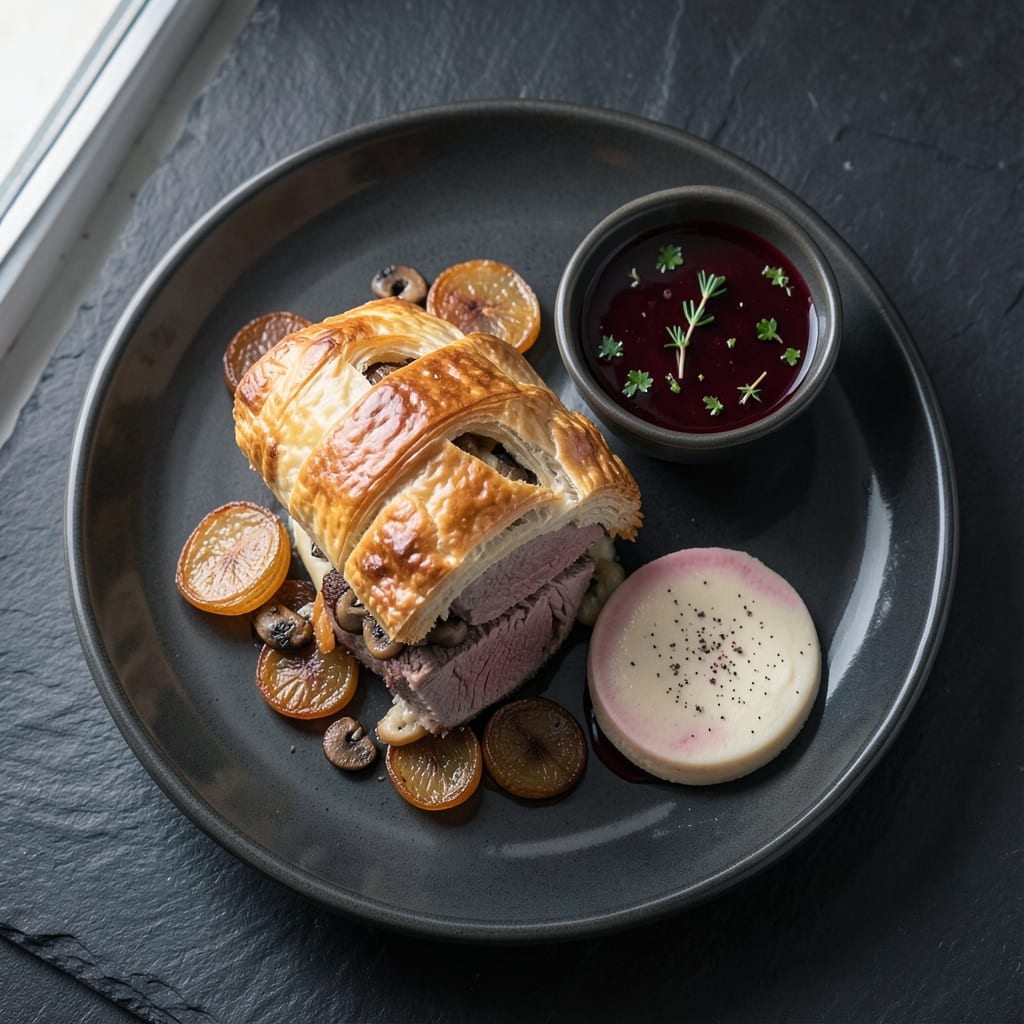
This 72-hour Beef Wellington recipe transforms a simple beef tenderloin into a showstopping centerpiece that feels like a Michelin-starred masterpiece. The secret lies in the patience—marinating the beef for three days develops deep, tender flavor, while the duxelles and pâté layers create a rich, earthy foundation beneath the golden puff pastry. This isn’t just a dish; it’s an experience that demands attention to detail and rewards it with every forkful.
The process begins with the duxelles, a finely chopped mushroom paste that forms the heart of the Wellington, followed by a layer of pâté that adds richness and structure. The beef, seared to a perfect medium-rare, rests on a bed of prosciutto before being wrapped in the buttery puff pastry—blind-baked to a golden finish—so it emerges from the oven crisp and inviting. Every step, from marinating to assembly, ensures the final result is silky beef with a crust that shatters like glass and a filling that’s impossibly tender.
What makes this recipe truly special is the harmony of textures and flavors: the crisp pastry, the velvety pâté, the earthy mushrooms, and the buttery prosciutto all come together in a way that’s both elegant and deeply satisfying. The 72-hour marinade isn’t just about flavor—it’s about transforming the beef into something so tender it melts in your mouth. This is the kind of dish that turns a weeknight dinner into a restaurant-worthy celebration, served with red wine reduction and roasted vegetables for the full experience.
Whether you’re preparing for a special occasion or simply want to elevate your cooking, this Beef Wellington delivers restaurant-quality results without the fuss. The key is in the preparation—patience, precision, and a little bit of love—and the payoff is a dish that will leave everyone at the table asking for seconds. Let’s get started on creating something truly extraordinary.
Ingredients for 72 hour beef wellington
Patience and precision transform simple ingredients into Michelin-worthy beef Wellington magic.
| Ingredient | Amount | Notes |
|---|---|---|
| Beef Tenderloin 🥩 | 2 ½ lb | Center-cut, trimmed of fat |
| Cremini Mushrooms 🍄 | 1 ½ lb | Finely chopped for duxelles |
| Shallots 🧅 | 6 whole | Minced for duxelles |
| Fresh Thyme 🌿 | ¼ cup | Leaves only for duxelles |
| Fresh Parsley 🌿 | ¼ cup | Chopped for duxelles |
| Pâté 🍖 | 1 cup | High-quality liver pâté |
| Prosciutto 🥓 | 8 oz | Thinly sliced for wrapping |
| Puff Pastry 🍞 | 1 sheet | High-fat, store-bought or homemade |
| Unsalted Butter 🧈 | ½ cup | Melted for brushing |
| Dijon Mustard 🍯 | 1 tbsp | For beef marinade |
| Red Wine 🍷 | 1 cup | Bold dry variety for marinade |
| Olive Oil 🫒 | ½ cup | Extra-virgin for marinade |
| Garlic Cloves 🧄 | 6 cloves | Minced for marinade |
| Salt 🧂 | 1 ½ tsp | Kosher or sea salt |
| Black Pepper 🌶️ | 1 tsp | Freshly ground |
The beef tenderloin is non-negotiable—center-cut, trimmed of fat—for that melt-in-your-mouth texture. Costco or high-end butchers have the best quality, but any reputable grocery store carries it. For the mushrooms, cremini or baby bella work best—their earthy flavor shines in the duxelles. Fresh thyme and parsley from the grocery store’s produce section (not the sad dried stuff) elevate the mushroom paste. The pâté? Fox’s Best or a quality liver pâté from specialty stores—don’t skimp here. Prosciutto should be thinly sliced, high-quality, and the puff pastry? All Butter Puff Pastry from Whole Foods or a trusted brand like Dufour is worth the splurge.
No prosciutto? Thinly sliced smoked ham works in a pinch, but it won’t have the same elegance. Short on pâté? Mushroom duxelles alone can carry the dish, though the pâté adds that velvety richness. The red wine in the marinade should be bold and dry—Cabernet Sauvignon or Merlot. If you’re out, beef broth with a splash of balsamic mimics the depth. The Dijon mustard in the marinade is key—no substitutions here, as it balances the richness. For the mushrooms, if you can’t find cremini, shiitake or oyster mushrooms add a different but delicious earthiness. The garlic in the marinade can be roasted for a sweeter note, but raw works too.
The beef marinade keeps up to 3 days in the fridge, but the duxelles should be made fresh the day before. Puff pastry can be prepped a day ahead and stored wrapped in plastic. The assembled Wellington holds in the fridge for 24 hours before baking—ideal for special occasions. Once baked, it’s best served immediately, but leftovers reheat beautifully in a 350°F oven for 15 minutes. For the ultimate presentation, brush the pastry with melted butter and sprinkle with flaky sea salt before baking—trust me, it’s worth the extra minute.
Why You'll Love This Recipe
- Minimal Prep Work: The beef just needs a quick sear and a 72-hour rest—no chopping, no stress. Honestly, the hardest part is remembering to take it out of the fridge.
- Rich Umami Bomb: That mushroom-duxelle layer? Earthy, meaty, deep—especially with the shallots caramelizing. The thyme ties it all together like a perfect hug for your taste buds.
- Weeknight to Dinner Party: Same recipe, different vibes. Throw it on the table for a cozy Tuesday or impress guests with a dish that looks fancy but feels familiar. (Yes, even on a Tuesday night.)
- Leftovers That Don’t Suck: Cold slices the next day? Still buttery, still flavorful—better than takeout, cheaper than ordering out. I’ve turned this into sandwiches, salads, and even breakfast hash.
Step-by-step instructions for perfect beef Wellington
Let's build this showstopper with precision—silky beef, rich duxelles, and golden puff pastry.
Prepare the Beef Tenderloin and Marinade
Start by trimming the 2.5 lb beef tenderloin of any visible fat or silver skin, leaving it completely smooth. Pat it dry with paper towels—this ensures a perfect sear later. In a bowl, whisk together 1 cup red wine, 0.5 cup olive oil, 1 tbsp Dijon mustard, 1.5 tsp salt, 1 tsp black pepper, and the 6 minced garlic cloves. Rub this marinade all over the beef, then wrap it tightly in plastic wrap. Refrigerate for 72 hours, turning it every 24 hours for even penetration.
Here's the thing—this long marinade transforms tough fibers into tender perfection. The acidity in the wine and mustard breaks down proteins, while the olive oil keeps the meat juicy. Don't skip this step, even if it feels like a long wait.
Create the Duxelles and Assemble the Filling
Finely chop 1.5 lb cremini mushrooms and 6 whole shallots until they resemble coarse sand. In a nonstick skillet over medium heat, cook them with 0.25 cup fresh thyme leaves and 0.25 cup fresh parsley for 20-25 minutes, stirring often, until completely dry and darkened. This is your duxelles—the flavor base of Wellington.
Spread 1 cup pâté on a sheet of parchment paper, then layer the duxelles evenly over it. Roll the prosciutto into a rectangle and place it over the duxelles, leaving a 1-inch border. Unwrap the beef, pat it dry again, and place it in the center of the prosciutto. Roll everything tightly using the parchment to help, then tie with kitchen twine every 2 inches. Chill for 30 minutes before proceeding.
Wrap in Puff Pastry and Rest
Roll out the 1 sheet puff pastry on a floured surface to a 12x16-inch rectangle. Unroll the beef parcel and place it in the center of the pastry. Brush the edges with melted 0.5 cup unsalted butter, then fold the pastry over the beef, sealing the edges tightly. Trim excess pastry, then use a fork to crimp the edges. Brush the entire surface with more butter for a golden finish.
Place the Wellington seam-side down on a parchment-lined baking sheet. Cover with plastic and refrigerate for 2 hours—this prevents the pastry from puffing too soon. The cold also helps the pastry hold its shape during baking.
Bake to Golden Perfection
Preheat your oven to 425°F. Bake the Wellington for 40-45 minutes until the pastry is deep golden brown and internal temperature reaches 125°F (it'll rise to 130°F while resting). The pastry should be crisp and flaky, not pale.
Remove from the oven and let rest for 15 minutes before slicing. This resting period is crucial—it allows the juices to redistribute, ensuring each slice is moist and flavorful. Slice carefully with a sharp knife, and serve with red wine reduction and roasted vegetables.
Pro Tips For Making 72 Hour Beef Wellington
- Dry the Beef Thoroughly: I learned this the hard way—skipping this step means the crust won’t brown properly. Pat the tenderloin completely dry with paper towels (even the ends), then let it sit uncovered on a wire rack for 30 minutes in the fridge. The extra time pays off with a crispy, golden crust instead of a sad, soggy one.
- Sear the Mushrooms Low and Slow: After burning three batches, I finally figured out cremini mushrooms hate high heat. Cook them gently in batches over medium-low, stirring often, until all the moisture evaporates and they’re deeply browned. This builds flavor without turning them to charcoal—yes, even if you’re impatient like me.
- Rest the Meat Under Foil: This isn’t the prettiest method, but it’s the tastiest. After roasting, transfer the beef to a cutting board, tent loosely with foil, and let it rest for 15–20 minutes. The internal temp will drop slightly (to 125°F), but the juices redistribute—skip this, and you’ll end up with a dry, overcooked center.
- Use Room-Temp Shallots: My grandmother swore by this, and she was right: finely mincing cold shallots releases too much moisture into the duxelles, making it watery. Take 10 minutes to let them sit at room temp before cooking—it makes a real difference in texture and flavor. (Your future self will thank you.)
Serving suggestions for this 72 hour beef wellington
Red Wine Reduction
This classic pairing elevates the Wellington by mirroring its bold flavors. Simmer 1 cup red wine (Cabernet Sauvignon works best) with 1 tbsp balsamic vinegar and 1 tbsp brown sugar until reduced by half—about 10-12 minutes. Finish with 1 tsp cold butter for a glossy, velvety sauce. Serve immediately alongside the Wellington to complement its richness. 🍷
Yorkshire Pudding
A crispy Yorkshire pudding adds a perfect textural contrast to the tender beef. Whisk 1 cup all-purpose flour, 1 tsp salt, and 1 cup milk, then add 2 eggs and 2 tbsp melted butter. Pour into a greased muffin tin and bake at 450°F for 20-25 minutes until puffed and golden. Serve warm with gravy for dipping.
Roasted Vegetables
Roasted root vegetables bring earthy balance to the dish. Toss 1 lb carrots, 1 lb parsnips, and 1 lb baby potatoes with 2 tbsp olive oil, 1 tsp thyme, and 1 tsp rosemary. Roast at 400°F for 40-45 minutes until caramelized. The natural sweetness contrasts beautifully with the savory Wellington. ✨
Garnish with Confidence
Elevate the plate with fresh parsley sprigs and a drizzle of truffle oil for a restaurant-quality finish. The bright green parsley cuts through the richness, while the truffle oil adds an luxurious aroma. Use a squeeze bottle for an even drizzle—just ½ tsp per plate is enough to make it feel special.
Wine Pairing
A bold Cabernet Sauvignon or Syrah complements the Wellington’s depth. Look for wines with 14-15% alcohol and notes of blackberry or cedar. Serve slightly chilled (60-65°F) to enhance the wine’s structure. Avoid high-tannin reds—they’ll clash with the pâté’s richness. 🍷
Make-Ahead Serving
Assemble the Wellington up to 24 hours ahead and refrigerate. Bake just before serving for the best texture. If reheating leftovers, warm at 350°F for 15 minutes covered with foil. The pastry stays crisp, and the beef remains juicy. This makes it perfect for holiday gatherings where timing is tricky. 💡
Nutrition facts
Frequently asked questions
Why does the beef need to marinate for 72 hours?
The extended marinade transforms the beef into something extraordinary. The acidity from the red wine and Dijon mustard breaks down tough fibers, while the olive oil and garlic penetrate deeply, creating a beef that's unbelievably tender and infused with flavor. This slow process is what separates a good Wellington from a showstopper.
Can I substitute prosciutto with something else?
Yes, but with trade-offs. Thinly sliced smoked ham works in a pinch, though it lacks the delicate saltiness of prosciutto. For a vegetarian option, try thinly sliced mushrooms or smoked tofu layered between the pâté and duxelles. The key is maintaining the same rectangular shape for proper wrapping.
What's the best way to store leftover Wellington?
Wrap tightly in aluminum foil and refrigerate for up to 3 days. To reheat, warm in a 350°F oven for 15 minutes covered with foil. For longer storage, freeze the assembled (unbaked) Wellington for up to 1 month. Thaw overnight in the fridge before baking. The pastry stays crisp, and the beef remains juicy.
How do I know when the Wellington is fully cooked?
Use a meat thermometer to check the internal temperature—it should reach 125°F (it'll rise to 130°F while resting). The pastry should be deep golden brown and crisp to the touch. If the juices run clear when you pierce the beef, it's perfect. Never overcook—the beef needs to rest to stay tender.
Can I make the duxelles ahead of time?
The duxelles can be made 1-2 days ahead and stored in an airtight container in the fridge. The flavors actually deepen over time. When ready to use, spread it on the pâté layer as directed. For best results, let it sit at room temperature for 30 minutes before assembling the Wellington.