
Main Courses
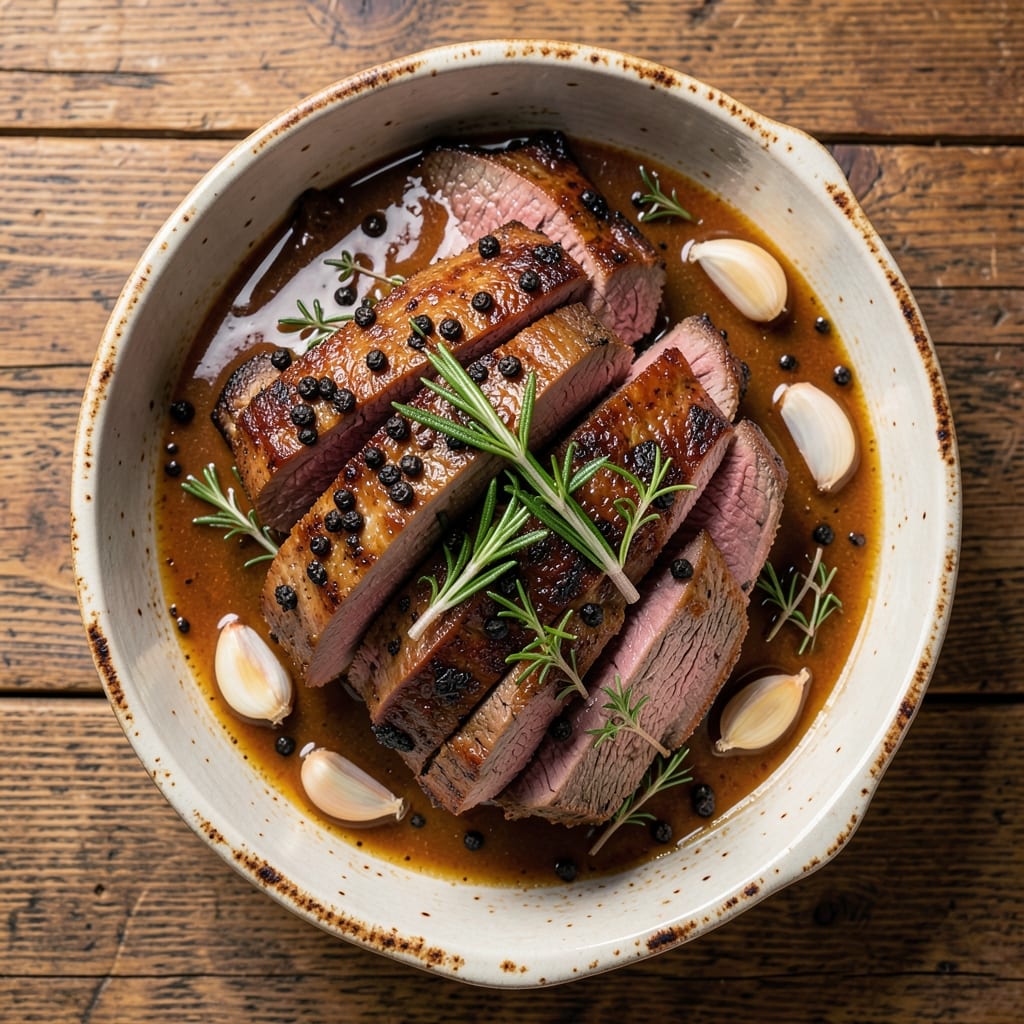
This amazing roast beef recipe delivers melt-in-your-mouth tenderness with a golden crust and rich au jus that keeps the meat perfectly moist for days. I developed this after years of trial and error—no more dry, overcooked roasts that fall apart at the slightest touch. The secret lies in a dry-brine overnight and a reverse sear that locks in juices while building that perfect crust.
What sets this apart is the au jus bath—a flavorful, savory liquid that transforms a simple roast into a showstopper. You’ll start with a herb-infused crust that adds depth, then slow-roast the beef to an ideal internal temperature before finishing with a high-heat sear. The result? A restaurant-quality centerpiece that’s foolproof for holidays or weeknight dinners.
By the time you carve into this roast, you’ll have juicy, tender slices with a glossy sheen from the au jus, which you’ll use to drizzle over every bite. The crust stays crispy while the meat remains perfectly moist—no guesswork, no stress. This is the kind of roast that makes your table the center of attention, whether it’s Thanksgiving or a casual Sunday supper.
Pair it with classic sides like roasted potatoes or a fresh salad, or go all out with horseradish cream and crusty bread. The au jus alone is worth the effort—it’s rich, aromatic, and packed with flavor. Let’s get cooking!
Ingredients for amazing roast beef
Six ingredients transform a simple roast into restaurant-quality perfection with golden crust and rich au jus.
| Ingredient | Amount | Notes |
|---|---|---|
| Beef Chuck Roast 🥩 | 4 lb | Center-cut, 2-3 inches thick |
| Kosher Salt 🧂 | 2 tbsp | Diamond Crystal preferred |
| Fresh Black Peppercorns 🌶️ | 1 tbsp | Coarsely cracked, not ground |
| Fresh Rosemary 🌿 | ¼ cup | Finely chopped, stems removed |
| Fresh Thyme 🌿 | ¼ cup | Leaves only, stems discarded |
| Garlic Cloves 🧄 | 6 whole | Smashed, skin on |
| Extra-Virgin Olive Oil 🫒 | ¼ cup | High-quality, fruity |
| Yellow Onion 🧅 | 1 whole | Cut into wedges |
| Carrots 🥕 | 2 whole | Whole, scrubbed |
| Celery Stalks 🥬 | 2 whole | Cut into 2-inch pieces |
| Beef Broth 💧 | 2 cups | Homemade or high-quality |
| Red Wine 🍷 | 1 cup | Dry, bold variety |
| Tomato Paste 🍅 | 2 tbsp | Smooth, no sugar added |
| Worcestershire Sauce 🥄 | 1 tbsp | Vegetarian version if needed |
| Unsalted Butter 🧈 | ½ cup | Cold, cubed |
The beef is everything here—chuck roast with good marbling delivers that melt-in-your-mouth texture. Costco or Whole Foods carry excellent center-cut pieces, but any butcher will trim it for you. Look for 2-3 inches thick—thinner cuts dry out during slow roasting. Fresh herbs matter too: Whole Foods or local farmers markets have the most vibrant rosemary and thyme. If you can't find fresh, dried works at one-third the amount, but the flavor won't be the same. The garlic should be plump and firm, not shriveled or sprouting.
No red wine? Beef broth with a splash of balsamic vinegar works perfectly—just add 1 tbsp balsamic to the broth. Worcestershire sauce is non-negotiable for depth, but if you're vegetarian, vegetarian Worcestershire (like Annie's) gives the same umami punch. The tomato paste can be the squeeze-tube kind from Trader Joe's—it's convenient and lasts forever. For the crust, Diamond Crystal kosher saltcold and cubed when you sear the roast for maximum crust development.
This roast keeps beautifully—3-4 days in the fridge with the au jus. For longer storage, freeze the roast and au jus together in a sealed container for up to 3 months. The au jus reheats perfectly and tastes even better the next day. I always make extra—it's fantastic over mashed potatoes or as a base for gravy. If you're prepping ahead, dry-brine the roast overnight and refrigerate it uncovered for 24 hours before roasting. The crust will be even more impressive.
Why You'll Love This Recipe
- Herb Bomb Flavor: That rosemary and thyme? They don’t just hint at flavor—they punch you in the taste buds. The crust gets perfectly caramelized while the inside stays tender, and honestly? It’s the kind of beef that makes you close your eyes and sigh.
- Leftovers for Days: Between us, this roast is so good that the leftovers become their own thing. Slice it thin for sandwiches, dice it into pasta, or just reheat it straight up—it’s that reliable. My freezer’s always stocked with portions because I can’t resist.
- Budget Stretch: A chuck roast is the unsung hero of affordable protein. It feeds four people for less than takeout, and the herbs cost pennies. Plus, the more you make, the more you save—no waste, just pure, satisfying beef.
Step-by-step instructions for perfectly moist roast beef
Here's how to create a showstopping roast with an au jus bath that keeps every slice juicy for days.
Prepare the Herb-Crusted Roast
In a small bowl, combine the 2 tablespoons kosher salt, 1 tablespoon cracked black peppercorns, ¼ cup chopped fresh rosemary, and ¼ cup fresh thyme leaves. Rub this mixture all over the 4 lb beef chuck roast, pressing firmly so it adheres. Let it sit at room temperature for 30 minutes while you prepare the vegetables.
This herb crust isn't just for flavor—it creates a protective barrier that helps lock in moisture during the long cook. The salt also begins to break down the muscle fibers, making the meat more tender. Don't skip this resting time; it ensures even cooking from edge to center.
Sear the Roast for Maximum Flavor
Heat a Dutch oven over medium-high heat until very hot. Add the ¼ cup extra-virgin olive oil and swirl to coat. Place the roast in the pot, fat-side down, and sear for 4-5 minutes until a deep golden crust forms. Flip and sear the other side for another 4-5 minutes. Remove the roast and set it aside.
This initial sear builds layers of flavor through the Maillard reaction while creating a barrier that helps prevent moisture loss during cooking. The oil also helps conduct heat more evenly. If you notice the oil smoking excessively, reduce the heat slightly—you want a steady sizzle, not a fire.
Build the Au Jus Foundation
In the same Dutch oven, add the 1 whole onion wedges, 2 whole carrots, and 2 whole celery stalks (cut into 2-inch pieces). Sauté for 5 minutes until the vegetables begin to soften. Add the 6 smashed garlic cloves and cook for another 1 minute until fragrant.
Stir in the 2 tablespoons tomato paste and cook for 1 minute to deepen its flavor. Pour in the 1 cup red wine and scrape up any browned bits from the bottom of the pot—these contain concentrated beef flavor. Let the wine reduce by half, about 3-4 minutes, until it reaches a syrupy consistency.
Create the Moisture-Sealing Au Jus Bath
Return the roast to the Dutch oven, fat-side up. Add the 2 cups beef broth and 1 tablespoon Worcestershire sauce, then bring everything to a simmer. Cover tightly with a lid and transfer to a 300°F oven. Cook for 3 hours, maintaining the simmer by adding ¼ cup hot water every 30 minutes if needed.
This low-and-slow approach with the au jus bath creates a self-basting environment. The liquid constantly bathes the roast, preventing it from drying out. The vegetables and wine infuse the broth with deep, complex flavors that penetrate the meat. The roast is done when it reaches an internal temperature of 195°F—this is the "rest temperature" that gives you that melt-in-your-mouth texture.
Finish with Butter and Rest
Remove the roast from the oven and transfer it to a cutting board. Tent loosely with foil and let it rest for 30 minutes. Meanwhile, remove the vegetables from the Dutch oven and discard them. Stir in the ½ cup cold cubed butter and simmer for 2 minutes until melted and incorporated. Strain the au jus through a fine-mesh sieve for a smooth, silky sauce.
The butter adds richness and helps emulsify the sauce, creating a velvety consistency perfect for drizzling over each slice. The rest is crucial—it allows the meat fibers to relax and redistribute juices. When ready to serve, slice against the grain into ¼-inch thick pieces and drizzle generously with the au jus. Each bite should be incredibly tender with perfect moisture retention.
Pro Tips For Making Amazing Roast Beef
- CRANK THE HEAT FIRST: Start your roast on high—425°F (220°C)—for the first 20 minutes. I used to play it safe with medium heat, and my crust never got that deep, caramelized color. This sears the surface fast and locks in those juices better than anything else.
- SALT THE ROAST 24 HOURS EARLY: Toss the chuck roast in kosher salt a day ahead and let it sit uncovered in the fridge. I learned this the hard way—rushing the seasoning leads to a bland crust. The salt breaks down the meat fibers, making it tender and letting the crust form like a dream.
- STOP POKING THE MEAT: Resist the urge to check doneness with a fork—every time you stab it, you’re pushing juices out. Use a meat thermometer instead; aim for 130°F (54°C) internal temp for medium-rare. I’ve ruined perfectly cooked roasts just by over-handling them.
- STEAM THE HERBS: Wrap the fresh rosemary and thyme sprigs in cheesecloth or a double layer of foil before adding them to the pan. This keeps the leaves from burning while still infusing the beef with flavor—no bitter aftertaste, just aromatic perfection. (Yes, it’s a tiny extra step, but it’s worth it.)
Wine and beer pairings for this recipe
Classic Red Wine
A bold Cabernet Sauvignon from Napa Valley is my go-to choice—its dark fruit notes and firm tannins complement the roast's richness beautifully. Look for a 2018 or newer vintage with at least 14% alcohol to stand up to the beef's intensity. A Syrah from the Rhône Valley also works wonderfully, offering peppery spice that enhances the herb crust. 🍷
Malbec for Hearty Pairings
If you prefer something slightly smoother, a Argentinian Malbec with its velvety texture and blackberry flavors pairs perfectly with the au jus. I recommend a Torrontés blend for a lighter option that still delivers depth. These wines cut through the fat while harmonizing with the rosemary and thyme in the crust.
Beer Pairings
A dark amber ale like Samuel Adams Nut Brown Ale provides malty sweetness that balances the beef's savory notes. For something lighter, try a Belgian Dubbel—its caramel and raisin flavors complement the roast's caramelized crust. Avoid hoppy IPAs, as they can overpower the dish's delicate flavors. 🍺
After-Dinner Digestif
Finish the meal with a Port wine or Cognac to cleanse the palate and enhance the beef's lingering flavors. A tawny Port with its nutty undertones pairs exceptionally well with the au jus. For a non-alcoholic option, a smoked tea like Lapsang Souchong adds a subtle earthiness that complements the roast's herbaceous notes.
Regional Wine Suggestions
If you're serving this roast in Texas, opt for a Texas High Plains Merlot—its smooth texture and dark fruit notes shine with the au jus. In New York, a Finger Lakes Riesling (dry style) offers crisp acidity that cuts through the richness. For California, a Zinfandel from Paso Robles brings bold spice to match the crust's herbs.
Budget-Friendly Options
Don't break the bank—Trader Joe's Charles Shaw Cabernet Sauvignon is a reliable choice under $10, while Barefoot Cabernet offers consistent quality for $8-10. For beer, Guinness or Leffe Blond are affordable yet flavorful options that won't overpower the meal. 💰
Nutrition facts
Frequently asked questions
Why does this recipe use a reverse sear method?
The reverse sear method ensures your roast stays incredibly tender while developing a perfect golden crust. First, we slow-cook the beef to 195°F in the au jus bath, which breaks down collagen and creates melt-in-your-mouth texture. Then we finish with a high-heat sear to build that delicious crust without overcooking the interior. This technique is especially important for thicker cuts like chuck roast that need extra time to tenderize.
Can I use a different cut of beef for this recipe?
While chuck roast is ideal for its marbling and flavor, you can substitute with top round or ribeye roast—just adjust cooking times. Top round will need longer slow cooking (up to 4 hours) to reach tenderness, while ribeye will cook faster (about 2.5 hours) but may be more tender already. For best results, always use a cut that's 2-3 inches thick to prevent uneven cooking.
What's the best way to reheat leftover roast beef?
Slice your roast and reheat in the au jus on low heat for 5-10 minutes—this prevents drying out. For sandwiches, warm slices in a skillet with a splash of au jus for just 1-2 minutes per side. Never microwave, as it turns the meat rubbery. The au jus reheats beautifully too—simmer it gently and use it to baste any reheated slices for extra moisture.
How do I know when the roast is done without a meat thermometer?
Press the roast gently with your finger—it should feel very tender, almost like butter. The internal temperature should reach 195°F for perfect tenderness. If you don't have a thermometer, cut into the thickest part: the juices should run clear (not pink) and the meat should pull apart easily. Remember, the roast will continue cooking slightly while resting, so pull it out when it's just barely done.
Can I make this recipe in a slow cooker?
Yes! Sear the roast first, then place it in your slow cooker with all ingredients except the butter. Cook on low for 8 hours or high for 5 hours. After cooking, remove the roast and tent it while you finish the au jus by adding the butter and straining. The slow cooker method works especially well for busy days—just remember the roast will need to rest before slicing to redistribute juices properly.