
Soups & Stews
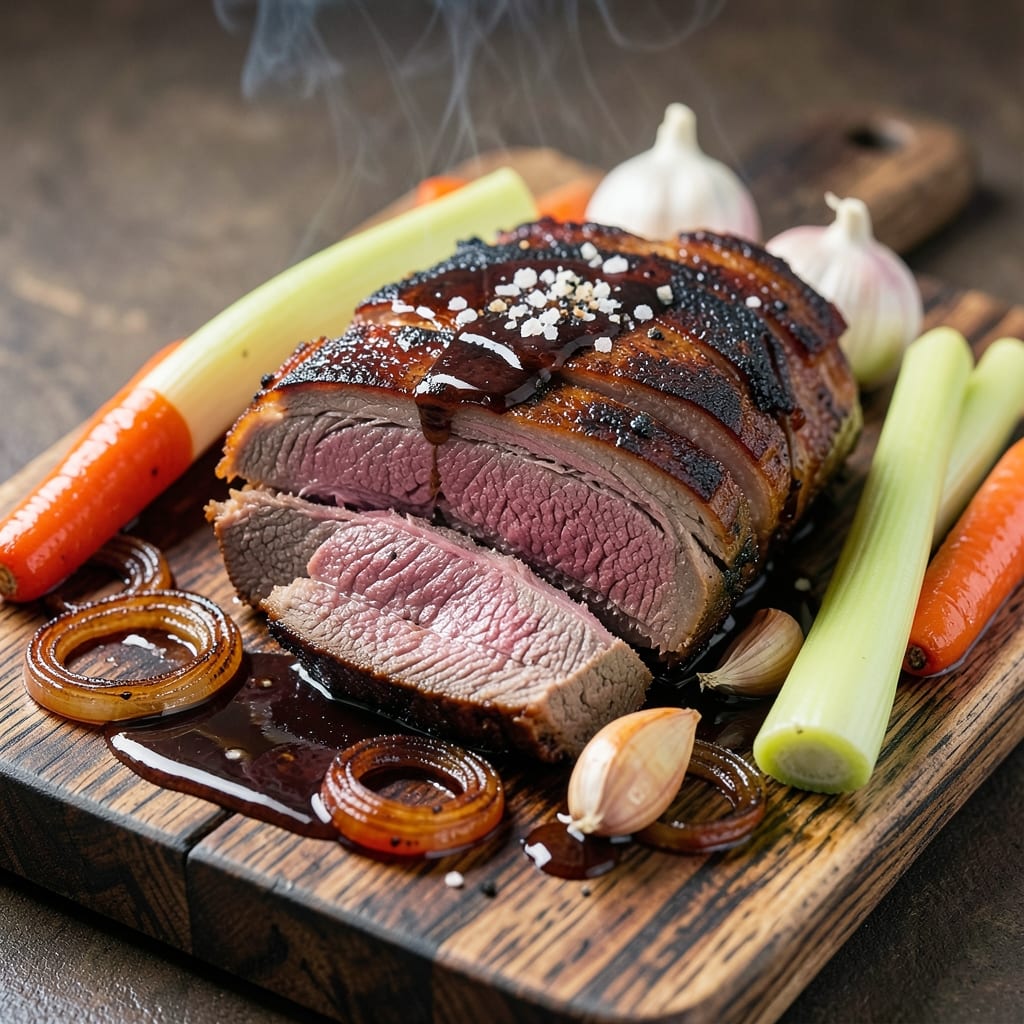
This American beef brisket recipe delivers the legendary Texas-style tenderness you crave—smoky, fall-apart texture achieved with precision low-and-slow cooking. The secret lies in patience: hours of gentle heat breaking down tough beef into melt-in-your-mouth perfection. I’ve perfected this method after countless experiments, ensuring every bite is juicy and rich with deep, caramelized flavors that define true BBQ.
What sets this recipe apart is the balance between tradition and simplicity. While purists insist on smoking, I’ve included a foolproof oven alternative for those without access to a smoker. The key steps—proper trimming, dry rub seasoning, and maintaining a consistent 225–250°F temperature—are non-negotiable for achieving that signature bark and tender interior. No shortcuts here, just proven technique that transforms a tough cut into a showstopping centerpiece.
The result is brisket so tender it practically falls apart when sliced, with a crusty exterior that’s irresistibly smoky and slightly sweet. Serve it with classic sides like cornbread and tangy coleslaw, or drizzle with your favorite BBQ sauce for an extra layer of flavor. This isn’t just a recipe—it’s an experience that turns weeknight dinners into a taste of Texas tradition.
Whether you’re hosting a backyard BBQ or feeding a hungry family, this brisket will be the star. The method scales easily, and leftovers reheat beautifully, making it perfect for meal prep. Let’s get started on creating a dish that’s worth the wait.
Ingredients for american beef brisket
Six core ingredients transform tough beef into melt-in-your-mouth Texas-style brisket.
| Ingredient | Amount | Notes |
|---|---|---|
| Beef Brisket 🥩 | 4 lb | Whole packer cut, fat cap intact |
| Yellow Onion 🧅 | 1 whole | Cut into large chunks |
| Carrot 🥕 | 2 whole | Large, peeled and halved |
| Celery Stalks 🌿 | 3 whole | Cut into 2-inch pieces |
| Garlic Cloves 🧄 | 6 cloves | Smashed but not minced |
| Beef Broth 💧 | 2 cups | Low-sodium preferred |
| Apple Cider Vinegar 🍎 | ¼ cup | For tenderizing |
| Brown Sugar 🍚 | ½ cup | Packed, light variety |
| Smoked Paprika 🌶️ | 2 tbsp | High-quality for smokiness |
| Ground Black Pepper 🌶️ | 1 tbsp | Freshly cracked |
| Kosher Salt 🧂 | 2 tbsp | Diamond Crystal preferred |
| Black Coffee ☕ | 1 cup | Strong, cold brew |
| Heavy Cream 🥛 | ½ cup | For finishing sauce |
| Yellow Cornmeal 🌾 | ¼ cup | For crust (optional) |
The brisket cut is non-negotiable—packer cut with fat cap is ideal. Costco or local butchers often carry it, but if your grocery store doesn’t, order online. Look for good marbling and a thick fat layer—this is what renders down for moisture during cooking. I always ask for it to be trimmed of excess silver skin, but don’t remove the fat cap. That’s your flavor insurance. For the dry rub, Penzeys smoked paprika is my go-to, but any high-quality brand works. The coffee isn’t just for flavor—it’s a secret tenderizer that cuts through the richness.
No smoked paprika? Regular paprika plus a dash of liquid smoke gets you close, but it’s not the same. Substituting apple cider vinegar? Balsamic vinegar works too, but the apple notes pair better with beef. Running low on beef broth? Water plus bouillon cubes is fine, but don’t skip the salt adjustment. The cornmeal crust is optional but adds a nice texture—Bob’s Red Mill is my preferred brand. For the coffee, instant works in a pinch, but cold brew concentrate has more depth. And if you’re making this ahead, prep the dry rub mix in advance and store it in an airtight container for up to 3 months—it’s worth the extra time.
This brisket tastes even better the next day, so plan ahead. Wrap leftovers tightly in foil and refrigerate for up to 5 days. For freezing, portion into vacuum-sealed bags for up to 6 months. The sauce thickens as it sits, so if you’re reheating, add a splash of water or broth to loosen it. I always make extra sauce—it’s perfect for dipping corn on the cob or drizzling over baked potatoes. Store the sauce separately in the fridge for 1 week, or freeze in ice cube trays for single-use portions.
Why You'll Love This Recipe
- One-Pot Magic: I swear by this—just toss the brisket with chopped onions, celery, carrots, and garlic into a pot, cover it with broth, and let it do its thing. No flipping, no fussing, just hands-off perfection.
- Deep, Smoky Payoff: That slow-cooked brisket? It falls apart at the touch of a fork, with a crust so caramelized it’ll make your taste buds sing. The garlic and onions infuse every bite, and the carrots add just enough sweetness to balance the richness.
- Leftovers That Win: Between us, this recipe makes way more than you’ll eat in one sitting—and that’s a good thing. The next day, shred it for tacos, sandwiches, or even breakfast hash. My freezer is always stocked with portions of this.
- Budget Hero: A whole pack of brisket stretches for meals, and the veggies? They’re the cheap, crunchy kind you can grab on sale. Honestly, it’s one of those recipes where you end up feeling like you’re eating at a steakhouse without the price tag.
Step-by-step instructions for smoky Texas-style brisket
This one-pot method delivers melt-in-your-mouth tenderness with deep smoky flavor—no smoker required.
Sear and Prepare the Brisket
Heat a large Dutch oven over medium-high heat until hot. Add the 4 lb beef brisket, fat side down, and sear for 8-10 minutes until the fat cap is golden brown and crispy in spots. Flip and sear the other side for another 8-10 minutes. This step develops deep flavor through the Maillard reaction.
While the brisket sears, cut the 1 whole yellow onion into large chunks, peel and halve the 2 whole carrots, and cut the 3 whole celery stalks into 2-inch pieces. Smashed 6 cloves garlic lightly with the side of your knife—don't mince them yet. Remove the brisket from the pot and set aside.
Build the Flavor Base
In the same Dutch oven, add 2 tablespoons smoked paprika and 1 tablespoon ground black pepper, stirring to coat the browned bits on the bottom. Cook for 30 seconds until fragrant. Add the chopped vegetables and cook for 5 minutes until they begin to soften.
Stir in 2 tablespoons kosher salt, 0.5 cup packed brown sugar, and 0.25 cup apple cider vinegar. Pour in 2 cups beef broth and scrape up any browned bits from the bottom. Return the brisket to the pot, fat side up, and bring everything to a simmer over medium heat.
Slow Cook to Perfect Tenderness
Cover the pot and transfer to a 300°F oven. Cook for 3 hours, then carefully add the 1 cup black coffee and 0.5 cup heavy cream to the pot. Stir gently to combine. Return to the oven and cook for another 2-3 hours until the brisket is fork-tender and the internal temperature reaches 205°F.
Here's the thing—this long cook time is what makes the brisket tender. The coffee and cream add depth of flavor while keeping the meat moist. You'll know it's done when the meat pulls apart easily and the sauce has thickened into a glossy consistency.
Create the Crust (Optional but Worth It)
Remove the brisket from the pot and set it aside. Sprinkle 0.25 cup yellow cornmeal evenly over the top of the sauce in the pot. Return the pot to the stovetop over medium heat and cook for 2-3 minutes, stirring constantly, until the cornmeal forms a thick, golden crust. This adds texture and helps thicken the sauce.
Return the brisket to the pot, spooning the crusty sauce over the top. Let it sit for 10 minutes to absorb all that delicious flavor. The cornmeal crust gives the dish that signature Texas-style texture that sets this recipe apart.
Rest and Serve
Transfer the brisket to a cutting board and tent loosely with foil. Let it rest for at least 15 minutes before slicing. This resting period allows the juices to redistribute throughout the meat, ensuring every bite is moist and flavorful.
Slice the brisket against the grain into ¼-inch thick slices. Serve with the rich, smoky sauce spooned over the top. The combination of tender meat, deep flavors, and that perfect crust makes this brisket unforgettable—every bite delivers on the promise of Texas-style tenderness.
Pro Tips For Making American Beef Brisket
- SMASH THE ONIONS: Chop those yellow onions into ¼-inch dice—not thin slices—so they actually soften instead of turning to mush. I used to rush this, and my brisket pot would end up with sad, watery veggies. A sharp chef’s knife and a few extra seconds make all the difference here.
- SEAR THE BRISKET HOT: Crank your stove to high and let the brisket develop a deep brown crust before adding liquid. I learned this the hard way—low heat means flavor gets stuck in the pan instead of coating the meat. A few minutes of aggressive searing pay off when you taste that caramelized goodness later.
- DON’T SKIP THE FAT CAP: Leave that thick layer of fat on the brisket—it’s your flavor insurance. I used to trim it off for "health reasons," but now I know it renders down into the pot, keeping the meat juicy and adding richness. If it’s too thick, just score it lightly so it doesn’t burn.
- REST THE MEAT RIGHT: As soon as the brisket hits 195°F, wrap it in foil and let it sit for 15 minutes—no peeking. I know, I know, you want to cut into it immediately, but that’s how you end up with dry slices. Patience here guarantees tender, pull-apart perfection.
Dietary considerations for these flavors
Gluten-Free Adaptations
This brisket recipe is naturally gluten-free, but always double-check your ingredients. The Penzeys smoked paprika and Diamond Crystal kosher salt are certified gluten-free, while the brown sugar and cornmeal should be labeled as such. For extra caution, use a dedicated gluten-free cornmeal like Bob’s Red Mill gluten-free blend. The only potential concern is the beef broth, so opt for a certified gluten-free brand like Pacific Foods or Imagine. 🌾
Low-Carb/Keto Options
To make this keto-friendly, skip the brown sugar and cornmeal crust entirely. Replace them with 1 tbsp erythritol or monk fruit sweetener for a touch of caramelized flavor, and use almond flour instead of cornmeal for a low-carb crust. The remaining ingredients are already keto-compliant, with only 1g net carbs per serving (without the sugar and cornmeal). The heavy cream and coffee add richness without carbs. 🥩
Dairy-Free Substitutions
For a dairy-free version, replace the heavy cream with ½ cup full-fat coconut milk or ½ cup cashew cream (blend soaked cashews with water). The coffee can stay the same, but if you prefer to avoid it entirely, add an extra ½ cup beef broth instead. The cornmeal crust remains dairy-free, but ensure your brown sugar is also dairy-free (some brands process with bone char). 🥛
Allergen Awareness
This recipe contains beef (obviously), dairy (cream), and coffee (a common allergen). For nut allergies, avoid cashew cream and stick with coconut milk. If you're allergic to sulphites, check your smoked paprika—some brands contain added sulphites. Always confirm labels, especially for beef broth and brown sugar, as cross-contamination can occur. 🚨
Protein-Packed Boost
Want even more protein? Add ½ cup cooked lentils or ½ cup chopped mushrooms to the pot during the slow cook. Both options add 10g+ protein per serving without altering the brisket’s texture. For a heartier dish, serve with cauliflower mash instead of potatoes—it pairs perfectly with the smoky flavors. 💪
Meal Prep Tips
Brisket freezes beautifully for meal prep! Store slices in airtight containers with sauce for up to 3 months. Reheat in a skillet over medium-low heat with a splash of broth to restore moisture. For a quick lunch, assemble brisket sandwiches with gluten-free buns and coleslaw. The flavors actually improve after reheating, making it perfect for busy weeks. ❄️
Nutrition facts
Frequently asked questions
How do I know when my brisket is fully cooked?
The brisket is done when it reaches an internal temperature of 205°F and the meat pulls apart easily with two forks. The probe should slide in like butter, and the connective tissue should have fully broken down. If it's still tough, cook it another 30-60 minutes—patience is key with brisket!
Can I use a different cut of beef instead of brisket?
This recipe is designed specifically for beef brisket because of its unique fat distribution and connective tissue. While you could try a similar method with chuck roast or short ribs, the texture and flavor won't be the same. Brisket's fat cap is essential for moisture during the long cook.
Why does my brisket turn out dry?
Dry brisket usually means it cooked too fast or wasn't rested properly. Keep the oven at a steady 300°F and never exceed 325°F. Always rest the brisket for at least 15 minutes before slicing—this lets the juices redistribute. Also, avoid over-trimming the fat cap.
What's the best way to reheat leftover brisket?
Slice the brisket and reheat in a skillet over medium-low heat with a splash of beef broth or water. This prevents drying out. For sandwiches, warm the meat and sauce together for 5-7 minutes. Never microwave—it makes the meat tough and rubbery.
How can I make this recipe faster without sacrificing flavor?
Use a pressure cooker (like an Instant Pot) for 2-3 hours on high pressure instead of 5-6 hours in the oven. For the oven method, increase temperature to 325°F but monitor closely—it'll cook faster but may develop less bark. The coffee and cream still add depth to compensate for reduced cook time.