
Soups & Stews
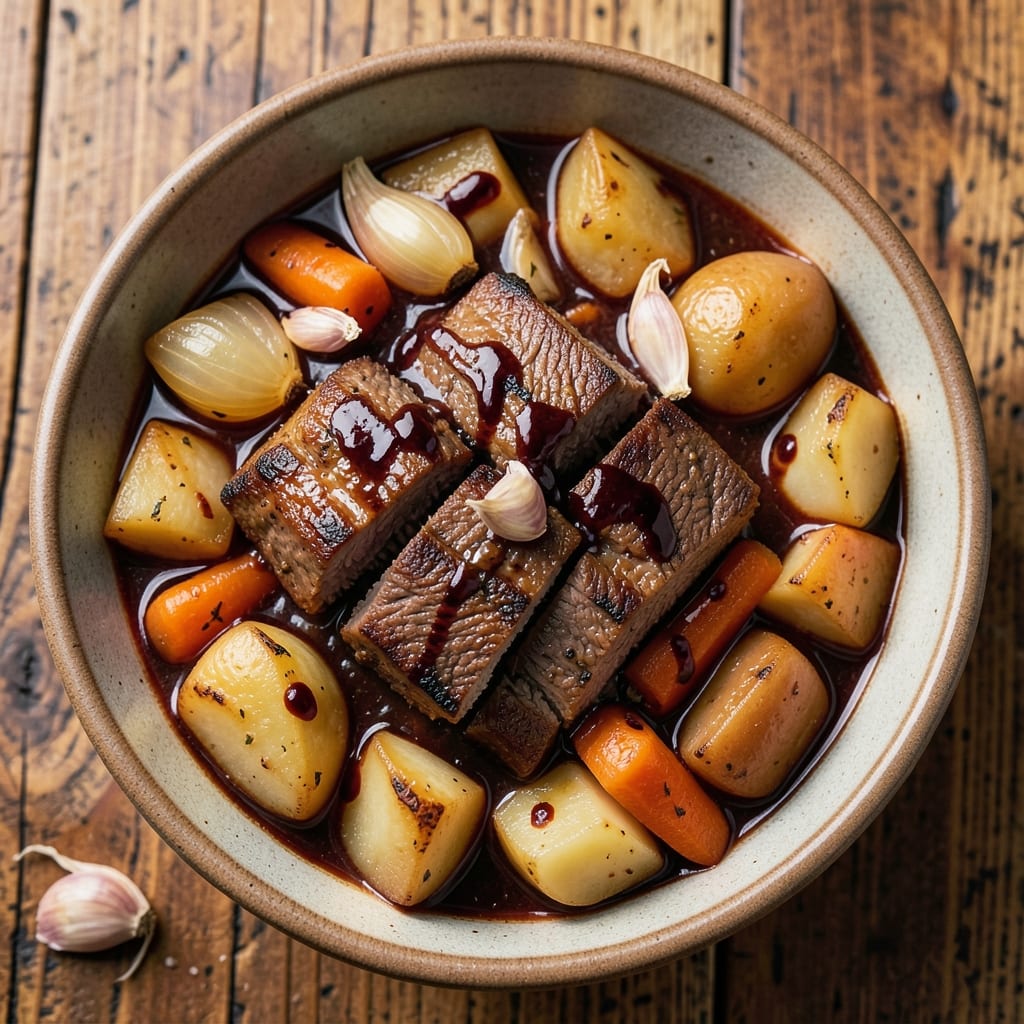
This American beef stew recipe delivers the kind of deep, rich flavor that transforms tough cuts into melt-in-your-mouth perfection. The secret lies in slow-braising beef with aromatic vegetables and a caramelized fond—a technique that builds layers of umami and depth you won’t find in store-bought versions. I’ve perfected this over years of testing, ensuring every bite is tender, savory, and packed with that signature crust of flavor from the seared meat.
The process starts with browning the beef—a critical step that develops the fond, which dissolves into the broth for maximum flavor. You’ll work with chuck roast or stew meat, cut into even pieces for consistent cooking, paired with onions, carrots, and potatoes that soften beautifully during the long simmer. A splash of red wine and a bouquet garni elevate the broth, while herbs like thyme and bay leaf infuse subtle earthiness.
By the time it’s done, you’ll have a hearty, restaurant-quality stew with fork-tender beef, caramelized vegetables, and a rich, velvety sauce that clings to every bite. The aroma alone will have everyone gathering around the table, and the leftovers reheat just as well—if they last that long. This is comfort food at its finest, perfect for chilly evenings or family gatherings.
Serve it with crusty bread to soak up every last drop of that flavorful broth, or pair it with buttery mashed potatoes for a classic American meal. The recipe scales easily, so double it for a crowd. Let’s get cooking—your kitchen will smell like home in no time.
Ingredients for american beef stew
Here's what you need to make this rich, restaurant-style beef stew.
| Ingredient | Amount | Notes |
|---|---|---|
| Chuck Roast 🥩 | 2 lb | Cut into 1.5-inch cubes |
| Yellow Onions 🧅 | 2 whole | Chopped into 1-inch pieces |
| Carrots 🥕 | 4 medium | Peeled and cut into 1-inch chunks |
| Russet Potatoes 🥔 | 2 lb | Cut into 1-inch cubes |
| Garlic Cloves 🧄 | 4 cloves | Minced |
| Red Wine 🍷 | 1 cup | Bold dry variety |
| Beef Broth 💧 | 4 cups | Low-sodium preferred |
| Tomato Paste 🍅 | 2 tbsp | Squeeze tube works |
| Fresh Thyme 🌿 | 2 sprigs | Or 1 tsp dried |
| Bay Leaves 🍃 | 2 whole | Remove before serving |
| Olive Oil 🫒 | 2 tbsp | For searing beef |
| All-Purpose Flour 🌾 | 2 tbsp | For dusting beef |
| Salt 🧂 | 1 ½ tsp | Kosher or sea salt |
| Ground Black Pepper 🌶️ | 1 tsp | Freshly cracked |
| Worcestershire Sauce 🍶 | 1 tbsp | Vegan if needed |
The chuck roast is the star—look for good marbling at Costco or your butcher shop. Pre-cut stew meat saves time, but if you're buying a whole roast, ask for it cubed. The potatoes should be firm and starchy—Russets or Yukon Golds work best. Carrots can be baby carrots if that's what's in the fridge, but the flavor's better with whole ones. For the wine, any bold, dry red works—Cab Sauv, Merlot, whatever's open. The beef broth? Homemade is ideal, but a quality low-sodium store brand works too.
No red wine? Beef broth with a splash of balsamic gets you close. Fresh thyme is ideal but dried works at one-third the amount. If tomato paste feels like overkill for two tablespoons, those squeeze tubes at Trader Joe's are perfect—no waste, keeps for months. The Worcestershire sauce adds depth—skip it if you're vegan, but it's worth the extra minute. For the flour, all-purpose is fine, but bread flour gives a nicer crust when dusting the beef. The bay leaves? Don't skip them—they're subtle but essential for that classic stew flavor.
This reheats beautifully—honestly tastes better the next day once everything melds. Keeps 4-5 days in the fridge, freezes for 3 months. I portion mine into containers so lunches are sorted for the week. The fond from browning the beef is non-negotiable—it's what gives this stew its deep, rich flavor. Don't rush this step, even if it means extra time at the stove. Trust me on the full-fat version—it's worth it for that velvety texture.
Why You'll Love This Recipe
- One-Pot Magic: I swear by this—just dump everything in one pot, walk away, and come back to something that smells like home. No fancy steps, no stressing over multiple dishes.
- Garlic-Kissed Richness: That chuck roast turns so tender, and when it soaks up the garlic and onions? Pure satisfaction. The potatoes get that buttery crisp edge while staying creamy inside—exactly what you want.
- Leftovers for Days: Between us, this stew only gets better the next day. I make a double batch on Sundays, and by Wednesday, it’s still the star of my lunch. Freezer-friendly too—just reheat and serve.
- Budget Hero: A chuck roast stretches for meals, and the veggies? Basic, cheap, and always in my pantry. Feeds four for under $15, and I’ve never had a complaint (even from my picky teen).
Step-by-step instructions for American beef stew
Here's how to build rich, umami-packed beef stew with a caramelized fond that clings to every bite.
Sear the Chuck Roast for Deep Flavor
Pat the 2 lb chuck roast dry with paper towels and cut it into 1.5-inch cubes. In a large Dutch oven, heat 2 tablespoons olive oil over medium-high heat until shimmering. Working in batches, sear the beef cubes for 2-3 minutes per side until deeply browned and caramelized.
Don't rush this step—browning creates the fond that dissolves into the stew, adding layers of flavor. Transfer the seared beef to a plate as you work. I like to leave the browned bits in the pot for the next step. Once all beef is browned, sprinkle with 2 tablespoons all-purpose flour and stir to coat evenly.
Build the Umami Base with Vegetables
Return the Dutch oven to medium heat and add the 2 whole yellow onions and 4 medium carrots, both chopped into 1-inch pieces. Cook for 5-6 minutes, stirring occasionally, until the onions soften and begin to caramelize. Add the 2 lb russet potatoes, cut into 1-inch cubes, and cook for another 2 minutes to lightly brown them.
Stir in the 4 cloves minced garlic, 2 tablespoons tomato paste, and 1 tablespoon Worcestershire sauce. Cook for 1 minute until fragrant. This step develops the stew's deep, savory foundation. The tomato paste adds richness, while the Worcestershire sauce enhances the umami profile.
Deglaze and Simmer the Stew
Pour in the 1 cup bold dry red wine, scraping up any browned bits from the bottom of the pot with a wooden spoon. This deglazing step captures all the caramelized flavor. Let the wine bubble for 2-3 minutes until it reduces by half. Add the 4 cups beef broth, 1.5 teaspoons salt, and 1 teaspoon ground black pepper, then stir to combine.
Bring the stew to a gentle simmer, then add the seared beef back into the pot. Tuck in the 2 sprigs fresh thyme and 2 whole bay leaves. Cover the Dutch oven and transfer it to the oven preheated to 325°F. Simmer for 2 hours, stirring occasionally, until the beef is fork-tender and the potatoes are easily pierced with a knife.
Finish with Crispy Fond and Rest
Once the stew is tender, remove the lid and increase the oven temperature to 400°F. Let the stew cook uncovered for 10-15 minutes to thicken and develop a caramelized fond on the bottom. This step intensifies the flavor and adds a delicious crunch.
Remove the stew from the oven and let it rest for 10 minutes before serving. This resting time allows the flavors to meld and the juices to redistribute. Remove the thyme sprigs and bay leaves before serving, as they can be bitter if overcooked. Ladle the stew into bowls, making sure to scoop up some of that rich fond for extra flavor.
Pro Tips For Making American Beef Stew
- Brown the Chuck First: That rich, caramelized crust on the beef isn’t just for looks—it’s where all the deep flavor hides. After slicing the roast against the grain (about 1-inch thick), sear it in batches in a heavy pot with 2 tablespoons of oil over medium-high heat until deep brown, 4-5 minutes per side. I used to skip this, and my stew always tasted like it needed more salt.
- Cut Potatoes Last: Russets break apart like overcooked pasta if added too early. Instead, wait until the beef has cooked for at least 1.5 hours before tossing in the potatoes—whole, unpeeled, and halved lengthwise. They’ll absorb the beefy broth perfectly and hold their shape. (Yes, even if you’re impatient like me.)
- Don’t Crowd the Carrots: Overpacking the pot turns carrots into mush. After browning the onions and garlic, spread them in a single layer at the bottom of the pot, then add carrots in a loose ring around the edges. This lets them crisp slightly at the edges while still softening in the broth—like a cross between a stew and a roasted veggie.
- Deglaze with Beer First: Skip the wine if you’re in a hurry—use 1 cup of dark beer (like stout or porter) instead. The maltiness cuts through the richness of the beef, and the alcohol burns off faster than wine. Just pour it in after browning the meat, scrape up those browned bits, and let it reduce by half before adding broth. (Your future self will notice the difference.)
Best sauces and condiments for this american beef stew
Classic Red Wine Reduction
This is my go-to sauce for beef stew—simply reduce 1 cup dry red wine with 1 tbsp tomato paste and 1 tsp Worcestershire sauce until syrupy. Deglaze the pot after searing the beef to capture all those flavorful browned bits. The wine's acidity brightens the stew while adding depth. I like to use a bold Cabernet Sauvignon or Merlot for the best results. 🍷
Creamy Mustard Sauce
For a smoother texture, stir ½ cup heavy cream and 2 tbsp Dijon mustard into the finished stew. The mustard adds a subtle tang that balances the richness, while the cream makes it feel extra luxurious. I recommend adding this in the last 10 minutes of cooking to prevent curdling. Serve with crusty bread for dipping. 🥖
Herbed Butter Drizzle
Melt 2 tbsp butter with 1 tsp fresh thyme leaves and ½ tsp minced garlic, then swirl it into individual bowls of stew just before serving. The butter adds richness while the herbs echo the stew's flavors. For extra flair, sprinkle with crumbled blue cheese or grated Parmesan. This is my favorite finishing touch! 🧈
Spiced Tomato Relish
Blend 1 cup crushed tomatoes, 1 tbsp apple cider vinegar, 1 tsp smoked paprika, and ½ tsp cayenne pepper into a chunky relish. Spoon it over the stew like a topping—it adds a bright, slightly sweet contrast to the deep beef flavors. I like to serve this with a dollop of sour cream on top. 🌶️
Horseradish Cream
Mix ¼ cup sour cream with 1 tbsp prepared horseradish and a pinch of salt for a zesty kick. This sauce cuts through the richness of the stew and adds a refreshing crunch. It’s perfect for those who love a little heat and creaminess together. Serve it on the side for dipping. 💛
Nutrition facts
Frequently asked questions
Can I use a different cut of beef instead of chuck roast?
Yes! Beef chuck is ideal for its marbling and flavor, but you can substitute with stew meat (pre-cut for stews) or even brisket. Avoid lean cuts like sirloin—they won’t tenderize properly. If using brisket, cut it into 1-inch cubes and sear thoroughly to build flavor.
How do I make this stew without red wine?
No problem! Replace the wine with 1 cup beef broth plus 1 tablespoon apple cider vinegar for acidity. For extra depth, add 1 teaspoon soy sauce or 1 teaspoon balsamic vinegar. The stew will still be rich and flavorful—just slightly less complex.
Why does my stew taste watery after cooking?
Watery stews usually happen from too much liquid or not enough simmering time. First, reduce the broth by ½ cup before adding the beef back. Second, simmer uncovered for 10-15 minutes at the end to thicken. If it’s still thin, mash 1-2 potatoes with a fork to release starch, which naturally thickens the sauce.
Can I prepare this stew in a slow cooker?
Sear the beef as directed, then transfer everything to a 6-quart slow cooker. Cook on LOW for 7-8 hours or HIGH for 4-5 hours. Skip the final high-heat step—slow cookers won’t develop the caramelized fond. Stir in a splash of beef broth if it’s too thick. The beef will still be tender and flavorful!
What’s the best way to reheat leftovers?
Reheat gently to avoid drying out the beef. Cover the pot and warm over low heat on the stove for 10-15 minutes, stirring occasionally. For microwave reheating, cover with a damp paper towel and heat in 1-minute intervals until hot. Leftovers taste even better the next day—just add a splash of broth if needed!