
Main Courses
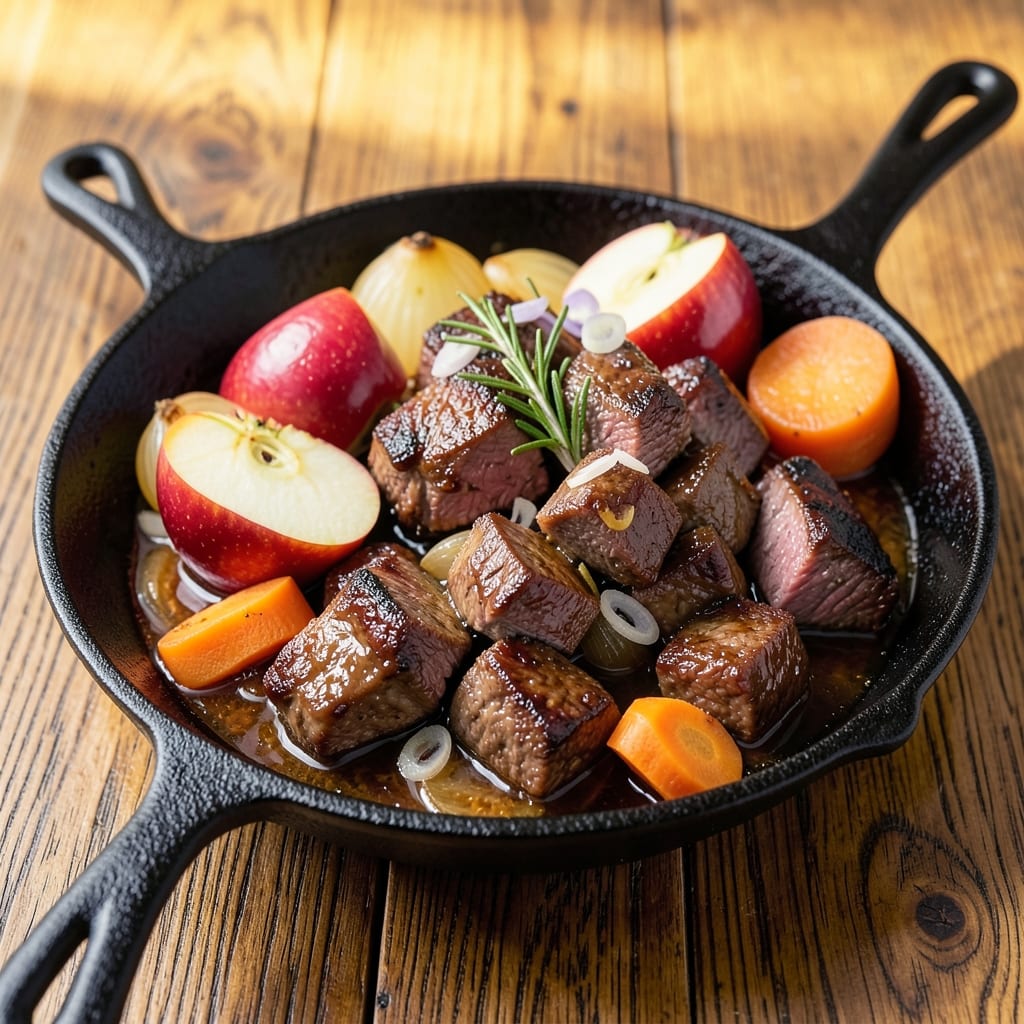
This apple beef recipe transforms humble ingredients into a restaurant-worthy dish where tender beef and caramelized apples create perfect harmony. The secret lies in braising the beef until fork-tender while simultaneously developing a rich, sweet-savory fond that coats every bite. What starts as simple cuts of beef and crisp apples becomes an elegant meal with layers of flavor that balance sweetness and umami beautifully.
The process begins with searing the beef to develop deep, meaty flavors before it braises slowly in a combination of apple cider, red wine, and aromatic vegetables. Meanwhile, the apples caramelize until they're soft and jammy, their natural sweetness complementing rather than overpowering the beef. This method ensures the beef stays moist while the apples contribute both texture and subtle sweetness that elevates the entire dish.
What you'll end up with is a dish that's equally impressive served at a dinner party or as a comforting weeknight meal. The beef will be fall-apart tender, the apples perfectly caramelized, and the sauce thick enough to coat each forkful. The aroma alone will have everyone gathering around the table, and each bite delivers that perfect balance of sweet and savory that makes this recipe truly special.
Pair it with mashed potatoes or crusty bread to soak up every last drop of that delicious braising liquid. The recipe scales beautifully, making it perfect for feeding a crowd or preparing ahead for meal prep. Here's how to create this comforting, flavorful masterpiece that brings warmth to any table.
Ingredients for apple beef
This elegant combo of beef and apples delivers restaurant-quality flavor with simple, quality ingredients.
| Ingredient | Amount | Notes |
|---|---|---|
| Beef Chuck Roast 🥩 | 2 lb | Cut into 1.5-inch cubes |
| Apples 🍎 | 4 medium | Honeycrisp or Fuji, peeled |
| Yellow Onion 🧅 | 1 whole | Chopped into wedges |
| Carrots 🥕 | 3 medium | Peeled and sliced into chunks |
| Garlic Cloves 🧄 | 4 cloves | Minced for depth of flavor |
| Apple Cider 🍎 | 2 cups | Unfiltered for richness |
| Dry Red Wine 🍷 | 1 cup | Cabernet Sauvignon preferred |
| Beef Broth 💧 | 2 cups | Low-sodium preferred |
| Tomato Paste 🍅 | 2 tbsp | Squeeze tube preferred |
| Fresh Thyme 🌿 | 2 sprigs | Or 1 tsp dried thyme |
| Fresh Rosemary 🌿 | 1 sprig | For aromatic depth |
| Bay Leaves 🍃 | 2 whole | Remove before serving |
| Salt 🧂 | 1 ½ tsp | Kosher or sea salt |
| Black Peppercorns 🌶️ | 1 tsp | Freshly cracked |
| Olive Oil 🫒 | 2 tbsp | For searing beef |
The beef is everything here—chuck roast gives you that melt-in-your-mouth texture when braised right. Most grocery stores carry it pre-cut, but if you're buying a whole roast, ask the butcher to cube it for you. Costco or Walmart usually have it prepped and ready. For the apples, Honeycrisp or Fuji are perfect—they hold up to braising without turning mushy. If you can't find those, Gala or Braeburn work too. Peeled and cored, they'll caramelize beautifully into jammy chunks. The onions and carrots should be fresh—no sad, rubbery veggies here. Look for firm, vibrant produce in the produce section, not the back of the bin.
No red wine? Substitute with beef broth plus 1 tbsp balsamic vinegar—it'll still taste rich and complex. Fresh thyme is ideal, but dried works at one-third the amount. The tomato paste can be skipped if you're not a fan, but it adds that deep, umami backbone. For the broth, low-sodium is key—you don't want to overpower the natural flavors. If you're in a pinch, store-bought beef broth works, but homemade always tastes better. The herbs? Fresh is best, but if you're using dried, make sure they're labeled as culinary-grade—nothing worse than bitter or stale spices. For the wine, Cabernet Sauvignon is classic, but Merlot or Zinfandel will do the trick too.
This dish tastes even better the next day as all the flavors meld together. Store leftovers in an airtight container in the fridge for up to 5 days, or freeze portions for 3 months. The braising liquid thickens as it cools, so you can even reheat it straight from the fridge—just add a splash of water or broth if it's too thick. I like to portion it into individual containers so I can grab a ready-to-eat meal for lunch. The apples and beef keep their texture beautifully when reheated, making this a perfect make-ahead dish for busy weeks.
Why You'll Love This Recipe
- One-Pot Magic: I swear by this recipe when I’m too tired to pull out five pans. Chuck roast, onions, and apples all go in one pot—no chopping mountains of veggies, just rough dice that disappear into tender perfection.
- Sweet-Savory Wham: That caramelized apple and beef combo? It’s like a hug for your taste buds. The onions and garlic deepen as they cook, but the apples keep it bright—no heavy, overpowering flavors here.
- Leftovers That Win: Between us, this dish begs for seconds, which means I always make extra. Reheat slices in a pan with a splash of broth, and it’s just as good the next day—ideal for packed lunches or lazy dinners.
- Budget-Friendly Feast: A chuck roast stretches further than you’d think, especially with apples and carrots bulking it out. Honestly, it’s my go-to when I need a hearty meal without breaking the bank—plus, apples are cheap in season.
Step-by-step instructions for apple beef braise
Transform tough beef into melt-in-your-mouth tenderness with this sweet-savory braise.
Sear the Beef for Deep Flavor
Heat a heavy Dutch oven over medium-high heat until hot. Add the 2 tablespoons olive oil and swirl to coat the bottom evenly. Working in batches to avoid crowding, add the 2 lb beef chuck roast cut into 1.5-inch cubes and sear for 3-4 minutes per side until deeply browned and caramelized.
This crucial step develops the rich fond that forms at the bottom of the pot—don't skip it. You'll know it's ready when the beef releases easily from the pan with a slight resistance. As you sear, remove the beef and set it aside on a plate, leaving all those precious browned bits in the pot.
Build the Aromatic Base
Reduce heat to medium and add the 1 whole yellow onion chopped into wedges, 3 medium carrots sliced into chunks, and 4 cloves garlic minced. Cook for 5-6 minutes until the vegetables soften and begin to caramelize, stirring occasionally to prevent burning.
Next, stir in the 2 tablespoons tomato paste and cook for 1 minute until it darkens slightly. This creates a flavorful base that will deepen the braising liquid. Sprinkle in the 1.5 teaspoons salt and 1 teaspoon black peppercorns (cracked), letting them toast for 30 seconds to release their aromatic oils.
Deglaze with Wine and Apple Cider
Pour in the 1 cup dry red wine and scrape up all those browned bits from the bottom of the pot with a wooden spoon. Let it simmer for 2-3 minutes until reduced by half. Add the 2 cups apple cider and bring to a gentle boil, then reduce heat to maintain a low simmer.
Return the seared beef to the pot along with the 2 sprigs fresh thyme, 1 sprig fresh rosemary, and 2 whole bay leaves. Partially cover the pot and let it cook for 1.5 hours, stirring occasionally to prevent sticking. This initial cooking time ensures the beef begins to tenderize before the apples are added.
Add Apples and Braise to Perfection
Peel and core the 4 medium apples (Honeycrisp or Fuji work best) and add them to the pot. Pour in the 2 cups beef broth and bring the mixture to a gentle simmer. Cover the pot and cook for an additional 1.5-2 hours until the beef is fork-tender and the apples have softened but still hold their shape.
Here's the thing—you want the apples to contribute sweetness without turning to mush. The beef should pull apart easily with a fork, and the sauce should coat the back of a spoon. If the liquid reduces too quickly, add a splash of water or broth to maintain the proper consistency.
Rest and Serve with Caramelized Fond
Remove the pot from heat and let the braise rest for 10-15 minutes. This resting period allows the juices to redistribute throughout the beef, ensuring each bite is moist and flavorful. Skim off any excess fat that has risen to the surface before serving.
Ladle the beef and vegetables onto plates, spooning the rich, caramelized fond over the top. The apples should be tender with a hint of sweetness, and the beef should be fall-apart tender with a deep, savory flavor. Serve with crusty bread to soak up every last drop of that incredible sauce.
Pro Tips For Making Apple Beef
- Sear the Roast First: I used to skip this step because it seemed like extra work, but searing the chuck roast in a hot pan for 3-4 minutes per side before slow cooking builds a flavor base that nothing else can match. The crust locks in juices, and the Maillard reaction gives depth to that sweet-tart apple-beef combo.
- Cut Apples in Even Bites: Uneven apple chunks mean some get mushy while others stay tough—annoying. Aim for 1-inch cubes, and if using tart varieties like Granny Smith, toss them in a splash of vinegar or lemon juice while prepping to keep them from browning prematurely. (Yes, even if you’re impatient like me.)
- Don’t Overcrowd the Pot: I learned this the hard way—dumping in all the veggies at once steams them instead of caramelizing. Brown the onions, garlic, and carrots in batches, pushing them around the pan until they’re golden. The extra 5 minutes pays off with real flavor, not just boiled veggies.
- Use a Meat Thermometer: Guessing doneness with chuck roast is how you end up with dry, stringy beef. Pull it at 195°F internal temp—it’ll rest down to 185°F, where it’ll be fork-tender. No, the recipe won’t say this, but trust me: this is the thing that matters most.
Best sauces and condiments for apple beef
Red Wine Reduction
The braising liquid in this recipe naturally reduces into a rich, caramelized sauce that clings beautifully to the beef. To enhance its depth, I recommend reducing it further on the stovetop after the braising is complete. Simmer the sauce uncovered for 5-7 minutes until it thickens slightly—this intensifies the apple and wine flavors. For extra richness, whisk in 1 tablespoon cold butter at the end. This sauce pairs perfectly with the tender beef and caramelized apples. 🍷
Apple Cider Glaze
For a sweeter, glossier finish, create an apple cider glaze by simmering ½ cup apple cider vinegar with 2 tablespoons brown sugar and 1 teaspoon cinnamon until reduced by half. Drizzle this over the plated beef just before serving to add a bright, tangy contrast to the deep umami flavors. It’s especially lovely if you’re serving this dish with mashed potatoes or crusty bread. 🍎
Mustard Cream Sauce
Balance the sweetness of the apples with a tangy mustard cream sauce. Mix ¼ cup sour cream with 2 tablespoons Dijon mustard and 1 tablespoon fresh parsley, then drizzle over the braised beef. The acidity cuts through the richness, while the creaminess adds a luxurious texture. This works especially well if you prefer a lighter sauce or want to serve the dish with roasted vegetables. 💛
Balsamic Caramel
Add a sophisticated touch by making a quick balsamic caramel. Heat 2 tablespoons balsamic vinegar in a small saucepan until it reduces to a syrupy consistency (about 3-4 minutes). Drizzle this over the beef and apples just before serving—it adds a deep, tangy sweetness that complements the wine and apple flavors beautifully. Store-bought balsamic glaze works in a pinch, but homemade is far superior. ✨
Fresh Herb Garnish
Brighten the dish with fresh herbs that add color and freshness. A sprinkle of chopped parsley or thyme leaves right before serving elevates the presentation and adds a bright, herbal note. For an extra touch, add a few edible flowers**> like nasturtiums—they’re beautiful and add a mild peppery flavor. This is a simple but effective way to make your dish look and taste restaurant-quality. 🌿
Nutrition facts
Frequently asked questions
Can I use a different cut of beef for this recipe?
Yes, but chuck roast is ideal for its marbling and tenderness. For a leaner option, use stew beef or chuck shoulder—just increase braising time by 30 minutes to ensure tenderness. Avoid tough cuts like flank steak, as they won't braise well. If you have beef short ribs, they'll add incredible richness but require 2.5 hours of braising.
What if I don't have red wine? Can I substitute it?
Use 1 cup beef broth plus 1 tablespoon balsamic vinegar for depth, or 1 cup apple juice for a sweeter profile. For extra richness, add 1 teaspoon soy sauce to mimic wine's umami. The dish will still taste amazing—just slightly less complex.
How do I prevent the apples from turning mushy?
Add the apples only in the last 1.5 hours of braising, not at the start. Use firmer varieties like Honeycrisp or Fuji, and keep the heat at a gentle simmer. If they soften too quickly, remove them early and reheat separately in the sauce. Avoid overcrowding the pot—leave some space for even cooking.
Can I make this recipe in a slow cooker?
Yes! Sear the beef first, then transfer everything to a slow cooker and cook on low for 7-8 hours or high for 4-5 hours. Add the apples only in the last 2 hours to prevent mushiness. The slow cooker's gentle heat ensures tender beef and perfectly caramelized apples without monitoring the stove.
What sides pair best with apple beef?
Classic choices include creamy mashed potatoes, buttery noodles, or crusty sourdough bread to soak up the sauce. For a lighter option, serve with roasted brussels sprouts or a fresh green salad**> with a tangy vinaigrette. The sweetness of the apples also pairs beautifully with polenta or wild rice.