
Main Courses
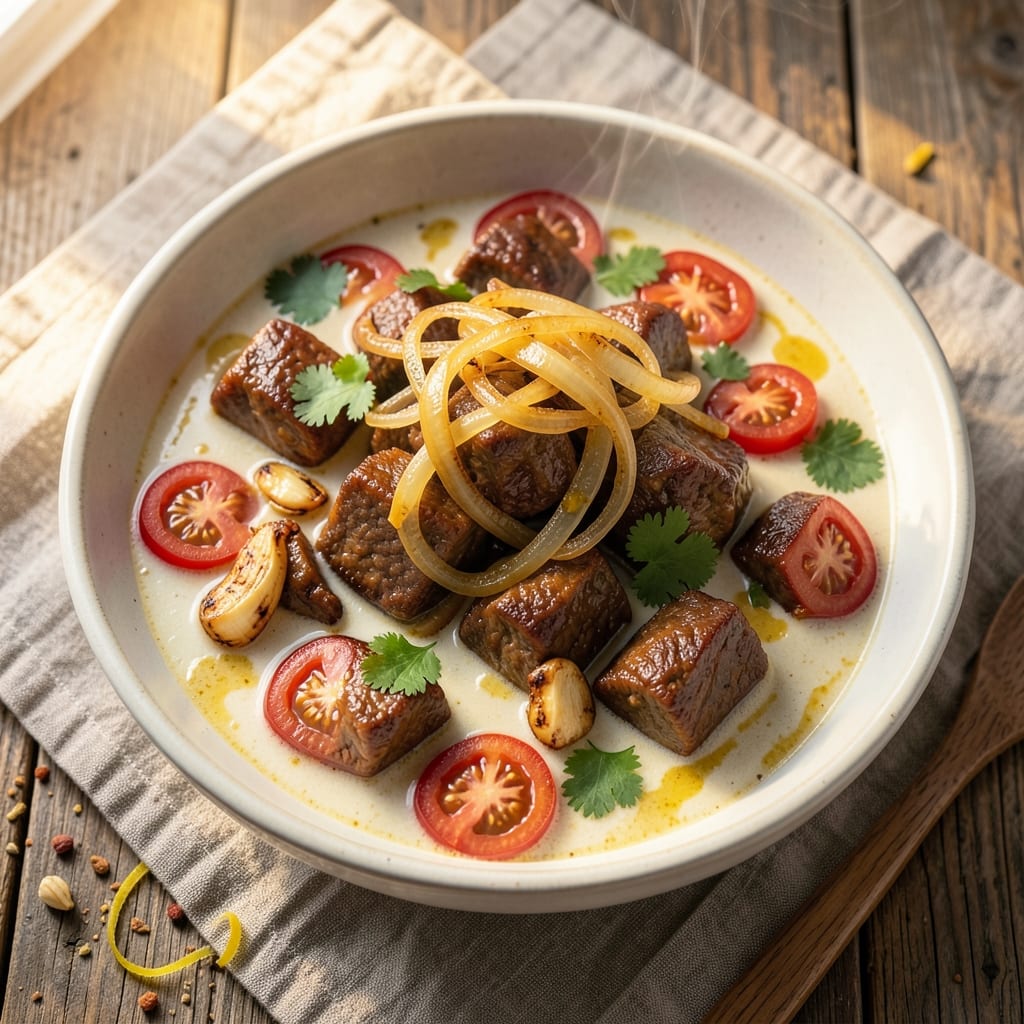
This Asian beef curry recipe transforms tough cuts into melt-in-your-mouth tenderness with fragrant coconut and aromatic spices. The secret lies in slow simmering—allowing flavors to meld while the beef becomes fork-tender. I developed this version after years of testing, balancing sweet, spicy, and umami notes for a dish that feels both comforting and sophisticated.
Unlike quick stir-fries, this curry builds depth through layered techniques: browning the beef for rich caramelization, blooming whole spices for complex aroma, and reducing coconut milk into a velvety sauce. The result is a one-pot wonder that delivers restaurant-quality results without hours of prep. Perfect for weeknight dinners or weekend feasts, this curry scales beautifully for crowds.
By the final spoonful, you’ll taste the harmony of ginger’s zing, garlic’s warmth, and coconut’s creaminess enveloping tender beef chunks. The sauce clings perfectly to each bite, offering just the right balance of heat and sweetness. Serve over steamed jasmine rice or with warm naan to soak up every last drop of this fragrant masterpiece.
This method preserves authenticity while making it accessible—no special equipment required. The key is patience: letting the spices toast, the beef tenderize, and the flavors develop. Trust the process, and you’ll have a curry that rivals your favorite takeout spot, with the satisfaction of making it from scratch.
Ingredients for asian beef curry
Fragrant spices, tender beef, and velvety coconut—this curry comes together with pantry staples and a few specialty finds.
| Ingredient | Amount | Notes |
|---|---|---|
| Chuck Roast 🥩 | 1 ½ lb | Cut into 1-inch cubes for even cooking |
| Yellow Onion 🧅 | 1 whole | Sliced into half-moons, about 1.5 cups |
| Garlic Cloves 🧄 | 6 cloves | Minced, for aromatic base |
| Fresh Ginger 🌿 | ½ cup | Finely grated, about 2-inch piece |
| Coconut Milk 🥥 | 1 can | Full-fat, 13.5 oz can (400 ml) |
| Tomato Paste 🍅 | ¼ cup | Smooth, not chunky |
| Green Curry Paste 🌶️ | 2 tbsp | Store-bought or homemade, for authentic flavor |
| Fish Sauce 🥫 | 1 tbsp | Red Boat preferred for quality |
| Brown Sugar 🍯 | 2 tbsp | Light or dark, for balancing sweetness |
| Jasmine Rice 🍚 | 1 ½ cups | Uncooked, for serving |
| Vegetable Oil 🫒 | 2 tbsp | For searing beef |
| Salt 🧂 | 1 ½ tsp | Diamond Crystal kosher salt |
| Black Pepper 🌶️ | ½ tsp | Freshly ground for best flavor |
| Cilantro Leaves 🌿 | ¼ cup | Chopped, for garnish |
| Lime Wedges 🍋 | 2 whole | For serving, fresh squeezed |
The chuck roast is your secret weapon here—it's budget-friendly and turns melt-in-your-mouth tender when slow-cooked. Look for well-marbled cuts at Whole Foods or your local butcher shop; the extra fat keeps the meat juicy. If you're short on time, pre-cubed beef from the grocery store's freezer section works just as well. For the coconut milk, full-fat is non-negotiable—it adds richness that lighter versions can't match. I always grab Thai Kitchen brand from the international aisle, but any quality can will do. The green curry paste is where the magic happens—Maesri or Thai Kitchen are my go-tos, but check the ingredients for no added MSG if you're sensitive.
No green curry paste? Mix 1 tbsp each of red curry paste, lemongrass paste, and galangal for a close substitute. Running low on fish sauce? Soy sauce at half the amount works in a pinch, though it won't be quite as umami-rich. The tomato paste can be swapped for crushed tomatoes at double the amount, but you'll lose some of that concentrated sweetness. Fresh ginger is ideal, but ground ginger at half the amount will get you through. For the cilantro, dried works in a bind (use one-third the amount), but fresh is always better—just make sure to wash it well. The lime wedges should be bright green and firm; Mexican limes from the grocery store's produce section are perfect for this.
This curry tastes even better the next day—make extra and freeze portions for up to 3 months. Store leftovers in airtight containers with a thin layer of coconut milk on top to preserve moisture. The rice reheats beautifully in a steamer basket over simmering water, and the curry can be gently warmed on the stove with a splash of water or coconut milk. For meal prep, portion the curry into containers with rice so everything stays fresh. The lime wedges keep for 5 days in the fridge, but add them fresh when serving for that bright zing.
Why You'll Love This Recipe
- One-Pot Magic: I swear by this recipe when I’m too tired to wash extra bowls—just sear the chuck roast, toss in the onions and ginger, then let the coconut milk do its creamy work. No straining, no fuss, just rich, tender beef melting into the sauce.
- Deep, Layered Taste: That first bite? The garlic and ginger hit like a warm hug, then the coconut milk smooths it all out with this velvety, slightly sweet depth. Honestly, the chuck roast gets so tender it falls apart, and that’s when you know you’ve won.
- Meal Prep MVP: Between us, this curry tastes even better the next day—perfect for lunches or when you need to feed a crowd without stress. I double the batch, freeze half, and boom, instant weeknight dinner when I’m too wiped to think.
- Budget-Friendly Luxury: Chuck roast is cheap, coconut milk stretches the flavors, and you’re left with leftovers that feel gourmet. I’ll be real: my grocery bill thanks me, but my family never notices the price tag—just the second helpings.
Step-by-step instructions for Asian beef curry
Here's how to create melt-in-your-mouth tender beef in a rich, fragrant coconut curry.
Prep and Sear the Chuck Roast
Cut the 1.5 lb chuck roast into 1-inch cubes for even cooking. Pat them dry with paper towels—this ensures a proper sear. Heat 2 tablespoons vegetable oil in a large Dutch oven over medium-high heat until shimmering.
Working in batches to avoid crowding, add the beef cubes and sear for 3-4 minutes per side until they develop a deep golden-brown crust. You want that caramelization to form before the aromatics go in—it builds incredible depth of flavor. Transfer the seared beef to a plate and set aside.
Build the Aromatic Base
In the same Dutch oven, reduce heat to medium and add the 1 whole yellow onion (sliced into half-moons) and 6 cloves garlic (minced). Cook for 4-5 minutes until the onions soften and turn translucent, then add the 0.5 cup fresh ginger (finely grated) and stir for 1 minute until fragrant.
Here's where the magic happens: Add 2 tablespoons green curry paste and cook for 1-2 minutes until it darkens slightly and releases its oils. This step develops the curry's signature complexity. If you notice the paste burning, reduce heat briefly—you want to toast it, not char it.
Simmer the Curry Sauce
Stir in the 0.25 cup tomato paste, 1 tablespoon fish sauce, and 2 tablespoons brown sugar, cooking for 2 minutes until the tomato paste darkens slightly. Pour in the 1 can coconut milk and scrape up any browned bits from the bottom of the pot—this is called deglazing, and it captures all the flavor you've built.
Return the seared beef to the pot, add 1.5 teaspoons salt and 0.5 teaspoon black pepper, then bring to a gentle simmer. Cover and cook for 1 hour 15 minutes on low heat, stirring occasionally, until the beef is fork-tender. The sauce should thicken slightly and coat the beef beautifully.
Finish and Serve
Once the beef is tender, remove the pot from heat and let it sit for 5 minutes to allow the flavors to meld. Stir in the 0.25 cup chopped cilantro leaves just before serving. The curry should have a rich, velvety texture with tender beef swimming in a fragrant coconut sauce.
Serve the curry hot over 1.5 cups cooked jasmine rice, garnished with 2 lime wedges. The acidity from the lime will brighten the rich flavors and cut through the creaminess of the coconut milk. Each bite should deliver perfectly tender beef with layers of sweet, spicy, and umami flavors.
Pro Tips For Making Asian Beef Curry
- SEAR THE CHUCK ROAST: Chuck roast needs a good crust to stay tender, so don’t skip the sear—get your pan smoking hot and let it brown for 5-6 minutes per side before pulling it out. I used to rush this, and the meat ended up dry; patience here makes all the difference.
- GINGER: GRATE, DON’T CHOP: Fresh ginger loses its punch when chopped, so grab that microplane and zest it right into the pan—about 2 tablespoons of finely grated ginger. Sounds weird, but it works: the surface area releases flavor instantly, and you won’t taste those annoying fibers.
- LOW AND SLOW FOR TENDERNESS: After browning, drop the heat to medium-low and let the chuck roast simmer in the coconut milk for at least 2 hours—no, it won’t fall apart faster. I learned this the hard way: high heat turns it tough; slow cooking melts the collagen into rich, silky texture.
- SAVE TIME WITH ONION LAYERS: Instead of dicing onions, slice them into thin strips and layer them like lasagna in the bottom of the pot before adding the meat. They soften faster and caramelize without burning, cutting prep by half—your future self will thank you.
Pro cooking tips for great asian beef curry
Sear Like a Pro
That golden-brown crust on your beef isn't just for looks—it's where the Maillard reaction happens, creating deep, complex flavors. Use a heavy-bottomed Dutch oven like Lodge's Enamel Cast Iron for even heat distribution. Sear in small batches to avoid steaming the beef, which keeps it juicy. I like to work with 1-inch cubes—they cook evenly and develop that perfect crust. 🔥
Bloom the Spices
Don't just toss in your curry paste—toast it first for 1-2 minutes until fragrant. This releases essential oils that build flavor depth. If your paste starts to burn, reduce heat immediately. For extra aroma, add whole spices like star anise or cinnamon sticks (remove before serving) when you add the coconut milk. The result? A sauce that sings with complexity.
Low-and-Slow Simmer
After adding the coconut milk, cover the pot and simmer on low heat for 1 hour 15 minutes. This slow cooking breaks down collagen in the beef, making it fork-tender. Stir occasionally to prevent sticking, but avoid aggressive stirring—you want the sauce to develop naturally. A meat thermometer ensures perfect doneness at 203°F internal temperature.
Deglaze for Flavor
After searing the beef, scrape up those browned bits from the bottom of the pot when adding coconut milk. These bits are packed with flavor—this technique is called deglazing. Use a wooden spoon to get every last bit, then stir in the tomato paste and fish sauce. This step transforms a good curry into an exceptional one.
Rest Before Serving
Let the curry rest for 5 minutes off the heat before serving. This allows the sauce to thicken slightly and the flavors to meld. Stir in fresh cilantro just before serving—it adds brightness and a pop of color. For extra richness, drizzle with a little toasted coconut oil or serve with a side of crispy fried shallots.
Adjust for Heat
Taste your curry before serving and adjust the balance. Too spicy? Add a spoonful of coconut milk or a squeeze of lime. Need more depth? A pinch of salt or a splash of fish sauce works wonders. For sweetness, stir in 1 more teaspoon of brown sugar. The goal is harmony—each bite should sing with balanced flavors. 💫
Nutrition facts
Frequently asked questions
Can I use ground beef instead of chuck roast?
Ground beef works in a pinch, but chuck roast delivers that signature melt-in-your-mouth tenderness. If you must use ground beef, brown it thoroughly first and reduce the simmering time to 45-50 minutes—it cooks faster. For best results, try 80/20 ground chuck to maintain richness.
How can I make this curry less spicy?
Start by reducing the green curry paste to 1 tablespoon instead of 2. If your paste is particularly fiery, add 1 extra tablespoon of coconut milk or 1/2 cup more when simmering. For extra cooling, stir in 1 teaspoon of honey or lime juice at the end. Taste as you go!
What's the best way to reheat leftover curry?
Reheat gently on the stove over low heat with 1-2 tablespoons of water or coconut milk to prevent drying. Cover and simmer for 5-7 minutes, stirring occasionally. For microwave reheating, use 50% power for 1-2 minutes with a damp paper towel covering the dish. Avoid high heat—it can make the sauce separate.
Can I substitute coconut milk with something else?
For a dairy-free option, try cashew cream (blend soaked cashews with water) or full-fat Greek yogurt (thinned with broth). For a lighter version, use half coconut milk and half chicken broth. Remember, coconut milk's richness is key to authentic flavor—substitutes will change the texture and depth.
How do I know when the beef is fully tender?
Use the fork test: Pierce a beef cube—if it slides in easily with no resistance, it's done. For extra accuracy, use a meat thermometer (aim for 203°F internal temperature). The sauce should coat the back of a spoon smoothly, not be watery. If it's still tough after 1 hour 15 minutes, cover and cook 15 more minutes.