
Main Courses
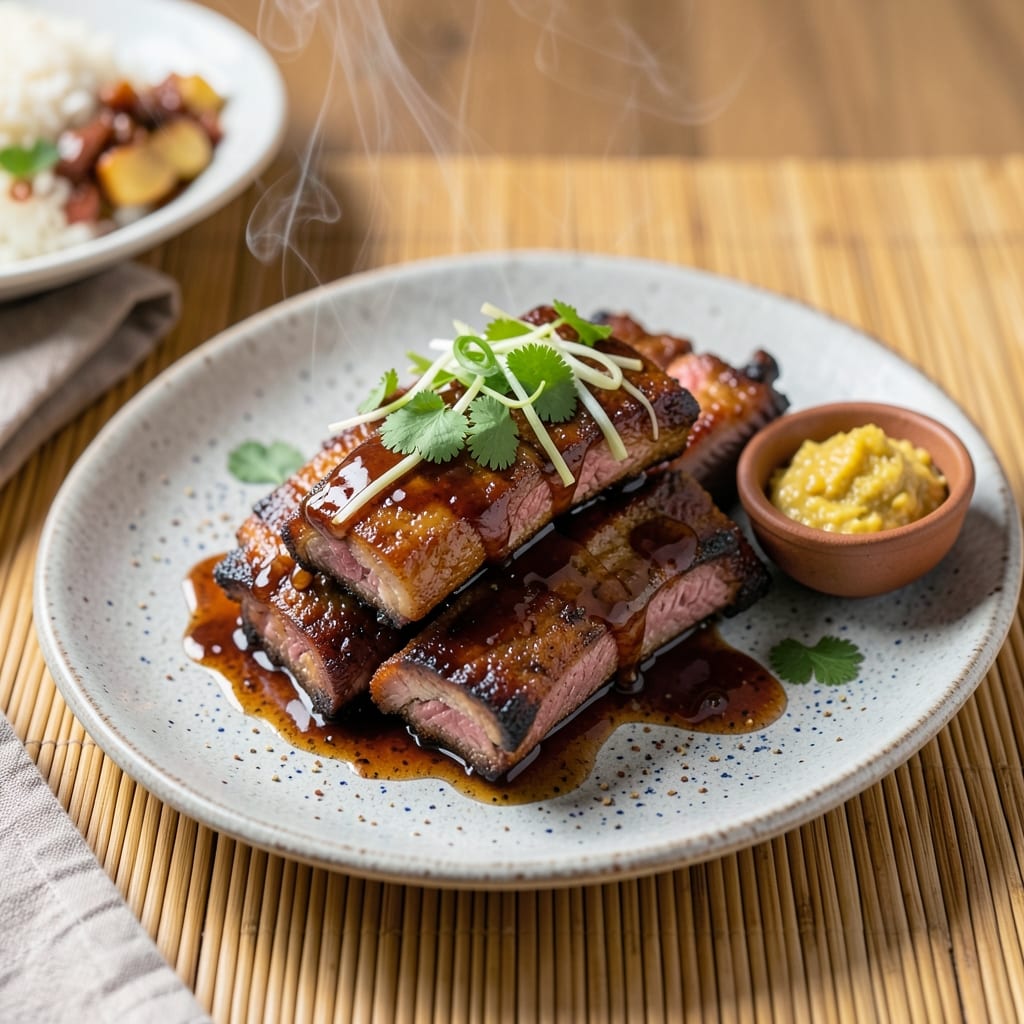
This Asian style beef ribs recipe delivers perfectly caramelized, sticky-sweet ribs with a five-spice glaze that balances smoky, spicy, and aromatic notes. The secret lies in marinating the ribs overnight and basting them with a glaze that develops deep caramelized richness during cooking. I've perfected this method after years of experimenting with different Asian-inspired techniques, and it consistently delivers restaurant-quality results at home.
The process begins with a marinade that tenderizes the meat while infusing it with complex flavors—ginger, garlic, soy sauce, and a touch of honey create the perfect balance. After marinating, the ribs are slow-cooked until they're fork-tender, then glazed with a five-spice-infused sauce that caramelizes into a sticky, glossy finish. This method ensures the meat stays moist while developing that coveted bark on the outside.
What you'll end up with is ribs that are tender enough to fall apart yet hold their shape beautifully, coated in a glossy glaze that's both sweet and savory. The aroma alone will have everyone gathering around your table, and each bite delivers layers of flavor—smoky from the cooking process, spicy from the five-spice blend, and perfectly balanced with sweet and umami notes.
Serve these ribs with steamed jasmine rice and quick-pickled vegetables for a complete meal that's as visually appealing as it is delicious. The leftovers reheat beautifully, making this recipe perfect for meal prep or entertaining. Let's get started on creating these impressive, flavor-packed ribs that will impress even the most discerning guests.
Ingredients for asian style beef ribs
Four pounds of meaty ribs plus aromatic spices and sticky glaze ingredients create restaurant-worthy Asian-inspired flavor.
| Ingredient | Amount | Notes |
|---|---|---|
| Beef Ribs 🥩 | 4 lb | Bone-in, meaty cuts preferred |
| Soy Sauce 🥢 | ½ cup | Low-sodium preferred |
| Honey 🍯 | ⅓ cup | Wildflower for depth |
| Fresh Ginger 🧄 | 2 tbsp | Grate finely for aromatic punch |
| Garlic Cloves 🧄 | 6 cloves | Minced for even distribution |
| Five-Spice Powder 🌶️ | 2 tbsp | Authentic blend for complex aroma |
| Sesame Oil 🫒 | 1 tbsp | Toasted for nutty richness |
| Brown Sugar 🍚 | ¼ cup | Packed for caramelization |
| Red Wine Vinegar 🍷 | 2 tbsp | Balances sweetness |
| Cornstarch 🌾 | 2 tbsp | For glaze thickening |
| Water 💧 | ½ cup | Room temperature |
| Salt 🧂 | 2 tsp | Diamond Crystal preferred |
| Black Peppercorns 🌶️ | 1 tsp | Freshly cracked |
| Jasmine Rice 🍚 | 2 cups | Uncooked, long-grain |
The ribs should be meaty and well-marbled—Costco's beef short ribs are my go-to for consistent quality, but any bone-in cut works. Fresh ginger and garlic are non-negotiable here; Trader Joe's carries excellent pre-grated ginger if you're short on time. For the five-spice powder, Penzeys or Spicewalla blends offer authentic depth, though most Asian markets carry reliable options. The honey should be wildflower or clover for its floral notes, which complement the smoky ribs beautifully.
No fresh ginger? Substitute 1 tbsp ginger paste—just reduce the water in the marinade slightly. Running low on sesame oil? Toasted peanut oil works in a pinch, though it lacks that distinctive nutty aroma. The cornstarch can be swapped for arrowroot powder at the same ratio. For a deeper umami kick, add 1 tbsp fish sauce to the marinade, though omit if avoiding seafood. The brown sugar can be replaced with coconut sugar for a slightly caramelized flavor profile.
Marinate the ribs overnight for maximum tenderness—use a resealable bag to save space. The glaze keeps well for 5 days in the fridge, though it thickens slightly; simply whisk with water to restore consistency. For meal prep, store ribs and glaze separately and reheat in a 350°F oven for 15-20 minutes until heated through. The rice can be prepped ahead and reheated with a splash of water.
Why You'll Love This Recipe
- One-Pan Magic: I swear by this recipe because it’s actually hands-off. Toss the ribs in a mix of soy sauce, honey, and minced ginger—no basting, no flipping—just let the oven work its magic while you sip tea or scroll through your phone.
- Sweet-Savory Balance: That honey-soy glaze? It’s the kind of flavor that makes you pause mid-bite. The garlic cloves caramelize into little bursts of heat, while the ginger adds this bright, zesty kick that cuts through the richness. (Yes, even my picky husband asks for seconds.)
- Leftovers That Don’t Suck: Honestly, I make a double batch because these ribs reheat like a dream. Cold or warm, they’re perfect for lunchboxes, quick dinners, or even tossed into fried rice the next day. No sad, dry meat here—just tender, flavorful bites.
- Weeknight Win: Between us, this is my go-to when I’m too tired to fuss. The ingredients are cheap (soy sauce, honey, and ribs? Check), and the prep takes less time than waiting for takeout. Plus, it’s hearty enough to feed a crowd but simple enough for two.
Step-by-step instructions for Asian style beef ribs
Master this technique and you'll achieve perfectly caramelized ribs with a glaze that balances sweet, savory, and aromatic complexity.
🔥 Step 1: Prepare the Ribs and Build the Glaze Base
Begin by trimming any excess fat from the 4 lb beef ribs, leaving a thin layer for flavor and moisture. In a large bowl, combine the 0.5 cup soy sauce, 0.33 cup honey, 2 tbsp minced fresh ginger, 6 cloves minced garlic, 2 tbsp five-spice powder, 1 tbsp toasted sesame oil, 0.25 cup packed brown sugar, and 2 tbsp red wine vinegar. Whisk vigorously until the brown sugar dissolves completely and the mixture becomes syrupy.
This glaze foundation is where all the magic happens—the five-spice powder adds depth, while the vinegar cuts through the sweetness. Let the mixture sit at room temperature for 15 minutes to allow the spices to bloom and the flavors to meld. The aroma should be rich and complex, with notes of cinnamon, star anise, and citrus from the vinegar.
🍳 Step 2: Sear the Ribs for Maximum Flavor
Preheat your oven to 300°F. In a large oven-safe Dutch oven or heavy pot, heat the ribs over medium-high heat until they develop a deep golden-brown crust on all sides, about 5-7 minutes per side. This searing step creates the Maillard reaction that forms the flavor base for your ribs.
Once properly seared, remove the ribs and set them aside. Carefully pour off all but 2 tablespoons of the rendered fat from the pot, leaving enough to prevent the glaze from burning. Here's the thing—this residual fat acts as a protective layer between the hot pot and your delicate glaze.
🥘 Step 3: Simmer the Glaze Until Thick and Sticky
Return the Dutch oven to medium heat and add the prepared glaze mixture. Stir constantly as it comes to a gentle simmer, allowing it to reduce by about 40%—this should take approximately 10-12 minutes. The glaze should coat the back of a spoon and form soft peaks when lifted.
During this reduction, the cornstarch will begin to thicken the glaze naturally. If you find it reducing too quickly, add the 0.5 cup room temperature water 1 tablespoon at a time until you reach the desired consistency. The perfect glaze should be thick enough to coat the ribs completely but still maintain a glossy sheen.
⏰ Step 4: Braise the Ribs to Tender Perfection
Return the seared ribs to the Dutch oven and spoon the thickened glaze generously over each piece. Cover tightly with a lid or foil and transfer to the preheated 300°F oven. Braise for 2 to 2.5 hours, turning the ribs occasionally to ensure even coating and caramelization.
About 45 minutes into cooking, check the internal temperature using a meat thermometer. The ribs are done when they reach 195-203°F and the meat pulls away from the bone with slight resistance. The glaze should have caramelized into a sticky, glossy coating with deep amber spots—this is your visual cue for perfect doneness.
🍽️ Step 5: Rest and Serve with Jasmine Rice
Remove the ribs from the oven and let them rest for 10-15 minutes before serving. This resting period allows the juices to redistribute throughout the meat, ensuring each bite is tender and flavorful. While the ribs rest, prepare the 2 cups jasmine rice according to package instructions.
To serve, arrange the ribs on a platter and drizzle any remaining glaze from the Dutch oven over the top. The contrast between the tender, fall-off-the-bone meat and the complex, caramelized glaze creates an unforgettable dining experience. Each bite should deliver perfect harmony of sweet, salty, and aromatic spices with the natural richness of the beef.
Pro Tips For Making Asian Style Beef Ribs
- BLISTER THE GARLIC FIRST: Toss whole garlic cloves in a dry skillet over medium-high heat for 30 seconds until they sizzle and smell nutty. This deepens their flavor way more than raw minced garlic ever will—especially when paired with honey and soy sauce. ---
- CUT RIB TIPS INTO STRIPS: Skip the whole bone-in ribs unless you’re aiming for a restaurant-level presentation. Trim the meat off the bone and slice it into 1-inch strips—it cooks faster, absorbs the sauce better, and lets you serve it over rice without forks. ---
- BALANCE THE SOY HONEY RATIO: For every 2 tablespoons of soy sauce, use 1 tablespoon of honey—no more. Too much honey makes the ribs cloyingly sweet; too little soy leaves them flat. Taste the sauce before adding ribs, and adjust while it simmers. ---
- SEAR IN BATCHES: Don’t crowd the pan. Cook the beef strips in 2-3 batches over high heat until they’re deeply browned—this builds flavor that just won’t happen if you’re shuffling them around. A minute per side max, then set aside.
Troubleshooting this dish
Glaze Too Thin?
If your glaze isn't thickening enough during reduction, you're likely reducing too quickly. Lower the heat to medium-low and stir constantly to prevent burning. For extra insurance, whisk in 1 tablespoon cornstarch mixed with 1 tablespoon cold water at a time until you reach the desired consistency. The glaze should coat the back of a spoon and form soft peaks when lifted—this is your perfect texture. 🥄
Ribs Not Tender Enough
Undercooked ribs are often the result of insufficient braising time or incorrect oven temperature. Make sure your oven is calibrated (use an oven thermometer) and maintain 300°F consistently. If ribs still feel tough after 2.5 hours, extend the cook time by 30 minutes and check the internal temperature—195-203°F is ideal. For extra tenderness, add ½ cup beef broth to the Dutch oven during braising. 💪
Glaze Too Sweet
The five-spice glaze can become overwhelmingly sweet if the honey and brown sugar dominate. Balance it by adding 1 extra tablespoon red wine vinegar or 1 teaspoon sesame oil to the glaze during reduction. For a more savory profile, stir in 1 tablespoon soy sauce or a pinch of black peppercorns while the glaze simmers. Taste as you go—adjust gradually to avoid overpowering the natural beef flavor. 🌶️
Ribs Sticking to the Pan
Ribs sticking during searing is usually caused by insufficient fat in the pan. After searing, leave 2 tablespoons of rendered fat in the Dutch oven before adding the glaze. For extra protection, lightly oil the ribs with sesame oil before searing. If they still stick, reduce the heat slightly and give them more time to develop that golden crust—patience pays off here! 🔥
Glaze Burning or Scorching
Burnt glaze happens when residual fat isn't properly managed. Always pour off all but 2 tablespoons of fat after searing, leaving just enough to prevent burning. If the glaze starts to darken too quickly, immediately remove the pot from heat and stir in 1 tablespoon water to cool it down. Keep the heat at medium-low during reduction to maintain control. 🌡️
Ribs Too Dry After Cooking
Overcooked ribs lose moisture because they weren't properly rested or the oven temperature fluctuated. After braising, always let ribs rest for 10-15 minutes before serving. If they still seem dry, reheat them in the oven at 300°F with 2 tablespoons beef broth for 10 minutes to restore moisture. Avoid cutting into them too soon—they'll release precious juices! 💧
Nutrition facts
Frequently asked questions
Can I use pork ribs instead of beef ribs?
While pork ribs will work, the cooking time and tenderness will differ. Pork ribs typically cook faster and may become too tender if braised for the full 2-2.5 hours. Reduce the oven time to 1.5-2 hours and check for doneness at 195°F internal temperature. The glaze will still caramelize beautifully, but the meat will be more delicate.
How do I make this recipe in a slow cooker?
Transfer the seared ribs and glaze to a slow cooker and cook on LOW for 6-7 hours or HIGH for 4-5 hours. The ribs will be tender but may lack the deep caramelization. For extra richness, broil for 2-3 minutes at the end to develop a glossy finish. The slow cooker method is perfect for hands-off prep!
What's the best way to store leftovers?
Store ribs and glaze separately in airtight containers for up to 4 days. Reheat ribs in a 300°F oven for 15-20 minutes with a splash of beef broth to restore moisture. The glaze can be reheated separately in a saucepan over low heat, stirring occasionally until warmed through. Leftovers reheat best when covered with foil to prevent drying.
Can I grill these ribs instead of oven-braising?
After searing, transfer ribs to a grill and cook indirectly over medium heat for 2-2.5 hours, basting with glaze every 30 minutes. Increase heat to high for the last 5 minutes to caramelize the glaze. Use a spray bottle with water to maintain moisture if needed. The smoky flavor from grilling pairs wonderfully with the five-spice glaze.
What sides pair best with these ribs?
Steamed jasmine rice and quick-pickled vegetables are classic pairings, but you can also try sticky rice with coconut milk, sesame noodles, or steamed bok choy. For a heartier meal, serve with mashed sweet potatoes or roasted Brussels sprouts**. The acidity from pickled veggies cuts through the richness of the ribs beautifully.