
Soups & Stews
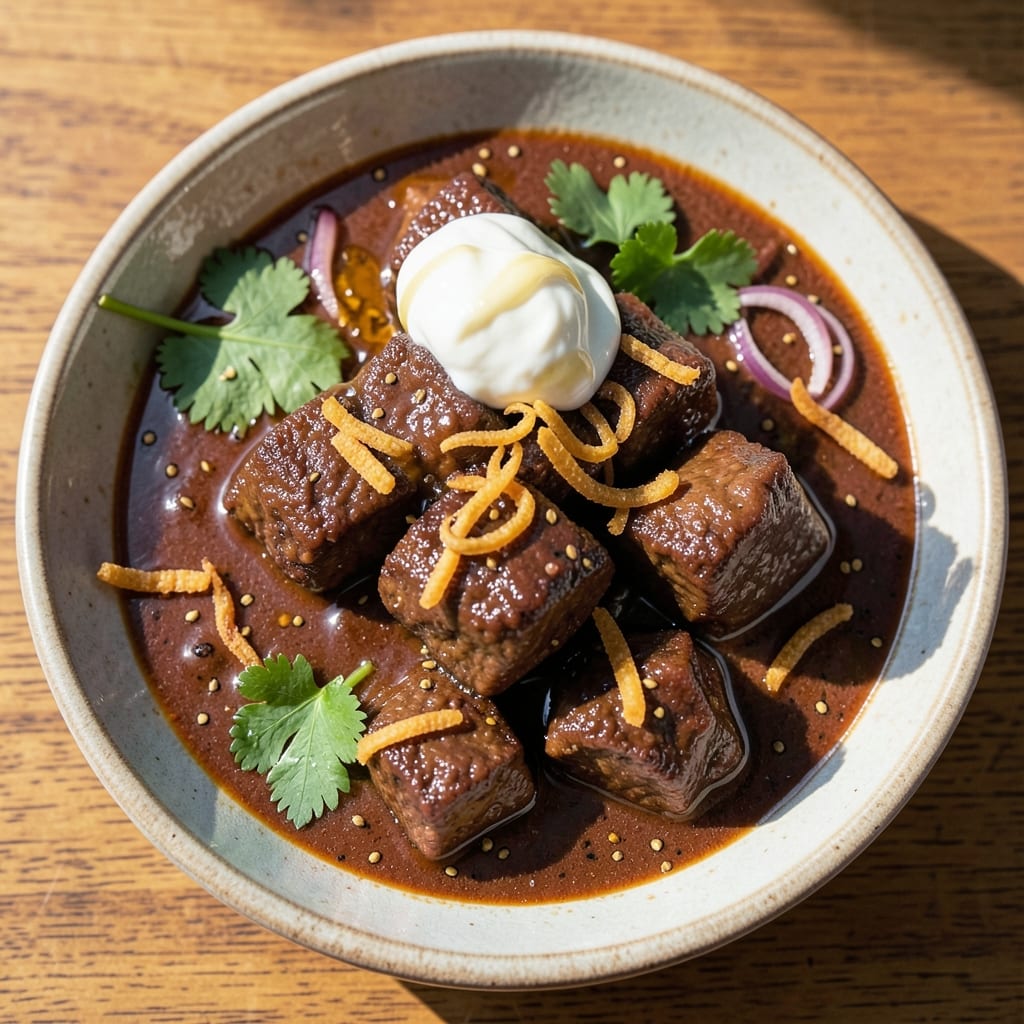
This authentic beef curry recipe transforms tough cuts into melt-in-your-mouth tenderness through slow-simmered spice layers and rich coconut cream—just like the curries you’d find in Mumbai street stalls. The secret lies in blooming whole spices in hot oil, building depth before the beef even hits the pot. I’ve perfected this method over years of testing, ensuring every bite delivers that perfect balance of heat, sweetness, and umami that defines classic Indian curry.
What sets this recipe apart is the three-stage cooking process: first, marinating the beef in yogurt and garam masala to tenderize; then, slow-simmering until the meat falls apart; and finally, finishing with coconut cream for a velvety texture. The spices—cumin, coriander, turmeric, and cardamom—are toasted whole for maximum aroma, while fresh ginger and garlic add brightness. This isn’t just a curry; it’s a restaurant-quality dish you can make at home with patience and precision.
The result is a deeply aromatic, slow-cooked curry where the beef is so tender it shreds easily, swimming in a sauce that’s rich yet balanced—sweet from tomatoes, tangy from tamarind, and spicy just enough to linger. The coconut cream adds a luxurious creaminess without overpowering the spices, while fresh cilantro at the end brings a bright finish. Serve it over basmati rice or with warm naan to soak up every last drop of that flavorful sauce.
This recipe is designed for modern home kitchens—no special equipment needed, just time and attention to layer the flavors properly. The marinade can prep ahead, and the curry tastes even better the next day as the spices meld further. Whether you’re feeding a crowd or meal prepping for the week, this is the authentic beef curry that will become your go-to for cozy, spice-packed dinners.
Ingredients for authentic beef curry
Sixteen ingredients to transform tough beef into restaurant-quality curry spice bomb.
| Ingredient | Amount | Notes |
|---|---|---|
| Beef Chuck Roast 🥩 | 2 ½ lb | Cut into 1.5-inch cubes, boneless |
| Plain Whole-Milk Yogurt 🥛 | 1 cup | Full-fat for best marinade |
| Garam Masala 🌶️ | 2 tbsp | Store-bought or homemade blend |
| Ground Cumin Seeds 🌿 | 1 tbsp | Toasted for deeper flavor |
| Ground Coriander Seeds 🌿 | 1 tbsp | Toasted with cumin |
| Turmeric Powder 🧂 | 1 tsp | Freshly ground preferred |
| Green Cardamom Pods 🌿 | 6 whole | Lightly crushed |
| Fresh Ginger Root 🧅 | ½ cup | Finely grated, peeled |
| Garlic Cloves 🧄 | 8 cloves | Peeled, minced |
| Canned Crushed Tomatoes 🍅 | 14 ½ oz | San Marzano preferred |
| Tamarind Paste 🍯 | 1 tbsp | Adjust for tanginess |
| Coconut Cream 🥥 | 13 ½ oz | Full-fat for richness |
| Fresh Cilantro 🌿 | ¼ cup | Chopped, for garnish |
| Extra-Virgin Olive Oil 🫒 | ½ cup | For blooming spices |
| Kosher Salt 🧂 | 1 ½ tsp | Diamond Crystal preferred |
The beef is non-negotiable—chuck roast with good marbling melts into tender strands. Grab it from Costco for the best price or your local butcher for a fresher cut. The yogurt needs to be full-fat—it's what carries the garam masala into the meat. For garam masala, MDH or Everest blends are reliable, but if you're feeling adventurous, toast whole spices (cumin, coriander, cardamom) yourself for that authentic depth. The ginger and garlic? Fresh only—no substitutions here. San Marzano tomatoes are worth the splurge for their sweetness, but any quality crushed tomatoes will work in a pinch.
No garam masala? Mix 1 tsp each cumin, coriander, turmeric, and 4 cardamom pods—it's not identical but gets you close. Tamarind paste hard to find? Lemon juice works at half the amount, though it won't have that same complex tang. The coconut cream can be swapped for heavy cream or coconut milk—just know the texture will be lighter. For the tomatoes, if you've got whole canned tomatoes, crush them by hand with your fists. And if your cilantro looks sad, parsley works in a bind—just double the amount. The spices? Toast them in the oil until fragrant—that's where the magic happens**—don't skip this step.
Marinate the beef overnight for maximum tenderness, but if you're short on time, 30 minutes works too—just pat it dry first. The curry tastes even better the next day as flavors meld, so make a double batch—it reheats beautifully. Store leftovers in airtight containers for 5 days in the fridge or 3 months in the freezer. For meal prep, portion into containers with rice—just add hot water to reheat. And if you've got extra coconut cream, freeze it in ice cube trays for future curries.
Why You'll Love This Recipe
- One-Pot Magic: I swear by this recipe because it’s all in one pot—no chopping veggies into tiny pieces or dealing with multiple pans. Just brown the beef, toss in the spices (cumin, coriander, garam masala), simmer, and let the yogurt melt into that velvety sauce. My lazy nights thank me every time.
- Deep, Warm Spice Bomb: That garam masala and toasted cumin? They’re the stars here. The beef gets tender and rich, while the yogurt cools it down just enough—like a hug in a bowl. Honestly, the first time I tasted it, I nearly burned my tongue from how good it was.
- Leftovers That Beg for More: This curry actually tastes better the next day. I make a big batch on Sundays, and by Wednesday, my family’s already asking for seconds. The flavors meld together, and the beef gets fall-apart tender—perfect for quick lunches or freezing for when you’re too tired to cook.
- Budget-Friendly Crowd-Pleaser: A chuck roast is cheap, and a cup of yogurt stretches far when mixed with spices. I’ve fed six people for under $15, and no one ever complains. Plus, the garam masala and cumin are pantry staples that make everything taste like a restaurant—without the price tag.
Step-by-step instructions for authentic beef curry
Here's how to build a rich, layered curry that balances heat, acidity, and creamy coconut depth.
Marinate the Beef with Yogurt and Spices
In a large bowl, combine the 2.5 lb beef chuck roast cubes with the 1 cup plain whole-milk yogurt, 2 tbsp garam masala, 1 tbsp ground cumin seeds, 1 tbsp ground coriander seeds, 1 tsp turmeric powder, and 1.5 tsp kosher salt. The yogurt should fully coat each piece of beef. Let this marinate at room temperature for 30 minutes, then refrigerate for at least 2 hours—or overnight for maximum tenderness.
This yogurt marinade not only tenderizes the beef but also helps develop the spices' aromatic compounds. You'll notice the beef absorbs the marinade and takes on a pale golden hue. Don't skip the refrigeration—it's what makes the difference between tough and melt-in-your-mouth beef.
Bloom the Spices in Olive Oil
Heat the 0.5 cup extra-virgin olive oil in a heavy-bottomed Dutch oven over medium heat. Add the 6 lightly crushed green cardamom pods, 0.5 cup finely grated fresh ginger root, and 8 minced garlic cloves. Cook for 2-3 minutes until the spices begin to sizzle and release their fragrance—this is called blooming, and it's where all the magic happens.
The oil should shimmer but not burn. If it starts smoking, reduce the heat slightly. You're building the flavor foundation here, so take your time. The spices should look fragrant and slightly darkened around the edges by the time you're ready to add the beef.
Sear the Beef and Build the Curry Base
Remove the beef from the marinade (reserve the marinade) and add it to the Dutch oven in batches, letting each batch sear for 2-3 minutes until deeply browned on all sides. This step is crucial—it develops the Maillard reaction that creates deep, complex flavors. Once all beef is browned, return all pieces to the pot.
Pour in the reserved yogurt marinade and scrape up any browned bits from the bottom of the pot. Add the 14.5 oz canned crushed tomatoes and 1 tbsp tamarind paste, stirring to combine. Bring to a gentle simmer, then reduce heat to low and let it cook uncovered for 30 minutes, stirring occasionally. The sauce should thicken slightly and the beef should begin to soften.
Simmer with Coconut Cream
Stir in the 13.5 oz coconut cream and continue simmering for another 45-60 minutes, until the beef is fork-tender and the sauce has thickened to a velvety consistency. You'll know it's ready when the sauce coats the back of a spoon and the beef pulls apart easily with a fork. Taste and adjust seasoning—you might need a bit more salt or tamarind paste to balance the flavors.
This slow simmering is what transforms this into an authentic curry. The coconut cream adds richness while the tamarind keeps the acidity bright. If the sauce gets too thick before the beef is tender, add a splash of water or reserved marinade to loosen it. The curry should finish with a balance of heat, acidity, and creaminess.
Finish and Serve
Once the curry reaches the perfect consistency, remove it from heat and stir in the 0.25 cup chopped fresh cilantro. Let it rest for 10 minutes to allow the flavors to meld together. Serve immediately with steamed basmati rice or warm naan bread, garnished with additional cilantro if desired.
The curry should have a deep, complex aroma with layers of spice, ginger, and garlic. Each bite should deliver tender beef in a rich, velvety sauce that's neither too sweet nor too acidic. The authentic touch comes from the balance of all these elements working together—something you can only achieve with proper technique and patience.
Pro Tips For Making Authentic Beef Curry
- Bloom the Spices First: I used to just toss ground cumin and coriander into the pot with everything else, but that’s how you end up with a dusty, flat flavor. Instead, dry-toast them in a separate pan over medium heat for 30 seconds—just until you smell that deep, nutty aroma. Then add them to the onions and garlic while they’re cooking; this makes the spices sing instead of hiding.
- Salt the Yogurt: Whole-milk yogurt can taste bland when raw, and if you don’t prep it right, your curry will feel flat. Mix in ½ teaspoon of salt per cup of yogurt and let it sit for 10 minutes before using—this balances the tang and ensures the yogurt’s creaminess shines through when it cooks down. (Yes, even if the recipe doesn’t call for it.)
- Sear the Chuck in Batches: A crowded pan steams the meat instead of searing it, and that’s how you end up with gray, rubbery beef. Cut the chuck into 1.5-inch chunks and work in two batches over high heat—don’t rush it. The crust you get from that first sear is what carries the garam masala’s warmth through the whole dish.
- Simmer Low and Slow: After adding the yogurt, resist the urge to crank the heat to finish fast. Instead, drop it to a bare simmer (tiny bubbles, occasional gentle rolls) for at least 45 minutes. This lets the flavors meld without curdling the yogurt or turning the beef tough. I know, I know—it’s tempting to speed it up, but patience here is everything.
Make-ahead tips for this dish
Marinade Prep Ahead
Prepare the beef marinade up to 2 days in advance—it keeps beautifully in an airtight container in the fridge. I like to marinate overnight, but even 4 hours makes a noticeable difference in tenderness. Store the yogurt-spice mixture separately from the raw beef to maintain food safety, then combine right before using. This step is non-negotiable for authentic flavor development. 🌶️
Slow Cooker Adaptation
For hands-off cooking, transfer the marinated beef and bloomed spices directly to a 6-quart slow cooker. Add the tomatoes, tamarind, and ½ cup water to prevent sticking. Cook on low for 6-7 hours, then stir in coconut cream and cook another 1-2 hours until beef is tender. The slow cooker version is perfect for busy weeknights—just add rice when serving. ⏰
Freezer-Friendly Sauce Base
Make the sauce base (everything except coconut cream and cilantro) up to 3 months ahead. Store in a freezer-safe bag, leaving 1-inch headspace for expansion. When ready to serve, thaw overnight in the fridge, then reheat gently with coconut cream. This works beautifully for meal prep—just portion with rice and reheat together. The flavors actually improve after freezing! ❄️
Portioning for Meal Prep
Divide the finished curry into 4-portion containers with equal amounts of rice. Store in the fridge for up to 5 days or freeze for 3 months. To reheat, add 2 tbsp water per container and microwave on 50% power for 3-4 minutes, stirring once. The sauce will thicken slightly upon reheating—just add a splash of water if needed. 💡
Spice Boost for Leftovers
If your reheated curry tastes slightly flat, revive it with ½ tsp freshly toasted cumin seeds or a pinch of asafetida powder (½ tsp). These spices add depth that freezer storage can dull. For extra richness, stir in 1 tbsp coconut cream or a pat of ghee while reheating. The key is gentle heat—never boil leftovers. 🔥
Rice Pairing Strategy
Cook 1.5 cups basmati rice (yields ~6 servings) while the curry simmers. Store rice separately in an airtight container in the fridge for up to 5 days or freeze for 3 months. When serving, reheat rice and curry separately, then combine. This prevents soggy rice and keeps textures perfect. For extra flavor, toast the rice in a dry pan for 2 minutes before serving. ✨
Nutrition facts
Frequently asked questions
Can I substitute chicken or lamb for the beef?
While this recipe is designed for beef, you can adapt it for chicken or lamb! For chicken, use 2.5 lb boneless thighs (they stay juicier than breasts) and reduce the simmering time to 30-40 minutes after adding coconut cream. For lamb, use 2.5 lb shoulder cut and simmer for 1.5-2 hours total. The marinade and spice ratios remain the same, but adjust cooking times based on the meat's density.
What makes this curry 'authentic' compared to others?
Three key elements: whole spice blooming (toasting spices in oil first), yogurt marinade (which tenderizes and develops flavors), and slow simmering (allowing spices to meld deeply). Many recipes skip these steps or use pre-ground spices, which lack complexity. The tamarind and coconut cream balance also reflect traditional techniques.
Can I make this less spicy?
Reduce the garam masala to 1 tbsp total and omit the tamarind (replace with 1.5 tbsp lemon juice instead). For extra mildness, add ½ cup coconut milk at the end to dilute the sauce slightly. Always taste as you go—you can add more spices later, but you can't remove them!
Why does my curry taste flat after reheating?
This happens when flavors aren't fully developed or when reheating too aggressively. To fix it, add ½ tsp freshly toasted cumin seeds or 1 tbsp coconut cream while reheating. For future batches, let the curry rest 10 minutes after cooking and store it in airtight containers. Reheat gently on low heat with a splash of water to revive the sauce.
What's the best rice to serve with this?
Use jasmine or basmati rice—both have the right texture and aroma to complement the curry. For extra authenticity, cook 1.5 cups rice in 3 cups water with ½ tsp salt and a pinch of turmeric. Toast the rice in a dry pan for 2 minutes before serving to enhance its nutty flavor. Store rice separately to prevent sogginess.