
Soups & Stews
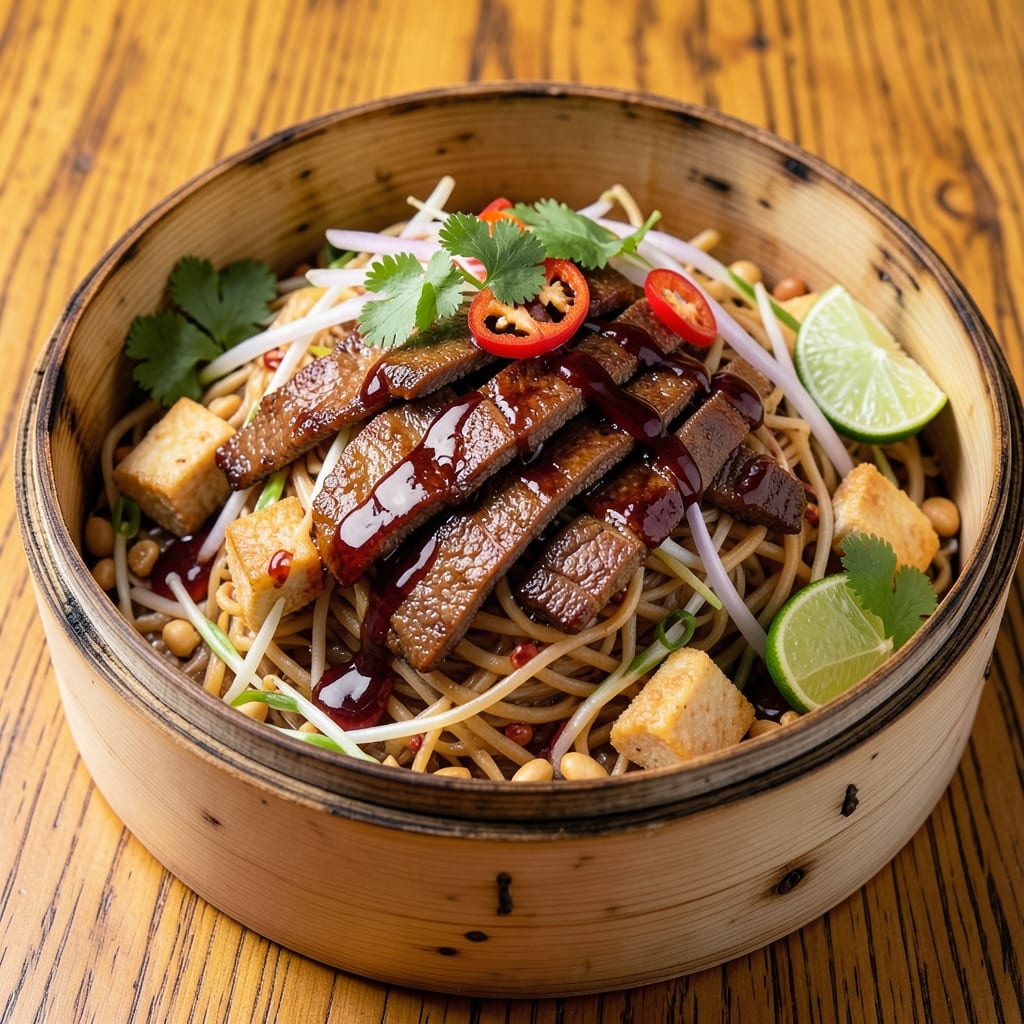
This authentic beef Pad Thai recipe brings the vibrant flavors of Thai street food to your kitchen with its signature tamarind tang and wok-tossed crunch. 🌟 The secret lies in balancing sweet, sour, and umami—just like the original—while keeping the technique simple enough for home cooks. I’ve perfected this version after years of testing, ensuring every bite delivers that perfect harmony of textures and flavors.
The dish starts with perfectly cooked rice noodles, stir-fried until just tender, then tossed in a rich tamarind-based sauce that’s tangy, slightly sweet, and packed with umami from fish sauce and shrimp paste. Thinly sliced beef adds a satisfying chew, while toppings like crushed peanuts, bean sprouts, and lime bring freshness and texture. The key is high heat and quick cooking to maintain that authentic wok-tossed crunch.
What you’ll end up with is a dish that’s restaurant-quality—golden noodles, glossy sauce, and a perfect balance of flavors in every bite. The tamarind gives it that signature tang, while the peanuts and lime add a bright, crunchy finish. It’s the kind of meal that feels special but is easy enough to make on a weeknight.
Serve it with a sprinkle of fresh herbs and extra lime wedges for that true Thai street-food experience. Let’s get cooking!
Ingredients for authentic beef pad thai
These vibrant ingredients bring Thai street food flavors right to your kitchen table.
| Ingredient | Amount | Notes |
|---|---|---|
| Rice Noodles 🍜 | 8 oz | Flat, medium-width, uncooked |
| Thinly Sliced Beef 🥩 | 12 oz | Flank or sirloin, cut against grain |
| Tamarind Paste 🍈 | ½ cup | Unadulterated, no sugar added |
| Fish Sauce 🍶 | 2 tbsp | Red Boat preferred |
| Shrimp Paste 🦐 | 1 tbsp | Kapi, for authentic umami |
| Palm Sugar 🍯 | 2 tbsp | Or light brown sugar |
| Rice Vinegar 🍶 | 2 tbsp | White or seasoned |
| Soy Sauce 🍶 | 1 tbsp | Light or all-purpose |
| Garlic Cloves 🧄 | 4 cloves | Minced, fresh preferred |
| Vegetable Oil 🫒 | ½ cup | High smoke point |
| Crushed Peanuts 🥜 | ¼ cup | Roasted, unsalted |
| Bean Sprouts 🌱 | 1 ½ cups | Fresh, rinsed |
| Fresh Lime Wedges 🍋 | 4 whole | For serving |
| Fresh Thai Basil 🌿 | ¼ cup | Or regular basil |
| Salt 🧂 | 1 tsp | Kosher or sea salt |
The beef is non-negotiable—flank or sirloin gives that perfect chew. Slice it thinly against the grain (about 1/8-inch) for that restaurant-style tenderness. Trader Joe's often has pre-sliced beef for Pad Thai, but if you're cutting it yourself, freeze it for 20 minutes first to firm up. Tamarind paste is the soul of this dish—look for unadulterated paste (no sugar added) at Asian markets or the international aisle. If you can't find it, tamarind concentrate from a can works in a pinch, but dilute it first. The fish sauce? Red Boat is the gold standard, but any good brand will do.
No shrimp paste? Anchovy paste at half the amount works, but it's not the same—shrimp paste gives that funky, authentic umami. Palm sugar hard to find? Light brown sugar is a solid swap, but reduce to 1.5 tbsp to avoid over-sweetness. The bean sprouts should be crisp—soak them in cold water for 10 minutes before using if they feel tough. Thai basil is ideal, but regular basil (or even cilantro) will work if you're improvising. For the peanuts, crush them yourself for maximum crunch—store-bought crushed peanuts get stale fast. And that lime? Fresh is a must—bottled lime juice just won't cut it.
The rice noodles need to be soaked in warm water for 20-30 minutes until pliable but still firm—over-soaking makes them mushy. Store the tamarind paste in the fridge after opening (it keeps for 6 months this way). The sauce can be made a day ahead and stored in the fridge—it actually tastes better after flavors meld. For leftovers, reheat gently with a splash of water to prevent drying out. And if you're making this for a crowd, double the beef and noodles—but keep the sauce proportions the same, or you'll dilute the flavor.
Why You'll Love This Recipe
- No-Soaking Needed: I keep a big bag of rice noodles in my pantry—just toss them in hot water for 2-3 minutes, and they’re ready. No waiting around like with other noodles, and honestly? That’s my favorite part.
- Tamarind Tang Magic: That first spoonful of tamarind paste—sour, sweet, and just a little funky—transforms everything. The beef gets this sticky, caramelized crust from the fish sauce and shrimp paste, and the balance? Pure satisfaction. (Yes, even on a Tuesday night.)
- Lunchbox Hero: Between us, this is my go-to for meal prep. I’ll make a big batch on Sunday, portion it into containers, and it stays fresh for days. The noodles hold up, the beef stays tender, and my kids actually eat it—no complaints.
- Budget Stretch: A pound of beef goes a long way when you slice it thin, and a little tamarind paste and fish sauce elevate the whole dish. I’ve fed four people for under $15, and honestly? That’s a win. Leftovers reheat like a dream, too.
Step-by-step instructions for authentic beef Pad Thai
Here's how to make restaurant-quality Pad Thai with that perfect tangy, umami-packed balance.
🍳 Step 1: Soak and Parboil the Rice Noodles
Place the 8 oz rice noodles in a large bowl and cover with hot water. Let them soak for 10-12 minutes until pliable but still slightly firm. Drain and rinse briefly with cold water to stop cooking.
In a separate pot, bring 2 cups fresh water to a boil and add the drained noodles. Cook for exactly 30 seconds - they should be tender but still holding their shape. Drain immediately and toss with 1 tbsp vegetable oil to prevent sticking. This quick parboil ensures they'll cook perfectly when tossed in the wok.
🔥 Step 2: Build the Tamarind-Garlic Base
Heat 0.25 cup vegetable oil in a wok over medium-high heat until shimmering. Add the 4 cloves minced garlic and stir for 10 seconds until fragrant but not browned. Immediately add the 0.5 cup tamarind paste and 1 tbsp shrimp paste, stirring constantly for 30 seconds until the mixture darkens slightly.
Add 2 tbsp palm sugar, 2 tbsp fish sauce, 2 tbsp rice vinegar, and 1 tbsp soy sauce. Stir vigorously for 1 minute until the sugar dissolves completely and the sauce begins to bubble. This is your flavor foundation - the tangy, sweet, umami base that makes Pad Thai special.
🍳 Step 3: Cook the Beef and Add Vegetables
Push the sauce to one side of the wok and add the 12 oz thinly sliced beef. Stir-fry for 1-2 minutes until the beef is 70% cooked but still slightly pink in the center. This ensures it finishes perfectly when everything comes together.
Add the 1.5 cups bean sprouts and stir-fry for 30 seconds until just wilted. Then add the parboiled rice noodles and toss everything together for 1-2 minutes until the noodles are evenly coated and heated through. The beef should now be fully cooked through with a nice pink center.
🥘 Step 4: Finish and Garnish
Remove the wok from heat and stir in the 0.25 cup crushed peanuts and 0.25 cup fresh Thai basil. Taste and adjust seasoning with additional fish sauce if needed - you want that perfect balance of sweet, sour, salty, and umami.
Divide the Pad Thai among 4 plates and serve immediately with the 4 fresh lime wedges on the side. The lime adds that final bright note that cuts through the richness. Garnish each serving with extra crushed peanuts and Thai basil if desired.
Pro Tips For Making Authentic Beef Pad Thai
- SOAK NOODLES UNTIL JUST FLEXIBLE: I learned this the hard way—over-soaking turns them mushy, but under-soaking means they fight back when tossing. Test with a quick pinch: they should hold together but still bend easily. Drain right before cooking, no need to rinse—wet noodles stick better to the sauce.
- SEAR BEEF IN BATCHES: Crowding the pan steams the beef instead of searing it. Work in small batches over medium-high heat—2-3 minutes per side max—until edges crisp. Reserve the drippings; they’re liquid gold for the sauce.
- STIR-FRY SHRIMP PASTE FIRST: Skip the shrimp paste in the sauce and toast it dry in the wok first. Just 30 seconds over high heat releases its nutty aroma without bitterness. Add it back later—this step makes the whole dish smell like a street cart.
- BALANCE SWEET AND SALTY: Tamarind paste and fish sauce need a 1:1 ratio to start, but taste as you go. Too tangy? Add a pinch of sugar. Too flat? A splash more fish sauce. My shortcut: mix them in a small bowl first, then adjust—no guessing mid-stir-fry.
Flavor customization for authentic beef pad thai
Spicy Heat Boost
For those who love a kick, add 1 tsp chili flakes or ½ tsp sambal oelek to the tamarind base while building the sauce. I like to toast the chili flakes in the wok for 10 seconds before adding other ingredients to deepen their flavor. If you prefer fresh heat, stir in 1-2 Thai bird's eye chili slices (seeds removed) with the bean sprouts. 🌶️
Sweet and Tangy Balance
Adjust the sweet-sour ratio by adding 1 extra tbsp palm sugar for more sweetness or 1 extra tbsp rice vinegar for extra tang. For a fruitier twist, fold in 2 tbsp finely chopped mango or 1 tbsp pineapple jam with the sauce. The fruit adds natural sweetness and a refreshing contrast to the savory beef.
Umami Depth Upgrades
Boost the umami with 1 extra tbsp soy sauce or ½ tsp MSG in the sauce. For a richer flavor, add 1 tbsp oyster sauce or 1 tsp fish sauce reduction (simmer 1 tbsp fish sauce for 2 minutes until thickened). I also love adding 1 tbsp fermented black beans (soaked and chopped) for a funky, salty depth.
Herb and Aroma Variations
Swap Thai basil for cilantro or mint for a different herbal profile. For a smoky note, add ½ tsp smoked paprika to the sauce or garnish with toasted sesame seeds. Fresh lemongrass (finely minced) in the sauce adds a citrusy aroma, while kaffir lime leaves (torn) bring a bright, floral touch.
Protein Swaps
Use chicken breast (thinly sliced) for a lighter option or shrimp (peeled and deveined) for a seafood twist. For extra richness, add 2 oz crispy fried shallots or 1 tbsp toasted coconut flakes on top. If you're vegetarian, replace beef with extra-firm tofu (pressed and cubed) or mushrooms (shiitake or oyster).
Texture Play
Add crispy fried wonton wrappers (cut into triangles) for crunch or crispy shallots for a sweet, oniony bite. For a creamy element, stir in 2 tbsp coconut milk or 1 tbsp peanut butter (thinly spread on a piece of parchment, rolled up, and sliced into strips for frying). These additions elevate the dish with exciting textures. ✨
Nutrition facts
Frequently asked questions
Why does authentic Pad Thai use tamarind paste instead of vinegar?
Tamarind paste provides that signature tangy-sweet balance that's impossible to replicate with vinegar alone. It contains natural acids and sugars that create the complex flavor profile—sour, slightly sweet, and umami-rich—while vinegar would make the dish too sharp. The paste also adds depth that vinegar can't match.
Can I make Pad Thai without shrimp paste?
Yes, but the flavor won't be as authentic. Use ½ tbsp anchovy paste as a substitute, though it lacks shrimp paste's funky depth. For a vegetarian version, omit it entirely and boost umami with 1 extra tbsp soy sauce or ½ tsp MSG instead.
How do I prevent the rice noodles from turning mushy?
Never over-soak them—10-12 minutes in warm water is perfect. After draining, give them a 30-second parboil in fresh boiling water, then drain immediately. Toss with oil right away to prevent sticking. Overcooking or leaving them in water too long destroys their texture.
What's the best way to store leftover Pad Thai?
Store in an airtight container for up to 3 days in the fridge. Reheat gently with a splash of water to restore moisture—microwaving directly dries out the noodles. For longer storage, freeze portions (without sauce) for up to 1 month.
Can I make Pad Thai ahead of time?
Make the sauce up to 1 day ahead and store it refrigerated. Assemble the dish just before serving—fresh toppings like crushed peanuts and lime add the best crunch and brightness. If reheating, add a splash of water to keep the noodles tender.