
Soups & Stews
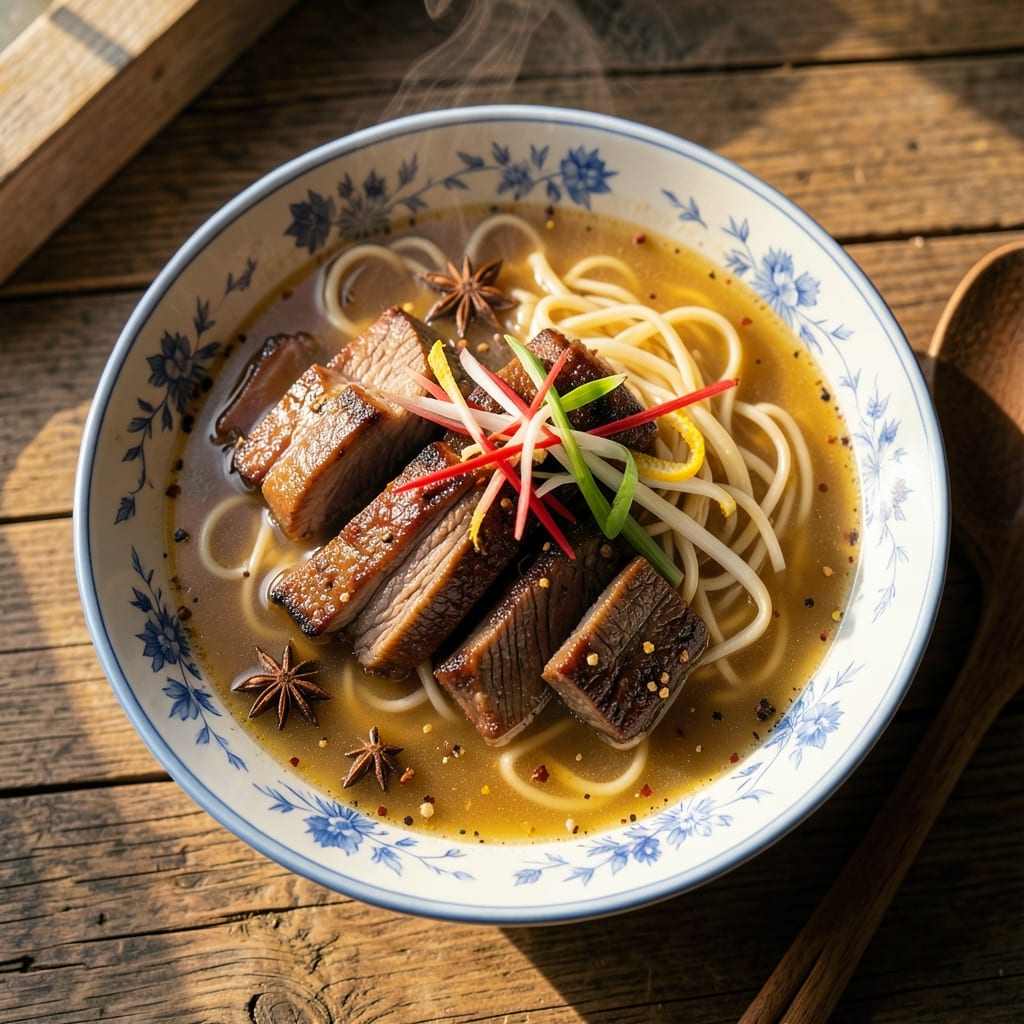
This authentic Chinese beef noodle soup recipe delivers the comforting, aromatic essence of a bustling street-side stall—rich, umami-packed broth, tender beef, and chewy noodles that come together in a single pot. The secret lies in wok-toasted aromatics and slow-simmered beef, which infuse every spoonful with deep, savory complexity. After years of perfecting this dish, I've simplified the process without sacrificing authenticity, so you can recreate that restaurant-quality experience at home.
The foundation of great beef noodle soup is the broth, built layer by layer with charred ginger, garlic, and scallions that form the aromatic base. A blend of star anise, cinnamon, and cloves adds warmth, while soy sauce and fermented black beans contribute that signature umami depth. The beef—traditionally a tougher cut like chuck—simmers until fork-tender, absorbing all those rich flavors. This isn't just soup; it's a flavor journey that starts with the first sip of that silky, golden broth.
What sets this recipe apart is the balance of textures and flavors—chewy wheat noodles, melt-in-your-mouth beef, and a broth so flavorful it needs no garnish (though fresh cilantro and chili oil take it to the next level). The technique is straightforward but requires patience: letting the aromatics bloom, simmering the beef low and slow, and adjusting seasoning at the end for perfect harmony. It's the kind of dish that gets better with leftovers, as the flavors deepen overnight.
Serve this soup steaming hot in deep bowls, with a sprinkle of sesame oil and crushed peanuts for crunch. It's equally satisfying as a light lunch or a hearty dinner, especially on chilly evenings when you crave something warming and deeply comforting. Let's create this bowl of nostalgia and flavor—one that'll have everyone asking for seconds.
Ingredients for authentic chinese beef noodle soup
Wok-toasted aromatics and slow-simmered beef make this soup restaurant-quality at home.
| Ingredient | Amount | Notes |
|---|---|---|
| Chuck Roast 🥩 | 1 ½ lb | Tough cut for tender results |
| Fresh Ginger Root 🧄 | ½ cup | Julienned, skin removed |
| Garlic Cloves 🧄 | 6 cloves | Minced, aromatic base |
| Scallions 🧅 | ½ cup | Sliced, white parts only |
| Star Anise Pods 🌿 | 2 whole | Whole, for infusion |
| Cinnamon Sticks 🌿 | 2 whole | 1-inch pieces |
| Cloves 🌶️ | 4 whole | Whole, for depth |
| Fermented Black Beans 🫘 | ¼ cup | Rinsed, umami bomb |
| Light Soy Sauce 🥄 | ½ cup | Kikkoman preferred |
| Dark Soy Sauce 🥄 | 1 tbsp | For color depth |
| Sesame Oil 🫒 | 1 tbsp | Toasted, for aroma |
| Wheat Noodles 🍜 | 8 oz | Fresh or dried, chewy |
| Fresh Cilantro 🌿 | ¼ cup | Chopped, for garnish |
| Crushed Peanuts 🥜 | ¼ cup | Toasted, for crunch |
| Chili Oil 🌶️ | 1 tbsp | Optional, for heat |
The ginger and garlic are non-negotiable here. Fresh ginger from the Asian market has more punch than the pre-grated stuff—look for knobby, firm roots. Whole star anise and cinnamon sticks are key for that deep, aromatic base; don't use ground versions. The chuck roast? Costco or butcher shops usually carry it pre-cut for convenience, but if you're buying whole, ask for the flat cut near the bone—it's more flavorful. Fermented black beans add that signature umami depth, and Asian grocery stores carry them in the refrigerated section. If you can't find them, a quick online search will turn up substitutes like fermented soybeans.
No star anise? Anise seeds work too, but star anise has a more complex flavor. Running short on ginger? Galangal root (common in Thai cooking) gives a citrusy kick. The soy sauces—light and dark—can be swapped for regular soy sauce, but you'll lose that beautiful color contrast. For the noodles, fresh wheat noodles give the best texture, but dried noodles like ramen work in a pinch. Just boil them al dente and rinse with cold water before adding to the soup. The chili oil? Store-bought works, but homemade (chili flakes + oil) is worth the effort if you're feeling ambitious.
This soup tastes even better the next day—flavors meld overnight. Store leftovers in the fridge for 4-5 days or freeze for 3 months. I like to portion it into containers so I can grab a bowl anytime. The broth freezes beautifully, so make extra if you're planning to use it for other dishes. For serving, keep the sesame oil, crushed peanuts, and chili oil separate until ready to eat—this keeps everything crisp and aromatic.
Why You'll Love This Recipe
- One-Pot Magic: I swear by this recipe because it’s actually one-pot—no fussing with multiple bowls or pans. Chuck roast and star anise simmer together until the broth is rich and the meat falls apart like it’s been braising all day (but it hasn’t).
- Ginger-Garlic Bomb: That first sip? Chef’s kiss. The fresh ginger and garlic cloves caramelize into the broth, while the star anise adds this deep, warm backbone that makes it taste like a home-cooked version of your favorite takeout. Honestly, I’ll take this over any pre-packaged soup kit.
- Lunchbox Hero: Between us, this is my go-to for meal prep—tastes just as good cold the next day. Pack it with noodles, and suddenly you’ve got a lunch that feels fancy but costs pennies. My kids even ask for it, and that’s saying something.
- Budget Stretch: A pound of chuck roast feeds four, and the leftovers? Even better the second day. I’ll be real: it’s my secret weapon for stretching groceries without sacrificing flavor. Plus, star anise pods are dirt cheap and make everything taste elevated.
Step-by-step instructions for authentic Chinese beef noodle soup
Here's the method that delivers restaurant-quality depth and richness every time.
Prepare the Chuck Roast for Maximum Tenderness
Begin by examining the 1.5 lb chuck roast and look for any large fat deposits or connective tissue. Using a sharp boning knife, trim away any excess fat but leave a thin layer to protect the meat during cooking. Cut the roast into 1-inch thick slices against the grain—this ensures the meat will be fork-tender when cooked.
In a large bowl, combine the sliced chuck roast with 0.5 cup julienned fresh ginger root, 6 minced garlic cloves, 0.5 cup sliced scallions (white parts only), 2 whole star anise pods, 2 whole cinnamon sticks (cut into 1-inch pieces), and 4 whole cloves. Massage the aromatics into the meat until every slice is thoroughly coated. This step infuses the beef with layers of flavor that will develop during the long simmer.
Let the marinated beef sit at room temperature for 30 minutes while you prepare the remaining ingredients. This resting period allows the meat to cook more evenly and prevents it from releasing excess juices into the broth too quickly.
Build the Broth with Fermented Black Beans and Soy Sauces
Heat 1 tablespoon sesame oil in a large stockpot or Dutch oven over medium-high heat. Add the marinated beef and sear for 3-4 minutes per side until the meat develops a deep golden-brown crust. Remove the beef and set it aside temporarily.
In the same pot, add 0.25 cup rinsed fermented black beans and cook for 2-3 minutes, stirring frequently, until they begin to darken slightly. This step develops their umami depth. Pour in 0.5 cup light soy sauce and 1 tablespoon dark soy sauce, scraping up any browned bits from the bottom of the pot. These bits, called fond, are packed with concentrated flavor.
Add 8 cups water (enough to generously cover the beef) and bring to a rolling boil. Once boiling, reduce the heat to low and return the beef to the pot. The broth should simmer gently—you'll see small bubbles breaking the surface but no vigorous boiling. Cover the pot and let it cook for 1.5 hours, skimming off any foam that rises to the surface. This simmering process transforms the tough chuck roast into tender, melt-in-your-mouth slices.
Finish the Broth and Prepare the Noodles
After 1.5 hours, remove the beef from the broth and set it aside. Strain the broth through a fine-mesh sieve into a clean pot, pressing gently on the solids to extract maximum flavor. Discard the solids. Return the broth to medium heat and bring it to a gentle simmer. Taste and adjust the seasoning—you may need to add a bit more light soy sauce or a pinch of salt to balance the flavors.
While the broth simmers, prepare the 8 oz wheat noodles according to package instructions. Chinese beef noodle soup traditionally uses fresh wheat noodles, but dried noodles work perfectly fine. Cook them until they're al dente—just slightly firm to the bite. Drain and rinse briefly under cold water to stop the cooking process, then drain again thoroughly.
Assemble and Garnish for Authentic Presentation
Return the beef slices to the simmering broth and let them warm through for 5 minutes. Divide the cooked wheat noodles among 4 bowls, then ladle the hot broth and beef over the noodles. The broth should be deep amber in color and aromatic with the scent of ginger, garlic, and star anise.
To finish, garnish each bowl with 0.25 cup chopped fresh cilantro, 0.25 cup toasted crushed peanuts, and a drizzle of 1 tablespoon chili oil (if using). The peanuts add a satisfying crunch, the cilantro brightens the rich broth, and the chili oil provides a subtle heat. Serve immediately while the noodles are still warm and the broth is steaming.
Serve with Confidence and Enjoy
Each bowl should deliver tender beef slices that fall apart easily, a silky broth infused with aromatic spices, and chewy noodles that soak up every drop of flavor. The combination of textures and temperatures—hot broth, warm noodles, and room-temperature beef—creates a harmonious eating experience that's quintessentially Chinese.
For an even more authentic touch, serve with small bowls of extra chili oil and sliced scallions on the side, allowing everyone to customize their level of heat and freshness. This soup tastes even better the next day as the flavors continue to meld, so consider making a double batch for leftovers.
Pro Tips For Making Authentic Chinese Beef Noodle Soup
- Sear the Chuck Hard: Don’t just warm the meat—get that chuck roast screaming hot in a dry pot for 3-4 minutes per side until it’s deep brown. I used to skip this, and the broth never carried that rich, caramelized depth. High heat. Seriously, crank it up. ---
- Peel Ginger Like a Pro: Use a spoon to scoop off the skin in one piece, then slice thinly—about 1/8-inch thick—so it infuses without turning to mush. Thick slices sit like rocks; thin slices dissolve into flavor. (Yes, even if you’re impatient like me.) ---
- Don’t Rush the Star Anise: Toss the whole pods in after the meat has simmered for 20 minutes. If you add them early, they’ll overpower the broth with bitterness. Remove them before serving—unless you’re feeling fancy and want to crush one for garnish. ---
- Save the Scallion Greens: Reserve the dark green tops for garnish—they add freshness and color at the end. Chop the whites roughly and add them last, just to brighten the broth. (Your future self will thank you for not chopping them all at once.)
Perfect pairings for this authentic chinese beef noodle soup
Broth Enhancers
Elevate your soup with umami-rich additions like shiitake mushrooms (2-3 dried, soaked and sliced) or oyster mushrooms (½ lb, sliced) that dissolve into the broth, adding depth. For extra richness, stir in 1 tablespoon of hoisin sauce during the final 5 minutes of simmering—it blends seamlessly with the soy flavors. 💫
Crunchy Toppings
Swap crushed peanuts for toasted sesame seeds (2 tbsp) or fried shallots (3 tbsp) for a nutty, crunchy contrast. For a spicy kick, add crushed dried chili peppers (½ tsp) or pickled garlic (2 tbsp, sliced) to brighten the dish. These toppings add texture and balance the soup’s richness without overpowering the broth.
Fresh Herbs
Beyond cilantro, try Thai basil (¼ cup, chopped) for a licorice-like aroma or mint leaves (¼ cup, torn) for a refreshing twist. If you love heat, add sliced Thai chilies (2-3) or a drizzle of sriracha (1 tsp) to customize the spice level. Fresh herbs should always be added after the soup is served to preserve their vibrant flavors.
Beverage Pairings
Pair this soup with a light-bodied Chinese tea like jasmine green tea or oolong to complement the broth’s aromatic spices. For beer lovers, a crisp lager (like Tsingtao) or a wheat beer (such as Blue Moon) cuts through the richness. Avoid heavy red wines—they’ll clash with the soy and spice notes. 🍺
Side Dish Harmony
Serve with steamed bok choy (tossed with a pinch of salt) or quick-pickled cucumbers (½ cup, sliced) to add freshness. For a heartier meal, pair with sticky rice (½ cup per person) or mandarin duck pancakes (store-bought or homemade). The contrast of textures and temperatures makes every bite more satisfying.
Nutrition facts
Frequently asked questions
Can I substitute chuck roast with a different cut of beef?
Yes, but choose wisely! For best results, use brisket or short ribs—both have excellent fat content and connective tissue that break down beautifully during the long simmer. Avoid lean cuts like sirloin, as they won't become tender enough. If using short ribs, trim excess fat and cut into 1-inch pieces for even cooking.
How do I make the broth richer without adding more water?
Boost umami by adding 1-2 tbsp of fish sauce or 1 tbsp of oyster sauce during the final 10 minutes of simmering. For depth, stir in 2 tbsp of tomato paste (cooked for 5 minutes) or ½ cup of beef bone broth instead of water. The key is to enhance what's already in the pot rather than dilute it.
Why does my beef noodle soup taste too salty?
This usually happens from overusing soy sauce or fermented black beans. To fix it, dilute the broth by adding 1 cup of hot water and simmer for 10 minutes to balance the flavors. If that's not enough, add ½ cup of cooked noodles (without broth) to each bowl—they'll absorb excess salt. Always taste the broth before adding noodles to adjust seasoning.
Can I make this soup in an Instant Pot or pressure cooker?
Sear the beef first, then add all ingredients (except noodles) and cook on high pressure for 45 minutes. Release pressure naturally, then strain and finish the broth on the stove. The pressure cooker reduces time by 40%, but you'll lose some of the deep, slow-developed flavors. For best results, use a Dutch oven for the full experience.
What's the best way to reheat leftover beef noodle soup?
Reheat only the broth (without noodles) in a pot over medium-low heat until steaming. Bring to a gentle simmer, then add noodles and beef separately to warm through (2-3 minutes). Microwaving makes noodles mushy—this method preserves texture. For extra flavor, add 1 tsp of sesame oil or a splash of chili oil when reheating.