
Soups & Stews
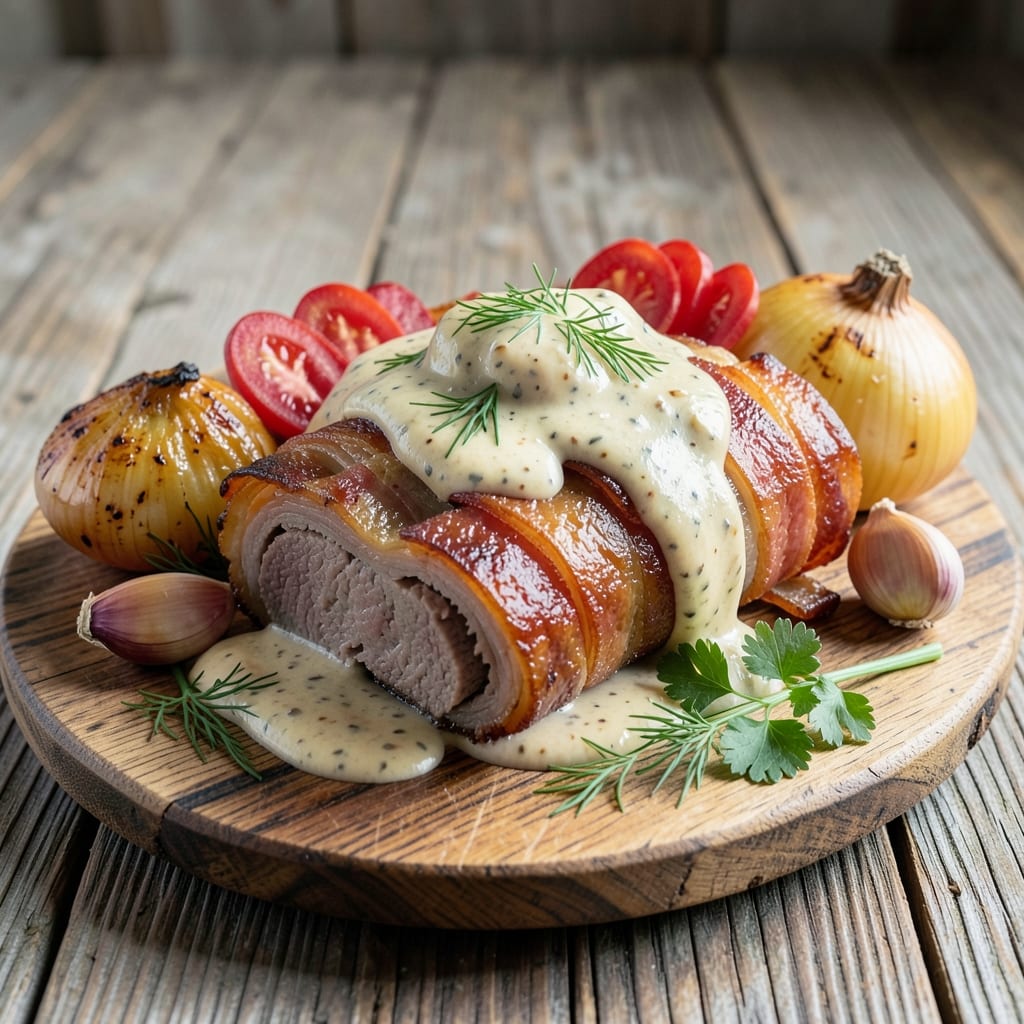
This authentic German beef rouladen recipe delivers the hearty, comforting flavors of traditional German cuisine in every tender bite. 🌟 The secret lies in thinly sliced beef rolls stuffed with sweet mustard, bacon, and pickles—classic elements that create a symphony of tangy, savory, and slightly sweet notes. What sets this recipe apart is the braising process, which transforms tough beef into melt-in-your-mouth perfection while developing a rich, flavorful gravy.
The beauty of rouladen is in its simplicity: no fancy techniques, just a few key steps that yield restaurant-quality results. You’ll start by carefully stuffing each beef slice with a mix of mustard, bacon, and pickles, then rolling them tightly before browning in a skillet. This initial sear locks in the juices, ensuring your rolls stay moist and flavorful as they braise slowly in a rich gravy.
By the time you’re done, you’ll have a dish that’s as impressive as it is delicious—golden-brown rolls swimming in a deep, aromatic gravy. The combination of tender beef, crispy bacon, and the tangy crunch of pickles makes this a meal that feels like a warm embrace, perfect for family dinners or special occasions. Serve it with traditional sides like Spätzle or Rotkohl for the full German experience.
This recipe strikes the perfect balance between authenticity and approachability, so even if you’re new to German cooking, you’ll achieve professional results. The key is patience—letting the beef braise slowly ensures it becomes fork-tender, while the gravy develops into a rich, velvety sauce that ties everything together. Let’s get started on creating a dish that tastes like home.
Ingredients for authentic german beef rouladen
Fourteen ingredients. One unforgettable dish. Traditional German flavors you'll crave again and again.
| Ingredient | Amount | Notes |
|---|---|---|
| Top Round Roast Beef 🥩 | 1 ½ lb | Thinly sliced against grain |
| Sweet German Mustard 🌶️ | ½ cup | Dijon or whole-grain preferred |
| Thick-Cut Bacon 🥓 | 8 oz | Cut into 1-inch pieces |
| Dill Pickle Slices 🥒 | ½ cup | Drained and patted dry |
| Yellow Onion 🧅 | 1 whole | Thinly sliced for stuffing |
| Garlic Cloves 🧄 | 4 cloves | Minced for filling |
| All-Purpose Flour 🌾 | 2 tbsp | For dredging beef |
| Vegetable Oil 🫒 | 2 tbsp | For browning |
| Beef Broth 💧 | 2 cups | Low-sodium preferred |
| Tomato Paste 🍅 | 2 tbsp | For rich gravy base |
| Red Wine Vinegar 🍷 | 1 tbsp | For tangy depth |
| Bay Leaves 🌿 | 2 whole | For aromatic gravy |
| Black Peppercorns 🌶️ | 1 tsp | Freshly cracked |
| Salt 🧂 | 1 ½ tsp | Kosher or sea salt |
The beef is everything here. Top round roast gives you that perfect balance of tenderness and flavor—sirloin or flank steak are great too, but avoid anything too fatty. Most butchers can slice it paper-thin against the grain, or you can freeze it for 30 minutes first to make slicing easier. Kroger or Whole Foods usually carry pre-sliced beef for rouladen, which saves time. Look for good marbling, not too much fat. The mustard should be sweet German-style—Kühne or Maille are the gold standard, but any good Dijon works in a pinch. Bacon matters too: thick-cut stays crispy, and Oscar Mayer or Applewood are reliable choices.
No German mustard? Dijon plus a touch of honey gets you close. Bacon too expensive? Smoked turkey bacon works, or skip it entirely if you're watching calories. Pickles can be bread-and-butter or dill—just make sure they're tangy. The onion and garlic are non-negotiable for flavor, but if you're short on time, pre-minced garlic from a jar (the good stuff, not the seasoning packet kind) works fine. For the gravy, low-sodium beef broth is key—you don't want to overpower the dish. No red wine vinegar? Apple cider vinegar has a similar tang. The tomato paste can be the squeeze-tube kind from Trader Joe's—it's perfect for this recipe.
This dish tastes even better the next day, so make extra if you can. The beef stays tender for 3-4 days in the fridge, and the gravy freezes beautifully for up to 3 months. I always portion mine into individual containers with a little extra gravy—perfect for lunches. If you're making this ahead, assemble the rolls but don't brown them until you're ready to cook. The filling won't dry out, and you can refrigerate them overnight. The bacon will get slightly softer, but it still adds great flavor.
Why You'll Love This Recipe
- No-Fuss Assembly: I swear by this recipe because the prep is ridiculously simple—just slice the beef, layer on the mustard, pickles, and bacon, then roll. No fancy techniques, no stress. Even if you burn the toast, you can still nail this.
- Taste Like Home: That sweet German mustard and tangy pickles wrapped in crispy bacon? It’s the kind of flavor that makes you close your eyes. The beef stays juicy while the bacon gets perfectly chewy—exactly how I remember it from my grandma’s kitchen.
- Leftovers That Shine: Between us, the best part might be the leftovers. Slice the rouladen cold for sandwiches or reheat them in gravy—both are solid. I’ve fed a crowd with this twice, and no one ever complained about seconds.
- Budget-Friendly Feast: Thick-cut bacon and top round beef sound fancy, but this recipe stretches ingredients smartly. A single roast feeds four, and the mustard and pickles add depth without breaking the bank. Honestly, it’s my go-to for when I need a hearty meal that won’t drain my wallet.
Step-by-step instructions for authentic German beef rouladen
Here's how to craft these classic German rolls with juicy beef and bold mustard filling.
👨🍳 Step 1: Prepare the Mustard-Stuffed Filling
In a small bowl, combine the 0.5 cup Sweet German Mustard, 0.5 cup Dill Pickle Slices, 1 whole Yellow Onion (thinly sliced), and 4 cloves Garlic Cloves (minced). Mix well until the mustard coats all ingredients evenly. This tangy-sweet filling is what makes rouladen so special.
Here's the thing—don't skip draining and patting dry those pickle slices. Excess moisture will make your filling soggy, and you want every bite to be packed with flavor, not water. I like to press the mixture gently with a spoon to distribute the mustard completely.
🔪 Step 2: Slice and Stuff the Beef
Slice the 1.5 lb Top Round Roast Beef thinly against the grain into strips about ¼-inch thick and 2-inches wide. You should get about 8-10 slices. Lay each slice flat on your cutting board and spread about 1 teaspoon of the mustard mixture evenly across the center of each slice.
Roll each slice tightly, starting from one end, to form a neat cylinder. Secure each rouladen with a 1-inch piece of the 8 oz Thick-Cut Bacon, wrapping it around the roll and tucking the ends underneath. This bacon will crisp up beautifully while braising and add extra flavor. I press down gently on the rolls as I shape them to keep everything compact.
🍳 Step 3: Brown the Rouladen Perfectly
Heat 2 tablespoons Vegetable Oil in a large Dutch oven over medium-high heat until shimmering. Working in batches if needed, add the rouladen and sear for 2-3 minutes per side until they develop a deep golden-brown crust. This step is crucial—it locks in flavors and prevents them from steaming in the broth later.
Don't crowd the pan or the temperature will drop. You'll know they're ready when the bacon starts to crisp and the beef releases easily from the pan. Transfer the browned rouladen to a plate and set aside while you prepare the braising liquid.
🥘 Step 4: Create the Rich Braising Liquid
In the same Dutch oven, reduce heat to medium and add 2 tablespoons All-Purpose Flour, stirring constantly for 1-2 minutes until it turns a light golden color. This creates a roux that will thicken your braising liquid beautifully. Immediately pour in 2 cups Beef Broth, scraping up any browned bits from the bottom of the pan.
Add 2 tablespoons Tomato Paste, 1 tablespoon Red Wine Vinegar, 2 whole Bay Leaves, 1 teaspoon Black Peppercorns (cracked), and 1.5 teaspoons Salt. Stir well and bring to a gentle simmer. Here's where the magic happens—the vinegar adds brightness, the tomato paste deepens the color, and the spices infuse the broth with aromatic complexity.
⏰ Step 5: Braise to Tender Perfection
Return the rouladen to the Dutch oven, arranging them seam-side up. Cover tightly with a lid and transfer to a 325°F oven. Braise for 2 to 2.5 hours until the beef is fork-tender and the bacon is crispy. You'll want to check at the 2-hour mark—every oven runs differently, and you want the beef to be just tender, not falling apart.
When done, the rouladen should be so tender that the beef slices easily with a fork. The braising liquid should have reduced slightly and thickened into a rich, flavorful gravy. Let the rouladen rest for 10 minutes before serving—this allows the juices to redistribute, ensuring each bite is moist and packed with flavor.
Pro Tips For Making Authentic German Beef Rouladen
- USE COLD MEAT: Take your beef out of the fridge at least 30 minutes before slicing—cold meat tears like paper. I learned this the hard way when my first batch of rouladen fell apart mid-roll. Room temp beef slices evenly and holds the filling better.
- SEAR THE BACON FIRST: Cook the thick-cut bacon until crispy before wrapping—it adds fat and flavor that soaks into the beef. I used to skip this, and the rouladen tasted flat. A quick 8-minute sear in a cold pan (yes, cold) renders the fat perfectly without burning.
- PUNCH HOLES IN PICKLES: Use a fork to pierce the dill pickle slices before wrapping—they’ll release brine and stay crispier. I was skeptical until I tried it; the pickles hold their texture and don’t turn mushy after braising.
- BRAISE LOW AND LONG: After browning, cover the rouladen and simmer at 300°F (150°C) for 2.5–3 hours—this keeps the meat tender without drying it out. I used to rush it, and the beef ended up chewy. Slow and steady wins the race.
Perfect pairings for authentic german beef rouladen
Classic German Sides
No rouladen is complete without traditional German sides that complement the rich flavors. Spätzle—handmade egg noodles—are a must, as they soak up the delicious gravy beautifully. I make mine with just 2 cups all-purpose flour, 3 large eggs, ½ cup water, and a pinch of salt, kneading until smooth and pressing through a Spätzle maker or colander into boiling water. 🥟
For a heartier option, serve with Rotkohl (German red cabbage), a sweet-and-sour braised cabbage dish that adds a tangy contrast. Simmer 1 small green cabbage, 1 apple, 2 tbsp brown sugar, and 1 tbsp apple cider vinegar until tender. The acidity cuts through the richness of the rouladen perfectly.
Crusty Bread Pairings
A dark rye bread or pumpernickel is ideal for mopping up the gravy. I love using German-style pretzels for extra crunch—just warm them in the oven for 5 minutes before serving. The salty, chewy texture balances the sweet and savory flavors of the rouladen beautifully.
Beverage Recommendations
A dark German lager like Beck's or Paulaner complements the hearty flavors without overpowering them. The malty sweetness pairs wonderfully with the mustard and bacon. For a non-alcoholic option, try Apfelschorle—a refreshing mix of apple juice and sparkling water—to cleanse your palate between bites. 🍺
Modern Twists
Want to elevate the meal? Add a side salad with arugula, shaved fennel, and a lemon-Dijon vinaigrette for brightness. Or try roasted Brussels sprouts with crispy bacon to echo the flavors in the rouladen. These additions keep the dish feeling fresh while honoring its roots.
Dessert Pairings
End the meal with a classic German dessert like Apfelkuchen (apple cake) or Schwarzwälder Kirschtorte (black forest cake). The sweetness contrasts perfectly with the savory rouladen, leaving everyone satisfied. For something lighter, serve vanilla ice cream with a drizzle of caramel sauce—simple but always a crowd-pleaser. 🍰
Nutrition facts
Frequently asked questions
Can I use a different type of beef for rouladen?
While top round roast is traditional, you can use sirloin or flank steak for similar results. Avoid fatty cuts like ribeye—they won't roll neatly and may become greasy. The key is thin, even slices cut against the grain for maximum tenderness.
What if I don't have German mustard?
Mix Dijon mustard with 1 teaspoon honey per ½ cup to mimic the sweetness. For extra tang, add ½ teaspoon apple cider vinegar. The flavor won't be identical, but it works in a pinch. The mustard is essential—it balances the richness of the beef and bacon.
How do I keep the rouladen from falling apart?
Don't overstuff the beef slices—1 teaspoon filling per roll is perfect. Roll tightly and secure with bacon, pressing gently to compact the filling. For extra stability, tie each rouladen with kitchen twine before browning. The twine dissolves during cooking and won't affect the flavor.
Can I make rouladen in a slow cooker?
Yes! Brown the rouladen first, then transfer to a slow cooker with 1 cup beef broth, 2 tablespoons tomato paste, and 1 teaspoon each salt and pepper. Cook on Low for 6-7 hours or High for 3-4 hours. The slow cooker method is forgiving and produces tender beef, though the gravy may be thinner. Add a cornstarch slurry if you prefer it thicker.
Why does my gravy taste bland?
Most likely, you didn't deglaze the pan after browning the rouladen. Always scrape up the browned bits with the flour before adding broth. For extra depth, add 1 teaspoon Worcestershire sauce or ½ teaspoon smoked paprika to the braising liquid. Simmering uncovered for the last 10 minutes helps reduce the liquid and intensify flavors.