
Main Courses
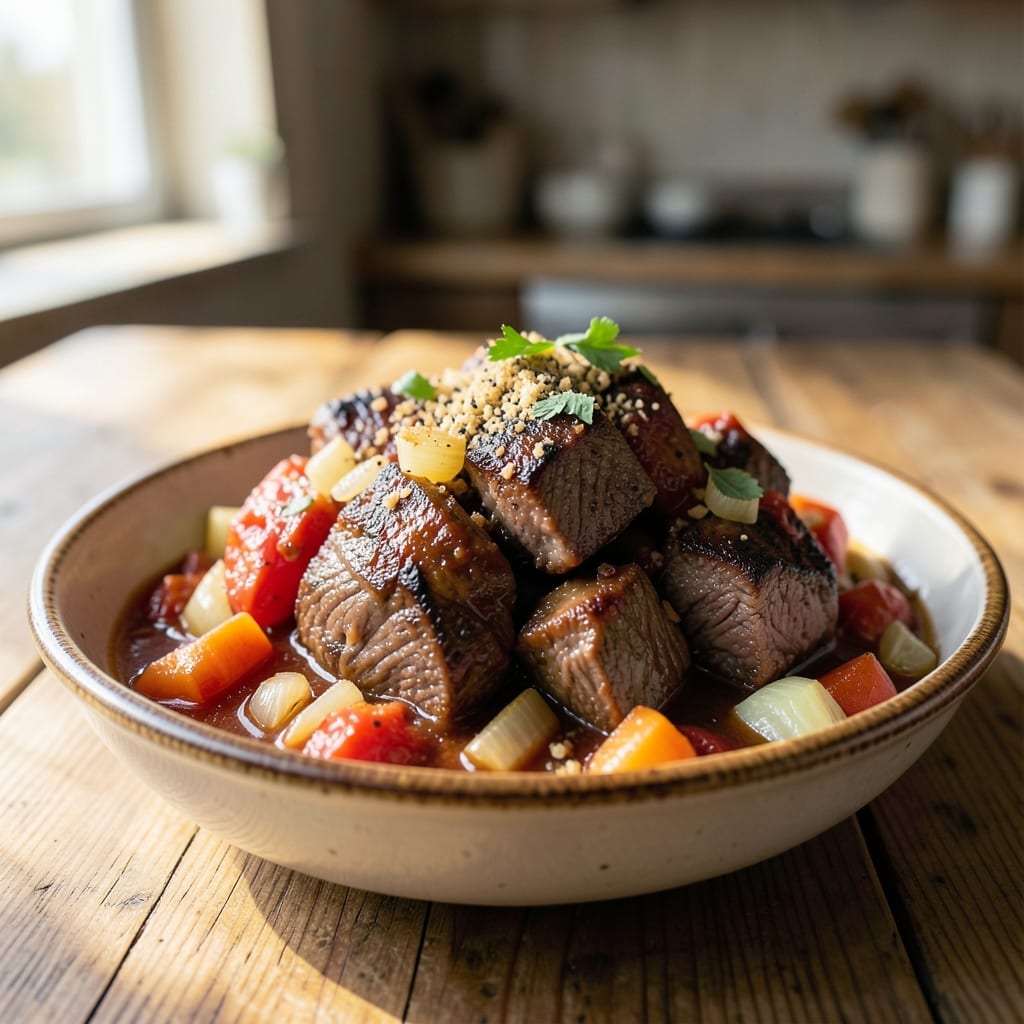
This authentic Italian beef ragu recipe transforms tough chuck roast into melt-in-your-mouth perfection through slow simmering and wine-infused depth. The secret lies in hours of gentle cooking, where San Marzano tomatoes and aromatic herbs meld into a rich, velvety sauce that clings to every strand of al dente pasta. I've perfected this version after years of testing—no shortcuts, just the time-honored method that makes Italian nonnas proud.
The process begins with browning the beef for maximum flavor, then deglazing the pan to capture every caramelized bit. Red wine reduces into the sauce, adding complexity, while onions, carrots, and celery form a fragrant base called soffritto—the foundation of authentic Italian cooking. The result? A ragu so rich and flavorful it tastes like it simmered all day, even if you only have a few hours.
What you'll end up with is a slow-simmered masterpiece—deep red, tender beef in a sauce so luxurious it deserves a sprinkle of fresh parsley and a generous grating of aged Parmesan. This isn't just pasta sauce; it's a labor of love that transforms simple ingredients into something extraordinary. Serve it over tagliatelle or creamy polenta for the full Italian experience.
The beauty of this recipe is its versatility. Make a big batch and freeze portions for lazy weeknights, or serve it at your next dinner party as the centerpiece dish. The aroma alone will have guests asking for the recipe—and they won't believe it's homemade. Let's get started on this Italian classic.
Ingredients for authentic italian beef ragu
Sixteen ingredients. One unforgettable sauce. Let's build this Italian classic.
| Ingredient | Amount | Notes |
|---|---|---|
| Chuck Roast 🥩 | 3 lb | Pre-cubed, 1-inch pieces |
| San Marzano Tomatoes 🍅 | 28 oz | Canned, whole or crushed |
| Dry Red Wine 🍷 | 1 cup | Bold, like Chianti or Cabernet |
| Yellow Onion 🧅 | 1 whole | Medium, diced |
| Carrot 🥕 | 2 whole | Medium, diced |
| Celery Stalk 🌿 | 2 whole | Trimmed, diced |
| Garlic Cloves 🧄 | 4 cloves | Fresh, minced |
| Tomato Paste 🍅 | 2 tbsp | Squeeze tube preferred |
| Fresh Rosemary 🌿 | 1 tbsp | Chopped, or 1 tsp dried |
| Fresh Thyme 🌿 | 1 tbsp | Leaves only, chopped |
| Beef Broth 💧 | 2 cups | Low-sodium preferred |
| Olive Oil 🫒 | 2 tbsp | Extra-virgin, for searing |
| Salt 🧂 | 1 ½ tsp | Diamond Crystal preferred |
| Black Pepper 🌶️ | 1 tsp | Freshly ground |
| Fresh Parsley 🌿 | ¼ cup | Chopped, for garnish |
The beef is non-negotiable—chuck roast with good marbling is what you want. Costco or Whole Foods usually have great cuts, but any grocery store's chuck will work if it's fresh. Look for pieces that are bright red, not grayish. If you're buying a whole roast, cube it yourself—1-inch pieces cook evenly. For the tomatoes, San Marzano is the gold standard, but any high-quality canned tomatoes will do. The wine? Bold and dry—Chianti, Cabernet, whatever's open. Never cook with cooking wine, trust me on this.
No red wine? Beef broth with a splash of balsamic works in a pinch. Fresh herbs are ideal, but dried rosemary and thyme at one-third the amount get you close. The tomato paste can be skipped if you're using crushed tomatoes, but it adds that concentrated depth. For the soffritto (onion, carrot, celery), don't peel the veggies—just trim and dice. The skins add color and flavor. If you're short on time, pre-diced soffritto mixes from Italian markets save steps. Just make sure they're fresh—no wilted celery in there.
This ragu tastes even better the next day, so make a double batch if you can. Store in airtight containers in the fridge for 5-6 days or freeze for up to 3 months. I like to portion it into meal-sized containers—just reheat with a splash of broth. The sauce thickens as it cools, so add a little water or broth when reheating. Garnish with fresh parsley right before serving—it keeps the color bright and adds a fresh finish.
Why You'll Love This Recipe
- Here’s what sold me: this ragu begs to be made in bulk. Freeze half for lazy nights, or simmer the rest into pasta the next day. My freezer’s always stocked with this—because nothing beats reheated ragu straight from the fridge.
- One-Pot Magic: I swear by this recipe—just sear the chuck roast, toss in onions and carrots, then let the wine and tomatoes work their magic. No extra pans, no fuss, and the house smells like heaven by the time it’s done.
- Wine-Infused Depth: That splash of dry red wine isn’t just for show—it tenderizes the meat and adds layers of richness you won’t find in store-bought sauces. The San Marzano tomatoes? Sweet, jammy perfection that balances everything.
- Leftover Goldmine: Here’s what sold me: this ragu begs to be made in bulk. Freeze half for lazy nights, or simmer the rest into pasta the next day. My freezer’s always stocked with this—because nothing beats reheated ragu straight from the fridge.
Step-by-step instructions for authentic Italian beef ragu
Here's the real deal—slow-cooked, rich, and packed with umami that'll make your pasta shine.
Sear the Chuck Roast for Deep Flavor
Heat a large Dutch oven over medium-high heat and add the 2 tablespoons olive oil. Once shimmering, add the 3 lb chuck roast in batches, letting each piece develop a deep brown crust before removing to a plate. This step is non-negotiable—it builds the foundation of flavor through the Maillard reaction. You'll know it's ready when the meat releases easily from the pan and has a rich, caramelized color.
Season each piece generously with 1 teaspoon salt and ½ teaspoon black pepper (reserve the rest for later). Don't rush this—crowding the pan will steam the meat instead of searing it. Work in batches if needed, keeping the cooked pieces warm in a clean bowl.
Build the Aromatic Base
In the same Dutch oven, add the 1 whole yellow onion, 2 whole carrots, and 2 whole celery stalks, all diced into ¼-inch pieces. Cook for 8-10 minutes until softened and golden, stirring occasionally. This trio forms the classic Italian "soffritto" base that infuses the ragu with sweetness and depth.
Add the 4 cloves minced garlic and cook for 30 seconds until fragrant—don't let it brown or it'll turn bitter. Stir in the 2 tablespoons tomato paste and cook for another 2 minutes to deepen its flavor. This step creates the flavor backbone that'll carry through the entire cooking process.
Deglaze and Simmer the Wine
Pour in the 1 cup dry red wine and scrape up all the browned bits from the bottom of the pot with a wooden spoon. This deglazing step captures all the flavor you've built so far. Let the wine simmer for 3-4 minutes until reduced by half and slightly thickened. You'll notice the alcohol aroma dissipating—this is when the wine transforms into flavor.
Add the 28 oz San Marzano tomatoes (crushed by hand if whole) and stir to combine. The tomatoes should be fully incorporated into the sauce. Sprinkle in the 1 tablespoon fresh rosemary and 1 tablespoon fresh thyme, then pour in the 2 cups beef broth. Bring to a gentle simmer, then reduce heat to low—this is where the magic happens.
Slow-Simmer for Maximum Tenderization
Return the seared chuck roast to the pot and add the remaining ½ teaspoon salt and ½ teaspoon black pepper. Partially cover the Dutch oven and let it simmer gently for 2.5 hours. The key here is patience—this slow cooking breaks down the tough muscle fibers, transforming the meat into fork-tender pieces while allowing all the flavors to meld together.
Every 30 minutes, give the ragu a stir and check the liquid level. If it's reduced too much, add ¼ cup hot water or beef broth to maintain a saucy consistency. The sauce should coat the back of a spoon but still be loose enough to cling to pasta. Resist the urge to peek too often—each time you lift the lid, you lose precious heat and moisture.
Finish and Garnish for Authentic Flavor
Once the meat is fork-tender (it should pull apart easily with minimal resistance), remove the chuck roast pieces with tongs and transfer them to a plate. Skim off any excess fat from the surface of the sauce using a fat separator or paper towels—this ensures a clean, balanced finish without compromising flavor.
Return the meat to the pot and stir to combine. The ragu should now be rich, velvety, and deeply flavorful. Taste and adjust seasoning if needed—you might need a pinch more salt to balance the acidity from the tomatoes. Ladle the ragu over your choice of pasta (traditionally pappardelle or tagliatelle) and garnish with the ¼ cup chopped fresh parsley. The parsley not only adds freshness but also brightens the dish visually, making it look as good as it tastes.
Pro Tips For Making Authentic Italian Beef Ragu
- SEAR THE ROAST IN BATCHES: Chuck roast loves a good crust, but don’t overcrowd the pan—it’ll steam instead of brown. Cut the meat into chunks first, then work in two batches over medium-high heat for 3-4 minutes per side. The first batch will look perfect; the second will too, if you resist the urge to rush.
- SWEAT ONIONS LOW AND SLOW: I used to crank the heat on the onions and carrots, thinking faster meant better. Wrong. Cook them on low for 15 minutes until the onion is translucent and the carrot is fork-tender—no browning needed. This builds flavor without burning, and you’ll taste the difference when the wine hits.
- DEGLAZE WITH PATIENCE: After the meat comes out, don’t pour that wine in right away—let the fond darken for 30 seconds first. Then add the wine slowly, scraping every last bit of browned bits off the bottom. That’s where half the flavor hides, and skipping it means missing out on the rich, deep base your ragu needs.
- SIMMER UNTIL IT’S THICK: The ragu isn’t done when the meat is tender—it’s done when the sauce clings like syrup. After the wine reduces, add the tomatoes and let it bubble away uncovered for at least 2 hours (3 is better). Stir occasionally, and if it gets too thin, uncover it completely. The evaporation is your friend here.
Storing and reheating your authentic italian beef ragu
Refrigerator Storage
Let your ragu cool to room temperature, then transfer it to airtight glass containers—I love using Pyrex with snap-on lids. Store in the fridge for up to 5-6 days, but the flavors actually deepen overnight as the sauce melds further. The meat will continue tenderizing slightly, making leftovers even more luxurious. 💫
Freezer Prep Tips
For long-term storage, portion the ragu into quart-sized freezer bags or glass containers, leaving 1-inch headspace to prevent expansion cracks. Label with the date—this ragu freezes beautifully for up to 3 months without losing its rich texture. I like to freeze it in 2-cup portions for easy reheating with pasta.
Stovetop Reheating
My preferred method is stovetop because it prevents the sauce from becoming grainy. Pour the ragu into a pot and heat over medium-low heat for 10-15 minutes, stirring occasionally. Add 2-3 tablespoons of beef broth if the sauce thickens too much—this restores its silky consistency. Taste and adjust seasoning before serving.
Microwave Method
For quick meals, transfer a portion to a microwave-safe dish and heat on 50% power for 3-4 minutes, stirring halfway. Add 1 tablespoon of water or broth if needed to loosen the sauce. The microwave can make ragu taste slightly metallic, so I recommend this only for emergencies or when you're short on time.
Reviving Dried-Out Ragu
If your reheated ragu seems too thick, don't panic! Simply add 1-2 tablespoons of warm water or broth and simmer for 2-3 minutes until it reaches the perfect saucy consistency. The key is patience—don't rush it, or the sauce may separate. A splash of red wine (just 1 tablespoon) can also help restore balance to the flavors.
Garnish Before Serving
Always finish with fresh parsley right before serving—this brightens the dish and keeps the colors vibrant. A sprinkle of grated Parmesan adds a salty contrast that elevates the entire plate. The parsley also masks any reheating odors, making your leftovers taste almost as good as fresh! ✨
Nutrition facts
Frequently asked questions
Why does authentic ragu take so long to cook?
The slow cooking is essential for breaking down tough chuck roast into tender, melt-in-your-mouth pieces. The 2.5-hour simmer allows the collagen in the meat to convert to gelatin, creating that signature velvety texture. This patient process also lets all the flavors meld together, creating the deep umami that defines Italian beef ragu.
Can I use ground beef instead of chuck roast?
While you can make a quick version with ground beef, it won't be authentic. Chuck roast's muscle fibers need the slow cooking to tenderize properly. If you're short on time, try Italian sausage or short ribs instead—they'll give you similar results with less cooking time.
What's the best pasta to serve with this ragu?
Traditional choices are tagliatelle or pappardelle—their wide, flat surfaces perfectly catch the rich sauce. For a heartier option, serve over creamy polenta or egg noodles. Avoid thin pastas like spaghetti, as they'll break under the weight of the meat.
How do I fix ragu that's too acidic?
If the tomatoes make the sauce taste too sharp, balance it with a pinch of sugar or a splash of red wine. For a more authentic fix, stir in a small piece of butter or add a spoonful of Parmesan cheese—both add richness that mellows the acidity while enhancing flavor.
Can I make this in an Instant Pot?
Yes, but with adjustments! Sear the meat first, then cook on high pressure for 45 minutes instead of simmering. After pressure cooking, let it natural release for 15 minutes, then finish with a quick stovetop reduction to thicken. The texture will be slightly different but still delicious—just not as tender as traditional methods.