
Main Courses
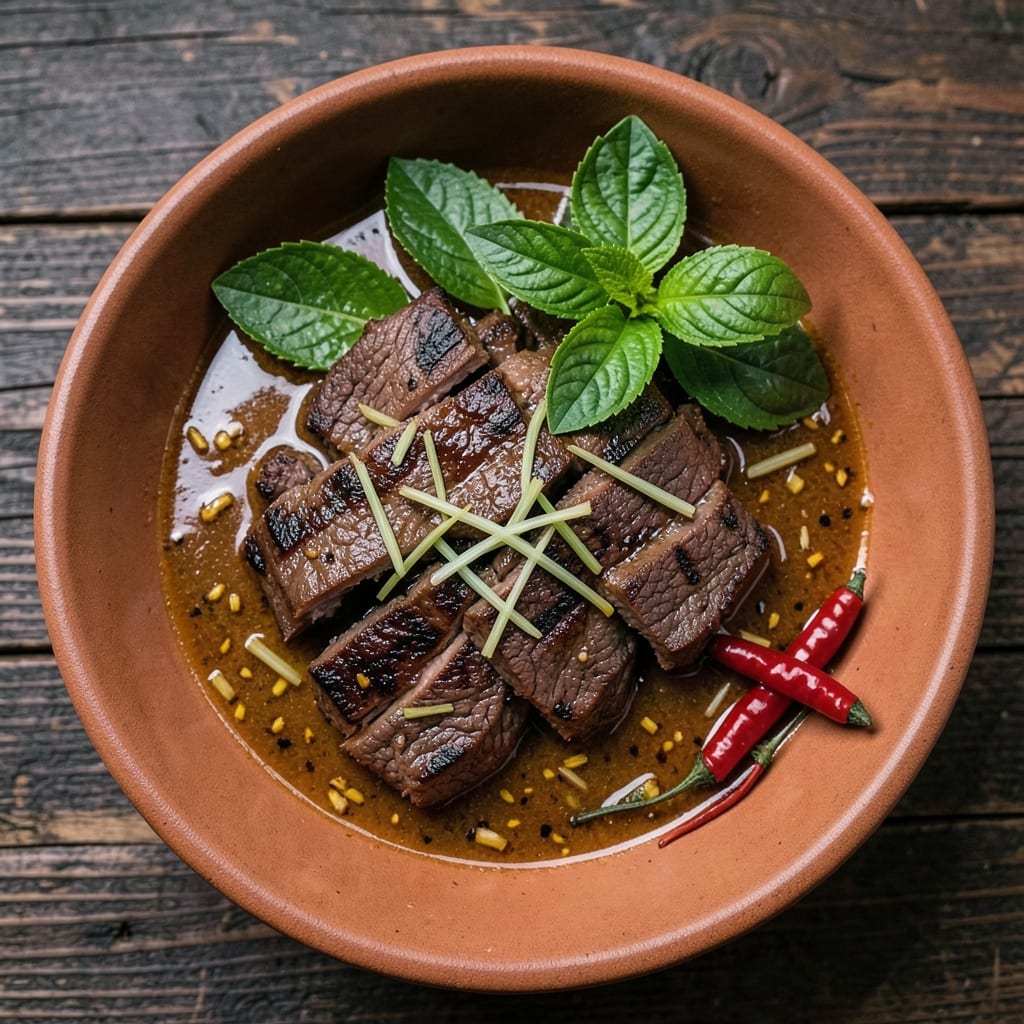
This authentic Thai beef recipe delivers the bold, aromatic flavors of street-side Thai cuisine right to your kitchen counter. The secret lies in balancing sweet, sour, and spicy elements while achieving that coveted wok-hei—smoky, charred aroma that defines Thai stir-fries. I've perfected this dish over years of testing, using traditional techniques that transform simple ingredients into a restaurant-quality meal.
The dish features tender beef marinated in a fragrant blend of lemongrass, galangal, and kaffir lime leaves, then stir-fried with Thai basil and bird's eye chilies for an authentic kick. The sauce, made with coconut milk and tamarind, creates a perfect harmony of richness and tang. What sets this apart is the proper technique: high-heat cooking in a well-seasoned wok to develop that signature smoky aroma while keeping the beef perfectly tender.
By the time you serve this dish, your kitchen will smell like a bustling Bangkok street market, and your taste buds will experience the perfect balance of sweet, sour, spicy, and umami. The beef comes out with a beautiful caramelized crust while remaining juicy inside, all coated in a glossy, aromatic sauce that clings perfectly to each bite. This is the kind of dish that makes you want to cook it again and again.
Serve it with steamed jasmine rice to soak up every last drop of that flavorful sauce, or pair it with fresh herbs and lime wedges for a complete Thai dining experience. The recipe includes tips for authentic presentation and variations to suit your spice preferences. Let's get cooking!
Ingredients for authentic thai beef
Bold flavors start here—lemongrass, galangal, and Thai basil transform simple beef into restaurant-quality Thai street food.
| Ingredient | Amount | Notes |
|---|---|---|
| Flank Steak 🥩 | 1 ½ lb | Thinly sliced against grain |
| Lemongrass 🌿 | 3 whole | White parts only, pounded |
| Galangal 🌿 | 2 inches | Fresh, peeled, sliced thin |
| Kaffir Lime Leaves 🍋 | 4 whole | Bruised to release oils |
| Thai Basil 🌿 | ½ cup | Fresh leaves only |
| Bird's Eye Chilies 🌶️ | 6 whole | Adjust to taste |
| Coconut Milk 🥥 | 1 can (13.5 oz) | Full-fat preferred |
| Tamarind Paste 🍋 | 2 tbsp | Or 3 tbsp lime juice |
| Fish Sauce 🍶 | 2 tbsp | Red Boat brand recommended |
| Brown Sugar 🍚 | 2 tbsp | Light or dark |
| Garlic Cloves 🧄 | 6 cloves | Minced fine |
| Shallots 🧅 | 4 whole | Minced fine |
| Vegetable Oil 🫒 | 2 tbsp | High smoke point |
| Jasmine Rice 🌾 | 2 cups | Uncooked, for serving |
| Lime Wedges 🍋 | 2 whole | For garnish |
The galangal and kaffir lime leaves are non-negotiable for authentic flavor—find them at Asian markets or well-stocked grocery stores like Whole Foods. If you can't locate fresh galangal, ginger at half the amount works in a pinch, though it won't be identical. For the beef, flank steak is ideal because it slices thinly and stays tender when cooked quickly. Look for good marbling and ask the butcher to slice it against the grain if you're not doing it yourself. Thai basil has a distinct anise-like flavor—don't substitute regular basil unless you want a completely different profile.
No tamarind paste? Lime juice with a pinch of sugar mimics the tang, though it won't be exactly the same. Running short on fish sauce? Soy sauce at half the amount gets you close, but you'll lose that umami depth. The bird's eye chilies pack serious heat—remove seeds for less spice if you're sensitive. For the coconut milk, full-fat gives the best texture, but light works if that's all you have. If you're missing galangal entirely, a little extra ginger plus a pinch of cardamom helps bridge the gap, though it's still not perfect.
Marinate the beef for at least 30 minutes—overnight if possible—for maximum flavor infusion. The sauce keeps well in the fridge for 5 days or freezes for 3 months. Store the fresh herbs separately if you're prepping ahead, and add them fresh when serving. The rice should be steamed just before serving to keep it light and fluffy. For a complete presentation, garnish with extra Thai basil and serve with lime wedges on the side—everyone should squeeze their own for that fresh burst.
Why You'll Love This Recipe
- No Chopping Chaos: I’ll be real—lemongrass and galangal can look intimidating, but this recipe only asks you to bruise them, not dice them. Five minutes with a knife (or a mortar and pestle, if you’re feeling fancy) and you’re done—no food processor required.
- Umami Bomb: That first bite? The charred flank steak with the bright, herby punch of Thai basil and the slow-simmered depth of galangal—it’s the kind of flavor that makes you pause mid-chew. Honestly, the balance of citrusy lemongrass and funky galangal is ridiculously hard to resist.
- Weeknight to Weekend: Make it for a lazy Tuesday with rice and a quick cucumber salad, or double the batch for a potluck where everyone asks for the recipe. The leftovers? Even better the next day—just reheat and toss with a fried egg for a lazy breakfast.
- Budget-Friendly Powerhouse: Flank steak stretches further than you’d think when sliced thin, and those aromatic herbs (yes, even kaffir lime leaves) turn a simple protein into something special. I’ve fed four people for under $15 with this—no takeout needed.
Step-by-step instructions for authentic Thai beef recipe
Here's how to balance fiery Thai spices with creamy coconut for a dish that sings with tradition.
Prepare the Aromatics and Marinade
Start by pounding the 3 whole lemongrass (white parts only) and 2 inches galangal (peeled) with the flat side of a knife until you achieve a rough paste. This releases their essential oils, which form the aromatic backbone of the dish. In a small bowl, combine the pounded lemongrass, galangal, 6 cloves garlic, 4 whole shallots, 2 tbsp brown sugar, 2 tbsp fish sauce, and 2 tbsp tamarind paste. Let this marinade sit for 15 minutes while you prep the remaining ingredients.
While the marinade develops, bruise the 4 whole kaffir lime leaves by gently pressing them between your palms. This releases their citrusy oils without turning them into pulp. Thinly slice the 1.5 lb flank steak against the grain into ¼-inch thick strips—this ensures tender bites. Add the steak to the marinade and toss to coat evenly. Let it marinate for at least 30 minutes (or up to 2 hours in the fridge for deeper flavor).
Cook the Jasmine Rice
Rinse the 2 cups jasmine rice under cold water until the water runs clear, then drain thoroughly. In a pot, combine the rice with 2 cups water and bring to a boil. Once boiling, reduce heat to low, cover, and simmer for 15 minutes. Turn off the heat and let it steam, undisturbed, for another 10 minutes. This resting period ensures each grain is fluffy and separate—critical for serving alongside the rich beef dish.
While the rice cooks, prepare the wok or large skillet. Heat 2 tbsp vegetable oil over medium-high heat until shimmering. Add the marinated steak in a single layer, leaving space between pieces to prevent steaming. Cook undisturbed for 2-3 minutes until the edges are deep golden brown and the steak releases easily from the pan. Transfer the beef to a plate and set aside.
Build the Spicy Coconut Sauce
In the same skillet, reduce the heat to medium and add 6 whole bird's eye chilies (adjust to taste). Toast them for 30 seconds until fragrant—this enhances their heat without burning. Add the 0.5 cup Thai basil and stir for 10 seconds to wilt slightly. Pour in the 1 can (13.5 oz) coconut milk and scrape up any browned bits from the bottom of the pan. These bits, called fond, are packed with flavor.
Simmer the coconut mixture for 5-7 minutes until it thickens slightly and coats the back of a spoon. Stir in the reserved marinated steak and heat through for 1-2 minutes—just enough to warm the beef without overcooking it. Taste and adjust seasoning: add a splash of water if the sauce is too thick, or a pinch of salt if it needs balance. The sauce should be vibrant, slightly sweet, and deeply aromatic with layers of spice.
Finish and Serve
Divide the jasmine rice among serving plates, creating a base for the beef and sauce. Spoon the beef and coconut sauce over the rice, ensuring each bite gets a generous portion of both. Garnish with the 2 whole lime wedges, squeezed lightly over each serving to brighten the dish with acidity. The lime also cuts through the richness of the coconut, balancing the heat.
Serve immediately while the rice is still warm and the flavors are at their peak. The dish should deliver a symphony of textures—tender beef, creamy coconut, and a subtle heat from the chilies—all harmonized by the aromatic lemongrass and galangal. For an extra touch, sprinkle with additional Thai basil just before serving to release its fresh, anise-like aroma. This is the moment when the dish truly shines, capturing the soul of Thai street food in your kitchen.
Pro Tips For Making Authentic Thai Beef
- Slice Against the Grain: Flank steak’s tough fibers need a plan—cut it against the grain after cooking, not before. I used to ignore this and ended up with chewy bites; now I slice thinly at a 45-degree angle right after searing, and the texture stays tender.
- Char the Galangal: Skip the pre-peeling—scrape off the outer purple skin with a spoon, then torch the galangal’s knobby end over a gas flame for 10 seconds. The smoky char deepens its peppery bite and makes it release flavor faster when minced.
- Don’t Crowd the Pan: High heat is your friend here, but I learned the hard way that stacking flank steak strips in a pan turns them soggy. Cook in batches if needed—let them sizzle undisturbed for 2 minutes per side, or you’ll end up with steamed beef instead of caramelized crust.
- Toast the Basil: Stems first, then leaves—toss the Thai basil stems into the wok before the beef, and let them crisp for 30 seconds. The stems add a subtle licorice note, and the leaves stay vibrant instead of wilting into mush. (Yes, even if you’re impatient like me.)
Serving suggestions for this dish
Rice Presentation
Jasmine rice is non-negotiable for this dish—its delicate floral aroma and separate grains create the perfect canvas for the bold flavors. I use a 1:1 rice-to-water ratio and steam it just until tender, then let it rest covered for 10 minutes before fluffing. For presentation, mound the rice slightly in the center of each plate to create a natural well for the beef and sauce to nestle into. A quick sprinkle of toasted sesame seeds adds visual contrast and a nutty crunch that complements the dish. 🌾
Sauce Garnishes
Fresh Thai basil is the star garnish here—toss a handful over each serving just before eating to release its anise-like aroma and brighten the dish. I also like to add thinly sliced red onions (about 2 tbsp per plate) for a sharp bite that cuts through the richness. For extra flair, drizzle with chili oil (mix 2 tbsp neutral oil with 1 tbsp crushed bird's eye chilies and ½ tsp sugar) just before serving. This adds a smoky, spicy finish that mimics street food presentation. 🌶️
Lime Wedges
Never skip the lime wedges—they're essential for balancing the dish's heat and richness. I serve 2 wedges per person, encouraging guests to squeeze them over their plates. The acidity brightens the coconut milk and tamarind, while the fresh citrus aroma makes the dish feel vibrant and complete. For an extra touch, sprinkle a pinch of salt on the wedges before serving to enhance their flavor. 🍋
Side Dish Pairings
While jasmine rice is the mainstay, a simple cucumber salad adds refreshing contrast. Toss 1 English cucumber (thinly sliced) with 1 tbsp rice vinegar, 1 tsp sugar, and ½ tsp salt. For something heartier, serve with Thai eggplant salad (Pad Prik King)—its smoky, spicy profile complements the beef beautifully. Both sides keep the meal balanced and true to Thai street food traditions. 🥒
Serving Utensils
Use long-handled serving spoons for the beef and sauce to maintain that restaurant-quality presentation. I like to place a small ceramic spoon on each plate for individual serving, which also adds to the aesthetic. For extra authenticity, serve with banana leaves (available at Asian markets) as a base—their natural aroma enhances the dish's tropical profile. If banana leaves aren't available, use parchment paper as a substitute. 🍽️
Family-Style Serving
This dish is perfect for sharing—present it family-style with a large platter of rice in the center, surrounded by the beef and sauce. I often add a small bowl of extra spicy chili sauce (mix 1 tbsp fish sauce, 1 tbsp lime juice, and 1 tbsp minced chilies) on the table for those who want extra heat. Encourage everyone to mix their portions to their taste, creating a communal dining experience that's very Thai. 💛
Nutrition facts
Frequently asked questions
What's the best cut of beef for this authentic Thai recipe?
Use flank steak or sirloin for the best results—they slice thinly against the grain and stay tender when cooked quickly over high heat. Avoid tougher cuts like chuck, as they won't develop the proper texture. If you can't find these, ribeye works too, though it has more fat.
Can I make this recipe without galangal?
Yes, but the flavor won't be exactly authentic. Replace 2 inches galangal with 1 tbsp fresh ginger + ½ tsp cardamom powder for the closest substitute. Galangal has a citrusy, peppery taste that's essential to Thai cuisine—skip it only if absolutely necessary.
How do I adjust the spice level?
Remove seeds from bird's eye chilies for milder heat, or add 1-2 extra chilies for more spice. For a non-spicy version, omit them entirely and add ½ tsp sugar to balance the sauce. Always taste the sauce before serving—Thai flavors build gradually!
Can I prepare this dish ahead of time?
Marinate the beef for up to 24 hours in the fridge for deeper flavor. Make the sauce 1 day ahead and reheat gently before adding the beef. Cook the rice fresh when serving—it loses texture when reheated. Store components separately and assemble just before eating.
What's the secret to getting that smoky wok-hei flavor?
Use a well-seasoned wok or cast-iron skillet on high heat until it's smoking slightly. Cook the beef in a single layer without stirring for 2-3 minutes to develop caramelization. The key is high heat + minimal movement—this creates the signature smoky aroma.