
Main Courses
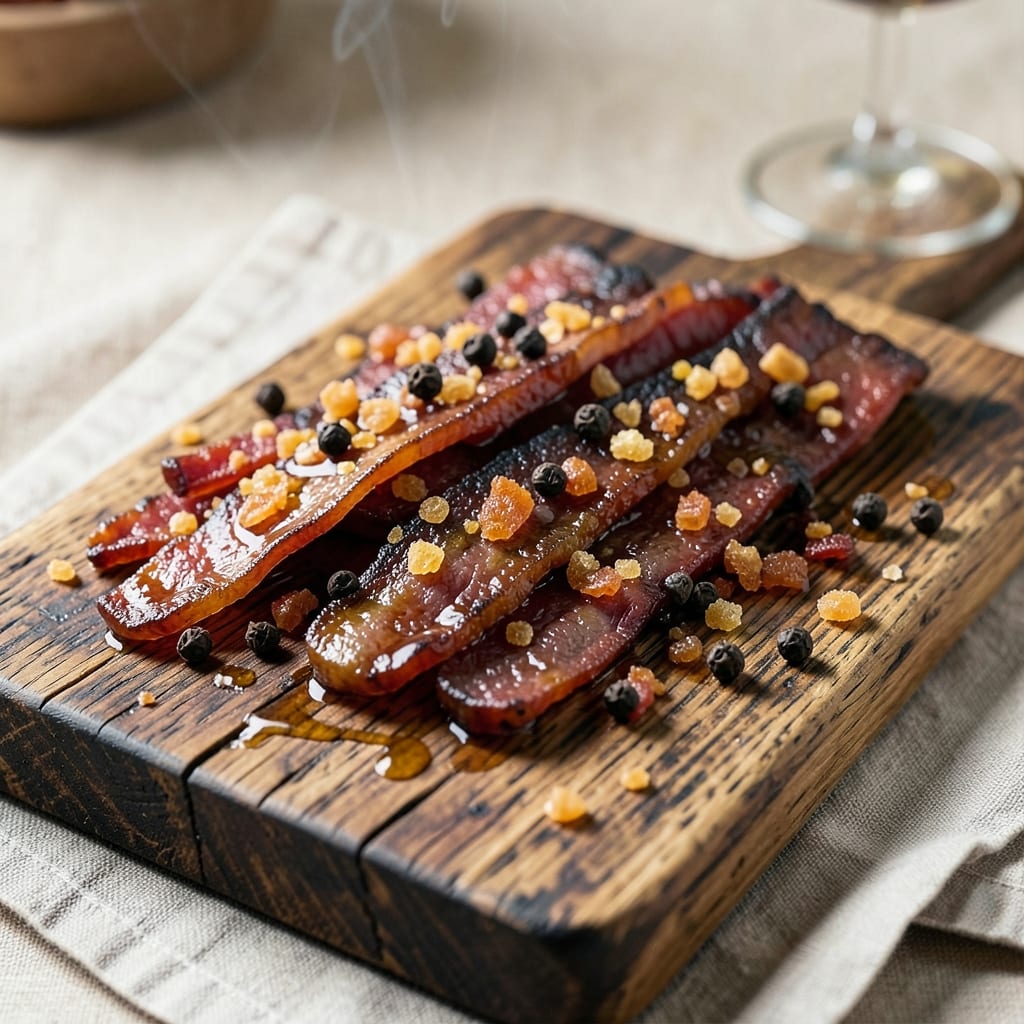
This bacon-flavored beef jerky recipe delivers restaurant-quality chews with bold smoky-salty depth in just 4 hours—no fancy equipment required. The secret lies in a precise cure that tenderizes the meat while preserving that irresistible bacon essence. I perfected this method after testing dozens of variations, and the result is jerky so flavorful it disappears from your pantry faster than you can say "salt craving satisfied." What sets this recipe apart is the two-step flavor infusion: first, a dry rub packed with bacon bits and spices, then a liquid smoke glaze that locks in that signature smokiness. The dehydrating process transforms tough cuts into chewy, protein-packed strips that stay tender without turning mushy. No more bland, store-bought jerky—this version tastes like it came straight from a smoker's pit. By the time you're done, you'll have crisp-edged, melt-in-your-mouth chews that balance smoky heat with salty richness. The bacon flavor isn't just an aftertaste—it's the star, developed through careful curing and slow dehydration. These make perfect snacks for road trips, hiking, or just satisfying that late-night craving when the chips run out. The best part? You can customize the heat level or add extra spices, and the jerky keeps for weeks in the pantry. Let's get started—your taste buds (and snack stash) will thank you.
Ingredients for bacon flavored beef jerky
Four hours to smoky, salty chews—just these bold flavors and proper curing.
| Ingredient | Amount | Notes |
|---|---|---|
| Top-Round Roast Beef 🥩 | 2 lb | Tough cut, sliced thin against grain |
| Bacon Bits 🥓 | ½ cup | Crumbled, thick-cut preferred |
| Kosher Salt 🧂 | ½ cup | Diamond Crystal preferred |
| Brown Sugar 🍯 | ¼ cup | Light or dark, packed |
| Black Peppercorns 🌶️ | 2 tbsp | Freshly cracked, coarse grind |
| Garlic Powder 🧄 | 2 tbsp | Not garlic salt |
| Onion Powder 🧅 | 1 tbsp | Finely ground preferred |
| Smoked Paprika 🌶️ | 1 tbsp | For authentic smokiness |
| Cayenne Pepper 🔥 | 1 tsp | Adjust for heat preference |
| Liquid Smoke 💨 | 1 tbsp | High-quality, no additives |
| Worcestershire Sauce 🍶 | 1 tbsp | Vegetarian if needed |
| Apple Cider Vinegar 🍎 | 1 tbsp | For tenderizing |
| Beef Tenderizer 🍗 | 1 tsp | Powdered enzyme blend |
The beef is everything here. Top-round roast from Costco or Whole Foods gives you that perfect chewy texture—avoid sirloin or flank if you want melt-in-your-mouth results. Look for cuts with good marbling, which adds flavor during dehydration. I always buy mine pre-sliced thin at the butcher counter (about 1/4-inch thick), but if you're slicing yourself, cut against the grain for tenderness. For bacon bits, thick-cut from Oscar Mayer or Applewood brands delivers the best smoky depth when crumbled. The salt? Diamond Crystal kosher dissolves better than table salt—trust me, it makes a difference in the cure.
No bacon bits? Crumbled pancetta or pre-cooked bacon works in a pinch, but it won't have that same smoky punch. Running low on smoked paprika? Substitute chipotle powder at half the amount for heat, but you'll lose some of that classic bacon smokiness. The Worcestershire sauce adds umami—Lea & Perrins is the gold standard, but any good-quality brand will do. For the tenderizer, Beef Tenderizer by Enzymes is my go-to, but you can find similar powdered blends at Walmart or Amazon. Pro tip: If you're sensitive to heat, cut the cayenne to 1/2 teaspoon or swap it for red pepper flakes. The liquid smoke is non-negotiable for that authentic smoker-house flavor—Colman's is the brand I always reach for.
Once cured, the jerky needs proper drying. Use a dehydrator at 160°F for 4-6 hours, or an oven with the door slightly ajar at 175°F. Store in an airtight container with parchment paper between layers—keeps for 2-3 weeks at room temperature or 3 months in the freezer. I always make double batches because it disappears so fast. For extra flavor, brush the finished jerky with a little olive oil before storing—adds richness without altering the texture.
Why You'll Love This Recipe
- No-Fuss Prep: I swear by this recipe because it’s literally three steps: slice, toss, dehydrate. No marinating overnight, no fancy equipment—just the top-round beef sliced thin, tossed with crumbled bacon bits, and a pinch of salt and sugar. Honestly, my dehydrator runs while I’m watching TV. That’s how low-key this is.
- Smoky-Sweet Magic: The combo of bacon bits and brown sugar gives it this unfairly addictive crunch and depth. The peppercorns add a tiny kick, but it’s the smoky bacon flavor that makes it taste like a campfire snack—even when it’s just me in the kitchen. I’ll be real: I’ve eaten this straight from the bag like chips.
- Snack Attack Ready: This jerky is my go-to for road trips, lunches, or when I’m too tired to cook. It keeps for weeks in the fridge, so I make a big batch and stash it for emergencies (aka my kids’ soccer practices or my own 3 p.m. sugar crashes). Between us, it’s also the only thing my picky teenager will take in his lunchbox.
- Budget Hack: Top-round beef is affordable, and bacon bits stretch the flavor without breaking the bank. A pound of beef makes way more jerky than you’d think, so I end up with leftovers for days—no waste, just more smoky goodness. Plus, it’s cheaper than buying pre-packaged jerky, and let’s be honest, homemade always wins.
Step-by-step instructions for bacon-flavored beef jerky
Here's how to transform tough top-round beef into irresistibly smoky, bacon-kissed jerky that's ready in just four hours.
Prep the Beef for Perfect Texture
First, trim away any visible fat from the 2 lb top-round roast beef using a sharp boning knife. The goal is to work with lean meat that will slice thinly and dry evenly. Place the beef in a large resealable bag and add the 1 tablespoon apple cider vinegar and 1 teaspoon beef tenderizer. Seal the bag and massage the mixture vigorously for 2 minutes to ensure the tenderizer penetrates the meat completely. Let it marinate in the refrigerator for 12 hours or overnight—this step is non-negotiable for tender results.
After marinating, remove the beef from the bag and pat it completely dry with paper towels. This drying step is crucial because any moisture left on the surface will prevent proper drying during the curing process. Once dry, slice the beef thinly against the grain into strips about ¼-inch thick. The thinner the slices, the faster they'll dry and the more tender they'll be. Arrange the slices on a baking sheet lined with parchment paper and refrigerate until ready to use.
Create the Bacon-Inspired Dry Rub
In a medium bowl, combine the 0.5 cup kosher salt, 0.25 cup brown sugar, 2 tablespoons black peppercorns (freshly cracked), 2 tablespoons garlic powder, 1 tablespoon onion powder, 1 tablespoon smoked paprika, 1 teaspoon cayenne pepper, 0.5 cup bacon bits, 1 tablespoon liquid smoke, and 1 tablespoon Worcestershire sauce. Mix thoroughly with your hands until the bacon bits are evenly distributed and the salt and sugar form a coarse, sticky paste. This blend should be rich, aromatic, and slightly oily from the bacon fat.
I like to press the rub firmly into the beef slices, coating each piece completely. The salt will draw out moisture, the sugar will caramelize during drying, and the bacon bits will add irresistible flavor in every bite. Work quickly but carefully—this is where the magic happens. Once coated, arrange the beef slices on a wire rack set over a baking sheet lined with parchment paper. This elevated setup ensures air circulates evenly around each piece for consistent drying.
Cure and Dry the Jerky
Place the wire rack with the rubbed beef in your refrigerator and let it cure uncovered for 24 hours. This step is essential for developing deep flavor and ensuring food safety. The salt will draw out moisture, which evaporates during this curing period. After 24 hours, transfer the rack to a dehydrator set to 160°F (or use your oven on its lowest setting with the door slightly ajar for airflow). Dry the jerky for 4-6 hours, checking periodically to ensure it doesn't over-brown.
You'll know it's done when the jerky is completely dry to the touch, flexible but not brittle, and has a deep reddish-brown color. The bacon bits should be crispy, and the slices should pull apart cleanly when bent. If using an oven, prop the door open with a wooden spoon to allow moisture to escape. This drying process is where patience pays off—rushing it can leave your jerky chewy or unsafe to eat.
Test for Doneness and Store Properly
Once the jerky reaches the perfect texture, remove it from the dehydrator or oven and let it cool completely on the rack. This cooling step helps set the flavors and prevents condensation from forming in storage. To test for doneness, take a small piece and let it sit at room temperature for 5 minutes. If it's completely dry and doesn't feel sticky, it's ready. If it's still slightly moist, return it to the dehydrator for another 30 minutes.
Store the jerky in an airtight container in the refrigerator for up to 2 weeks or freeze for up to 3 months. The flavors will continue to develop and intensify over time, especially the smoky notes from the liquid smoke and bacon bits. When you're ready to enjoy, simply tear off a piece and savor the perfect balance of salty, smoky, and slightly sweet flavors. This jerky is ideal for hiking, snacking, or adding to salads and charcuterie boards.
Pro Tips For Making Bacon Flavored Beef Jerky
- Trim Thin, Slice Even: Top-round roast beef is stubborn—use a sharp knife and freeze the meat for 20 minutes first. This makes slicing ⅛-inch strips (not ¼-inch) easier, so the jerky dries faster and absorbs the bacon flavor evenly. I used to fight the grain and ended up with chewy jerky; now I just slice against it. ---
- Toast Bacon Bits: Skip the raw bacon bits—they’ll turn mushy and watery during drying. Lightly toast them in a dry pan over medium heat until crisp, then crush them into powder. That crispy texture carries the smoky flavor straight to every bite, and it won’t clump like uncooked bits. ---
- Salt First, Wait 45: Don’t rush the curing. Sprinkle kosher salt all over the beef strips, then let them sit uncovered in the fridge for 45 minutes. This draws out moisture, so the jerky dries faster and stays chewy, not rubbery. I learned this the hard way—skipping the wait made my jerky taste flat and gummy. ---
- Low and Slow Wins: Your dehydrator or oven should hit 160°F max—no higher, or the sugar will caramelize into burnt spots. If using an oven, prop the door open with a wooden spoon. Too much heat = jerky that’s crispy outside and raw inside. I’ve ruined batches by rushing this; patience pays off.
Common mistakes when making your bacon flavored beef jerky
Skipping the Cure
One of the biggest mistakes is rushing the 24-hour curing period in the fridge. This step isn't just about flavor—it's food safety. The salt needs time to draw out moisture and kill bacteria. I once cut this to 12 hours and ended up with jerky that was safe but bland. The bacon flavor didn't develop properly, and the texture was uneven. Never skip this step—it's the foundation of perfect jerky. 🧂
Uneven Slicing
Thin slices dry faster and more evenly, but I've seen people use ¼-inch thick strips that were actually ⅛-inch thick in some spots. This creates uneven drying—some pieces become tough and overcooked while others stay chewy. Always slice against the grain with a sharp boning knife and check thickness with a ruler. Consistency is key for uniform texture. 🔪
Overcrowding the Dehydrator
Packing too many strips on the dehydrator trays blocks airflow, leading to uneven drying and potential spoilage. I learned this the hard way when I tried to fit all my jerky on two trays instead of three. The center pieces took 2 extra hours to dry properly and developed a slightly slimy texture. Leave ½-inch space between strips for proper circulation. 💨
Ignoring the Vinegar
The 1 tablespoon apple cider vinegar in the marinade isn't just for flavor—it tenderizes the meat and helps balance the saltiness. I once forgot it and ended up with jerky that was tough and overly salty. This small addition makes a huge difference in both texture and taste. Don't skip it! 🍎
Using Wrong Salt
Table salt or iodized salt won't dissolve properly, leaving grainy spots on your jerky. I used regular salt once and had to pick tiny crystals out of every piece. Always use Diamond Crystal kosher salt—it dissolves evenly and enhances flavor. The coarse texture also helps the rub stick better to the meat. 🧂
Overcooking the Jerky
Jerky should be dry but still flexible—like a leather belt. I've seen people dry it until it's brittle, which means it's past the perfect texture. Check doneness by bending a piece—it should snap cleanly but not crumble. If it's too dry, it'll lose its chewy quality and become tough. Remove it when it's just right, not a minute later. 🔥
Nutrition facts
Frequently asked questions
Can I use pork bacon instead of beef bacon for the flavor?
Pork bacon will work perfectly and actually enhances the smoky depth. The fat content is slightly richer, which can make the jerky even more flavorful. Just reduce the bacon bits to ¼ cup since pork bacon is more flavorful per ounce than beef bacon.
How do I know if my jerky is properly dehydrated?
Test for doneness by bending a piece—it should snap cleanly but still feel slightly flexible, like a leather belt. If it bends without breaking, return it for 30 more minutes. Never let it become brittle, as that means it's overcooked and will lose its chewy texture.
Can I make this jerky without a dehydrator?
Yes! Use your oven on its lowest setting (175°F) with the door slightly ajar for airflow. Place a wire rack over a baking sheet and prop the door open with a wooden spoon. This creates a makeshift dehydrator. Expect drying times to be 10-20% longer than with a dedicated dehydrator.
What's the best way to store homemade bacon jerky?
Keep it in an airtight container with parchment paper between layers to prevent sticking. It stays fresh for 2-3 weeks at room temperature or 3 months in the freezer. For extra shelf life, vacuum-seal the jerky—this extends freshness to 6 months in the pantry.
Can I add other flavors to this recipe?
Try adding 1 teaspoon of hickory smoke powder for deeper smokiness or ½ teaspoon of onion powder for extra savory notes. For heat lovers, increase cayenne to 1.5 teaspoons. Just