Main Courses
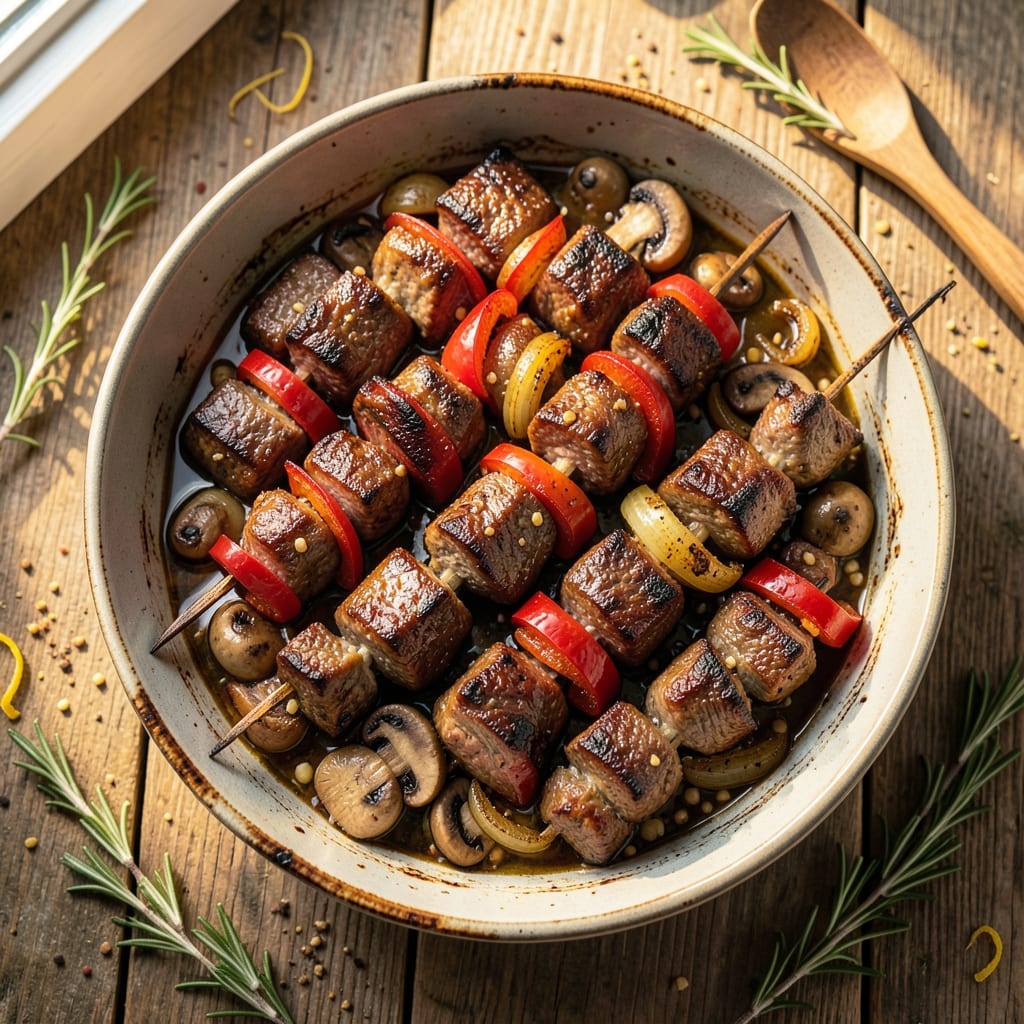
This baked beef kabob recipe delivers juicy pink centers with a perfect charred crust—no grill required. The secret lies in marinating the beef for at least 4 hours (overnight is ideal) to tenderize and infuse flavor, then baking at high heat to lock in moisture while creating that coveted caramelized exterior. I developed this method after years of experimenting with traditional grilled kabobs, and it consistently delivers restaurant-quality results at home.
The marinade is where the magic happens—a blend of olive oil, soy sauce, garlic, and spices that transforms tough beef into tender, flavorful bites. You'll skewer the beef with vegetables like bell peppers and onions for color and texture, then bake until the edges are beautifully charred while the centers remain perfectly pink. This method is foolproof for weeknight dinners or special occasions, as it requires minimal hands-on time but delivers maximum flavor.
What you'll end up with is a visually stunning dish that's as impressive to look at as it is to eat—golden-brown kabobs with tender beef and vibrant vegetables, all coated in a sticky-sauce glaze. The high-heat baking ensures a crispy exterior without drying out the meat, while the marinade guarantees deep, complex flavors in every bite. This is the kind of dish that elevates any meal from ordinary to extraordinary.
Serve with a side of couscous or crusty bread to soak up the delicious juices, and garnish with fresh herbs for a pop of color. The recipe scales easily for parties, and leftovers reheat beautifully for lunch the next day. Let's get started on creating kabobs that will have everyone asking for seconds.
Ingredients for baked beef kabob
Juicy beef cubes and vibrant veggies transform into restaurant-style kabobs with minimal effort.
| Ingredient | Amount | Notes |
|---|---|---|
| Beef Chuck Roast 🥩 | 1 ½ lb | Cut into 1.5-inch cubes, boneless |
| Extra-Virgin Olive Oil 🫒 | ½ cup | For marinade and basting |
| Soy Sauce 🍶 | ¼ cup | Low-sodium preferred |
| Garlic Cloves 🧄 | 6 cloves | Minced for marinade |
| Ground Cumin 🌿 | 1 tbsp | Toasted for depth |
| Smoked Paprika 🌶️ | 1 tbsp | For smoky flavor |
| Ground Coriander 🌿 | 1 tsp | Freshly ground preferred |
| Red Bell Peppers 🍅 | 2 whole | Cut into 1.5-inch chunks |
| Yellow Onions 🧅 | 1 whole | Cut into 1.5-inch chunks |
| Wooden Skewers 🪵 | 8 whole | Soaked in water 30 minutes |
| Honey 🍯 | 1 tbsp | For glaze finish |
| Balsamic Vinegar 🍷 | 1 tbsp | For glaze finish |
| Salt 🧂 | 1 ½ tsp | Kosher or sea salt |
| Black Pepper 🌶️ | 1 tsp | Freshly ground |
The beef cut is everything here. Chuck roast delivers that melt-in-your-mouth texture—sirloin or ribeye stays too firm. Look for well-marbled meat at the butcher counter or pre-cut beef sections in your grocery store's meat department. I always buy Costco's pre-cubed chuck for convenience, but if you're feeling ambitious, trim any large fat caps before cubing. For the vegetables, red bell peppers and yellow onions add color and crunch, but swap in zucchini or mushrooms if you prefer. Just keep the chunks consistent in size so everything cooks evenly.
No soy sauce? Coconut aminos work in a pinch, though the flavor won't be identical. Running short on honey? Maple syrup or agave gives a similar sweetness for the glaze. The garlic can be pre-minced from a jar (no shame), but freshly minced packs more punch. For the spices, Penzeys or the bulk section at Whole Foods are great for quality—just check the expiration dates. If you're making this ahead, marinate the beef overnight for maximum tenderness, but the veggies should only soak in the marinade for 30 minutes to prevent mushiness.
Marinated beef keeps 3 days in the fridge—use within that window for best texture. The skewers? Soak them 30 minutes before assembly to prevent burning. Assemble kabobs just before baking so they hold their shape. Leftovers reheat beautifully—400°F for 5-7 minutes restores that charred crust. I always make a double batch because these disappear fast. Store any extras in a single layer on a tray before transferring to containers to prevent sticking.
Why You'll Love This Recipe
- No Chopping Hassle: I swear by this recipe because the beef comes pre-cut—just cube it yourself in 5 minutes. No fancy knife skills, no tiny pieces falling apart. The chuck roast stays together beautifully, even after baking, so you’re not stuck with a mess.
- Deep Umami Magic: That soy sauce and garlic marinade? It’s where the real flavor lives. The beef develops this caramelized crust while staying juicy inside, and the cumin adds just enough earthy warmth to make it feel like a restaurant dish without the fuss.
- Weeknight to Party: I’ve served these as a casual dinner with crusty bread and as the star at a potluck—no one ever questions why they’re so good. The leftovers reheat perfectly, too, so you’re not stuck eating the same thing twice.
- Budget Meal Stretch: A single chuck roast feeds my family for days. The olive oil and spices cost pennies, and you’re not wasting anything—every bite is packed with flavor. Honestly, it’s my go-to when I need to feed a crowd without breaking the bank.
Step-by-step instructions for baked beef kabobs
Here's how to achieve perfectly charred kabobs with tender beef and caramelized vegetables.
Prepare the Marinade and Cube the Beef
In a large bowl, combine the 0.5 cup extra-virgin olive oil, 0.25 cup soy sauce, 6 cloves minced garlic cloves, 1 tbsp ground cumin, 1 tbsp smoked paprika, 1 tsp ground coriander, 1.5 tsp salt, and 1 tsp black pepper. Whisk until fully blended and the spices are evenly distributed. This marinade should be smooth and fragrant with a deep, earthy aroma.
Cut the 1.5 lb beef chuck roast into 1.5-inch cubes—keep them uniform in size so they cook evenly. Add the beef to the marinade, turning to coat completely. Cover and refrigerate for at least 4 hours, or preferably overnight. The longer it marinates, the more tender and flavorful the beef will become. If you're short on time, marinate for at least 2 hours—just be prepared for slightly firmer beef.
Prep Vegetables and Skewer the Kabobs
Cut the 2 whole red bell peppers and 1 whole yellow onion into 1.5-inch chunks, matching the size of the beef cubes. Soak the 8 whole wooden skewers in water for 30 minutes to prevent burning during baking.
Thread the marinated beef and vegetables onto the skewers, alternating between beef, red bell pepper, and yellow onion. Start and end with beef to ensure even cooking. Arrange the kabobs in a single layer on a baking sheet, leaving space between each skewer for air circulation. This prevents steaming and ensures a proper char on all sides.
Bake Until Caramelized and Tender
Preheat your oven to 425°F and position a rack in the middle position. Place the baking sheet on the rack and bake the kabobs for 15 minutes. After this initial sear, reduce the heat to 375°F and continue baking for an additional 15-20 minutes, until the beef reaches an internal temperature of 145°F and the vegetables are tender with slightly charred edges.
You'll know they're done when the beef pulls away from the skewer easily and the vegetables have softened but still hold their shape. The edges should be deep golden brown with visible grill marks. If the kabobs aren't brown enough after 20 minutes, return them to the oven for 5-10 minutes at 400°F to finish charring.
Glaze and Serve with Flavorful Drizzle
While the kabobs rest, combine the 1 tbsp honey and 1 tbsp balsamic vinegar in a small saucepan. Heat over low heat and simmer for 2-3 minutes until slightly thickened. This glaze should coat the back of a spoon and have a glossy sheen.
Drizzle the glaze evenly over the hot kabobs, letting it caramelize slightly for 1-2 minutes. Serve immediately, as the glaze sets quickly. The beef should be juicy with a pink center, while the vegetables will be tender and slightly caramelized from the glaze. Pair with a fresh salad or warm pita bread for a complete meal.
Pro Tips For Making Baked Beef Kabob
- Sear Before Baking: The Chuck Roast’s fat cap needs a hot sear first—cast iron or heavy skillet, 3-4 minutes per side until golden. I used to skip this, and the kabobs ended up dry and flavorless. That crust locks in juices and builds depth.
- Slice Against the Grain: Cut the roast into 1-inch cubes after it rests, and slice each piece against the grain. I learned this the hard way—thinly sliced kabobs turn to mush when you don’t. Use a sharp knife and work fast; the meat cools quickly.
- Marinate Overnight, But Not Too Long: Toss the cubed beef in olive oil, soy sauce, minced garlic, and cumin, then let it sit 12-24 hours max. Any longer, and the soy sauce starts cooking the meat, turning it mushy. Cover and refrigerate—no need to overcomplicate.
- Use Wooden Skewers, Soak Them: Metal skewers? They’ll burn your beef and warp. Wooden ones need a 30-minute soak in water first—prevents splintering and keeps the kabobs from falling apart. I was skeptical until I tried it; now I never go back.
Storing and reheating your leftovers
Fridge Storage Tips
Store your baked beef kabobs in an airtight container with parchment paper between layers to prevent sticking. The beef stays juicy for up to 3 days when refrigerated at 40°F or below. I always let them cool completely before storing to avoid condensation. For extra protection, sprinkle a pinch of smoked paprika over the top before sealing—it keeps the beef looking vibrant and adds a subtle smoky aroma. 🌶️
Freezer-Friendly Method
Freeze kabobs for up to 3 months by wrapping them individually in plastic wrap, then placing in a freezer-safe bag with all air squeezed out. Label with the date and reheating instructions. When ready to eat, thaw overnight in the fridge before reheating. I find this works best for meal prep—just assemble and freeze the uncooked skewers, then bake straight from frozen at 400°F for 25-30 minutes.
Reheating for Charred Crust
For the best texture, reheat kabobs in a 400°F oven for 5-7 minutes on a wire rack over a baking sheet. This maintains that charred crust while warming through. Avoid microwaving—it turns the beef rubbery. If you must use the microwave, cover with a damp paper towel and heat in 30-second bursts on 50% power, then finish under the broiler for 1-2 minutes to restore browning. 🔥
Glaze Refresh Trick
If the glaze looks dry after reheating, brush on a fresh mix of 1 tbsp honey and 1 tbsp balsamic vinegar warmed for 1 minute in the microwave. This revives the sticky, caramelized finish. For extra flavor, add a pinch of ground cumin to the reheated glaze—it bridges the gap between the original marinade and the reheated beef beautifully.
Serving Leftovers Creatively
Turn reheated kabobs into a kabob salad by chopping and tossing with mixed greens, cherry tomatoes, and a lemon-tahini dressing. Or shred the beef and mix into pasta with a sprinkle of fresh parsley. The marinade flavors infuse everything, making leftovers taste almost as good as the original. I always keep a small container of extra glaze in the fridge to drizzle on these creative dishes. ✨
Nutrition facts
Frequently asked questions
Can I use regular sirloin instead of chuck roast for this recipe?
While sirloin works, it won't be as tender because it has less fat and connective tissue. For best results, stick with chuck roast or ribeye—these cuts stay juicy and flavorful when baked. If you must use sirloin, marinate it for at least 6 hours (overnight is ideal) to maximize tenderness.
How do I prevent the kabobs from falling apart when baking?
Soak wooden skewers for 30 minutes before using to prevent burning, and arrange the beef and veggies snugly on each skewer. For extra security, thread a small piece of bell pepper or onion at the very end of each skewer to act as a stopper. Avoid overloading the skewers—keep the pieces uniform in size.
Can I bake these kabobs in foil to make cleanup easier?
Yes, but it won't give you that perfect charred crust. If you prefer foil, bake at 375°F for 25-30 minutes instead, then finish under the broiler for 3-5 minutes to brown the tops. For foil-free baking, line your sheet pan with parchment paper for easy cleanup while still getting those caramelized edges.
What's the best way to test if the beef is done?
Use a meat thermometer to check for 145°F internal temperature—this ensures juicy pink centers while killing bacteria. If you don't have one, cut into a piece: the juices should run clear, and the beef should pull away from the skewer easily. For medium-rare, aim for 135°F.
Can I swap out the vegetables in this recipe?
Try zucchini, mushrooms, or pineapple for sweetness. Just keep chunks 1.5 inches to match the beef size. For heartier kabobs, add cherry tomatoes or red onions. The key is balancing textures—soft veggies like zucchini pair well with firm beef.