
Main Courses
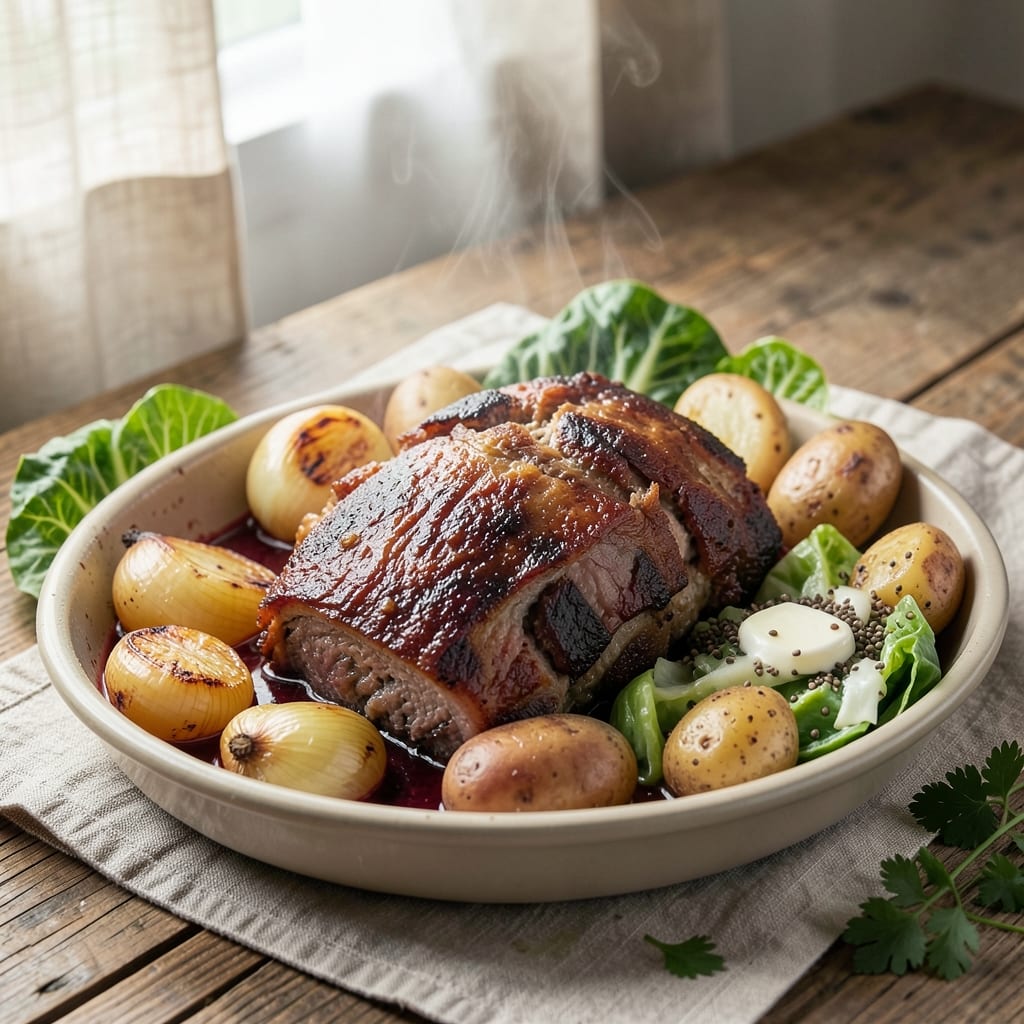
This baked corned beef brisket and cabbage recipe delivers all the hearty, comforting flavors of an Irish pub without the fuss of stovetop braising. The secret lies in slow-baking the brisket until fork-tender while the cabbage softens into sweet, caramelized perfection—no pot to scrub, just rich, satisfying results. I've perfected this method over years of St. Patrick's Day celebrations, where it becomes the centerpiece that disappears faster than the green beer.
The beauty of this recipe is its simplicity: just a few ingredients, a single baking dish, and 3 hours of hands-off cooking that transforms tough brisket into melt-in-your-mouth slices. The cabbage gets tossed with just enough butter and caraway seeds to complement the brisket's deep, savory notes, while potatoes on the side soak up every last drop of the juices. It's the kind of meal that makes your kitchen smell like a cozy pub and leaves everyone asking for seconds.
What makes this version special is the balance—rich but not greasy, tender but not mushy, with flavors that develop beautifully as it bakes. The brisket emerges with a crispy exterior and juicy interior, while the cabbage achieves that perfect sweetness from slow caramelization. This is comfort food at its finest: hearty enough for a family gathering but simple enough for a weeknight dinner when you crave something substantial.
Serve with buttered mashed potatoes, crusty bread for soaking up the juices, and a simple green salad to cut through the richness. The leftovers reheat beautifully, making this an excellent make-ahead option for busy days. Here's how to create this Irish pub masterpiece in your own kitchen.
Ingredients for baked corned beef brisket and cabbage
Six hearty ingredients transform into a pub-style feast that smells like home.
| Ingredient | Amount | Notes |
|---|---|---|
| Corned Beef Brisket 🥩 | 4 lb | Pre-cured, 4-5 lbs for even cooking |
| Fresh Green Cabbage 🥬 | 2 whole | Heads, cut into eighths |
| Yellow Onions 🧅 | 2 whole | Medium, sliced into half-moons |
| Russet Potatoes 🥔 | 2 lb | Yukon Gold or red preferred |
| Unsalted Butter 🧈 | ½ cup | Cold, cut into pats |
| Ground Caraway Seeds 🌿 | 1 tbsp | Freshly ground preferred |
| Fresh Thyme Leaves 🌿 | ¼ cup | Or 1 tbsp dried thyme |
| Garlic Cloves 🧄 | 6 cloves | Smashed, not minced |
| Beef Broth 💧 | 2 cups | Low-sodium preferred |
| Apple Cider Vinegar 🍎 | ¼ cup | For tangy depth |
| Kosher Salt 🧂 | 1 ½ tsp | Diamond Crystal preferred |
| Freshly Ground Black Pepper 🌶️ | 1 tsp | Cracked peppercorns preferred |
| Bay Leaves 🍃 | 2 whole | Removed before serving |
| Heavy Cream 🥛 | ¼ cup | For cabbage sauce |
The brisket is the star—look for a 4-5 lb piece with good marbling at your butcher or Costco. Pre-cured is key here, so check the label (or ask your butcher). If you're buying whole, trim excess fat to about 1/4-inch thickness—this helps it crisp up during baking. Dunk the brisket in cold water for 10 minutes before seasoning to reduce saltiness. For cabbage, fresh green heads are best, but purple works too—just halve them and remove the core. The potatoes? Yukon Golds are ideal—they hold their shape but still get tender.
No caraway seeds? Skip it entirely—this isn't a dealbreaker, just a traditional touch. Short on thyme? Dried oregano at half the amount works in a pinch. Using low-sodium broth? Add an extra pinch of salt to compensate. The apple cider vinegar can be swapped for red wine vinegar if that's what you've got. For the cabbage, pre-cut coleslaw mix saves time, though fresh is always better. And if you're feeling fancy, add a splash of stout beer to the baking liquid—trust me on this.
This reheats like a dream—350°F for 10 minutes covered with foil. The brisket stays juicy for 3-4 days in the fridge, while the cabbage and potatoes keep for 2 days. For leftovers, I always portion the brisket separately so it's ready to slice. The cabbage sauce? Freezes beautifully for up to 3 months—just reheat gently and stir in a splash of cream to restore richness. Make a double batch of the cabbage mix if you're feeding a crowd—it disappears fast.
Why You'll Love This Recipe
- One-Pan Magic: I swear by this recipe because it’s the rare dish where you chop once, bake twice, and call it a day. The cabbage and onions caramelize right alongside the brisket—no fancy pots or pans needed.
- Deep, Savory Crunch: That crispy edge on the brisket? The butter-basted potatoes? Honestly, it’s the kind of flavor that makes you close your eyes. The corned beef stays juicy, the cabbage gets just tender enough to soak up every bit of that smoky, salty goodness.
- Leftovers That Win: Between us, this is the only recipe where I actually look forward to leftovers. The brisket shreds perfectly for sandwiches, and the potatoes and cabbage reheat like a dream—no soggy mess, just pure comfort.
- Budget-Friendly Feast: A whole brisket feeds six, and the cabbage and potatoes stretch it even further. I’ll be real: this is my go-to when I need to feed a crowd without breaking the bank. Plus, the ingredients are all pantry staples.
Step-by-step instructions for baked corned beef brisket and cabbage
Here's how to transform your corned beef into a tender, flavorful masterpiece with perfectly braised cabbage.
Prepare the Corned Beef Brisket
Preheat your oven to 300°F. Rinse the 4 lb corned beef brisket thoroughly under cold water to remove excess curing salt. Pat it dry with paper towels—this helps the crust form properly. Place the brisket in a large, heavy pot or Dutch oven, fat-side up. Add the 2 whole yellow onions, sliced into half-moons, around the brisket.
Pour in the 2 cups beef broth and 0.25 cup apple cider vinegar—this combination creates that signature tangy depth. Add the 6 smashed garlic cloves, 1 tbsp ground caraway seeds, 0.25 cup fresh thyme leaves, 2 whole bay leaves, 1.5 tsp kosher salt, and 1 tsp freshly ground black pepper. The spices should be distributed evenly around the brisket, not clumped together.
Braise the Vegetables
While the brisket simmers, prepare the vegetables. Cut the 2 whole fresh green cabbage into eighths and remove the tough outer leaves. Peel and quarter the 2 lb russet potatoes, leaving the skin on for texture. In a large bowl, toss the cabbage and potatoes with 0.5 cup unsalted butter, cut into pats, and mix until each piece is lightly coated.
Arrange the cabbage and potatoes in a single layer around the brisket in the pot. The vegetables should be partially submerged in the liquid but not packed tightly—this allows them to cook evenly. Cover the pot with a tight-fitting lid and transfer it to the preheated oven.
Slow-Braise for Tender Perfection
Braise the brisket and vegetables for 3 to 3.5 hours until the meat is fork-tender and the cabbage is soft enough to pierce easily with a fork. Check the liquid level occasionally and add ½ cup hot water if it drops below halfway up the brisket—this prevents drying out. The brisket is done when it reaches an internal temperature of 203°F and pulls apart easily.
Here's the thing—don't rush this step. The slow cook ensures the brisket becomes melt-in-your-mouth tender while the cabbage absorbs all those rich flavors. If you peek too often, you'll lose heat and extend cooking time, so resist the temptation.
Finish and Serve
Once the brisket is tender, carefully remove it from the pot and place it on a cutting board. Tent loosely with foil and let it rest for 15 to 20 minutes—this allows the juices to redistribute, making each slice even more flavorful. Skim any excess fat from the braising liquid, then stir in the 0.25 cup heavy cream to create a silky sauce. Taste and adjust seasoning if needed.
Slice the brisket against the grain into ¼-inch thick slices and arrange it on a platter. Spoon the creamy cabbage and potato mixture over the top, drizzling with the reserved braising sauce. Serve immediately with crusty bread to soak up every last drop of that rich, savory sauce.
Pro Tips For Making Baked Corned Beef Brisket And Cabbage
- Preheat Pan First: I used to just toss everything in cold and hope for the best—never again. Heat your baking dish (with a little butter or oil) for 5 minutes at 425°F before adding the brisket and veggies. This jumpstarts the crust on the meat and caramelizes the onions faster, cutting 20 minutes off your total cook time. ---
- Core the Potatoes: Skipping this step is lazy, but I get it. For even cooking, jab each potato with a fork or skewer every 1.5 inches before baking. Otherwise, you’ll end up with undercooked centers or potatoes that fall apart like sad mashed potatoes. ---
- Salt the Cabbage: Fresh cabbage is tough and bitter raw, but a quick salt bath fixes that. Toss shredded cabbage with 1 teaspoon salt per pound and let it sit for 10 minutes before draining. It’ll soften faster and taste sweeter—no more chewing through tough leaves. ---
- Cover for 45 Minutes: After the first 45 minutes of baking, tent the brisket with foil. This traps steam and keeps the meat from drying out while the potatoes and cabbage finish cooking. I learned this the hard way—dry brisket is a crime against St. Patrick’s Day.
Best sauces and condiments for baked corned beef brisket and cabbage
Creamy Cabbage Sauce
This is my go-to finishing touch—a silky, buttery sauce that elevates the dish from hearty to restaurant-worthy. After braising, skim the fat from the cooking liquid, then stir in ½ cup heavy cream and simmer for 5 minutes until thickened. I like to add 1 tsp Dijon mustard for a subtle tang. This sauce clings beautifully to the cabbage and potatoes, making every bite luxurious. 🥛
Horseradish Cream
For a bold kick, whip together ½ cup sour cream, 1 tbsp prepared horseradish, and 1 tsp lemon juice. Drizzle this over the sliced brisket just before serving—it cuts through the richness while adding a sharp, refreshing contrast. Adjust the horseradish to taste; I like mine with a little heat but not overpowering. Perfect for guests who love a zing! 🌶️
Brown Sugar Glaze
Caramelized onions and brown sugar create a sweet-savory glaze that pairs perfectly with the brisket. Sauté 2 large onions in 2 tbsp butter until deep golden, then stir in 2 tbsp brown sugar and 1 tbsp apple cider vinegar. Simmer until thickened and spoon over the brisket slices. This glaze adds depth and a touch of sweetness that balances the saltiness of the corned beef. 🍯
Whiskey Gravy
If you're feeling adventurous, make a whiskey gravy by whisking 1 cup beef broth with 2 tbsp all-purpose flour until smooth. Cook until thickened, then stir in ¼ cup bourbon or Irish whiskey and reduce by half. Finish with a splash of cream and a pinch of thyme. This gravy adds a smoky, rich dimension that complements the brisket beautifully. 🥃
Mustard Sauce
A classic choice for corned beef, this sauce is quick and tangy. Mix ½ cup mayonnaise with 2 tbsp yellow mustard, 1 tbsp apple cider vinegar, and a pinch of salt. Drizzle over the brisket slices or serve on the side for dipping. The mustard’s sharpness brightens the dish without overpowering the meat. It’s a crowd-pleaser that never disappoints! 🥬
Spiced Apple Butter
For a sweet and spicy contrast, warm ½ cup apple butter with ½ tsp cinnamon and ¼ tsp cayenne pepper until smooth. Spread a thin layer over the cabbage or drizzle over the brisket. The warmth of the spices and the sweetness of the apples create a perfect balance with the savory meat. It’s a unique twist that adds a festive touch! 🍎
Nutrition facts
Frequently asked questions
Can I use a regular oven instead of a slow cooker for this recipe?
This recipe is designed for oven baking, which gives you more control over the cooking process and creates that perfect crispy exterior on the brisket. The slow-baking method at 300°F ensures tender meat and caramelized cabbage without drying out. If you prefer a slow cooker, transfer everything to it after browning and cook on low for 8-10 hours instead.
How do I know when the corned beef is fully cooked?
The brisket is done when it reaches an internal temperature of 203°F and easily pulls apart with a fork. For extra accuracy, insert a meat thermometer into the thickest part—no need to worry about overcooking since the slow method keeps it juicy. The cabbage should be soft enough to pierce with a fork but still hold its shape slightly.
What can I do if my brisket is still tough after baking?
If the brisket isn't tender, it likely didn't cook long enough. Return it to the oven for another 30-60 minutes covered with foil. The slow method is key—rushing it leads to chewy results. For extra tenderness, slice against the grain and serve with plenty of sauce to help break it down. If it's still tough, try shredding it for sandwiches or stews where texture matters less.
Can I make this recipe ahead of time?
This dish actually tastes even better the next day! The brisket stays juicy for 3-4 days in the fridge, and the cabbage and potatoes keep well for 2 days. Reheat gently at 350°F for 10 minutes covered with foil. The cabbage sauce can be made 3 days ahead and reheated with a splash of cream to restore richness. Perfect for meal prep!
What's the best way to serve leftovers?
Leftovers make amazing sandwiches—slice the brisket thinly and pile it high on crusty bread with mustard sauce or horseradish cream. For a hearty bowl, mix the brisket with cabbage and potatoes, then top with extra sauce. You can also shred the brisket for tacos or nachos. Store components separately to keep them fresh longer, and always reheat with a splash of broth or water to maintain moisture.