
Main Courses
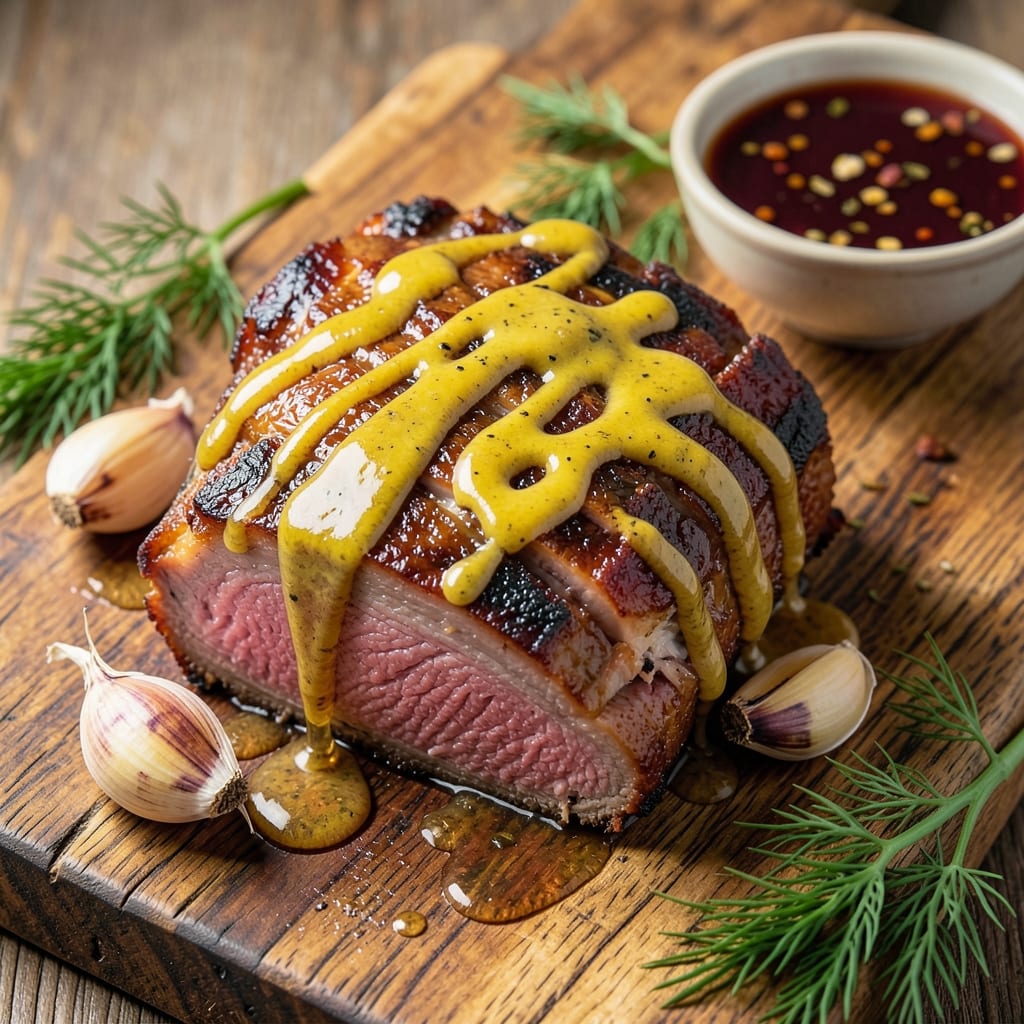
This baked corned beef recipe with mustard delivers the perfect balance of crispy crust and juicy pink magic—a classic that transforms a simple brisket into a centerpiece worthy of any holiday table. The secret lies in slow-baking and a mustard glaze that caramelizes into a golden, flavor-packed crust while keeping the meat tender inside. I’ve perfected this method over years of testing, ensuring it works in your home oven with just a few key techniques.
The beauty of this recipe is its simplicity: no fancy equipment, just a roasting pan, mustard, and patience. A 3-hour bake at 300°F ensures the meat stays moist, while the mustard glaze—applied in layers—develops that signature crispy exterior. The result? A brisket so flavorful and tender, every slice feels like a celebration. This is the kind of dish that makes Sunday dinner feel like a tradition.
What you’ll end up with is a crispy, caramelized crust that cracks open to reveal perfectly pink, juicy meat inside—no dryness, no guesswork. The mustard adds a tangy depth that pairs beautifully with classic sides like cabbage, carrots, or buttery mashed potatoes. It’s the kind of meal that feeds a crowd and leaves everyone asking for seconds.
Perfect for St. Patrick’s Day, Easter, or any occasion calling for a hearty main dish, this corned beef is foolproof yet impressive. Let’s get started—your table is about to become the talk of the neighborhood.
Ingredients for baked corned beef recipe with mustard
Six ingredients transform corned beef into holiday-worthy crispy magic with minimal effort.
| Ingredient | Amount | Notes |
|---|---|---|
| Corned Beef Brisket 🥩 | 4 lb | Pre-cured, whole packer cut preferred |
| Yellow Mustard 🍯 | ½ cup | Smooth, not chunky variety |
| Dijon Mustard 🍯 | ¼ cup | For depth of flavor |
| Honey 🍯 | ¼ cup | Wildflower preferred for complexity |
| Beef Broth 💧 | 1 ½ cups | Low-sodium preferred |
| Garlic Cloves 🧄 | 6 cloves | Smashed, not minced |
| Onion 🧅 | 1 whole | Yellow, peeled, quartered |
| Carrots 🥕 | 3 whole | Baby carrots work too |
| Fresh Parsley 🌿 | ¼ cup | Chopped, for garnish |
| Olive Oil 🫒 | 2 tbsp | For roasting pan |
| Salt 🧂 | 1 ½ tsp | Kosher preferred |
| Black Pepper 🌶️ | 1 tsp | Freshly cracked |
| Bay Leaves 🌿 | 2 whole | Fresh if available |
| Allspice Berries 🌶️ | 4 whole | Crushed lightly |
The brisket is non-negotiable—Costco or local butchers carry the best cuts. Look for a 4-pound packer brisket with good fat cap; the fat renders down for flavor. If you can't find pre-cured, soak your own in water, salt, and spices for 3-5 days. The mustards? French's yellow and Maille Dijon are my go-tos, but any smooth varieties work. Honey should be raw and unfiltered—the darker, the better for depth. I always grab extra honey since it's used in so many holiday dishes.
No yellow mustard? Dijon plus a splash of apple cider vinegar mimics that tangy brightness. Short on honey? Maple syrup at half the amount works in a pinch, though it lacks the floral notes. The beef broth can be swapped for water plus 1 tsp beef bouillon, but quality matters here—Kitchen Basics or Swanson are reliable. Fresh garlic and onion are ideal, but frozen diced sets (like Green Giant) save time. The allspice berries? Crushed between two spoons—no need to pulverize. If you can't find them, 1/2 tsp ground allspice works, though it's less aromatic.
This keeps beautifully—3 days in the fridge, 3 months frozen. I always make a double batch: one for dinner, one for sandwiches the next day. The crust gets even better reheated! Store leftovers wrapped tightly in foil to preserve moisture. For serving, slice against the grain—thin, even slices—and garnish with fresh parsley. The mustard glaze hardens slightly when chilled, so bring it to room temp before carving for that signature crackly crust.
Why You'll Love This Recipe
- One-Pan Magic: I swear by this for lazy Sundays—just plop the corned beef in a dish, slather it with that mustard-honey glaze, and let the oven do the work. No pots, no pans, no stress.
- Sweet-Savory Crust: That caramelized mustard crust? Chef’s kiss. The yellow and Dijon mustard blend creates this sticky, tangy glaze that’s sweet from the honey but still packs a punch—like a hug from your favorite comfort food.
- Leftovers for Days: Between us, this recipe makes way more than I can eat in one sitting. The beef stays juicy, and the glaze thickens beautifully when reheated—perfect for sandwiches, hash, or just straight-up cold slices.
- Budget Stretch: A single brisket feeds my whole family, and the broth keeps for ages. Honestly, it’s my go-to when I need a hearty meal without breaking the bank—plus, the mustard and honey are pantry staples I already had.
Step-by-step instructions for baked corned beef with mustard glaze
Here's how to transform a simple corned beef brisket into showstopping centerpiece with a crackling crust and melt-in-your-mouth tenderness.
Prepare the Corned Beef for Perfect Browning
Preheat your oven to 325°F—this low-and-slow temperature is key for even cooking without drying out the meat. Pat the 4 lb corned beef brisket completely dry with paper towels, especially focusing on the fat cap. I like to press firmly to remove any moisture that would prevent that golden crust from forming.
In a small bowl, whisk together the 0.5 cup yellow mustard, 0.25 cup Dijon mustard, and 0.25 cup honey until smooth. This glaze will create both the crispy crust and that signature sweet-savory flavor. Spread this mixture all over the brisket, including the fat cap, pressing it into the meat so it adheres well. Let it sit at room temperature for 15 minutes while you prepare the vegetables.
Build the Flavor Base with Aromatics
In a large roasting pan, combine the 2 tbsp olive oil, 1.5 cups beef broth, 1.5 tsp salt, 1 tsp black pepper, 2 whole bay leaves, and 4 whole allspice berries. Add the 1 whole onion (quartered), 3 whole carrots (peeled if needed), and 6 cloves garlic cloves (lightly smashed). Bring this mixture to a simmer on the stovetop for 5 minutes to meld the flavors.
Here's the thing—don't skip the simmering. This step develops the aromatic base that will infuse the corned beef during cooking. The onions should soften slightly and release their sweetness, while the garlic will perfume the broth. Once fragrant, carefully place the seasoned brisket fat-side up into the roasting pan, nestling it among the vegetables.
Bake to Juicy Perfection with Crispy Crust
Transfer the roasting pan to the preheated 325°F oven and bake uncovered for 2.5 hours. This initial cooking time allows the meat to reach 160°F internal temperature while developing that beautiful crust. I know it seems like a long time, but patience is crucial—rushing leads to dry meat.
After 2.5 hours, increase the oven temperature to 400°F and continue baking for another 30-45 minutes until the crust is deep golden brown and crispy. The brisket should probe tender with a fork, and the juices should run clear. If the pan gets too dry, add ¼ cup water to prevent burning. The high heat at the end caramelizes the mustard glaze for that perfect crust we're after.
Rest and Garnish for Showstopping Presentation
Remove the brisket from the oven and transfer it to a cutting board. Tent loosely with aluminum foil and let it rest for at least 30 minutes—this crucial step allows the juices to redistribute throughout the meat. I usually let it rest for 45 minutes if I'm serving it with potatoes, as they take time to finish cooking too.
While the brisket rests, skim any fat from the pan juices and strain them through a fine-mesh sieve to remove any vegetable bits. Stir in the reserved 0.25 cup fresh parsley and keep warm. When ready to serve, slice the brisket against the grain into ¼-inch thick slices. Spoon the pan juices over the top and garnish with additional parsley. The result should be tender, juicy slices with a crackling crust that's irresistible to pick at.
Pro Tips For Making Baked Corned Beef Recipe With Mustard
- Pat the Brisket Dry: I learned this the hard way—skipping this step means your mustard glaze won’t stick like it should. Wipe down the raw brisket with paper towels before baking; the extra effort guarantees a crisp, caramelized crust instead of a sad, sticky mess.
- Mix Mustards First: Dijon and yellow mustard behave differently when heated. Whisk them together with honey before brushing on the meat—this way, they blend into one smooth, clingy glaze that won’t separate or drip off mid-bake.
- Don’t Overcrowd the Pan: Stuffing a roasting pan with too much broth? Bad idea. Use just enough beef broth to come about halfway up the brisket’s sides—any more, and you’ll steam the meat instead of browning it. Trust me, you want that golden crust, not a sad, waterlogged top.
- Rest Before Slicing: I used to cut into corned beef the second it came out of the oven, and the slices fell apart like overcooked pasta. Tent it with foil and let it sit for 10 minutes—this lets the juices redistribute, so every bite stays tender and moist. (Yes, even if you’re impatient like me.)
Troubleshooting your baked corned beef recipe with mustard
Crust Too Soft
If your mustard crust isn't crispy enough, the issue is likely moisture or insufficient caramelization. First, ensure your brisket is completely dry before applying the mustard glaze—pat it thoroughly with paper towels. For extra crispiness, increase the final baking temperature to 425°F for the last 15 minutes instead of 400°F. This higher heat will intensify the caramelization of the honey and mustard. I've also found that brushing the crust with a little extra honey right before the final high-heat phase helps create that perfect crackly texture. 🔥
Dry Meat
Dry corned beef usually means the meat cooked too long at high temperatures. To prevent this, never exceed 325°F for the initial 2.5 hours of cooking. Once the internal temperature reaches 160°F, switch to 400°F for the final 30-45 minutes—this two-stage approach keeps the meat juicy. If your oven runs hot, consider using an oven thermometer to verify accuracy. I also recommend tenting the brisket loosely with foil during the final 15 minutes if it's browning too quickly. 🌡️
Mustard Too Strong
The mustard flavor can overwhelm if you use too much or if the meat doesn't balance it properly. Stick to the ½ cup yellow mustard + ¼ cup Dijon ratio, and let the natural sweetness of the honey and the depth of the beef broth complement it. If your mustard glaze tastes too sharp, reduce the amount slightly next time or add 1 tablespoon of apple cider vinegar to the broth to mellow the flavors. The key is balance—let the meat's richness shine through. 💡
Uneven Cooking
Uneven cooking often happens when the brisket isn't positioned correctly in the pan. Always place the brisket fat-side up and nestle it among the vegetables so it cooks evenly. If you notice one side cooking faster, rotate the pan halfway through the 2.5-hour low-and-slow phase. For extra insurance, use a meat thermometer to check the thickest part of the meat—it should reach 160°F before increasing the heat. I've also found that adding ½ cup water to the pan during the final 400°F phase helps distribute heat more evenly. ⚡
Pan Juices Too Thin
Thin pan juices usually mean the broth reduced too much or the meat didn't release enough flavor. To fix this, reduce the initial broth amount to 1 cup instead of 1.5 cups. If the juices are still too thin after cooking, simmer them on the stovetop for 5-10 minutes to thicken slightly. For richer flavor, strain the juices and return them to the pan, then reduce them further over medium-low heat until slightly syrupy. This concentrated sauce will add depth to your dish. 💫
Mustard Glaze Not Sticking
A mustard glaze that won't stick often means the meat wasn't dry enough or the glaze wasn't applied properly. Before spreading the mustard mixture, pat the brisket completely dry and press the glaze into every crevice, including the fat cap. If the glaze still doesn't adhere, mix 1 teaspoon of cornstarch into the mustard-honey blend to help it cling better. Let the glaze sit on the meat for 15 minutes before baking to give it time to bond. 🎯
Nutrition facts
Frequently asked questions
Can I use regular mustard instead of Dijon?
Yes, but the flavor will be milder. For best results, use ½ cup yellow mustard (like French's) and add 1 teaspoon apple cider vinegar to the broth to mimic Dijon's tang. The honey and beef broth will still create that signature crust, though the depth of flavor will be slightly less complex.
How do I know when the corned beef is fully cooked?
Use a meat thermometer to check the thickest part of the brisket—it should reach 160°F internal temperature. The juices should run clear when pierced, and the meat should be fork-tender. If you don't have a thermometer, cut into the thickest part: it should be slightly pink in the center (not gray) and pull apart easily.
Can I make this in a slow cooker?
Not ideally—this recipe relies on the mustard glaze caramelizing for that crispy crust. However, you can adapt it by coating the brisket with mustard, then cooking on low for 8 hours in the slow cooker with 1 cup broth and vegetables. For crispiness, finish with 30 minutes in a 425°F oven after transferring to a baking dish.
What's the best way to reheat leftovers?
Slice the corned beef and reheat in a skillet over medium-low heat with 1 tablespoon beef broth per slice until warmed through (5-7 minutes). For the crust, wrap slices tightly in foil and heat in a 350°F oven for 15 minutes to preserve moisture. Avoid microwaving—it makes the meat tough.
Why does the crust crack but not stay crispy?
This happens when the meat releases too much moisture during cooking. To fix it, pat the brisket extra dry before applying the mustard glaze, and tent it loosely with foil during the final 15 minutes of baking. For next time, try adding 1 teaspoon cornstarch to the mustard mixture to help it set better.