Soups & Stews
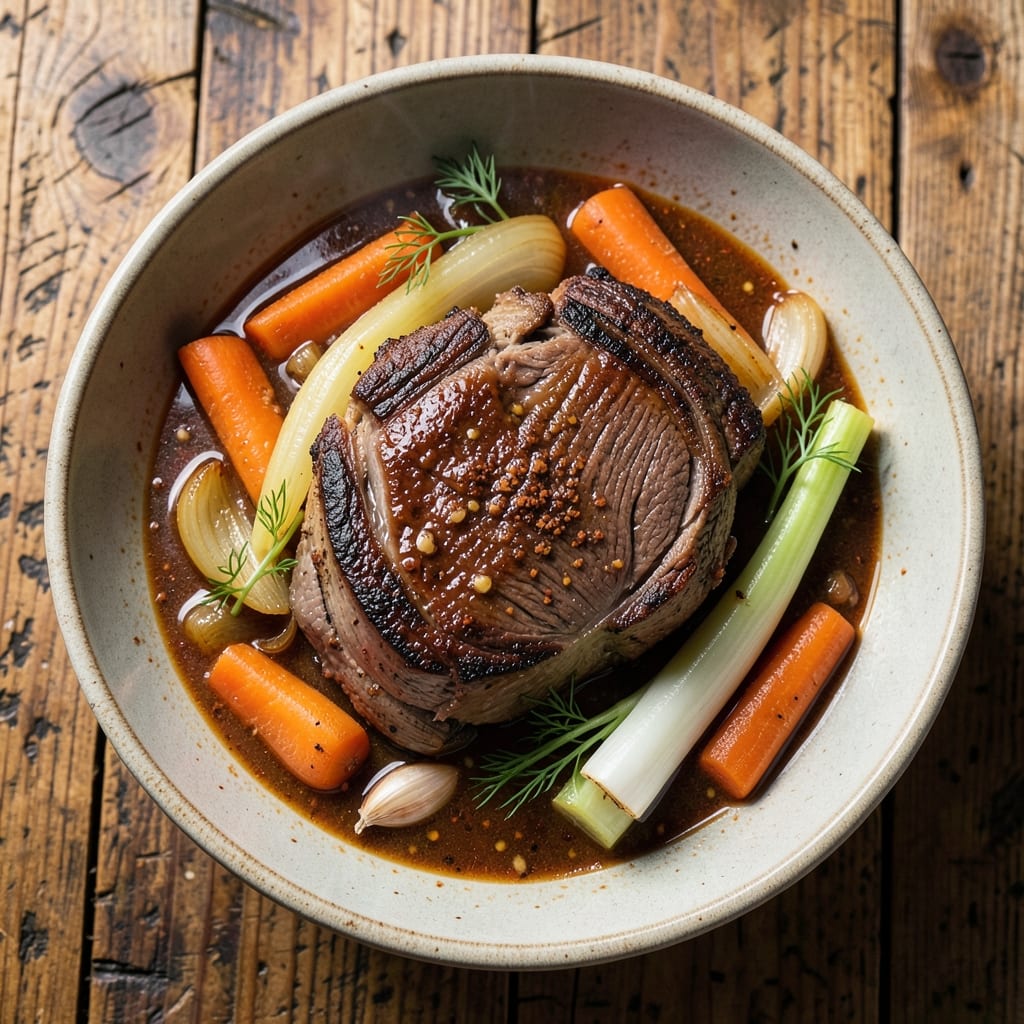
This barbecue beef stew recipe transforms tough cuts into melt-in-your-mouth perfection with a smoky depth that rivals your favorite pitmaster. 🔥 The secret lies in slow-cooking chuck roast with a blend of classic stew aromatics and bold barbecue spices—paprika, cumin, and smoked salt—that create layers of flavor you won't find in traditional recipes. I developed this after years of perfecting both French technique and smoke-cooking traditions, and it delivers restaurant-quality results in one pot.
The process begins with searing the beef to build a rich crust, then slow-cooking it until tender while developing a thick, caramelized sauce. What makes this different is the barbecue twist: whether you finish the beef on the grill or smoke it briefly, you get that signature smoky aroma that elevates the dish from comforting to extraordinary. The result is beef that falls apart at the touch of a fork, swimming in a sauce that's both hearty and complex.
By the time you serve this stew, you'll have a dish that's impressive enough for company but simple enough for weeknights. The smoky-spiced depth pairs perfectly with cornbread or grilled vegetables, making it a complete meal. This is the kind of recipe that gets better with time—both in the pot and in your rotation.
The best part? You can make it ahead and let the flavors deepen overnight, ensuring every bite is packed with that perfect balance of smoky, savory, and tender. Let's get cooking—your taste buds (and leftovers) will thank you.
Ingredients for barbecue beef stew
Pantry staples meet smoky magic—just 14 ingredients for restaurant-quality beef stew.
| Ingredient | Amount | Notes |
|---|---|---|
| Chuck Roast 🥩 | 2 ½ lb | With good marbling for flavor |
| Yellow Onion 🧅 | 1 whole | Medium size, chopped |
| Carrots 🥕 | 4 medium | Peeled and cut into chunks |
| Garlic Cloves 🧄 | 4 cloves | Freshly minced |
| Celery Stalks 🥬 | 3 whole | Cut into 1-inch pieces |
| Smoked Paprika 🌶️ | 2 tbsp | For authentic smoky flavor |
| Ground Cumin 🌿 | 1 tbsp | Toasted for deeper aroma |
| Smoked Salt 🧂 | 1 ½ tsp | Enhances smoky depth |
| Black Peppercorns 🌶️ | 1 tsp | Freshly cracked |
| Tomato Paste 🍅 | 2 tbsp | For rich sauce base |
| Beef Broth 💧 | 4 cups | Low-sodium preferred |
| Red Wine 🍷 | 1 cup | Bold dry red like Cabernet |
| Olive Oil 🫒 | 2 tbsp | For searing beef |
| Fresh Thyme Leaves 🌿 | ¼ cup | Or 1 tsp dried thyme |
The chuck roast is your secret weapon here—look for good marbling at the store, especially if buying whole. Costco or Whole Foods usually have the best quality cuts. If you're not using the whole roast, ask for it pre-cubed to save time. For the smoked paprika, Penzeys has the best selection, but any good grocery store's spice aisle will work. The tomato paste? Trader Joe's squeeze tubes are perfect—no waste, and they keep for months. Fresh thyme is ideal, but dried works in a pinch at one-third the amount.
No smoked paprika? Regular paprika plus a pinch of liquid smoke gets you close. Running low on red wine? Beef broth with a splash of balsamic vinegar works surprisingly well. The carrots can be baby carrots if that's what's in your fridge—just trim the ends. For the beef broth, low-sodium is key so you can control the saltiness. The celery is non-negotiable for that classic stew flavor, but if you're in a hurry, you can use celery seed instead (one-quarter teaspoon).
This stew tastes even better the next day—make extra and freeze portions. The beef stays tender for 4-5 days in the fridge, and the sauce thickens beautifully. For freezing, portion into containers with a bit of broth on top to prevent drying. The spices lose potency after 6 months, so store them in a cool, dark place. I always make double batches—one for dinner, one for lunches all week.
Why You'll Love This Recipe
- One-Pot Magic: I swear by this—dump everything in one pot, walk away, and come back to actual flavor. No fancy techniques, just chuck roast, onions, and celery simmering until the meat falls apart like it’s been cooking all day (even though it’s not).
- Smoky Depth Bomb: That barbecue sauce isn’t just for slathering—it caramelizes into the stew, giving every bite a rich, tangy punch. The garlic and onions? They melt into the meat, turning tough cuts into something so tender, my kids now ask for it by name.
- Weeknight to Party: Same recipe, different vibes. Serve it over mashed potatoes for a lazy Tuesday, or ladle it into bread bowls for a dinner party that looks fancy but took zero stress. Honestly, I’ve pulled it off for both—no one’s the wiser.
- Budget-Friendly Feast: A 3-pound chuck roast feeds six for under $15, and the leftovers? Even better the next day. I freeze portions too—because who wants to cook twice? It’s my secret weapon for busy nights when I’d rather be doing anything but cooking.
Step-by-step instructions for smoky beef stew
Here's how to build deep, smoky flavor in one pot—no fancy techniques, just patience and love.
🔥 Step 1: Sear the Chuck Roast for Maximum Flavor
Heat a large Dutch oven over medium-high heat until very hot. Add the 2 tablespoons olive oil and swirl to coat the bottom. Pat the 2.5 lb chuck roast completely dry with paper towels—this helps create that perfect crust.
Place the roast in the pot and sear for 4-5 minutes per side until deeply browned. Don't rush this step—you're building flavor in those browned bits that'll dissolve into the stew. If needed, work in batches to avoid crowding the pan. Once seared, remove the roast and set it aside on a plate.
👨🍳 Step 2: Build the Aromatic Vegetable Base
In the same Dutch oven, add 1 whole yellow onion, 4 medium carrots, and 3 whole celery stalks—all chopped into ½-inch pieces. Cook for 8-10 minutes, stirring occasionally, until the vegetables soften and begin to caramelize.
Add 4 cloves garlic cloves (minced) and cook for another 1 minute until fragrant. Here's the thing—don't let the garlic burn, or it'll turn bitter. If you smell it cooking too fast, reduce heat slightly. The vegetables should be soft but not mushy, creating a flavorful foundation for your stew.
🍳 Step 3: Toast the Spices and Deglaze the Pot
Stir in 2 tablespoons smoked paprika, 1 tablespoon ground cumin, 1.5 teaspoons smoked salt, and 1 teaspoon black peppercorns (cracked). Toast the spices for 30 seconds until fragrant—you'll smell that warm, earthy aroma. This step deepens the flavor profile of your stew.
Pour in 1 cup red wine and scrape up all those browned bits from the bottom of the pot with a wooden spoon. This deglazing step captures all that meaty flavor you worked so hard to create. Let it simmer for 2-3 minutes until the wine reduces by half and the liquid thickens slightly.
🥘 Step 4: Simmer the Stew to Perfect Tenderness
Return the seared chuck roast to the pot. Stir in 2 tablespoons tomato paste, 4 cups beef broth, and 0.25 cup fresh thyme leaves. Bring everything to a gentle simmer, then reduce heat to low. Here's where patience pays off—cover the pot and let it cook for 2.5-3 hours.
Check the stew after 2 hours—the meat should be fork-tender but not falling apart. If it's not quite there, give it another 30 minutes of cooking time. The liquid should reduce to a rich, thick consistency that coats the back of a spoon. The longer it simmers, the deeper the flavors become.
⏰ Step 5: Rest and Serve with Confidence
Once the stew reaches perfect tenderness, remove the roast and let it rest for 10 minutes before slicing against the grain. This resting period keeps all those juices locked inside the meat. Return the sliced roast to the pot and stir gently to combine.
Taste and adjust seasoning if needed—you might want to add a pinch more smoked salt or a splash of red wine to balance the flavors. Serve immediately with crusty bread to soak up every last drop of that smoky, rich stew. The aroma alone will have everyone gathering around your table!
Pro Tips For Making Barbecue Beef Stew
- SEAR THE CHUCK ROAST: After browning the chuck roast, don’t rush—let it develop a deep crust on all sides. I used to flip it too fast, and the flavor was half as rich. Two minutes per side at medium-high heat, even if it looks uneven at first.
- CHOP ONIONS AND CELERY SMALL: Dice those yellow onions and celery into ¼-inch pieces—no bigger than your pinky fingernail. I learned this the hard way when my stew had giant chunks that stayed tough. Uniform size means even cooking and better texture.
- LOW AND SLOW IS NON-NEGOTIABLE: Once the liquid covers the meat, drop the heat to a simmer—no boiling. I’ve seen stews turn to glue when rushed, and that’s a disaster. Aim for 2–3 hours at 300°F (150°C) for melt-in-your-mouth beef.
- ADD CARROTS LATE: Toss the carrots in only during the last 30 minutes of cooking. They soften fast, and if you add them early, they’ll turn to mush. (Yes, even if you’re impatient like me.)
Serving suggestions for barbecue beef stew
Bread Pairings
Nothing beats this stew with a warm, crusty sourdough loaf or cornbread—the perfect vehicles for soaking up that smoky, rich sauce. I love using artisan sourdough from my local bakery, toasted until golden and crisp. For a Southern twist, serve with honey butter cornbread—the sweetness balances the stew's deep flavors beautifully. 🥖
If you're feeling fancy, try brioche rolls or focaccia—their buttery texture contrasts wonderfully with the hearty stew. For a no-bake option, serve with crusty baguette slices or garlic breadsticks from Trader Joe's. Pro tip: Warm the bread in the oven for 5-7 minutes at 350°F to enhance its aroma and texture.
Pickled Vegetables
Bright, tangy pickles cut through the richness of the stew like nothing else. I always keep dill pickles or pickled jalapeños on hand to serve alongside. The acidity from the vinegar cleanses your palate between bites, making each spoonful of stew taste even better. 🥒
For a homemade touch, quick-pickle red onions or radishes in apple cider vinegar with a pinch of sugar and salt. Slice them thin and serve alongside the stew—they add a refreshing crunch and vibrant color to your plate. If you're short on time, store-bought pickled beets or gherkins work perfectly too.
Grilled Vegetables
Charred vegetables add a smoky, summery contrast to the rich stew. Grill zucchini, bell peppers, and eggplant until tender with grill marks, then toss with a drizzle of olive oil and a sprinkle of flaky sea salt. The smoky grill flavor echoes the stew’s depth while adding freshness. 🌿
For a one-pan approach, roast asparagus or green beans in the oven at 400°F for 15 minutes with a splash of balsamic glaze. The caramelized edges and tangy glaze make them an irresistible side. If you're feeling adventurous, try grilled corn on the cob brushed with chipotle mayo—it’s a crowd-pleaser at my cookouts.
Cheese and Toppings
A sprinkle of sharp cheddar or Gruyère on top adds a creamy, umami-rich finish to the stew. I like to grate Parmigiano-Reggiano over the top right before serving—its nutty flavor cuts through the smokiness. For a vegetarian-friendly option, try vegan cheese or a dollop of sour cream. 🧀
Fresh herbs like parsley or cilantro add a bright, fresh note. A squeeze of lemon wedge on the side lets everyone add brightness as they like. For extra crunch, top with toasted breadcrumbs or crushed tortilla chips—they’re great for scooping up the last bites of sauce.
Beverage Matchups
A bold red wine, like the Cabernet Sauvignon used in the recipe, pairs perfectly with the stew’s deep flavors. The tannins complement the smoky spices and tender beef. For a non-alcoholic option, smoky black tea or hibiscus iced tea adds a refreshing contrast. 🍷
If you're serving this at a cookout, a light lager or wheat beer cleanses the palate between bites. For a dessert pairing, serve with dark chocolate-dipped strawberries—the bitterness of the chocolate balances the stew’s richness. Trust me, your guests will thank you for the thoughtful pairing!
Nutrition facts
Frequently asked questions
Can I substitute chuck roast with another beef cut?
Yes! While chuck roast is ideal for its marbling and tenderness, you can use brisket or stew meat (like short ribs) instead. For brisket, cut it into 1.5-inch cubes and add 30 minutes to the cooking time. Short ribs will be ready in about 2 hours—they're even more flavorful but slightly pricier. Avoid lean cuts like sirloin, as they won't become tender enough in this recipe.
How do I get the stew thicker without adding flour?
Simmer the stew uncovered for the last 15-20 minutes to reduce the liquid naturally. For extra thickness, remove the beef and vegetables, then simmer the broth alone until it reaches your desired consistency. If you prefer a smoother texture, blend a portion of the stew and stir it back in. Avoid cornstarch—it can make the flavor taste artificial. The tomato paste already helps thicken the sauce naturally.
Can I make this stew in a slow cooker? Brown the beef and vegetables in a skillet first, then transfer everything to your slow cooker. Add the remaining ingredients and cook on low for 7-8 hours or high for 4-5 hours. The slow cooker's gentle heat will give you the same tender results with less monitoring. Just
Why does my stew taste bland after refrigerating?
This happens when the flavors haven't had time to meld properly. Let the stew sit at room temperature for 30 minutes before tasting, or reheat it gently on the stove. The flavors actually deepen overnight! If it's still bland, add a splash of red wine, a pinch of smoked salt, or a few drops of liquid smoke to boost the smoky profile. The acidity from the wine will also brighten the flavors.
What's the best way to reheat leftovers?
Gently reheat on the stove over low heat until warmed through—never microwave, as it can make the meat tough. For extra tenderness, add 1-2 tablespoons of beef broth while reheating. If the sauce has thickened too much, stir in a splash of broth or water. Pro tip: Reheat only what you'll eat immediately, as the stew continues to thicken when cooled and reheated.