
Main Courses
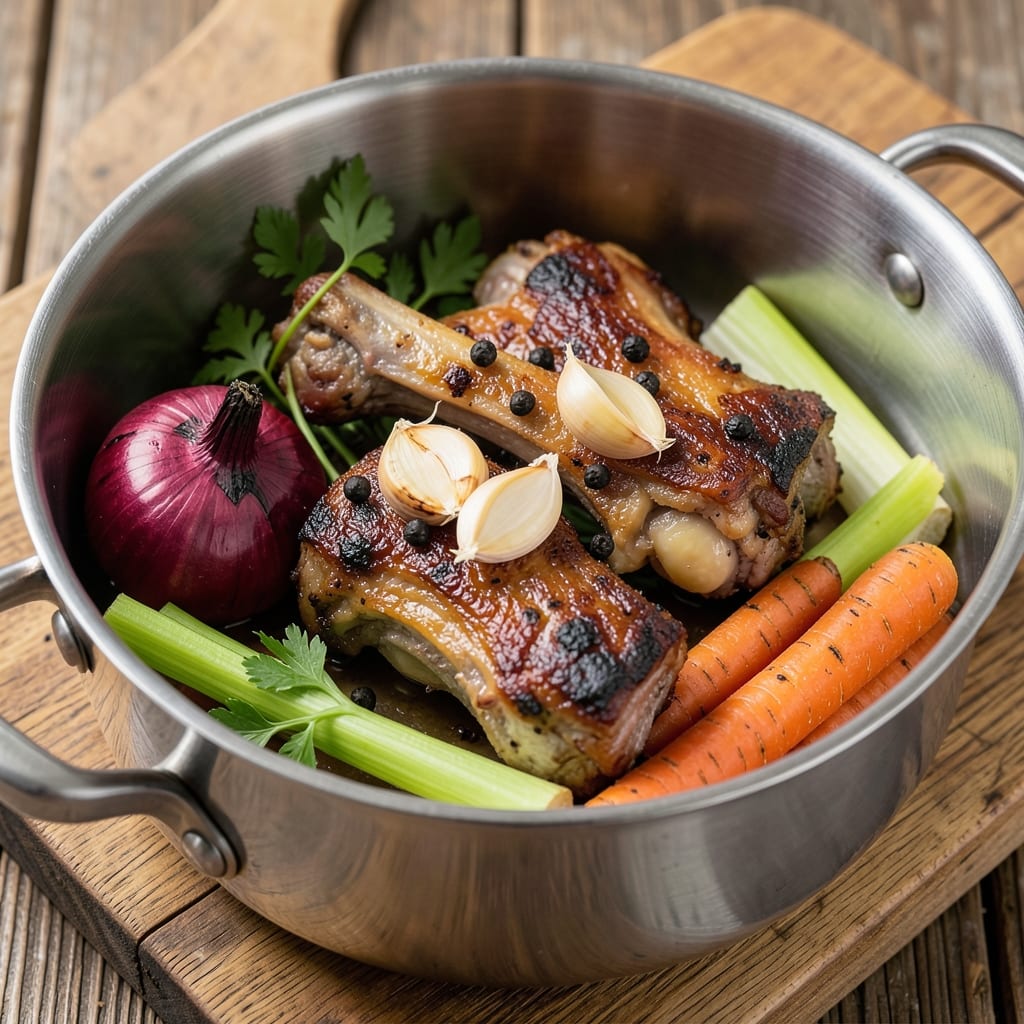
This basic beef stock recipe transforms simple ingredients into the golden foundation of countless soups, stews, and sauces—packed with deep, umami-rich flavor that elevates any dish. The secret lies in slow simmering bones, vegetables, and aromatics to extract maximum richness, creating a versatile liquid that freezes beautifully for future use. Whether you're building a classic French consommé or a hearty winter stew, this foolproof method delivers restaurant-quality results at home.
Start with beef bones—marrow bones for richness, knuckle bones for gelatin—along with onions, carrots, and celery for the classic "mirepoix" base. A splash of white wine or apple cider vinegar brightens the stock, while black peppercorns and bay leaves add subtle depth. The key is patience: simmering gently for 3-4 hours ensures clarity without bitterness, while skimming impurities keeps the final stock crystal-clean.
What you’ll end up with is a glossy, amber-hued stock with a velvety texture and layers of savory complexity—ideal for braising, deglazing pans, or enriching sauces. The gelatin from the bones gives it body, while the aromatics infuse it with warmth. This isn’t just a side dish; it’s the backbone of your cooking repertoire, ready to transform simple meals into something extraordinary.
Use it immediately in soups or stews, or store it in the freezer for up to 6 months—no waste, just endless culinary possibilities. For extra depth, roast the bones before simmering, or add a splash of soy sauce for umami. Here’s how to make it perfectly every time.
Ingredients for basic beef stock
Transform humble bones and aromatics into restaurant-quality stock with these 11 essential ingredients.
| Ingredient | Amount | Notes |
|---|---|---|
| Beef Bones (Marrow and Knuckle) 🦴 | 4 lb | Raw or roasted for depth |
| Yellow Onions 🧅 | 2 whole | Peeled, roughly chopped |
| Carrots 🥕 | 3 whole | Scrubbed, cut into chunks |
| Celery Stalks 🌿 | 3 whole | Trimmed, cut into pieces |
| Garlic Cloves 🧄 | 6 cloves | Smashed, skins left on |
| Black Peppercorns 🌶️ | 1 tbsp | Crushed, whole preferred |
| Bay Leaves 🍃 | 2 whole | Fresh or dried |
| White Wine 🍷 | ½ cup | Dry, like Sauvignon Blanc |
| Apple Cider Vinegar 🍎 | 1 tbsp | Or lemon juice substitute |
| Cold Water 💧 | 8 cups | Tap or filtered preferred |
| Salt 🧂 | 1 tsp | Kosher or sea salt |
The bones are non-negotiable—marrow bones deliver richness while knuckle bones provide gelatin for body. Local butchers often sell them pre-cut, but if buying whole, ask for a mix of marrow and knuckle. Roasting bones first (450°F for 20 minutes) deepens flavor, though raw works fine. For vegetables, organic produce minimizes pesticide residue, but conventional is acceptable. The classic mirepoix ratio of 2:1:1 (onions:carrots:celery) ensures balanced sweetness and earthiness. Garlic cloves should be left whole but smashed to release oils without burning. Penzeys Spices carries excellent whole peppercorns if you prefer pre-crushed options.
No white wine? Dry vermouth or apple cider vinegar work equally well for acidity. Substitute dried bay leaves at half the quantity, but fresh infuses more aroma. Out of carrots? Sweet potatoes or parsnips add depth without altering flavor dramatically. For a vegetarian version, replace bones with mushrooms (8 oz) and use vegetable broth instead of water. The water should be cold to prevent immediate cloudiness—hot water extracts impurities too quickly. If your stock tastes bitter, simmer time was insufficient; if it's cloudy, skim more frequently next time.
This stock peaks after 3-4 hours of simmering but can safely cook for up to 8 hours for maximum gelatin extraction. Strain through a fine-mesh sieve lined with cheesecloth for crystal clarity. Store in airtight containers: fridge for 5 days, freezer for 6 months. For long-term storage, freeze in ice cube trays—perfect portions for future recipes. The gelatin-rich stock thickens when chilled; simply reheat gently to restore liquid form. Always reserve some stock before freezing to use as a base for future batches.
Why You'll Love This Recipe
- No Chopping Chaos: I swear by the "sofrito shortcut"—just roughly chop the onions, carrots, and celery (no peeling needed) and toss them in whole. The bones do all the work while you sip coffee. Honestly, the flavor builds deeper than any pre-packaged broth ever could.
- Rich Without Effort: That marrow in the knuckle bones? Pure liquid gold. After simmering, it turns the stock into something velvety and unctuous—like a hug in a bowl. The garlic cloves, cracked but left whole, infuse just enough punch without overpowering.
- Stockpile Savings: Freeze it in ice cube trays for soup boosts or defrost a batch to stretch a simple pasta into a hearty meal. Between us, this is how I feed my family for weeks without breaking the bank. One pot, endless meals.
- Weeknight Magic: Simmer overnight? No problem. Need it in 2 hours? Still works. I’ll be real: I’ve made this on a gas stove, Instant Pot, and even a slow cooker—always reliable. The only decision is whether to drink it now or save it for later.
Step-by-step instructions for crafting umami-rich beef stock
Transform simple ingredients into a velvety, flavor-packed foundation for your cooking repertoire.
Prepare and Roast the Beef Bones for Maximum Flavor
Preheat your oven to 450°F and position a rack in the middle position. Place the 4 lb beef bones (marrow and knuckle) on a rimmed baking sheet lined with parchment paper. Roast for 30 minutes, turning occasionally, until they develop a deep golden-brown color and begin to smell rich and caramelized.
Roasting the bones before simmering creates a complex, nutty flavor through the Maillard reaction. I like to press down gently on the bones during the first 15 minutes—this prevents them from curling and ensures even contact with the hot pan. If you're short on time, you can skip roasting and proceed directly to the simmering step, though the flavor will be less developed.
Build the Aromatic Base with Vegetables and Herbs
While the bones roast, peel and roughly chop the 2 whole yellow onions into ½-inch pieces. Scrub the 3 whole carrots and cut them into 1-inch chunks, then trim the 3 whole celery stalks and cut them into similar-sized pieces. Smash the 6 cloves garlic with the flat side of a knife, leaving the skins on to prevent them from slipping through your fingers.
Crush the 1 tbsp black peppercorns lightly with the side of your knife—just enough to release their aroma without turning them into a powder. Tear the 2 whole bay leaves in half to release their essential oils. These aromatic vegetables and herbs form the flavor backbone of your stock, so don't skip this step. I always use a sharp chef's knife for chopping—it gives me better control and cleaner cuts.
Simmer the Bones and Vegetables for Deep Flavor Extraction
Transfer the roasted bones to a large stockpot or Dutch oven. Add the chopped onions, carrots, celery, garlic, black peppercorns, and bay leaves. Pour in the 0.5 cup white wine and scrape the bottom of the pot to release any browned bits—they're packed with flavor. Add the 1 tbsp apple cider vinegar and 8 cups cold water.
Bring the mixture to a boil over medium-high heat, then immediately reduce the heat to low to maintain a gentle simmer. You'll see small bubbles breaking the surface, but it shouldn't be a rolling boil. Skim off any foam or impurities that rise to the surface during the first 15 minutes of simmering. This ensures your stock stays clear and clean. The reason we use cold water instead of hot is that it allows for more even extraction of flavors and prevents the stock from clouding.
Simmer for 4-6 Hours to Develop Rich, Complex Flavors
Cover the pot and let it simmer gently for 4-6 hours, checking occasionally to ensure the water level doesn't get too low. Add hot water as needed to keep the bones and vegetables submerged. The longer you simmer, the more gelatinous and flavorful your stock will become. I usually set a timer for 4 hours first, then taste it—if it's still bland, I extend it to 6 hours.
Here's where the magic happens: the collagen in the bones breaks down into gelatin, creating that luxurious mouthfeel. You'll know it's ready when the bones are falling apart easily and the stock has a deep, meaty aroma. If you're using marrow bones, you can crack them open after 3 hours of simmering to release the rich marrow into the stock. Don't rush this step—rushing leads to a thin, flavorless stock that won't hold up in your recipes.
Strain, Season, and Store for Future Use
Once the bones are tender and the stock has developed a rich color and aroma, remove the pot from the heat. Strain the stock through a fine-mesh sieve or cheesecloth-lined colander into a clean container, pressing on the solids to extract every last drop of flavor. Discard the bones and vegetables—they've given everything they've got.
Add the 1 tsp salt and stir well. Let the stock cool to room temperature, then transfer it to airtight containers. It will keep in the refrigerator for up to 5 days or in the freezer for up to 3 months. This stock is incredibly versatile—use it as a base for soups, braises, risottos, or even as a cooking liquid for grains and vegetables. The depth of flavor will elevate any dish it touches.
Pro Tips For Making Basic Beef Stock
- Char the Bones First: I learned this the hard way—skipping the char step means a milder stock. Sear the knuckle and marrow bones in batches over medium-high heat until deep brown in spots (about 5-7 minutes per side). The caramelized crust adds richness that no amount of simmering can replicate.
- Cut the Celery Right: Don’t chop celery into tiny pieces—it turns to mush and clouds the stock. Instead, slice each stalk into 2-inch chunks, then cut those chunks lengthwise into quarters (like a quartered log). This way, it releases flavor without disintegrating.
- Strain Twice, Once Hot: After simmering, strain the stock through a fine-mesh sieve first, then immediately pour it through a cheesecloth-lined strainer. The cheesecloth catches the last of the grit and fat, leaving you with a crystal-clear stock—no need for a fancy stock bag.
- Add Garlic Late: Toss whole garlic cloves into the pot with the bones, but don’t crush them until the very end. When the stock reduces to your desired volume, smash the cloves with the back of a knife and let them steep for 10 minutes. This keeps the flavor bright instead of bitter.
Perfect pairings for this basic beef stock
Classic Comfort Soups
Use your homemade beef stock as the base for a creamy potato-leek soup—simmer 2 cups chopped potatoes, 1 cup leeks (white and light green parts), and 2 cups whole milk> with 3 cups beef stock until tender. Finish with a dollop of crème fraîche and fresh thyme. For a hearty beef barley soup, combine 1 lb stew beef, 1 cup pearl barley, 2 carrots, and 3 cups stock—simmer until beef is fork-tender and barley is al dente. 🥘
Rich Braising Liquids
Transform your stock into a braising liquid for roasts or stews by reducing it by half in a saucepan over medium heat. Deglaze the pan with 1 tbsp butter and 1 tbsp flour> to create a glossy sauce. Use it for beef short ribs or pot roast—simmer the meat in the stock until tender, then shred and serve with the reduced sauce spooned over the top. The gelatin-rich stock thickens beautifully when reduced. 🍖
Sauce Elevations
Turn your stock into a pan sauce for steak or chicken by deglazing the pan with ½ cup stock after searing meat. Add 1 tbsp Dijon mustard and 1 tbsp heavy cream for a classic steak sauce. For a wild mushroom sauce, sauté 8 oz mushrooms> in butter, then add 1 cup stock, 1 tsp thyme, and reduce until syrupy. Drizzle over grilled meats or pasta. 🍝
Grain and Rice Bases
Cook risotto or pilaf in beef stock for a deeper, meatier flavor. For classic risotto, toast 1 cup Arborio rice in butter, then gradually add 4 cups warm stock> while stirring until creamy. Finish with Parmesan cheese> and fresh parsley. For beef pilaf, sauté 1 cup basmati rice> with onions, then simmer in 2 cups stock> with ½ cup diced beef> until tender. The stock’s richness infuses every grain. 🍚
Beverage Pairings
Pair your beef stock-based dishes with a bold red wine like Cabernet Sauvignon or Malbec—their tannins complement the deep umami flavors. For lighter dishes, a Pinot Noir or Gamay balances the richness without overpowering. If you prefer beer, a dark ale or stout (like Guinness) enhances the savory notes. Avoid sweet or overly fruity drinks—they’ll clash with the stock’s depth. 🍷
Global Variations
Use your stock in French-style bouillabaisse by simmering it with saffron-infused fish stock, fennel, and mussels. For an Italian osso buco, braise veal shanks in the stock with gremolata until tender, then serve with risotto alla Milanese. In Mexican-style, reduce the stock with chiles and tomatoes for a consommé to serve with tacos or enchiladas. The possibilities are endless! 🌍
Nutrition facts
Frequently asked questions
Can I use chicken or vegetable broth instead of water?
Using 1-2 cups of chicken or vegetable broth instead of plain water adds extra depth of flavor right from the start. For maximum richness, try a mix of 6 cups water + 2 cups broth. The broth's existing umami compounds will enhance the beef stock's complexity without overpowering it.
What's the difference between stock, broth, and consommé?
Stock is made by simmering bones and vegetables for 3-6 hours to extract maximum gelatin and flavor. Broth uses meat or vegetables simmered 1-2 hours for lighter results. Consommé is a clarified stock with a crystal-clear appearance, achieved through additional straining and sometimes egg whites. Your basic beef stock falls in the middle—rich but not as concentrated as consommé.
How do I fix cloudy stock?
Cloudiness usually means impurities weren't skimmed properly. To fix it, strain through a cheesecloth-lined sieve again, then chill the stock overnight. The fat will solidify on top—skim it off before reheating. For future batches, skim more frequently during simmering and use cold water instead of hot.
Can I make beef stock without a stockpot?
Yes! Use a large Dutch oven or even a slow cooker on low heat. For a stovetop alternative, try a deep skillet with a lid, though you'll need to monitor water levels more carefully. The key is maintaining a gentle simmer—never a rolling boil.
Why does my beef stock taste bitter?
Bitterness usually means the stock boiled too vigorously or simmered too long. Always keep heat at a gentle simmer (small bubbles) and never let it boil hard. If it's already bitter, try balancing it with a splash of apple cider vinegar or lemon juice (1 tbsp per cup of stock). For future batches, reduce simmer time to 3-4 hours maximum.