
Soups & Stews
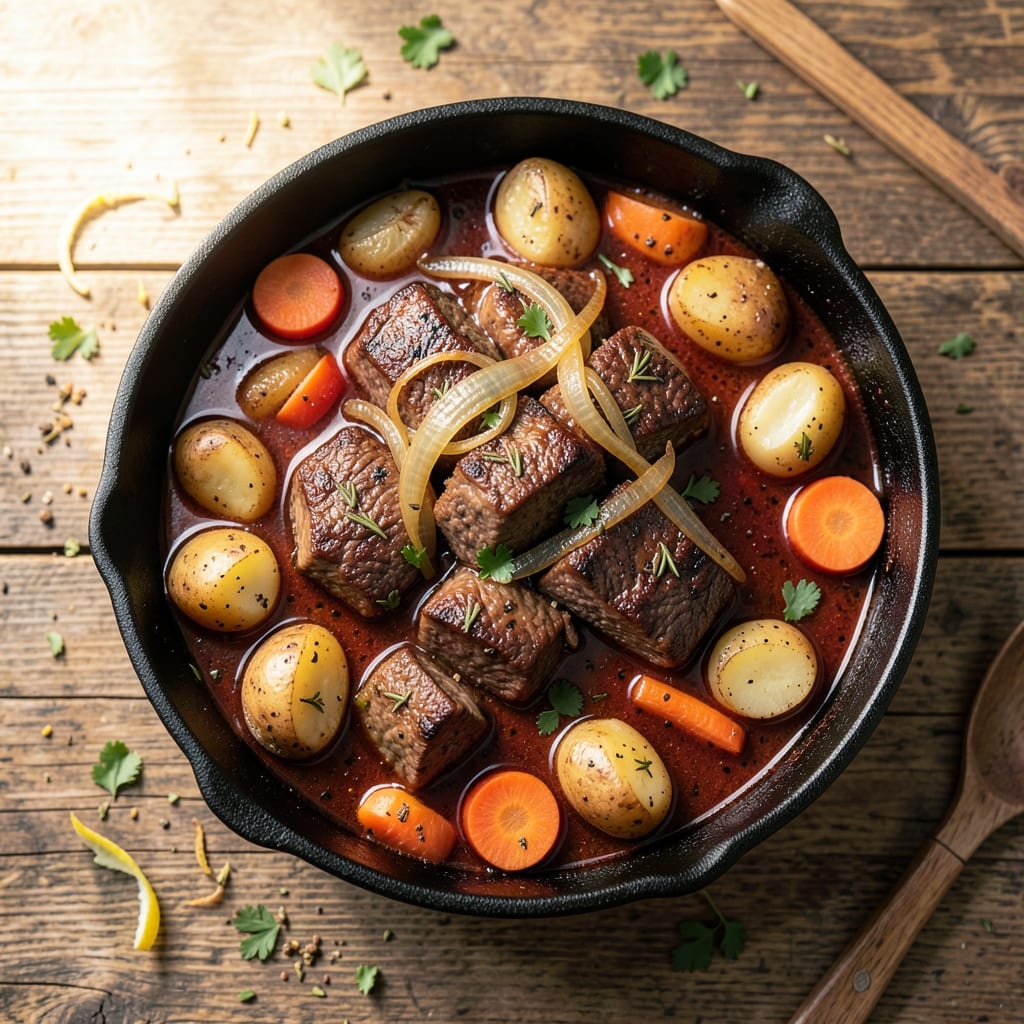
This beef ale stew recipe delivers the kind of hearty, malty richness you’d expect from a cozy British pub—slow-simmered until the beef falls apart and the ale infuses every spoonful. The secret lies in a perfect balance of tender beef, deep caramelized flavors, and vegetables that soak up the savory broth without overpowering it. I’ve perfected this over years of testing, ensuring the ale’s bitterness mellows into a complex, warming depth that makes every bite satisfying.
The beauty of this stew is its simplicity: just a few key ingredients—chuck beef, onions, carrots, and potatoes—simmered low and slow with a malty ale and aromatic herbs. Unlike quick versions, this recipe rewards patience with layers of flavor that develop as it cooks. The beef becomes fork-tender, the vegetables melt into the broth, and the ale’s caramelized notes create a velvety sauce that’s impossible to resist. It’s the kind of dish that tastes even better the next day, making it perfect for meal prep or a weekend project.
What sets this stew apart is how the ale transforms from a sharp, bitter brew to a smooth, malty foundation for the dish. The slow simmer breaks down the beef’s connective tissue, while the vegetables absorb the rich, savory liquid. The result is a stew that’s hearty enough for a cold evening but elegant enough to serve at a dinner party. Each bite delivers a perfect harmony of tender meat, tender vegetables, and a broth so flavorful it disappears too quickly.
Serve it with crusty bread to soak up every last drop of that golden, ale-infused sauce, or pair it with buttery mashed potatoes for a true pub-style experience. The leftovers reheat beautifully, making this the ultimate comfort food for busy weeknights or special occasions. Here’s how to make it—step by step.
Ingredients for beef ale stew
Pantry staples meet pub-style magic—just 14 ingredients for a stew so rich it tastes like home.
| Ingredient | Amount | Notes |
|---|---|---|
| Chuck Roast Beef 🥩 | 2 lb | Well-marbled, cut into 1.5-inch cubes |
| Yellow Onions 🧅 | 2 whole | Medium-sized, sliced into half-moons |
| Carrots 🥕 | 4 whole | Medium-sized, peeled and cut into chunks |
| Russet Potatoes 🥔 | 4 whole | Medium-sized, peeled and quartered |
| Dark Ale Beer 🍺 | 2 cups | Malty, non-alcoholic if preferred |
| Beef Broth 💧 | 2 cups | Homemade or high-quality low-sodium |
| Tomato Paste 🍅 | 2 tbsp | Smooth, not chunky |
| Fresh Thyme 🌿 | 1 tbsp | Leaves only, chopped |
| Fresh Rosemary 🌿 | 1 tbsp | Leaves only, chopped |
| Garlic Cloves 🧄 | 4 cloves | Peeled and smashed |
| Olive Oil 🫒 | 2 tbsp | Extra-virgin for richness |
| Salt 🧂 | 1 ½ tsp | Kosher or sea salt |
| Black Peppercorns 🌶️ | 1 tsp | Freshly cracked |
| All-Purpose Flour 🌾 | 2 tbsp | For thickening sauce |
The beef is non-negotiable here—chuck roast with good marbling melts into tender perfection. Costco or local butchers usually carry it pre-cut, but if you’re buying a whole roast, ask for the chuck section. The dark ale? Guinness or a malty IPA work best, but any dark beer (or non-alcoholic stout) will do. Skip the light lagers—they won’t caramelize right. For the broth, homemade is ideal, but Annie’s or Pacific Foods low-sodium versions save time without sacrificing flavor.
No dark ale? Substitute with beef broth plus 1 tbsp balsamic vinegar—it mimics the depth. Fresh thyme and rosemary are ideal, but dried at 1/3 the amount works in a pinch. The tomato paste can be swapped for 1/4 cup crushed tomatoes if you’re avoiding it. For the potatoes, Yukon Golds hold up better than Russets, but don’t stress—any starchy potato does the job. The flour at the end? All-purpose is fine, but if you’ve got cornstarch, use that for a glossier sauce.
This stew tastes even better the next day—3-4 days in the fridge or 3 months frozen. For freezing, portion into containers with a little extra broth on top to prevent drying. Reheat gently on the stove, adding a splash of water or broth if it’s too thick. The sauce thickens as it cools, so don’t overdo it when reheating. Leftovers make the best sandwiches—crusty bread, mustard, and a sprinkle of fresh parsley turn it into lunch the next day.
Why You'll Love This Recipe
- Minimal Chopping Required: I swear by this—just dice the onions and carrots into big chunks, toss them in, and let the slow cook do the work. No fancy knife skills, no stress.
- Ale Magic: That dark ale doesn’t just flavor the stew—it tenderizes the beef until it falls apart with a fork. (Yes, even the toughest chuck roast.)
- Leftovers That Shine: This stew actually gets better the next day. I make a double batch on Sundays and freeze half—because reheating it is just as good as the first bite.
- Budget-Friendly Feast: Chuck roast is cheap, beer is cheap, and a big pot feeds six for under $20. Honestly, it’s the kind of meal that makes grocery day feel like a win.
Step-by-step instructions for beef ale stew
Here's how to build a hearty stew with deep, malty flavor that tastes like a pub classic.
Sear the Beef for Rich Flavor
Heat 1 tablespoon olive oil in a large Dutch oven over medium-high heat. Working in batches, add the 2 lb chuck roast beef cut into 1.5-inch cubes and sear for 2-3 minutes per side until deeply browned. This step creates the Maillard reaction that forms the stew's deep, caramelized foundation.
Don't crowd the pan—sear in batches if needed. Once all beef is browned, remove it from the pot and set aside. You'll notice the beef releases juices as it cooks, which we'll use to build the stew's rich base.
Sauté Vegetables and Aromatics
In the same Dutch oven, add the remaining 1 tablespoon olive oil and increase heat to medium-high. Add the 2 whole yellow onions sliced into half-moons and cook for 5 minutes until softened and golden. Add the 4 whole carrots cut into chunks and 4 cloves garlic smashed with the side of your knife, cooking for another 3-4 minutes until the carrots begin to soften.
Here's the thing—don't rush this step. The onions should develop a deep golden color and the garlic should smell intensely fragrant. This builds the aromatic foundation for the stew. If the onions start to brown too quickly, reduce heat to medium to prevent burning.
Build the Stew Base
Stir in the 2 tbsp tomato paste and cook for 1 minute until it darkens slightly. This intensifies the umami flavor that pairs perfectly with the beer. Pour in the 2 cups dark ale beer and scrape up any browned bits from the bottom of the pot with a wooden spoon. These bits are packed with flavor that will dissolve into the stew.
Add the 2 cups beef broth, 1.5 tsp salt, and 1 tsp freshly cracked black peppercorns. Return the seared beef to the pot and bring everything to a gentle boil. Once boiling, reduce heat to low and add the 1 tbsp fresh thyme and 1 tbsp fresh rosemary. This is where the magic begins—your stew will simmer slowly for the next hour.
Simmer Until Tender
Cover the pot and let the stew simmer gently for 1 hour. The key here is patience—this slow cooking breaks down the tough beef fibers, transforming them into tender, melt-in-your-mouth pieces. Check occasionally to ensure the liquid doesn't reduce too much, adding a splash of water if needed.
After 1 hour, add the 4 whole russet potatoes quartered. Return to a simmer and cook uncovered for another 20-25 minutes until the potatoes are fork-tender and the stew has thickened slightly. The potatoes should be soft enough to pierce easily with a fork but still hold their shape.
Thicken and Serve
Remove the pot from heat and let it sit for 5 minutes to allow the flavors to meld. In a small bowl, whisk together the 2 tbsp all-purpose flour with 2 tablespoons of the stew liquid to create a slurry. Stir this back into the stew and simmer for another 2-3 minutes until the sauce thickens to your desired consistency.
Taste and adjust seasoning if needed—this is your chance to fine-tune the balance of malty beer, savory beef, and herbal notes. Ladle the stew into bowls and serve immediately with crusty bread to soak up every last drop of that rich, flavorful sauce. The aroma alone will make your kitchen smell like a cozy pub, and the first bite will reward you with all the comforting flavors you've built through careful cooking.
Pro Tips For Making Beef Ale Stew
- SEAR THE ROAST FIRST: Chuck roast needs that golden crust to hold up through hours of simmering. Hit it with a dry skillet over medium-high heat—no oil needed—until deep brown in spots. I learned this the hard way: skipping the sear means flavorless, stringy beef by the end.
- PEEL THOSE POTATOES LAST: Russets break down fast in beer. Add them raw, unpeeled, and only 30 minutes before serving so they soak up flavor without turning to mush. (Yes, even if you’re impatient like me.) Peel them afterward—no one cares about the skins by then.
- USE STOUT, NOT LIGHT ALE: Dark ale or stout adds depth the cheap lager can’t. Skip the pale beer—it’ll make your stew taste like watered-down broth. I was skeptical until I tried it: the maltiness balances the beef’s richness perfectly.
- CHOP ONIONS UNIFORMLY: Big chunks stay tough; tiny bits disappear. Aim for ½-inch pieces so they cook through but still hold their shape. (A food processor does this faster than knives, but don’t overdo it—you’re not making onion puree.)
Make-ahead tips for leftovers
Prep Ahead Strategy
Start by prepping all your ingredients the night before—this stew rewards advance work. Cut the beef into 1.5-inch cubes and store in the fridge in an airtight container. Slice the onions, chop the carrots, and quarter the potatoes, keeping them separate in sealed containers. This saves 30 minutes of prep time the next day. 🌟
Slow Cooker Adaptation
For hands-off cooking, brown the beef in a skillet first, then transfer everything to a 6-quart slow cooker. Add all ingredients except the potatoes and cook on low for 6 hours. Stir in the potatoes during the last 2 hours to prevent them from turning mushy. The slow cooker's gentle heat mimics the Dutch oven's even cooking.
Freezing for Future Meals
This stew freezes beautifully for up to 3 months. After cooking, let it cool completely, then portion into airtight containers with ½-inch headspace. Label with the date and freeze. When ready to eat, thaw overnight in the fridge, then reheat on the stove with 2 tbsp water or broth to restore moisture. The flavors actually deepen after freezing!
Potato Timing Tip
Add the potatoes 20-25 minutes before serving to ensure they're tender but not falling apart. If using a slow cooker, add them during the last 2 hours of cooking. For extra flavor, toss them in 1 tsp olive oil before adding to the stew. This prevents them from sticking together and adds richness.
Sauce Thickening Shortcut
If you're short on time, make a quick slurry using 2 tbsp cornstarch mixed with 2 tbsp cold water instead of flour. Stir it into the stew during the last 5 minutes of cooking—it thickens faster than flour and gives a glossier finish. This works especially well if you're reheating leftovers and want a smoother texture.
Make-Ahead Serving Suggestions
Prep garnishes ahead of time to streamline serving. Chop fresh parsley and store in the fridge, or toast crusty bread and keep it warm in a 200°F oven for up to 30 minutes. For a restaurant-style touch, sprinkle the stew with crumbled blue cheese or a drizzle of hot honey just before serving. 🍯
Nutrition facts
Frequently asked questions
Can I substitute ale with another liquid?
Yes, but choose wisely! For a non-alcoholic version, use 2 cups beef broth plus 1 tbsp balsamic vinegar to mimic the malty depth. Dark stout or porter work best if keeping beer, while red wine adds richness but changes the flavor profile completely. Avoid light lagers—they lack the caramelized notes that define this stew.
Why does my stew taste bitter?
Bitterness usually comes from overcooked onions or under-seasoned broth. Reduce heat when caramelizing onions to prevent burning, and always taste the broth before adding beef. If it's still too bitter, balance it with 1 tsp sugar or honey or a pinch of salt. The ale should mellow during simmering—if it's still sharp, extend cooking time to 90 minutes.
How do I make this stew in a pressure cooker?
Sear the beef as directed, then add all ingredients except potatoes. Seal and cook on high pressure for 25 minutes. Quick-release the pressure, stir in potatoes, and cook another 5 minutes on high heat. The pressure cooker cuts time by half while keeping the beef tender. For sauce thickening, use 1 tbsp cornstarch slurry at the end.
Can I use frozen potatoes?
Thaw them first, then pat dry thoroughly to prevent watery stew. Peel and quarter as directed, but add them 10 minutes earlier than fresh potatoes since they're already partially cooked. For extra insurance, toss them in 1 tsp olive oil before adding to the stew to help them crisp slightly.
What's the best way to reheat leftovers?
Gently reheat on the stove over medium-low heat with 2 tbsp water or broth to restore moisture. Never microwave—it makes the sauce watery. For best results, reheat just until hot (3-5 minutes), then let it sit covered for 5 minutes to thicken. The flavors actually improve after resting!