Main Courses
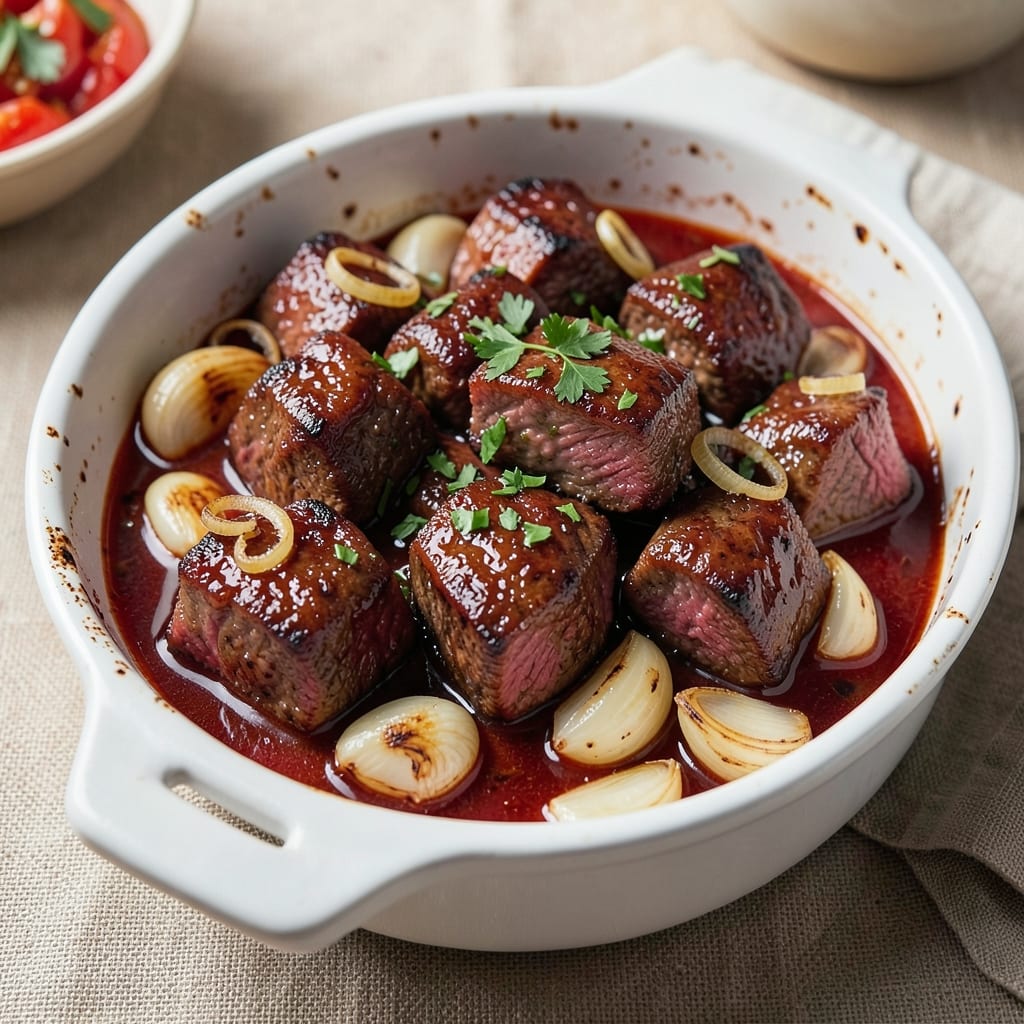
This fine beef cubes recipe transforms tough cuts into melt-in-your-mouth perfection with a one-pan red wine reduction that elevates simple ingredients to restaurant-quality. After years of perfecting this technique—from my grandmother's diner days to modern kitchen experiments—I've found the ideal balance between tender beef and rich, velvety sauce. The secret lies in precise cutting, proper searing, and slow reduction that develops deep flavors without overpowering the natural beef taste.
What sets this recipe apart is the combination of traditional French-inspired searing with a modern one-pan approach that cuts prep time in half. You'll start with uniform beef cubes—critical for even cooking—then achieve that signature caramelized crust through careful searing before deglazing with red wine. The sauce reduces to a glossy, aromatic finish that clings beautifully to each tender piece. This method delivers professional results without requiring specialized equipment.
The final dish features perfectly tender beef cubes with a rich, glossy red wine reduction that's both elegant and approachable. The sauce's depth comes from proper reduction techniques that concentrate the wine's flavors while balancing acidity with sweetness. This recipe works beautifully as a standalone main course or paired with creamy mashed potatoes, crusty bread, or roasted vegetables. The presentation is simple yet impressive—ideal for weeknight dinners that feel special.
Whether you're cooking for a family dinner or hosting guests, this beef cubes recipe delivers consistent, restaurant-quality results every time. The technique is straightforward once mastered, and the rich flavors make it worth the effort. For those short on time, I'll show you how to adapt this method using an Instant Pot while maintaining the same depth of flavor. Let's get started on creating beef that's impossible to resist.
Ingredients for fine beef cubes
Uniform beef cubes and rich red wine reduction create restaurant-quality one-pan perfection every time.
| Ingredient | Amount | Notes |
|---|---|---|
| Chuck Roast Beef 🥩 | 2 lb | Trimmed of fat, cut into 1.5-inch cubes |
| Dry Red Wine 🍷 | 1 cup | Bold Cabernet Sauvignon or Merlot preferred |
| Beef Broth 💧 | 1 cup | Low-sodium preferred, homemade or high-quality |
| Tomato Paste 🍅 | 2 tbsp | San Marzano preferred, no added salt |
| Garlic Cloves 🧄 | 4 cloves | Peeled, smashed for deep flavor infusion |
| Shallots 🧅 | 2 whole | Minced finely, or substitute 3 tbsp onion |
| Fresh Thyme 🌿 | ¼ cup | Leaves only, stems removed |
| Olive Oil 🫒 | 2 tbsp | Extra-virgin for high smoke point |
| Dijon Mustard 🍯 | 1 tbsp | For depth of flavor in reduction |
| Balsamic Vinegar 🍶 | 1 tbsp | For balancing acidity in reduction |
| Diamond Crystal Kosher Salt 🧂 | 1 ½ tsp | Adjust to taste, don't oversalt |
| Freshly Ground Black Pepper 🌶️ | 1 tsp | Cracked peppercorns preferred |
| Unsalted Butter 🧈 | 1 tbsp | For finishing sauce richness |
| Fresh Parsley 🌿 | ⅛ cup | Chopped, for garnish only |
The beef selection is non-negotiable for this technique. Chuck roast delivers that signature melt-in-your-mouth texture when properly seared and reduced, while sirloin or ribeye will remain too firm. Most butcher counters will cube it for you—ask for 1.5-inch uniform pieces. For the wine, Cabernet Sauvignon or Merlot from a reputable producer like Louis Martini or Apothic works beautifully, but any bold, dry red will suffice. The key is avoiding overly sweet or oaky wines that can overpower the beef's natural flavor. For the broth, Homemade or high-end brands like Pacific Foods ensure proper depth without excessive sodium.
No red wine on hand? Substitute with beef broth plus 1 tbsp balsamic vinegar—it mimics the acidity profile surprisingly well. Fresh thyme is ideal, but dried thyme at one-third the amount works in a pinch. The tomato paste can be replaced with 1/4 cup crushed San Marzano tomatoes if you prefer a chunkier sauce. For the shallots, yellow onions work fine, though they have a slightly sweeter profile. The Dijon mustard adds complexity—if you're avoiding it, substitute with 1 tsp whole-grain mustard. For the butter finish, vegetable shortening provides a neutral fat alternative, though it lacks the same richness.
Proper storage begins with the beef—use within 2 days of purchase for optimal texture. The wine reduction can be made ahead and reheated gently on the stove, though the sauce will be slightly thicker after refrigeration. Store leftovers in an airtight container for up to 4 days, or freeze portions for 3 months. For the fresh herbs, wrap them in damp paper towels and store in a sealed container with a rubber band around the stem—this keeps them vibrant for up to 5 days. The finished dish reheats beautifully—simply cover with foil and warm in a 350°F oven for 10-15 minutes, basting occasionally with the pan juices.
Why You'll Love This Recipe
- One-Pot Magic: I swear by this recipe because it’s literally dump-and-simmer. Chuck roast cubes, a splash of red wine, and beef broth—just sear, deglaze, then let it work its magic. No fancy techniques, no stress.
- Rich Without Effort: That deep caramelized crust on the beef? Pure reward for 10 minutes of attention. The wine and tomato paste turn this into something restaurant-worthy, but honestly? It’s my lazy night’s best friend.
- Lunch for Days: Between us, this makes perfect leftovers. The flavors get even better after a day in the fridge—ideal for meal prep. Pack it for work or freeze portions for when you’re too tired to cook.
- Budget Beef Boost: Chuck roast is affordable, and this recipe stretches it far. A single cut feeds four, and the wine and broth add depth without breaking the bank. (Yes, even on a Tuesday night.)
Step-by-step instructions for one-pan red wine reduction magic
Transform tough chuck roast into tender, restaurant-quality beef cubes with this elegant one-pan technique.
Sear the Beef Cubes for Maximum Flavor
Heat a large Dutch oven over medium-high heat until a drop of water sizzles instantly. Add the 2 lb chuck roast beef cubes in a single layer, working in batches if needed to avoid crowding. Let them sear undisturbed for 3-4 minutes per side until deeply browned with a crust forming.
This initial sear creates the Maillard reaction that builds deep, complex flavors. I press down gently on the cubes during the first minute to prevent curling and ensure even contact with the pan. Once all cubes are golden brown, remove them and set aside on a plate. The residual heat will keep them warm while you build the sauce.
Build the Aromatic Base
In the same Dutch oven, reduce heat to medium and add the 2 tbsp olive oil. Add the 2 whole shallots and 4 cloves garlic cloves, cooking for 3-4 minutes until the shallots soften and the garlic becomes fragrant but doesn't brown. Stir occasionally to prevent burning.
Here's where the magic begins: Add the 2 tbsp tomato paste and cook for 1 minute, stirring constantly to distribute it evenly. This creates a rich foundation for the reduction. The tomato paste's concentrated flavor will carry through the entire dish, balancing the acidity of the wine and vinegar.
Deglaze with Wine and Reduce
Pour in the 1 cup dry red wine and scrape up all the browned bits from the bottom of the pan using a wooden spoon. This deglazing captures all the flavor compounds that would otherwise be lost. Let the wine simmer for 3-4 minutes until reduced by half, until it reaches a syrupy consistency.
Add the 1 cup beef broth, 1 tbsp Dijon mustard, 1 tbsp balsamic vinegar, and 0.25 cup fresh thyme leaves. Bring to a gentle simmer and let cook for 5 minutes to allow the flavors to meld. The thyme should be fragrant but not bitter—if it tastes harsh, you've overcooked it.
Braise the Beef to Tender Perfection
Return the beef cubes to the Dutch oven and add the 1.5 tsp Diamond Crystal kosher salt and 1 tsp freshly ground black pepper. Stir to combine, then bring the liquid to a gentle simmer. Cover and transfer to a 325°F oven for 2-2.5 hours, until the beef is fork-tender and easily pulls apart.
I check for doneness by inserting a fork into the thickest piece—it should slide in with minimal resistance. The sauce should have reduced significantly, coating the beef in a glossy, velvety glaze. If it's too thin, uncover and simmer for an additional 10-15 minutes to thicken.
Finish with Butter and Garnish
Remove the Dutch oven from heat and stir in the 1 tbsp unsalted butter until melted and incorporated. This final step adds richness and helps emulsify the sauce for a silky texture. Taste and adjust seasoning if needed—you may need a pinch more salt to balance the wine's acidity.
Transfer the beef cubes to a serving platter and spoon the reduction sauce over the top. Garnish with the 0.125 cup chopped fresh parsley for a pop of color and freshness. Serve immediately with crusty bread or over polenta to soak up every last bit of that luxurious sauce.
Pro Tips For Making Fine Beef Cubes
- Sear the Cubes First: Chuck roast is forgiving, but a quick sear in a screaming-hot pan with oil before adding wine and broth builds flavor you’ll notice immediately. I used to skip this, thinking it was extra work—until I tasted the difference. Just 2-3 minutes per side, until golden.
- Use Cold Wine: Pouring cold red wine into a hot pot causes it to cook off too fast, leaving your sauce flat. Chill the wine first, then add it gradually as the beef simmers. This keeps the acidity bright and the alcohol from evaporating like a ghost.
- Deglaze with Broth: After browning the beef, don’t just splash in wine—toss in a splash of beef broth first to loosen the fond from the pan. Scrape it up like you mean it, then add the wine. This step makes the sauce richer without extra effort.
- Crush the Garlic: Minced garlic burns fast, and you’ll end up with bitter bits. Smash the cloves with the flat side of your knife first, then chop them into rough pieces. They’ll soften beautifully without turning your sauce into charcoal. (Yes, I’ve done that.)
Troubleshooting great fine beef cubes
Uneven Cooking
If your beef cubes finish with some pieces still tough while others are mushy, it's likely due to uneven cube sizes. I learned this the hard way when a neighbor tried my recipe—her convection oven's hot spots made it worse. Always cut cubes to exactly 1.5 inches using a meat slicer or ask your butcher to do it. For the toughest cuts like chuck roast, I recommend trimming any large fat caps first—they insulate the meat and prevent even cooking. 🌡️
Sauce Too Thin
A watery sauce usually means the reduction didn't concentrate enough. The key is patience—never rush the simmering process. If your sauce is too thin after braising, uncover the pot and simmer uncovered on the stovetop for 10-15 minutes to reduce further. For extra thickness, I sometimes add 1 tsp cornstarch mixed with 2 tbsp cold water and stir it in at the end. The butter finish helps emulsify the sauce naturally, too.
Beef Too Dry
Overcooking is the #1 reason for dry beef cubes. The internal temperature should reach 203°F for perfect tenderness. I use a meat thermometer to monitor doneness—any higher and the meat becomes stringy. If you're using an Instant Pot, cook on high pressure for 40 minutes then natural release for 10 minutes. For oven-braised versions, 2-2.5 hours at 325°F is ideal. Remember: the residual heat will continue cooking the meat after you remove it from the oven.
Wine Flavor Lost
If your dish tastes more like beef broth than wine, you likely didn't reduce the wine long enough. The wine should reduce by at least half before adding broth—this concentrates the flavors. I use Cabernet Sauvignon because it holds up well to reduction, but avoid sweet wines like Zinfandel. For extra depth, add 1 tsp soy sauce during the reduction phase—it enhances the umami without overpowering the wine's profile. 🍷
Burnt Bottom
Those dark, bitter bits at the bottom of your pan? That's caramelized fond—but too much ruins the dish. Always use medium heat when building the aromatic base and stir frequently. I keep a wooden spoon handy to scrape up browned bits during deglazing. For stubborn burnt bits, add 1 tbsp beef broth and scrape while on low heat—this lifts the flavor without adding too much liquid. A well-seasoned Dutch oven helps prevent sticking, but don't skip the oil!
Herbs Too Bitter
Overcooked thyme or parsley turns bitter and ruins the dish. Fresh herbs should be added late in the process—only 5 minutes before serving. For thyme, I add it with the broth but remove it before serving. If using dried herbs, reduce to one-third the amount of fresh and add them 10 minutes before the end. The parsley garnish should be added right before serving to preserve its bright flavor. 🌿
Nutrition facts
Frequently asked questions about perfect beef cubes
What's the best cut for these beef cubes?
Use chuck roast for the most tender, flavorful results—it's designed to become melt-in-your-mouth when slow-cooked. For quicker versions, sirloin or ribeye work well but require shorter cooking times. Never use flank steak or skirt—those cuts stay tough no matter how you cook them.
Can I make this recipe without red wine?
Replace the wine with 1 cup beef broth plus 1 tbsp balsamic vinegar for similar acidity. For extra depth, add 1 tsp soy sauce during reduction. The dish will still develop rich flavors—just expect a slightly different profile without the wine's complexity.
How do I get perfectly even cubes?
Use a meat slicer or ask your butcher to cut 1.5-inch cubes for uniform cooking. Trim any large fat caps first—they insulate the meat and create uneven doneness. For home cutting, use a sharp knife and measure each piece against a ruler for consistency.
What's the best way to reheat leftovers?
Cover with foil and warm in a 350°F oven for 10-15 minutes, basting occasionally with pan juices. For stovetop reheating, use low heat and add 1-2 tbsp broth to prevent drying. Never microwave—it makes the beef rubbery. The sauce will thicken slightly after reheating.
Can I use this technique for other proteins?
This method works beautifully with chicken thighs (reduce cooking time to 30 minutespork shoulder (increase to 3 hourscod with only 10 minutes of braising. The key is matching the protein to the cooking time—tougher cuts need longer, delicate ones need less.