
Main Courses
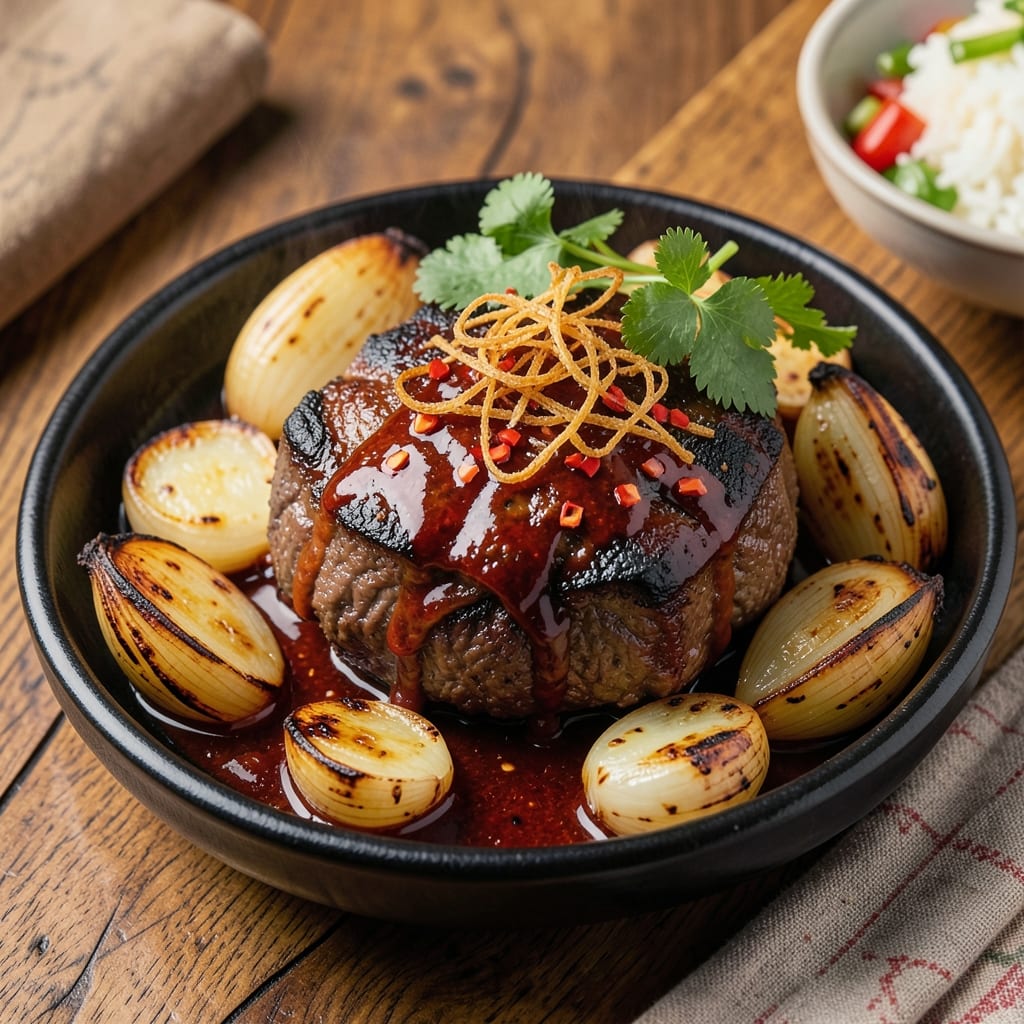
This slow-braised angry beef transforms tough cuts into tender, spice-packed perfection with charred onions that add smoky depth. The secret lies in a three-stage cooking process—searing for caramelized crust, braising for melt-in-your-mouth texture, and finishing with a spicy-sweet glaze that balances heat and richness. I developed this recipe after years of experimenting with Korean-style braised beef, where the slow cook transforms tough beef into something so tender it nearly falls apart at the touch. What sets this dish apart is the layered heat profile: gochujang for umami depth, chili flakes for sharpness, and a touch of honey to mellow the burn. The charred onions add a caramelized sweetness that cuts through the spice, while garlic and ginger build aromatic complexity. This isn’t just another spicy beef dish—it’s a flavor bomb that delivers restaurant-quality results with minimal effort. By the time it’s done, you’ll have deeply flavorful beef that’s juicy and tender, coated in a glossy, slightly sticky sauce with perfectly balanced heat. The aroma alone will have everyone gathering around the table, and the first bite delivers that satisfying mix of spicy, sweet, and savory that makes it impossible to stop eating. Serve it over steamed rice with quick-pickled cucumbers to cool the palate, or with buttery mashed potatoes to soak up every last drop of that spice-infused sauce. The leftovers? Even better the next day as the flavors meld further. Let’s get cooking—this is the kind of dish that turns weeknights into a flavor adventure.
Ingredients for angry beef
Pantry staples meet bold flavors in this restaurant-style angry beef that delivers deep, layered heat and smoky richness.
| Ingredient | Amount | Notes |
|---|---|---|
| Chuck Roast 🥩 | 2 ½ lb | Tough cut for braising, pre-cubed |
| Yellow Onions 🧅 | 3 whole | Charred for smoky depth |
| Gochujang Paste 🌶️ | ½ cup | Korean chili paste for umami |
| Garlic Cloves 🧄 | 8 cloves | Minced for aromatic base |
| Fresh Ginger 🌿 | ½ cup | Grated, peeled, for zing |
| Red Chili Flakes 🔥 | 2 tbsp | Adjust for heat preference |
| Honey 🍯 | 2 tbsp | Balances spice intensity |
| Soy Sauce 🍶 | ½ cup | Kosher or tamari preferred |
| Beef Broth 💧 | 2 cups | Homemade or high-quality |
| Sesame Oil 🫒 | 1 tbsp | Toasted for nutty aroma |
| Vegetable Oil 🫒 | 2 tbsp | For high-heat searing |
| Diamond Crystal Kosher Salt 🧂 | 1 ½ tsp | For seasoning and balance |
| Black Peppercorns 🌶️ | 1 tsp | Freshly cracked for heat |
| Brown Sugar 🍚 | 1 tbsp | Enhances caramelization |
The chuck roast is your secret weapon—tough cuts transform into melt-in-your-mouth perfection when braised properly. Grab a 2.5-pound piece from the butcher counter (they'll often cube it for you), or use pre-cubed beef from the meat department. Look for good marbling—it'll render down during cooking and keep the beef juicy. If you're feeling adventurous, ask for a whole chuck roast and cube it yourself for maximum flavor. The onions? Yellow onions are ideal—they caramelize beautifully and add natural sweetness that balances the heat. Char them until blackened in spots for that smoky depth the recipe promises.
No gochujang? Mix 2 tbsp sriracha with 1 tbsp soy sauce and 1 tbsp honey for a quick substitute, though it won't have the same complex umami. Fresh ginger is ideal, but substitute with 1 tbsp ground ginger if needed (though it lacks the same bright zing). Running low on sesame oil? Toast 1 tsp sesame seeds in a dry pan and grind them into the sauce at the end. The beef broth can be store-bought, but homemade or high-quality low-sodium makes a noticeable difference. For the honey, avoid light-colored varieties—they lack the depth of flavor. And if you're sensitive to heat, reduce the chili flakes to 1 tbsp or use just 1 tbsp of the gochujang paste.
This dish tastes even better the next day as the flavors meld—plan to make extra. Store leftovers in an airtight container in the fridge for 4-5 days, or freeze portions for up to 3 months. The sauce thickens as it cools, so add a splash of beef broth when reheating. For meal prep, portion the beef and sauce separately—it reheats beautifully in the microwave or on the stovetop. The charred onions can be prepped ahead and stored in the fridge for 3 days, though they're best used immediately for maximum flavor impact.
Why You'll Love This Recipe
- One-Pot Magic: I swear by this recipe because it’s that easy—just sear the beef, toss in the onions and gochujang, then let it slow-cook. No flipping pans, no fussing with sauces. The chuck roast practically melts into tender perfection while you’re still chopping the ginger.
- Spicy-Sweet Fix: That gochujang paste? It’s the star—fermented, funky, and packed with depth. The garlic and ginger sizzle into the onions first, then the beef soaks up all that smoky-sweet-spicy goodness. Honestly, the first bite makes you want to skip dinner and eat it straight from the pot.
- Weeknight & Leftovers: Between us, this is my go-to for busy nights and lazy Sundays. It’s hearty enough for a crowd but keeps well for days—better the next day, if you ask me. Toss it in sandwiches, over rice, or even in tacos. (Yes, even on a Tuesday night.)
- Budget Stretch: A chuck roast is cheap, and this recipe stretches it into so much. You’re not just feeding yourself—you’re feeding a family for half the price of takeout. Plus, the gochujang adds that restaurant-quality kick without breaking the bank. My secret weapon, honestly.
Step-by-step instructions for slow-braised spice bomb
This dish delivers deep, complex flavors through careful layering and patience—trust the process.
Char the Onions and Sear the Beef
Heat a dry skillet over medium-high heat and place the 3 whole yellow onions cut in half lengthwise, cut-side down. Let them char for 10-12 minutes until deeply blackened in spots and caramelized at the edges. This smoky depth is the foundation of the dish—don't rush it. Transfer the onions to a plate and set aside, reserving any browned bits in the pan.
Increase heat to high, add the 2 tablespoons vegetable oil, and sear the 2.5 lb chuck roast in batches if needed. Cook for 3-4 minutes per side until deeply browned and developing a crust. The beef should be firm to the touch—this ensures maximum flavor extraction during braising. Remove the beef and set aside with the onions. 2
Build the Spice Paste and Deglaze
In a large Dutch oven or heavy pot, reduce heat to medium and add the 8 cloves minced garlic and 0.5 cup grated fresh ginger. Sauté for 1-2 minutes until fragrant but not browned—burnt aromatics will make the dish bitter. Stir in the 0.5 cup gochujang paste, 2 tablespoons red chili flakes, and 1 tablespoon brown sugar, cooking for 1 minute to toast the spices and deepen their flavors.
Pour in the 0.5 cup soy sauce and 2 tablespoons honey, scraping up all the browned bits from the bottom of the pot. This deglazing step captures all the caramelized flavors that would otherwise burn. Let the mixture simmer for 2-3 minutes until slightly thickened and glossy—this forms the velvety base for your braise.
Step 3: Braise Until Fork-TenderReturn the seared beef to the pot along with the charred onions. Pour in the 2 cups beef broth and bring to a simmer over medium-low heat. The liquid should just barely bubble—this gentle simmer is crucial for tenderizing the tough chuck roast. Cover the pot and let it cook for 2.5-3 hours, checking occasionally to ensure there's enough liquid (add a splash of water if needed).
After 2 hours, stir in the 1 tablespoon sesame oil and 1.5 teaspoons kosher salt. The beef should be fork-tender when pierced with a knife—it should pull apart easily but still hold its shape. If it's not quite tender yet, continue cooking for another 30 minutes. The onions should be completely soft and infused with all the spicy, umami flavors.
Step 4: Finish with Pepper and RestOnce the beef is tender, remove the pot from heat and let it rest for 10 minutes covered. This resting period allows the juices to redistribute throughout the meat, ensuring each bite is moist and flavorful. While it rests, crack the 1 teaspoon black peppercorns over the top and give everything a final stir to combine.
Serve the beef with the onions and all the rich, spicy braising liquid spooned over the top. The dish should be vibrant red from the gochujang, with deep charred onion flavors cutting through the richness of the beef. Each bite delivers a perfect balance of heat, sweetness, and umami—this is what makes it truly "angry" in the best sense of the word.
Step 5: Garnish and ServeFor presentation, transfer the beef and onions to a platter, spooning the braising liquid generously over the top. Garnish with additional red chili flakes if desired, and serve immediately with steamed rice or crusty bread to soak up all that delicious sauce. The contrast of the warm, spicy beef with cool rice makes every bite even more satisfying.
This dish tastes even better the next day as the flavors continue to meld, so it's perfect for meal prep. Store any leftovers in the refrigerator for up to 4 days—the beef will only become more tender with time.
Pro Tips For Making Angry Beef
- SEAR THE ROAST FIRST: Hit that chuck roast with a screaming-hot pan—no rushing—until it’s deep brown in spots. I learned this the hard way: skipping the sear means your beef will taste like it’s been simmered in its own juices the whole time, not caramelized into flavor bombs. (Yes, even if you’re impatient like me.)
- JULIENNE THE ONIONS: Thin, even strips—about 1/8-inch thick—cook faster and soak up the gochujang without turning to mush. I used to chop them roughly, and they’d either burn or stay raw. Now I slice them on the diagonal and keep them moving in the pan.
- LOW AND SLOW AFTER 30: Once the beef and aromatics hit the liquid, crank the heat to boil for 5 minutes to blister the garlic and ginger, then drop to a bare simmer. After burning three batches, I finally figured out: rushing the simmer = bitter, muddy sauce. Let it work its magic.
- TOAST THE GOCHUJANG: Bloom that paste in the pan for 2 minutes before adding liquid—it deepens the umami and cuts through the heat. I was skeptical until I tried it: the sauce goes from sharp to rich, like someone added a secret ingredient. (Spoiler: it’s just patience.)
Troubleshooting great angry beef
Undercooked Beef
The most common issue is beef that’s still tough after braising. This usually happens when the beef isn’t seared properly or the braising time is insufficient. Always sear the beef until deeply browned on all sides—this creates a flavorful crust that locks in juices. For a 2.5 lb chuck roast, plan for 2.5-3 hours of braising at medium-low heat. If your beef isn’t tender after this time, check your heat—it should be a gentle simmer, not a rolling boil. 🌡️
Sauce Too Thin
A watery sauce often means the beef released too much liquid during braising. Start with 2 cups beef broth, but reduce it slightly by simmering uncovered for the last 10-15 minutes of cooking. If the sauce is still too thin, mix 1 tablespoon cornstarch with 2 tablespoons cold water, stir it into the sauce, and simmer until thickened. Avoid adding extra broth—this will dilute the flavors you’ve worked so hard to build.
Overpowering Heat
If the dish tastes too spicy, balance it with more sweetness or acidity. Stir in an extra 1 tablespoon honey or 1 teaspoon apple cider vinegar to mellow the heat. You can also reduce the red chili flakes to 1 tablespoon in future batches. For immediate relief, serve with cool, quick-pickled cucumbers or a side of steamed rice to counteract the spice. 🌶️
Onions Not Charred Enough
Under-charred onions lack the smoky depth that anchors the dish. Use a dry skillet over medium-high heat and let the onions cook until they’re blackened in spots and caramelized at the edges—this takes 10-12 minutes. If your onions aren’t dark enough, return them to the skillet for another 2-3 minutes, watching closely to avoid burning. The charred flavor is non-negotiable for that signature "angry" kick.
Beef Too Dry
Dry beef usually means the pot wasn’t covered properly or the liquid evaporated too quickly. Always cover the pot with a tight-fitting lid and monitor the liquid level—add a splash of beef broth if it drops below ½ inch. After braising, let the beef rest for 10 minutes covered to retain juices. If the beef is still dry, try braising with 1 extra cup of broth next time and reduce it at the end.
Flavor Imbalance
If the dish tastes flat or one-note, it’s likely missing umami or acidity. Boost umami by adding 1 teaspoon fish sauce or ½ teaspoon MSG at the end. For acidity, stir in 1 teaspoon rice vinegar or a splash of lemon juice. Taste as you go—this dish thrives on bold flavors, so don’t be afraid to adjust. The goal is a perfect balance of spicy, sweet, and savory. ✨
Nutrition facts
Frequently asked questions
What makes this dish different from regular spicy beef?
The "angry" factor comes from the three-stage cooking process—charred onions for smoky depth, gochujang for umami heat, and a balanced sweet-spicy glaze. Unlike quick stir-fries, this slow-braised version transforms tough chuck roast into melt-in-your-mouth beef with complex layers of flavor. The honey and charred onions create a perfect heat balance that regular spicy beef recipes often miss.
Can I substitute gochujang with something else?
Yes! For a quick substitute, mix 2 tbsp sriracha with 1 tbsp soy sauce and 1 tbsp honey. However, you'll lose some of the deep umami complexity. If you're avoiding gluten, use tamari instead of soy sauce. For extra heat without gochujang, add 1 extra tbsp red chili flakes and ½ tsp smoked paprika. The key is maintaining that sweet-spicy balance.
How do I adjust the heat level for sensitive eaters?
Start by reducing the red chili flakes to 1 tbsp and using only ¼ cup gochujang instead of ½ cup. For extra mildness, add 1 tbsp apple cider vinegar or 1 tsp sugar at the end to balance flavors. Serve with cool sides like quick-pickled cucumbers or steamed rice to help counteract any remaining heat. The beef itself won't be spicy—just the sauce!
What's the best way to reheat leftovers?
Reheat in a skillet over medium-low heat with 1-2 tbsp beef broth to restore moisture. Avoid microwaving—it makes the beef tough. For best results, cover the pan and warm for 5-7 minutes, stirring occasionally. The sauce will thicken as it reheats, so add a splash of broth if needed. Leftovers actually improve as flavors meld further!
Can I make this in an Instant Pot?
Yes! Sear the beef first in a separate pan, then transfer to the Instant Pot with all ingredients except the sesame oil. Cook on high pressure for 45 minutes, then quick-release. Finish by stirring in the sesame oil and letting it rest 10 minutes before serving. The pressure cooker cuts braising time by about half while keeping the beef tender. The sauce will be slightly thinner, so reduce it uncovered for 5 minutes at the end.