
Soups & Stews
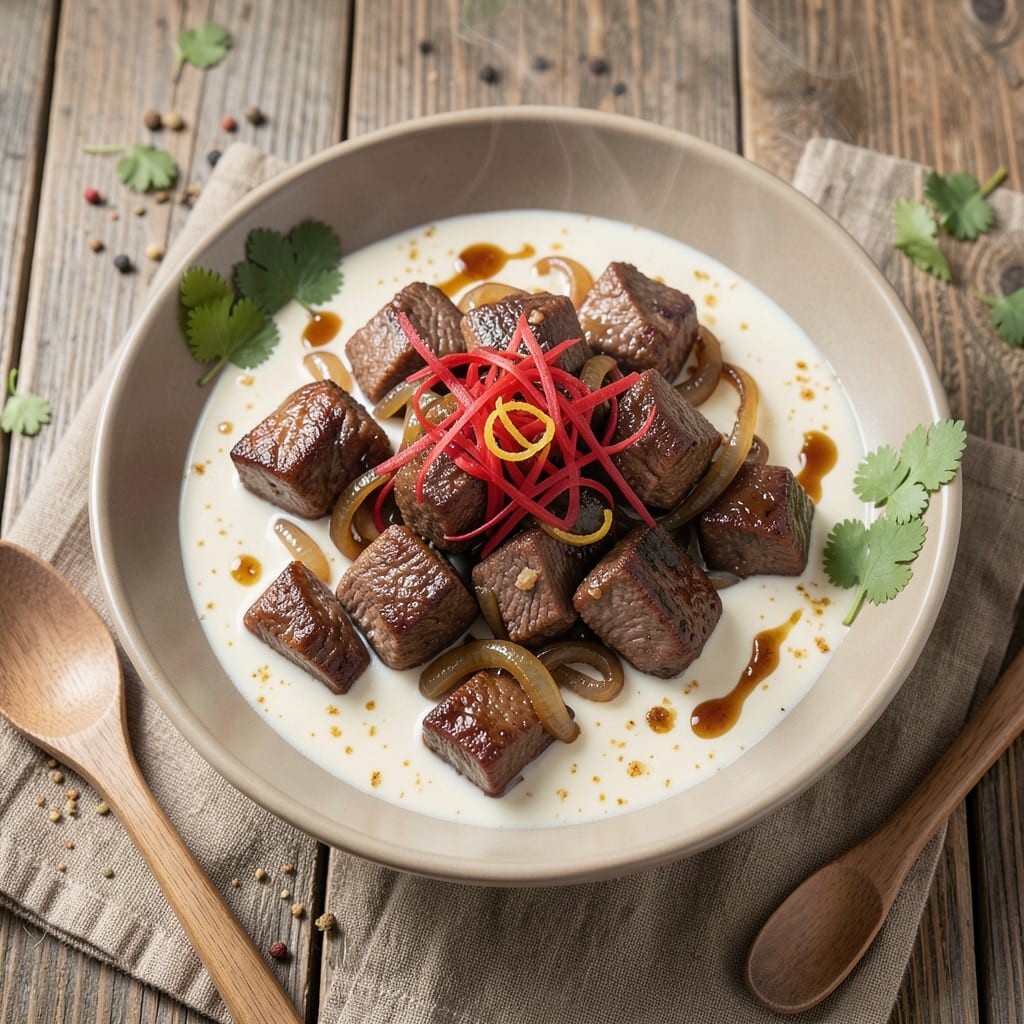
This Asian-style beef stew transforms tough cuts into silky, flavor-packed bites with a fragrant wok-toasted base. The secret lies in charring aromatics—garlic, ginger, and scallions—before slow simmering beef with soy, coconut milk, and star anise until fork-tender. I developed this recipe after craving restaurant-quality depth at home, and it delivers restaurant-quality results with minimal effort.
The beauty of this stew is its versatility—adjust the broth to suit your taste (Japanese-inspired with miso, Korean with gochujang, or Thai with lemongrass). The beef becomes melt-in-your-mouth tender while absorbing the rich, umami-forward flavors. What starts as a simple braise becomes a deeply aromatic, comforting dish that pairs perfectly with steamed rice or pickled vegetables.
What sets this recipe apart is the layered flavor development: first the wok-toasted aromatics, then the slow simmer that melds soy, coconut milk, and spices into a velvety broth. The result is a stew that’s hearty enough for a weeknight dinner but elegant enough for a special occasion. Every bite offers a perfect balance of savory, sweet, and slightly spicy notes.
Perfect for meal prep—this stew tastes even better the next day as flavors deepen. Serve with jasmine rice and quick-pickled cucumbers for a complete, satisfying meal. The instructions are straightforward, but the payoff is a dish that feels like a restaurant masterpiece.
Ingredients for asian style beef stew
Six aromatic ingredients transform tough beef into restaurant-quality stew with minimal effort.
| Ingredient | Amount | Notes |
|---|---|---|
| Chuck Roast 🥩 | 2 ½ lb | Cut into 1.5-inch cubes |
| Yellow Onion 🧅 | 2 whole | Thinly sliced, white and yellow |
| Garlic Cloves 🧄 | 8 cloves | Peeled, smashed slightly |
| Fresh Ginger 🌿 | ½ cup | Finely grated, peeled |
| Scallions 🧅 | ½ cup | White and green parts, sliced |
| Coconut Milk 🥥 | 1 can | Full-fat, 13.5 oz can |
| Soy Sauce 🍶 | ½ cup | Japanese-style preferred |
| Star Anise 🌟 | 2 whole | Lightly crushed |
| Cinnamon Stick 🌿 | 1 whole | Optional, for depth |
| Brown Sugar 🍯 | ¼ cup | Light or dark |
| Vegetable Oil 🫒 | ¼ cup | High smoke point |
| Salt 🧂 | 1 ½ tsp | Kosher or sea salt |
| Black Pepper 🌶️ | 1 tsp | Freshly ground |
| Jasmine Rice 🍚 | 2 cups | Uncooked, for serving |
The beef cut matters here—chuck roast is your best bet for that melt-in-your-mouth texture. Costco or Whole Foods usually carry it pre-cubed, which saves time. If you're buying a whole roast, ask the butcher to cut it into 1.5-inch cubes—this ensures even cooking. For the aromatics, fresh ginger and garlic are non-negotiable. Asian markets often have better quality ginger, and I always grab extra—half goes into the stew, half gets tossed in later for brightness. The star anise and cinnamon? Penzeys or bulk spice sections are your friends—whole spices stay potent longer than ground.
No soy sauce? Tamari or coconut aminos work perfectly—just use the same amount. Running low on coconut milk? Heavy cream plus a splash of coconut extract mimics the richness (though texture will differ). Fresh ginger too fibrous? Ground ginger at half the amount is a decent swap, but you'll lose that lovely aroma. The brown sugar adds depth, but maple syrup or agave can stand in if you're avoiding refined sugar. Pro tip: toast the star anise and cinnamon in the oil for 30 seconds before adding the beef—this unlocks their flavors.
This stew gets better with time—2-3 days in the fridge, flavors deepen like magic. Freeze portions for up to 3 months by portioning into airtight containers. I always double the batch and freeze half—weeknight dinners sorted. Serve over jasmine rice (or any long-grain) and top with extra scallions and a drizzle of the cooking liquid. The rice absorbs all that rich, umami goodness, making every bite heartier. Leftovers reheat beautifully—just add a splash of water or broth to loosen the sauce.
Why You'll Love This Recipe
- One-Pot Magic: I swear by this recipe because it’s all in one pot—no chopping mountains of veggies, no cluttered countertops. Just toss in the onion, garlic, ginger, and scallions, let the chuck roast simmer, and walk away.
- Umami Bomb: That chuck roast? It gets insanely tender while soaking up the ginger’s zing and garlic’s punch. The scallions at the end add this bright, fresh finish—like a little flavor hug after every bite.
- Leftovers That Don’t Suck: This stew actually improves the next day. The flavors meld into something deeper, and it reheats like a dream. I make a double batch on Sundays because it’s the only meal I don’t dread eating for lunch.
- Budget Feast: A chuck roast stretches for days—this is my go-to for feeding a crowd without breaking the bank. Honestly, the only thing costlier is my habit of making it too often.
Step-by-step instructions for Asian style beef stew
Here's how to create a rich, aromatic stew with tender beef and fragrant wok-toasted aromatics.
Prepare the Beef and Aromatics
Cut the 2.5 lb chuck roast into 1.5-inch cubes—this size ensures even cooking and proper texture. Pat them dry with paper towels, which helps develop that beautiful caramelized crust later.
In a large mixing bowl, combine the thinly sliced yellow onion, smashed garlic cloves, finely grated fresh ginger, and sliced scallions. Toss everything together with 1.5 tsp salt and 1 tsp black pepper. Set aside—this aromatic blend will form the flavor base for your stew.
Wok-Toast the Aromatics for Deep Flavor
Heat a wok or large skillet over medium-high heat and add the 0.25 cup vegetable oil. Once the oil shimmers but isn't smoking, add the prepared aromatics in batches. Stir-fry for 4-5 minutes until the onions soften and the garlic turns golden—this step builds layers of flavor you won't get from raw aromatics.
Transfer the toasted aromatics to a plate and set aside. In the same pan, add the beef cubes in a single layer. Sear undisturbed for 2 minutes until browned on one side, then flip and repeat. Remove the beef and set aside with the aromatics—this prevents overcrowding and ensures proper browning.
Build the Flavorful Braising Liquid
Return the seared beef and aromatics to the pan. Add the lightly crushed star anise, cinnamon stick, 0.5 cup soy sauce, 0.25 cup brown sugar, and 1 can coconut milk. Stir everything together and bring to a gentle simmer over medium heat. The liquid should reduce slightly while the spices infuse their flavors.
Once simmering, reduce heat to low, cover, and let it cook for 2 hours. This slow braising breaks down the beef fibers, creating silky, fork-tender meat. Check occasionally and add 2-3 tablespoons of water if the liquid gets too thick—you want a rich, velvety sauce.
Finish and Serve with Jasmine Rice
After 2 hours, remove the cinnamon stick and star anise (they've done their job). Taste and adjust seasoning with additional salt or soy sauce if needed. The stew should be rich, slightly sweet, and deeply aromatic with notes of ginger and garlic.
Serve the stew hot over 2 cups cooked jasmine rice, spooning the beef and sauce generously over each portion. The rice absorbs the flavorful liquid, creating a perfect balance of textures and tastes. Garnish with extra sliced scallions for freshness and color.
Pro Tips For Making Asian Style Beef Stew
- Sear the Chuck Hard: I learned this the hard way—skipping the deep sear means flavor hiding in the broth instead of clinging to the meat. Get that pan smoking hot (medium-high heat, 3-4 minutes per side) and let it develop a crust before adding anything else. The Maillard reaction is your friend here, especially for chuck’s rich, beefy depth.
- Slice Ginger Thinly: Fresh ginger’s sharp bite disappears when it’s chunky. Use a mandoline or the thinnest knife setting on your food processor—aim for 1mm slices. Toss them in the pot early (along with garlic) so they infuse without turning to mush. (Yes, even if you’re impatient like me.)
- Don’t Crowd the Pot: I used to dump everything in at once, and the onions turned to paste while the beef barely simmered. Start with half the onions and ginger, let them soften for 5 minutes, then add the rest. This keeps the stew from steaming instead of braising—critical for tender chuck.
- Save the Scallions: Resist the urge to chop all the scallions into the stew. Keep half whole and stir them in the last 10 minutes—this adds a bright, fresh finish that cuts through the richness. (Your future self will thank you.)
Wine and beer pairings for this recipe
Japanese-Inspired Sake
For a lighter, more delicate pairing, reach for a dry junmai sake like Dassai 23—its crisp acidity and subtle umami notes complement the stew's soy and ginger flavors beautifully. The alcohol content (~15%) cuts through the richness while enhancing the dish's aromatic complexity. Serve slightly chilled (45-50°F) to refresh your palate between bites. 🍶
Korean Ginseng Beer
A Korean ginseng lager such as Hite Jinro Ginseng Beer bridges the gap between the stew's savory depth and your palate's need for refreshment. The ginseng adds a subtle earthy sweetness that mirrors the brown sugar in the stew, while the beer's effervescence cleanses between bites. Opt for a 45-minute draft to let the carbonation settle before pairing. ✨
Thai-Inspired White Wine
If your stew leans Thai with lemongrass or galangal, try a Thai-inspired white wine like Oyster Bay Gewürztraminer—its lychee and floral notes harmonize with coconut milk while the wine's slight sweetness balances the soy's saltiness. Serve at 50°F to preserve its aromatic profile. The wine's acidity also helps break down the stew's rich textures. 🍷
Chinese Rice Wine
For a traditional Chinese touch, Shaoxing wine (a fermented rice wine) is a must. Use it both in the stew and as a pairing—its nutty, slightly funky profile mirrors the stew's caramelized aromatics. Serve it room temperature in small cups alongside the meal. The wine's earthiness grounds the dish's sweet-savory balance. 🥃
Light Lager for Balance
When in doubt, a crisp Japanese lager like Asahi Super Dry works wonders. Its clean, light profile won’t overpower the stew but instead highlights its natural flavors. The subtle hop bitterness also complements the soy sauce’s saltiness. Keep it well-chilled (38°F) for maximum refreshment. 🍺
Nutrition facts
Frequently asked questions
What's the best cut of beef for this Asian-style stew?
Use chuck roast—it's the perfect balance of affordability and tenderness when slow-cooked. The fat marbling breaks down beautifully, creating silky texture. Avoid leaner cuts like sirloin, as they can become dry.
Can I make this stew in an Instant Pot?
Sauté the aromatics and beef first, then add all ingredients and cook on high pressure for 45 minutes. Release pressure naturally, then finish with a 5-minute simmer to thicken the sauce. The Instant Pot cuts cooking time by about half while keeping the beef tender.
How can I adjust the spice level?
For milder heat, skip the star anise and cinnamon or reduce them to 1 each. For spicier versions, add 1 tsp gochugaru (Korean red pepper flakes) or 1 tbsp sriracha at the end. Thai-inspired versions work well with 1 stalk lemongrass and 1 tbsp fish sauce.
Why does my stew taste too salty?
Soy sauce is concentrated—start with 0.25 cup instead of 0.5 and taste as you go. If already too salty, dilute with 1/4 cup water or coconut milk and simmer for 10 minutes to balance flavors. The coconut milk also helps mellow the saltiness naturally.
What vegetables pair best with this stew?
Steamed bok choy, shitake mushrooms, or daikon radish add texture and freshness. For a complete meal, serve with jasmine rice and quick-pickled cucumbers or carrots. The acidity cuts through the richness while maintaining Asian flavor harmony.