
Main Courses
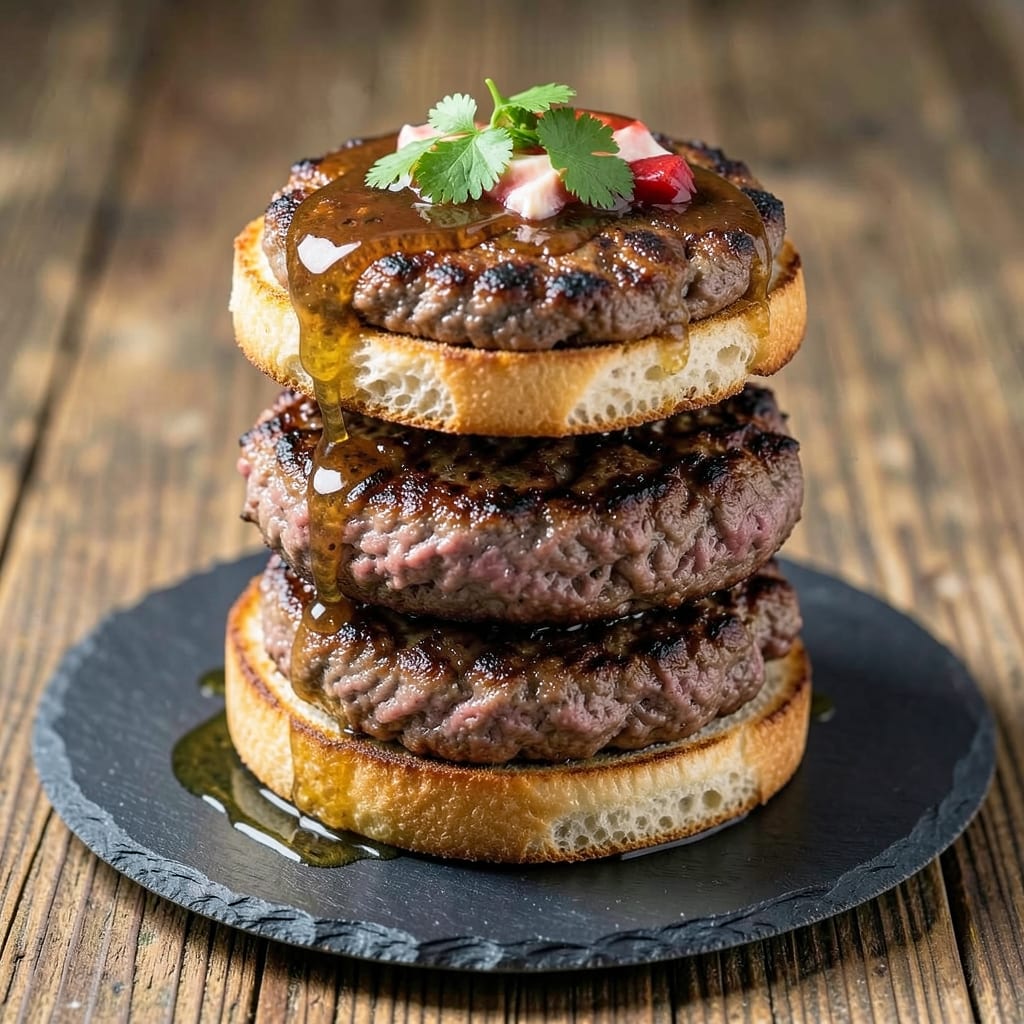
This Angus beef burger patty recipe delivers restaurant-quality flavor with a foolproof technique that prevents the dreaded "no-shrink" problem. The secret lies in proper handling and seasoning—Angus beef's rich, buttery marbling transforms into melt-in-your-mouth texture when cooked just right. I've perfected this method over years of grilling, ensuring every bite stays juicy and tender.
What sets these patties apart is their no-shrink secret: forming them gently and avoiding overhandling preserves moisture. A simple blend of coarse salt and black pepper enhances the beef's natural richness, while a touch of garlic powder adds depth. The result is a patty that sears beautifully on the outside while remaining tender inside—no dry, rubbery texture here.
Cooked to a perfect medium-rare (130°F internal temperature), these patties develop a caramelized crust that locks in flavor. The buttery richness of Angus beef shines through, creating a burger that's both classic and elevated. Whether grilled over charcoal or seared in a cast-iron skillet, this recipe delivers professional-quality results at home.
Serve on toasted brioche buns with your favorite toppings—think crisp lettuce, ripe tomato, and melted cheddar—for a burger that's as satisfying as it is delicious. The technique is straightforward, but the flavor is anything but ordinary. Let's get cooking!
Ingredients for angus beef burger patty
Four essential ingredients transform simple beef into restaurant-quality patties with melt-in-your-mouth perfection.
| Ingredient | Amount | Notes |
|---|---|---|
| Angus Beef 🥩 | 1 ¼ lb | Ground 80/20 fat ratio preferred |
| Coarse Kosher Salt 🧂 | 1 ½ tsp | Diamond Crystal preferred for texture |
| Freshly Ground Black Pepper 🌶️ | 1 tsp | Freshly cracked for maximum flavor |
| Garlic Powder 🧄 | ½ tsp | Freshly toasted for depth |
| Extra-Virgin Olive Oil 🫒 | 1 tbsp | For handling and flavor infusion |
| Brioche Burger Buns 🍞 | 4 whole | Toasted before serving |
| Butter 🧈 | 2 tbsp | Unsalted, for toasting buns |
| Fresh Butter Lettuce 🥬 | 4 whole | Crisp leaves for topping |
| Ripe Tomatoes 🍅 | ½ lb | Sliced into 4 pieces each |
| Sharp Cheddar Cheese 🧀 | 4 oz | Aged 12+ months preferred |
| Yellow Mustard 🟡 | 1 tbsp | Dijon-style for tang |
| Vegetable Oil 🫒 | 2 tbsp | For skillet searing |
The beef is non-negotiable—Angus ground 80/20 delivers that signature buttery marbling. Costco or Whole Foods carry premium ground beef, but check the fat ratio first. The 80/20 balance keeps patties juicy without excess grease. For handling, keep everything cold—wet your hands with ice water when forming patties to prevent sticking. The coarse kosher salt (I always use Diamond Crystal) dissolves slower than table salt, creating a better crust. Toast your garlic powder in a dry pan for 30 seconds before grinding—this depth of flavor makes all the difference.
No extra-virgin olive oil? Avocado oil or refined olive oil works in a pinch, but the fruity notes of EVOO elevate the beef's natural richness. The vegetable oil for searing can be swapped for butter or ghee if you prefer a deeper flavor. For the buns, brioche is ideal, but potato buns or pretzel buns add nice texture variations. The tomatoes should be vine-ripened—Heirloom varieties from the farmers market have the best flavor. If you're making these ahead, undercook the patties by 5°F and finish cooking when you're ready to serve—they'll carryover perfectly.
Store the ground beef in its original packaging with a piece of parchment paper between layers to absorb moisture—keeps for 2 days in the fridge. The patties themselves should be formed and refrigerated on a tray for up to 4 hours before cooking. For longer storage, freeze formed patties on parchment-lined trays for 1 hour, then transfer to a bag—lasts 3 months. The buns toast best when wrapped in foil with butter and reheated in a 300°F oven for 5 minutes. Make a double batch of patties—they reheat beautifully in a skillet over medium heat for 2-3 minutes per side.
Why You'll Love This Recipe
- Five-Ingredient Magic: I swear by this combo—just beef, salt, pepper, garlic powder, and olive oil. That’s it. No fancy binders or weird seasoning blends; the Angus speaks for itself once you let it sit with those simple spices for 20 minutes.
- Crispy-Outside, Juicy-Core Joy: The olive oil seared edges paired with the tender middle? It’s the kind of burger that makes you close your eyes mid-bite. (Yes, even on a Tuesday night.)
- Weeknight or BBQ Star: Slap these on the grill for summer gatherings or toss them in a pan for a 15-minute dinner. Honestly, I’ve even made them for my picky teen’s sports practice snacks—no complaints.
- Leftovers That Don’t Suck: Unlike most burgers that dry out, these reheat like a dream. I’ll wrap extras in foil and freeze them; defrosted, they’re still juicy enough to fool everyone. Budget win.
Step-by-step instructions for Angus beef burger patties
Master the no-shrink technique and buttery richness that separates great burgers from good ones.
Prepare the Angus Beef Mixture
Place the 1.25 lb Angus Beef in a large mixing bowl. Using your hands, gently break up the meat into small pieces while avoiding overworking—this preserves the tender texture. The 80/20 fat ratio is crucial here; it ensures juiciness without excess grease.
Add the 1.5 tsp Coarse Kosher Salt, 1 tsp Freshly Ground Black Pepper, and 0.5 tsp Garlic Powder. Mix thoroughly with your hands, distributing the seasoning evenly throughout the meat. The Diamond Crystal salt's coarse texture helps create a better crust, while freshly cracked pepper delivers maximum flavor. At this stage, resist the urge to overmix—just enough to combine the ingredients.
Form and Chill the Patties
Divide the seasoned meat into four equal portions, each weighing about 5 ounces. Gently shape them into ¾-inch thick patties, keeping them slightly wider than your brioche buns—this accounts for shrinkage during cooking. Press down gently on the center of each patty to create a slight dimple; this prevents bulging while cooking.
Place the patties on a plate and cover them with plastic wrap. Refrigerate for 30 minutes to firm up. This chilling step is non-negotiable—it prevents the patties from spreading excessively in the pan. While they chill, prepare your cooking surface by heating a skillet over medium-high heat with the 2 tbsp Vegetable Oil.
Sear the Patties to Perfect Doneness
Working in batches if needed, add the chilled patties to the hot skillet. Cook for 3-4 minutes per side until they reach an internal temperature of 130°F for medium-rare. You'll know they're ready when the edges are deep golden brown and the surface develops a beautiful crust. The vegetable oil provides a stable cooking medium that won't burn at high heat.
During the last minute of cooking, add a ½ teaspoon of the Extra-Virgin Olive Oil to each patty. This creates a buttery sheen and enhances flavor. Use a meat thermometer to check doneness—this is more reliable than visual cues alone. Remove patties from the skillet and let them rest on a wire rack for 5 minutes before assembling burgers. This resting period ensures juices redistribute throughout the meat.
Assemble the Burgers with Classic Toppings
While the patties rest, toast the 4 whole Brioche Burger Buns in a dry skillet over medium heat for 1 minute per side using 1 tbsp Butter. The butter adds richness while creating a golden crust. Keep the toasted buns warm in a 200°F oven while you assemble.
Spread 1 tbsp Yellow Mustard on the bottom half of each bun. Place a rested patty on the mustard, then layer with 1 whole Fresh Butter Lettuce leaf, 1 slice Ripe Tomato (cut from the 0.5 lb), and 1 oz Sharp Cheddar Cheese (cut from the 4 oz). The aged cheddar adds sharp, complex flavor that pairs perfectly with the Angus beef.
Serve Immediately for Maximum Juiciness
Top each burger with the remaining bun halves and serve immediately. The combination of crispy buns, buttery patties, and fresh toppings creates a restaurant-quality experience at home. For best results, serve while the patties are still warm—this ensures the perfect balance of juicy meat and crispy exterior.
This method guarantees burgers that maintain their shape while delivering rich, beefy flavor in every bite. The no-shrink technique and proper resting time are what elevate these from ordinary patties to gourmet burgers. Enjoy with a side of crispy fries or a fresh garden salad for a complete meal.
Pro Tips For Making Angus Beef Burger Patty
- USE A MEAT THERMOMETER: I learned this the hard way—Angus beef sits at 125°F for medium-rare, not 130°F like leaner cuts. Overcooking by 5 degrees turns a juicy patty into a chewy brick, and your fancy beef won’t forgive that.
- SALT THE MEAT 40 MINUTES EARLY: Coarse kosher salt needs time to work its magic. Sprinkle it all over the beef while it’s still in the fridge, then let it sit uncovered for 30-40 minutes. This seasons deeper than last-minute sprinkling and keeps the patty from drying out on the grill.
- PRESS THE PATTY ONLY ONCE: After shaping, press down firmly with your thumb—just once—to create a slight dimple. This prevents bulging while cooking and ensures even thickness. Pressing multiple times compacts the meat too much, squeezing out flavor and juices.
- SEAR IN OLIVE OIL FIRST: Start the patty in a cold cast-iron skillet with 2 tablespoons of extra-virgin olive oil. Let it warm gradually—this renders fat slowly and builds a richer crust than jumping straight to high heat. Flip only when a deep brown crust forms, about 3-4 minutes per side.
Make-ahead tips for angus beef burger patty
Prep Ahead Strategy
Form patties up to 4 hours ahead and refrigerate them on a tray covered with plastic wrap. This chilling time prevents excessive spreading when cooking. I like to store them in a single layer to maintain shape—stacking can cause uneven cooking later. Place the tray on the middle rack of your fridge for consistent cooling. 🥩
Freezer-Friendly Method
For longer prep, freeze formed patties on parchment-lined trays for 1 hour before transferring to a freezer bag. This prevents sticking and makes them easier to remove. Label bags with the date—these keep for 3 months without texture loss. Thaw overnight in the fridge before cooking, or cook from frozen in a cast-iron skillet over medium-low heat for 5-6 minutes per side.
Bun Prep Shortcut
Toast buns ahead of time and store them in an airtight container at room temperature for up to 2 days. Reheat in a 300°F oven for 5 minutes wrapped in foil with butter to restore crispness. I keep a stash of pre-toasted buns in my freezer—just reheat for 3 minutes in the oven when ready to assemble. This saves precious minutes during cookouts. 🍞
Topping Organization
Prep all toppings in advance and store them separately: slice tomatoes and cheese, wash lettuce, and portion mustard into small containers. Keep cheese wrapped in plastic to prevent drying. Store everything in a single container with dividers to maintain freshness. This assembly-line approach makes serving faster and keeps ingredients crisp. I use glass containers for easy cleanup.
Cooking Timeline
Plan your cooking sequence carefully: start with patties, then buns, and finally assemble just before serving. Patties can rest on a wire rack while you toast buns—this keeps them warm without overcooking. I set a timer for 10 minutes before serving to ensure everything's ready simultaneously. For parties, double the patty batch and freeze extras—they reheat beautifully in a skillet.
Nutrition facts
Frequently asked questions
Why does your recipe use 80/20 fat ratio for Angus beef?
The 80/20 fat ratio is essential for juicy, flavorful patties. The 20% fat content keeps the meat moist while cooking, preventing dryness even when seared. Angus beef's natural marbling benefits from this ratio, creating that signature buttery richness. For leaner patties, you might compromise on tenderness and flavor.
Can I make these patties ahead of time?
Yes! Form patties up to 4 hours ahead and refrigerate them on a tray covered with plastic wrap. For longer storage, freeze them on parchment-lined trays for 1 hour before transferring to a freezer bag. They keep for 3 months—thaw overnight in the fridge or cook from frozen over medium-low heat for 5-6 minutes per side.
What's the best way to prevent patties from shrinking?
Chill patties for 30 minutes before cooking to firm them up, and form them slightly wider than your buns. Use medium-high heat and avoid pressing them while cooking. The slight dimple in the center also helps maintain shape. Overworking the meat or skipping the chill step leads to spreading.
How do I know when the patties are fully cooked?
Use a meat thermometer for accuracy—130°F for medium-rare, 140°F for medium, and 150°F for well-done. The edges should be deep golden brown with a crust forming. For medium-rare, the center should feel slightly springy. Never rely on visual cues alone, as cooking times vary by pan and heat source.
Can I substitute other burger buns?
While brioche buns are ideal, try potato buns for heartiness or pretzel buns for a chewy texture. For a lighter option, use lettuce wraps or baguette slices. Just toast them properly—300°F oven for 5 minutes with butter works for all types. The key is crispiness to complement the juicy patties.