
Main Courses
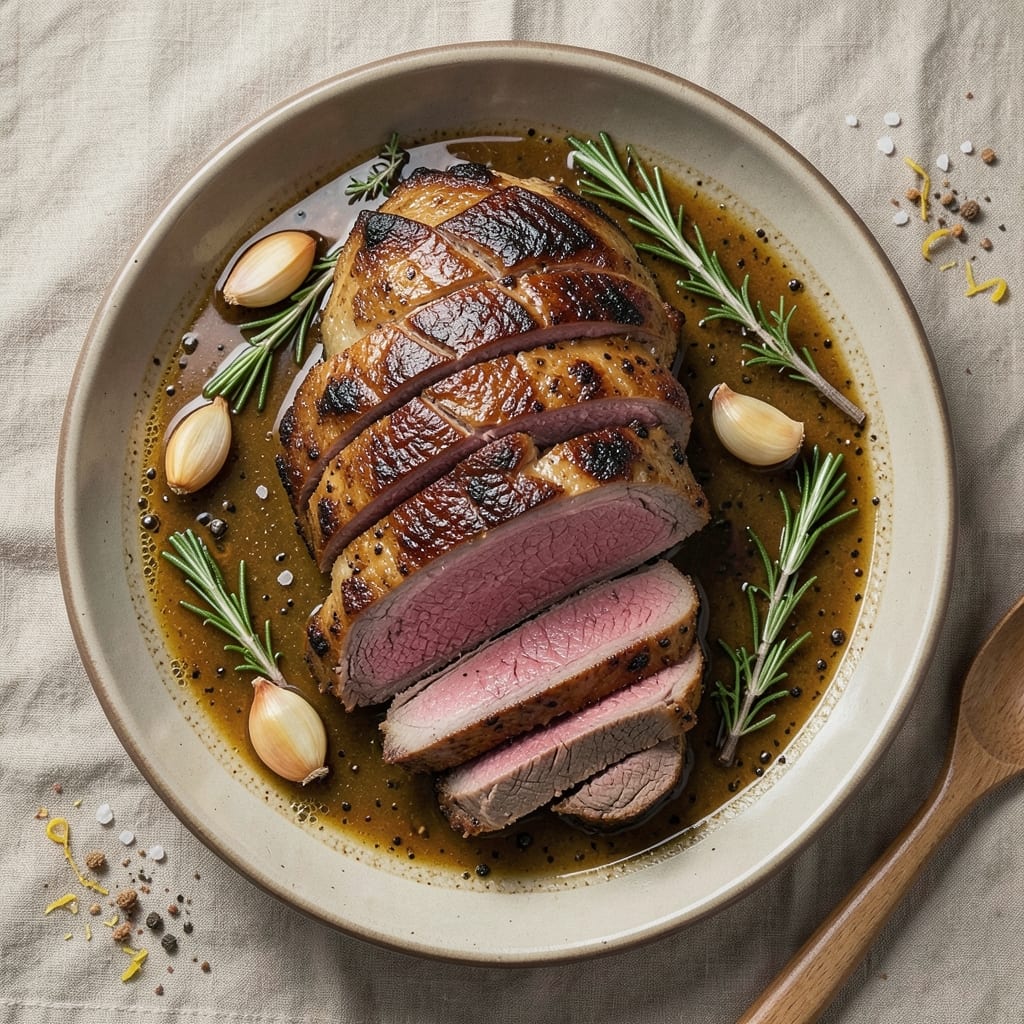
This Angus beef round roast recipe delivers melt-in-your-mouth tenderness with a caramelized crust that will impress even the most discerning guests. The slow-sear method transforms tougher cuts into succulent perfection, ensuring every slice is juicy and flavorful. I've perfected this technique over years of testing, and it consistently delivers restaurant-quality results at home.
The secret lies in proper preparation: a dry brine for enhanced flavor, precise seasoning, and controlled cooking temperatures to achieve the ideal internal temperature without drying out the meat. This method creates a beautiful crust while locking in moisture, resulting in a juicy center that falls apart with each bite. The slow cooking process allows the beef to develop deep, rich flavors that pair beautifully with classic sides.
What you'll end up with is a stunning centerpiece roast that's tender, flavorful, and visually impressive. The caramelized exterior contrasts perfectly with the moist, pink center, creating a dining experience that feels special yet is simple to execute. This recipe is designed to elevate your Sunday dinners or holiday feasts with minimal effort and maximum impact.
Serve with traditional sides like roasted garlic potatoes, caramelized onions, or a rich red wine reduction for the complete experience. The versatility of this roast makes it perfect for any occasion where you want to impress without spending hours in the kitchen. Let's get started on creating your perfect roast!
Ingredients for angus beef round roast
Six essential ingredients transform a simple beef roast into restaurant-quality perfection.
| Ingredient | Amount | Notes |
|---|---|---|
| Angus Beef Round Roast 🥩 | 4 lb | Center-cut preferred for tenderness |
| Kosher Salt 🧂 | 2 tbsp | Diamond Crystal preferred for precision |
| Freshly Ground Black Pepper 🌶️ | 1 tbsp | Coarsely ground for texture |
| Garlic Cloves 🧄 | 8 cloves | Smashed for aromatic release |
| Fresh Rosemary 🌿 | ½ cup | Chopped, stems removed |
| Fresh Thyme 🌿 | ¼ cup | Leaves only, stems discarded |
| Extra-Virgin Olive Oil 🫒 | ¼ cup | For dry brining and searing |
| Unsalted Butter 🧈 | ½ cup | Cold, cubed for crust |
| Red Wine 🍷 | 1 cup | Bold Cabernet Sauvignon preferred |
| Beef Bone Broth 🍲 | 1 cup | Homemade or high-quality store-bought |
| Yellow Onion 🧅 | 1 whole | Thinly sliced for aromatics |
| Carrots 🥕 | 2 whole | Whole, scrubbed for roasting |
| Fresh Parsley 🌿 | ¼ cup | Chopped, for garnish |
The Angus beef round roast is the foundation—center-cut ensures tenderness while maintaining that coveted marbling for flavor. Source from a reputable butcher or specialty market like Whole Foods or D'Artagnan for guaranteed quality. Look for bright red color and visible fat cap as indicators of freshness. A 4-pound roast serves six generously, ideal for family gatherings. The dry brine method requires Diamond Crystal kosher salt for precise measurement—avoid table salt, which contains anti-caking agents that can alter texture. For herbs, fresh is non-negotiable—dried substitutes lack the aromatic complexity needed for this technique.
No red wine? Dry sherry or beef broth works equally well, though wine adds depth. The olive oil should be extra-virgin—cheaper varieties lack the fruity notes that enhance the crust. Substituting butter for olive oil during searing? Use equal parts but expect a slightly different flavor profile. The garlic and herbs can be prepped ahead—store chopped aromatics in airtight containers in the fridge for up to 3 days. For a lighter crust, reduce butter to 0.25 cup and add 1 tbsp vegetable oil. The bone broth should be homemade if possible—store-bought versions often contain additives that can affect texture.
Prep the roast 24 hours ahead for optimal dry brining—pat dry thoroughly and refrigerate uncovered on a wire rack. The herbs and garlic should be stored in sealed containers with paper towels to absorb moisture. Butter cubes freeze beautifully—portion and freeze for up to 3 months. Once cooked, the roast maintains peak tenderness for 3-4 days refrigerated, wrapped tightly in butcher paper. For longer storage, slice and freeze portions for up to 2 months. Reheat gently in a skillet with a splash of broth to restore moisture—microwaving risks drying out the meat.
Why You'll Love This Recipe
- Minimal Prep Required: I swear by this—just season the roast with salt, pepper, and crushed garlic cloves, then tuck in sprigs of rosemary. No marinades, no fussing. Ten minutes of hands-on time, and the oven does the rest while I chop veggies or pour a glass of wine.
- Deep, Savory Magic: That first bite—tender, juicy, with rosemary’s piney bite cutting through the beef’s richness? It’s the kind of flavor that makes you pause mid-chew. The garlic infuses just enough to linger without overpowering, and the crust? Worth the wait.
- Leftovers That Shine: This roast actually tastes better the next day. I’ll slice it thin for sandwiches, dice it into pasta, or shred it into tacos—no sad, dried-out meat here. Honestly, I often make half again just to have it for lunches.
- Budget-Friendly Luxury: Angus round roast is affordable for what you get—tender, flavorful beef that feels fancy without the steakhouse price. A single roast feeds my family of four for days, and the simple seasonings stretch every dollar. (Yes, even on a Tuesday night.)
Step-by-step instructions for perfectly slow-sear Angus beef round roast
A two-stage cooking process ensures tender, juicy beef with a caramelized center.
Dry Brine and Sear the Roast
Pat the 4 lb Angus Beef Round Roast completely dry with paper towels—this step is non-negotiable for a crisp crust. In a small bowl, combine the 2 tbsp Kosher Salt and 1 tbsp Freshly Ground Black Pepper, then rub this mixture all over the roast, pressing firmly to create a salt crust. Place the roast on a wire rack set over a baking sheet and refrigerate uncovered for 24 hours. This dry brining process enhances flavor penetration and surface texture.
After brining, remove the roast from the refrigerator and let it sit at room temperature for 1 hour. Preheat your oven to 425°F. Heat a heavy Dutch oven over medium-high heat and add the 0.25 cup Extra-Virgin Olive Oil. Once shimmering, add the roast and sear on all sides until deeply browned—about 5 minutes per side. This initial sear locks in juices and builds foundational flavor. Transfer the roasted roast to a plate and tent loosely with foil.
Slow-Cook with Aromatics and Wine
In the same Dutch oven, add the 1 whole Yellow Onion (thinly sliced) and 2 whole Carrots (scrubbed). Cook for 3 minutes until slightly softened. Add the 8 smashed Garlic Cloves, 0.5 cup Fresh Rosemary, and 0.25 cup Fresh Thyme, stirring briefly to release their aromas. Pour in the 1 cup Red Wine and scrape up any browned bits from the bottom of the pan—this deglazing captures all the seared flavors.
Return the roast to the Dutch oven, fat-side up, and transfer to the preheated oven. Reduce heat to 300°F and cook for 2 hours. This slow cooking phase breaks down collagen and ensures even doneness throughout the roast. After 2 hours, check the internal temperature with a meat thermometer—it should read 195°F at the thickest part. If not, continue cooking until it reaches this temperature.
Finish with Butter and Broth
Once the roast reaches 195°F, remove it from the oven and let it rest on a cutting board for 30 minutes. This resting period is crucial for redistributing juices. Meanwhile, increase the oven temperature to 450°F. In the same Dutch oven, melt the 0.5 cup Unsalted Butter over medium heat. Add the 1 cup Beef Bone Broth and simmer for 5 minutes until slightly reduced.
Return the roast to the Dutch oven, basting it with the butter-broth mixture. Place it back in the oven for 10 minutes to create a glossy, caramelized crust. Remove the roast and transfer it to a cutting board. Tent loosely with foil and let it rest for an additional 15 minutes before slicing. The internal temperature should now read 205°F, ensuring a perfectly juicy, caramelized center.
Slice and Serve
Slice the roast against the grain into ½-inch thick slices. Arrange the slices on a platter and spoon the reduced butter-broth mixture over the top. Garnish with the 0.25 cup Fresh Parsley. Serve immediately with the roasted vegetables from the Dutch oven. Each slice should be tender enough to pull apart with a fork, with a rich, caramelized flavor and a juicy, melt-in-your-mouth texture.
Pro Tips For Making Angus Beef Round Roast
- CRANK THE HEAT FIRST: I used to start roasts at medium heat and wondered why the crust never formed properly. For this cut, sear the roast in a dry, screaming-hot pan for 3-4 minutes per side—you’ll get that deep, caramelized crust that locks in all those juices. (Yes, even if you’re impatient like me.)
- SALT THE ROAST 24 HOURS EARLY: My grandmother swore by this, and she was right: Salt the roast the day before cooking. The salt penetrates deeply, seasoning the meat evenly without over-salting the surface. Skip this, and you’ll end up with a bland center and a salty crust—no one wants that.
- USE ROOM-TEMP GARLIC: I was skeptical until I tried it: Smash the garlic cloves with the flat side of your knife before adding them to the roast. This releases more flavor, and since they’re already room temperature, they’ll cook faster without burning. (Your future self will thank you.)
- REST IT UNDER FOIL: This isn’t the prettiest method, but it’s the tastiest. After removing the roast from the oven, tent it loosely with foil for 15-20 minutes. This keeps the exterior warm while letting the juices redistribute—cutting it too soon means dry slices. (I skip this when I’m lazy, and the difference is noticeable.)
Regional styles of this recipe
Classic Texas Style
In Texas, the Angus beef round roast is often prepared with bold, smoky flavors that reflect the state's BBQ traditions. I like to add 1 tbsp smoked paprika and ½ tsp cayenne pepper to the dry brine for a subtle heat. After the initial sear, I wrap the roast in butcher paper with 2 tbsp chopped chipotle peppers in adobo and 1 tbsp brown sugar during the slow cook, creating a sticky, caramelized bark. Serve with creamy coleslaw and Texas toast for a true Lone Star experience. 🌶️
English Sunday Roast
The British take on this dish transforms it into a comforting centerpiece for Sunday dinners. Start by adding 1 tbsp Dijon mustard and 1 tsp Worcestershire sauce to the dry brine. During the slow cook, I tuck 4 sprigs fresh thyme and 1 bay leaf under the roast. After resting, slice and serve with Yorkshire pudding, buttered peas, and horseradish cream. The mustard adds a tangy depth that pairs perfectly with the rich beef. 🍽️
French Bistro Approach
For a French bistro twist, I incorporate 2 tbsp brandy instead of wine during the deglazing step—flambé it carefully for a dramatic presentation. Add 1 tbsp fresh tarragon and 1 sprig rosemary to the aromatics. After the butter-broth finish, reduce the sauce with 1 tsp cornstarch to create a glossy jus. Serve with ratatouille and crusty baguette for an authentic Parisian touch. The brandy adds a sophisticated depth that elevates the dish to restaurant quality. ✨
Italian Sunday Special
In Italy, this roast becomes a festive primo piatto—first course—served with polenta and roasted vegetables. I add 1 tsp fennel seeds to the dry brine and use dry white wine instead of red. During the slow cook, I tuck 4 slices prosciutto under the roast for extra flavor. After slicing, I finish with fresh basil leaves and a drizzle of aged balsamic glaze. The fennel and prosciutto create a savory harmony that feels distinctly Italian. 🌿
Modern Fusion Twist
For a contemporary approach, I blend global flavors by adding 1 tbsp gochujang to the butter-broth mixture and finishing with Korean pear slices and sesame seeds. This fusion of Korean and Western techniques creates a sweet-spicy contrast. Serve with kimchi and steamed jasmine rice for a dish that feels both familiar and exciting. The gochujang adds a depth that modern diners love. 🔥
Nutrition facts
Frequently asked questions
Why does the recipe call for a 24-hour dry brine?
The 24-hour dry brine transforms tougher round cuts into melt-in-your-mouth perfection by drawing moisture to the surface, creating a flavorful crust while keeping the interior juicy. This method also enhances the beef's natural tenderness by breaking down muscle fibers gently. Skipping it risks a bland, dry result—especially important for budget-friendly cuts like round roasts.
What's the difference between searing and slow-roasting?
The initial 5-minute sear at 425°F creates a flavorful crust through the Maillard reaction, while the 2-hour slow roast at 300°F breaks down collagen for tenderness. This two-stage process mimics restaurant techniques, ensuring a caramelized exterior with a perfectly pink center.
Can I use a different cut of beef?
While this recipe is designed for Angus beef round roast, you can substitute with chuck roast or top round—just increase cooking time by 30-45 minutes since these cuts are tougher. Avoid leaner cuts like sirloin or flank steak, as they lack the fat needed for moisture. For best results, stick to marbled beef with visible fat cap.
Why must I rest the roast before slicing?
Resting for 30-45 minutes allows juices to redistribute throughout the meat, preventing them from pooling on your plate when sliced. Cutting too soon releases all the flavorful juices, resulting in dry slices. This step is especially critical for large roasts like this 4-pound cut.
What if my roast is still tough after cooking?
If your roast feels tough, it likely didn't reach 205°F internal temperature. Return it to 300°F for another 30 minutes, checking frequently. For extra tenderness, slice against the grain and serve with a red wine reduction or beef bone broth sauce to add moisture. Overcooking is the most common mistake—use a meat thermometer to avoid it!