
Soups & Stews
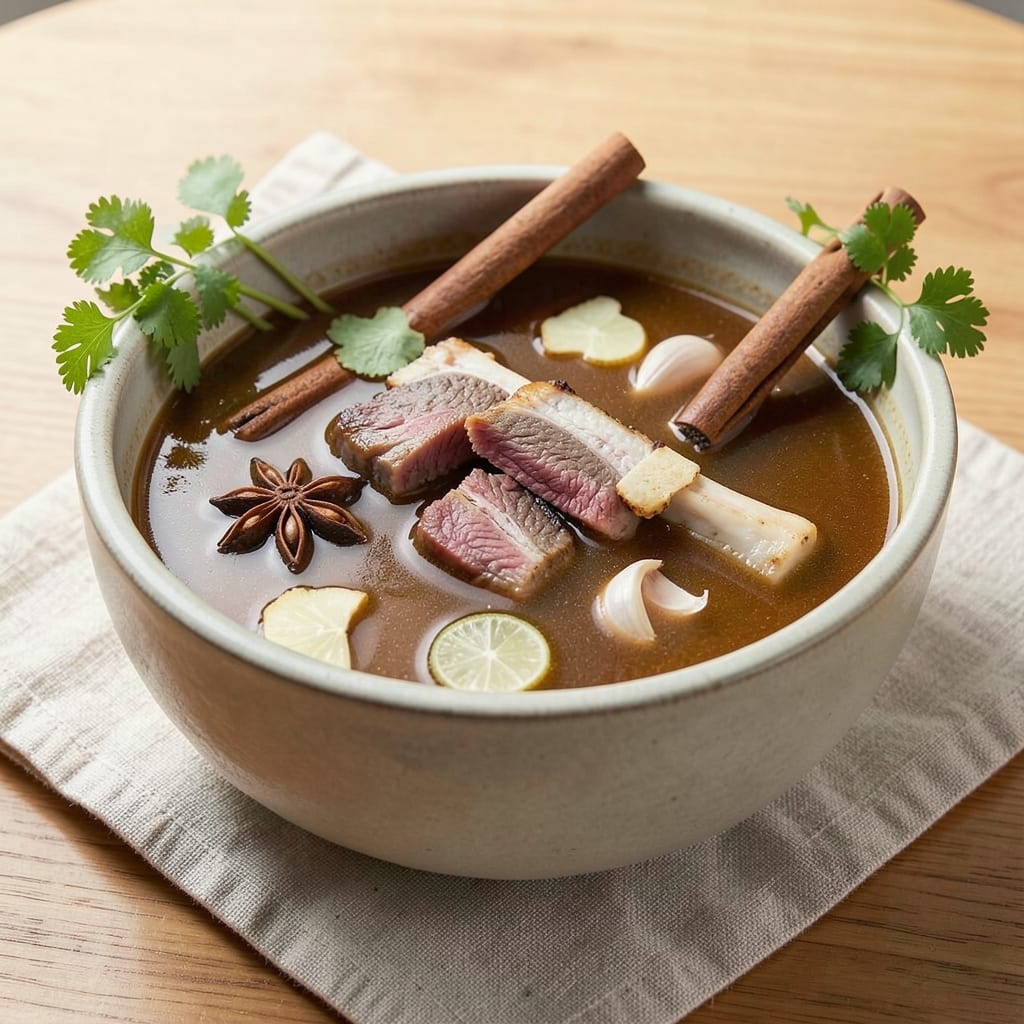
This Asian beef bone broth recipe transforms tough beef bones into a rich, umami-packed elixir that forms the foundation of countless Asian dishes. The slow simmering process unlocks deep flavors while extracting collagen for a velvety texture—something store-bought versions simply can't match. I've perfected this method over years of testing, ensuring every batch delivers that perfect balance of savory, aromatic depth.
The secret lies in the aromatic blend—fresh ginger, garlic, star anise, and cinnamon create complex layers that elevate the broth beyond basic beef stock. Unlike quick broths, this requires patience: 12-24 hours of gentle simmering transforms bones into a golden, nutrient-dense liquid that's perfect for soups, stir-fries, or sipping straight from a bowl. The process might seem long, but the results are worth every minute.
What you'll end up with is a deep amber broth that's rich in minerals and collagen, with a flavor profile that's both comforting and complex. The aroma alone will transform your kitchen into a fragrant haven, while the texture becomes luxuriously smooth when properly strained. This isn't just broth—it's a flavor multiplier that turns simple dishes into extraordinary meals.
Use it as the base for pho, ramen, or braised dishes, or enjoy it warm with a squeeze of lime and fresh cilantro for a simple yet sophisticated treat. The possibilities are endless, but the foundation—this deeply flavorful broth—is what makes everything better. Let's get started on creating your own umami elixir.
Ingredients for asian beef bone broth
These aromatic ingredients transform tough bones into a velvety, umami-rich Asian elixir perfect for soups and stir-fries.
| Ingredient | Amount | Notes |
|---|---|---|
| Beef Bones 🦴 | 4 lb | Knuckle or marrow bones preferred |
| Cold Water 💧 | 16 cups | For initial soak and simmer |
| Fresh Ginger Root 🌿 | ½ lb | Unpeeled, sliced into thick coins |
| Garlic Cloves 🧄 | 12 cloves | Smash slightly for deeper flavor |
| Star Anise Pods 🌟 | 4 whole | Whole pods for easy removal |
| Cinnamon Sticks 🌳 | 2 whole | 2-inch lengths preferred |
| Dried Coriander Seeds 🌾 | 2 tbsp | Toasted for enhanced aroma |
| White Peppercorns 🌶️ | 1 tbsp | Crushed lightly for subtle heat |
| Asian Fish Sauce 🍶 | 2 tbsp | Red Boat brand preferred |
| Light Soy Sauce 🥫 | 2 tbsp | Kikkoman brand recommended |
| Sesame Oil 🫒 | 1 tbsp | Toasted sesame oil added last |
| Diamond Crystal Kosher Salt 🧂 | 1 tbsp | For seasoning at the end |
| Fresh Cilantro Stems 🌿 | 1 cup | Optional for garnish and aroma |
The bones are the foundation—knuckle or marrow bones provide the most collagen and flavor. Costco or local butchers often have them pre-cut, but if buying whole, ask for the knuckle joints. Fresh ginger and garlic should be vibrant, not shriveled—Asian markets usually carry the best quality. Star anise and cinnamon can be found in the spice aisle, but Penzeys Spices sells them whole and potent. The fish sauce and soy sauce are non-negotiable for that authentic umami punch—Red Boat fish sauce is the gold standard, while Kikkoman soy sauce is universally trusted.
No fish sauce? Extra soy sauce plus a splash of Worcestershire works in a pinch, though it won't be identical. Running low on star anise? Cardamom pods or fennel seeds add depth, though the flavor will shift slightly. The sesame oil is added last—never cook it directly as it burns easily. For a quicker version, pressure cook for 4-6 hours instead of simmering, though the texture won't be as velvety. The cilantro stems add a subtle aroma when simmered, but fresh leaves can be added later as garnish for brightness.
This broth peaks after 24 hours of simmering, but even 12 hours yields incredible results. Store in glass jars in the fridge for up to 5 days or freeze for 3 months. I triple the batch and freeze in ice cube trays—perfect for adding to stir-fries or ramen later. The longer it simmers, the richer it becomes, so don't rush it. For an extra boost, add a splash of mirin or rice vinegar at the end for brightness.
Why You'll Love This Recipe
- No-Chop Start: I swear by this—just toss in whole ginger knobs, smashed garlic cloves, and star anise pods. No peeling, no mincing, no fuss. The broth still bursts with flavor, and honestly? That’s half the battle won before you even turn on the heat.
- Umami Bomb: Between the deep, slow-cooked beef bones and those star anise pods, this isn’t just broth—it’s liquid gold. The ginger and garlic caramelize just enough to give it that warm, earthy kick that makes every sip satisfying. I’ll be real: I’ve had store-bought broth that couldn’t compete.
- Endless Upgrades: Use it as-is for ramen, stir-fry sauce, or even a quick soup base. Freeze batches to toss into rice dishes later—my go-to is dumping it into a rice cooker with frozen veggies for an instant meal. It’s the kind of ingredient that turns lazy nights into effortless feasts.
- Pantry Hero: A big pot of this costs less than takeout and lasts for weeks. I make it in bulk when bones are cheap, then pull from the freezer whenever I need a flavor boost. Not to mention, it’s the secret weapon that makes even the simplest meals taste like you put in hours of work. (Spoiler: You didn’t.)
Step-by-step instructions for Asian beef bone broth
Transform simple ingredients into a rich, aromatic broth that captures the essence of Asian cuisine.
Prepare and Soak the Beef Bones
Rinse the 4 lb beef bones thoroughly under cold water to remove any impurities. Place them in a large stockpot and cover completely with the 16 cups cold water. The water should be at least 1 inch above the bones to allow for proper extraction during simmering.
Bring the water to a boil over medium-high heat, then immediately reduce to a gentle simmer. Skim off any foam or impurities that rise to the surface during the first 15 minutes of simmering. This step is crucial—it ensures a clear, clean broth without unwanted bitterness. Once the foam subsides, you're ready to add the aromatic ingredients.
Add Aromatics and Simmer Low and Slow
Peel and slice the 0.5 lb fresh ginger root into thick coins, then add them to the pot along with the 12 smashed garlic cloves, 4 whole star anise pods, and 2 whole cinnamon sticks. Stir gently to combine, ensuring the spices are fully submerged in the liquid.
Toast the 2 tbsp dried coriander seeds in a dry skillet over medium heat for 1-2 minutes until fragrant, then add them to the pot. Lightly crush the 1 tbsp white peppercorns and add those as well. Simmer the broth uncovered for 3 hours on low heat, maintaining a gentle bubble. This slow cooking process extracts maximum flavor and collagen from the bones, creating a deeply rich broth.
Incorporate Seasonings and Fish Sauce
After 3 hours, stir in the 2 tbsp Asian fish sauce and 2 tbsp light soy sauce. These ingredients add umami depth and balance the broth's flavor profile. Taste the broth at this stage—it should be developing a robust, aromatic base. If the broth has reduced too much, add 1-2 cups of hot water to maintain the proper consistency.
Continue simmering uncovered for another 2 hours, stirring occasionally. The broth should gradually thicken and develop a rich, caramelized color. The longer it simmers, the more collagen will break down, resulting in a velvety texture. This is where patience pays off—don't rush this step.
Finish with Sesame Oil and Salt
Once the broth has simmered for a total of 5 hours, remove it from heat. Stir in the 1 tbsp sesame oil and 1 tbsp diamond crystal kosher salt, allowing the sesame oil to infuse its nutty aroma into the broth. The salt should be added gradually to taste, as preferences vary.
Optional: For garnish and aroma, add the 1 cup fresh cilantro stems just before serving. The cilantro will add a bright, herbal note that complements the deep umami flavors of the broth. Strain the broth through a fine-mesh sieve into a clean pot or bowls, discarding the solids. The broth is now ready to be enjoyed as-is or used as a base for soups, stir-fries, or braises.
Rest and Serve
Allow the broth to rest at room temperature for 15-20 minutes before serving. This resting period lets the flavors meld and the broth settle, ensuring each sip is perfectly balanced. Serve the broth warm, accompanied by steamed rice, fresh herbs, or your favorite Asian-inspired dishes.
This broth keeps well in the refrigerator for up to 5 days or can be frozen for 3 months. The longer it sits, the more flavorful it becomes, making it a versatile and rewarding ingredient for any meal.
Pro Tips For Making Asian Beef Bone Broth
- BLANCH BONES FIRST: Toss those beef bones in boiling water for 5–10 minutes before simmering—this removes scum and impurities that’ll otherwise cloud your broth. I learned this the hard way after scraping a pot full of gunk mid-cook. Use a colander and cold water to stop the cooking immediately.
- SMASH GINGER HARD: Don’t just slice it—pound the ginger root with the flat side of your knife or a mortar and pestle until it releases juices and turns purple-gray. This unlocks more flavor than thin slices ever will. (Yes, it looks like you’re making a smoothie, but trust me.)
- KEEP TEMPERATURE LOW: A rolling boil is the enemy here—aim for a gentle simmer where tiny bubbles break the surface, not a violent storm. I used to rush it, and the broth ended up bitter. Cover the pot and let it hum along at 160–180°F (70–80°C) for real depth.
- ADD STAR ANISE LATE: Toss the star anise pods in after 4 hours, not at the start—this prevents over-extraction and bitterness. I was skeptical until I tried it; the aroma stays bright and floral instead of turning harsh. (Save a pod to sip the broth like tea—it’s a game-changer.)
Serving suggestions for asian beef bone broth
Pho or Ramen Base
This rich broth is the soul of Vietnamese pho or Japanese ramen. For pho, add 1 lb sliced beef (sirloin or brisket) and 8 oz rice noodles to the hot broth. Top with bean sprouts, Thai basil, lime wedges, and 1 tbsp hoisin sauce per bowl. For ramen, use 1 lb pork shoulder and 1 package ramen noodles, then finish with soft-boiled eggs and sliced green onions. 🍜
Stir-Fry Flavor Booster
Use 1 cup of broth as a sauce base for stir-fries. Deglaze your wok with the broth after removing meat, then add 1 tbsp oyster sauce and ½ tsp sugar. Toss with 2 cups stir-fry veggies and 1 lb chicken or shrimp. The umami depth elevates simple stir-fries to restaurant quality.
Braised Dishes
Create a quick braise by simmering 2 lb short ribs in 3 cups broth with 1 tbsp soy sauce and 1 tsp five-spice powder for 2 hours. The broth's richness tenderizes the meat while adding complex layers. Serve over steamed jasmine rice with pickled vegetables.
Simple Sipping Broth
For a comforting drink, ladle warm broth into bowls and garnish with 1 tbsp toasted sesame seeds, fresh cilantro sprigs, and a squeeze of lime. The aromatic spices create a soothing, savory tea perfect for cold evenings. Add a splash of mirin for extra brightness. ✨
Garnish Ideas
Fresh herbs elevate the broth's flavor. Try Thai basil for pho, shiso leaves for ramen, or mint and cilantro for a refreshing twist. A drizzle of chili oil adds heat, while crushed peanuts provide crunch. The right garnish transforms simple broth into a complete meal.
Meal Prep Tips
Store broth in glass jars in the fridge for up to 5 days or freeze in ice cube trays for easy portioning. Thaw frozen cubes in the fridge overnight. Reheat gently on the stove—never microwave—to preserve texture. Label containers with the date and use within 3 months for best flavor. 📅
Nutrition facts
Frequently asked questions
Can I use chicken or pork bones instead of beef?
While beef bones are ideal for this recipe due to their collagen content and rich flavor, you can adapt it for chicken or pork. Chicken bones will yield a lighter broth with a more delicate taste, perfect for soups like pho or ramen. Pork bones work well but may have a slightly stronger flavor—reduce the fish sauce by half to balance it. The simmering time remains the same, but chicken broth will be ready in about 8-12 hours due to its faster extraction rate.
Why does my broth look cloudy after simmering?
A cloudy broth usually means impurities weren't skimmed properly or the bones weren't rinsed well. Start by thoroughly rinsing bones and skimming foam for the first 15-20 minutes of simmering. For extra clarity, strain the broth through a cheesecloth-lined sieve after simmering. If you prefer a richer texture, leave it slightly cloudy—it often means more collagen and flavor!
Can I make this broth in an Instant Pot or pressure cooker?
Yes! For a quicker version, use the same ingredients but reduce simmering time to 4-6 hours on high pressure. After cooking, let the pressure release naturally for 15 minutes before releasing the remaining pressure. The texture will be slightly less velvety than slow-simmered broth, but the flavor remains deep. Add an extra 1 tbsp fish sauce to compensate for the shorter cooking time.
How do I know when the broth is done?
The broth is ready when it develops a rich, amber color and coats the back of a spoon with a velvety consistency. For maximum flavor, aim for 12-24 hours of simmering. Taste it periodically—it should be deeply savory with a balanced mix of ginger, garlic, and umami. If it's too thin, simmer uncovered to reduce it further. The longer it cooks, the more collagen releases, creating that luxurious texture.
What can I do with leftover bones after making broth?
Don't toss those bones! Rinse them thoroughly and use them for a second batch of broth or make bone marrow toast. For the second batch, simmer the rinsed bones with fresh aromatics (ginger, garlic, and a splash of vinegar) for 6-8 hours. The marrow can be scooped out, toasted in a skillet, and spread on crusty bread with flaky salt and herbs for a gourmet snack.