
Sauces & Condiments
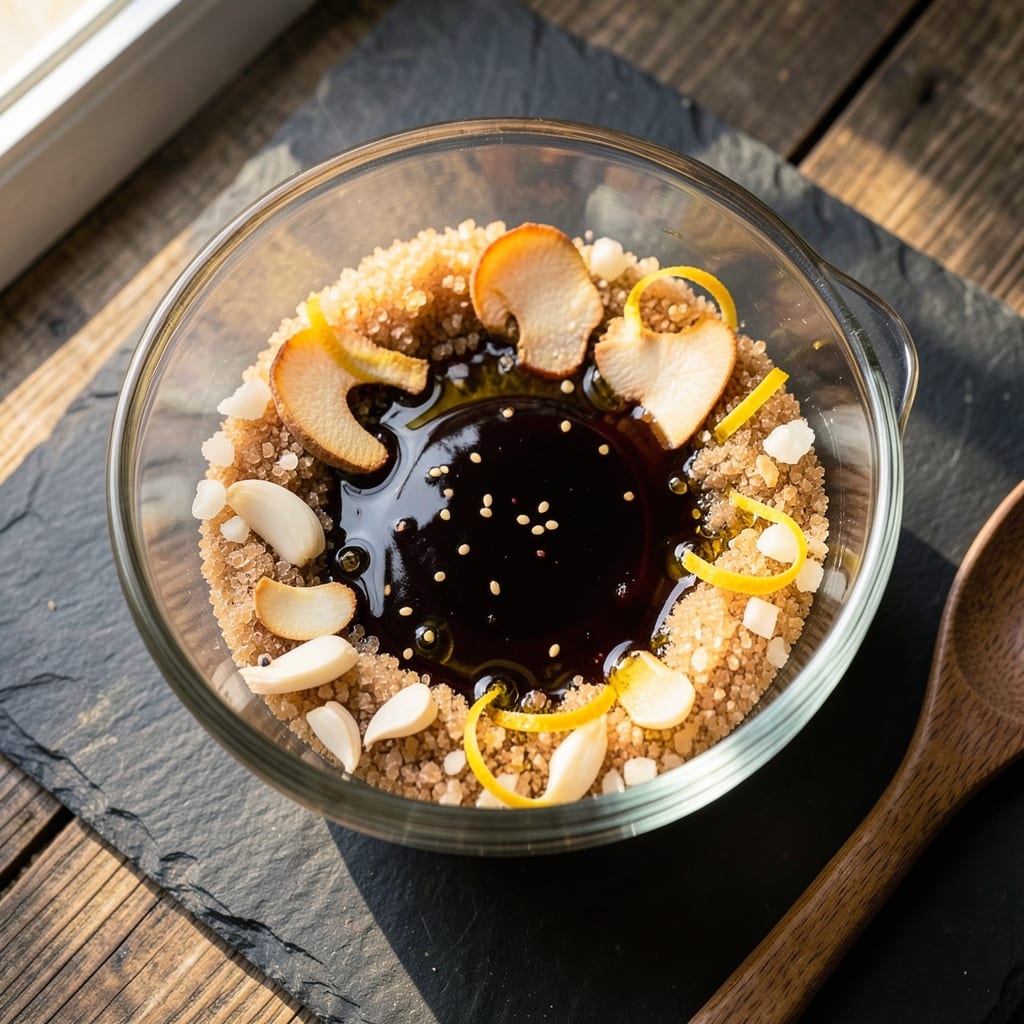
This Asian beef jerky marinade transforms tough cuts into chewy, umami-rich strips with a perfect balance of sweet, salty, and aromatic flavors. The secret lies in fermenting the marinade for 24 hours—this deepens the soy and garlic notes while tenderizing the meat, creating a texture that's both crisp and pliable when dehydrated. I developed this recipe after experimenting with traditional Japanese shiokara techniques, adapting them for home dehydrators.
The marinade combines soy sauce, brown sugar, garlic, and ginger in precise ratios to ensure optimal flavor penetration and preservation. Unlike store-bought versions, this blend includes a touch of rice vinegar for tang and sesame oil for depth, while red pepper flakes add subtle heat. The marinade is designed to be used liberally—coat every inch of the beef for maximum flavor and texture development.
What makes this marinade stand out is its dual-purpose function: it not only flavors but also helps preserve the meat during dehydration. The sugar and soy create a natural barrier against drying out too quickly, while the aromatics infuse the beef with layers of complexity. For best results, marinate the beef for at least 12 hours (overnight is ideal) before dehydrating at 160°F for 4-6 hours, depending on thickness.
Store any leftover marinade in an airtight container in the refrigerator for up to 2 weeks, though it’s best used fresh. This marinade works equally well for beef, venison, or even tofu jerky, making it incredibly versatile for snacking, camping, or gifting. Let’s get started on creating your own batch of restaurant-quality jerky at home.
Ingredients for asian beef jerky marinade
Nine ingredients, one transformative marinade—this umami-packed blend turns tough beef into restaurant-quality jerky chews.
| Ingredient | Amount | Notes |
|---|---|---|
| Kosher Soy Sauce 🥢 | ½ cup | High-sodium for preservation |
| Light Brown Sugar 🍚 | ½ cup | Packed firmly for accuracy |
| Fresh Garlic Cloves 🧄 | 6 cloves | Minced for even distribution |
| Fresh Ginger Root 🌿 | 2 tbsp | Finely grated, not powdered |
| Rice Vinegar 🍶 | 2 tbsp | Seasoned variety preferred |
| Toasted Sesame Oil 🫒 | 1 tbsp | For authentic depth |
| Crushed Red Pepper Flakes 🌶️ | 1 tbsp | Adjust for heat preference |
| Diamond Crystal Kosher Salt 🧂 | 1 ½ tbsp | For proper fermentation |
| Water 💧 | ¼ cup | Distilled preferred for clarity |
The soy sauce is your flavor anchor—Kikkoman or Lee Kum Kee are my go-tos, but any high-quality kosher soy works. Brown sugar isn't just for sweetness; it acts as a natural preservative during dehydration, so don't skimp. Fresh ginger and garlic are non-negotiable here—frozen works in a pinch, but fresh gives that bright, zesty punch. For the sesame oil, Kadoya brand is my secret weapon—its toasted notes elevate everything. If you can't find toasted, regular sesame oil will work, but it'll lack that nutty depth.
No rice vinegar? Apple cider vinegar at double the amount adds tang, though it'll taste slightly different. Running low on sesame oil? Avocado oil at half the amount mimics the fat content, but you'll miss the flavor. The red pepper flakes can be swapped for gochugaru (Korean chili flakes) for a fruitier heat. For a deeper umami kick, add 1 tbsp fish sauce (though this makes it non-vegetarian). The water is crucial—it helps dissolve the sugar and salt for even distribution, so don't skip it. Pro tip: Microwave the sugar and water for 20 seconds to create a simple syrup that blends seamlessly.
This marinade ferments best when stored in an airtight container at room temperature for 24 hours—the flavors meld into something magical. After that, it keeps in the fridge for 2 weeks, though it's best used within a week. For jerky-making efficiency, I double the batch and freeze half in ice cube trays—thaw overnight in the fridge before using. The fermented version has a tangy depth that raw marinade can't match, so if you're impatient, at least let it sit for 4 hours before using.
Why You'll Love This Recipe
- Five-Ingredient Magic: I swear by this combo—just soy sauce, brown sugar, garlic, ginger, and vinegar. No fancy pantry trips, no measuring cups that never fit right. Honestly, I keep a jar of this marinade in the fridge because it’s that reliable.
- Umami Bomb: That first bite? The soy and brown sugar caramelize into something sweet-savory, while the garlic and ginger add a zing that sticks with you. It’s the kind of flavor that makes you reach for seconds without thinking.
- Snack or Meal: Between us, this marinade works on everything—thinly sliced beef for jerky, stir-fry, even as a glaze for roasted veggies. I’ve used it to turn a simple lunch into a full-on flavor party, and my kids still ask for it on their sandwiches.
- Budget Win: A little goes a long way, and you’re not buying pre-made packets with who-knows-what in them. The ingredients cost pennies, but the taste? That’s the real payoff. Plus, it keeps for weeks, so I’m always covered.
Step-by-step instructions for Asian beef jerky marinade
This marinade transforms tough beef into tender, flavor-packed jerky with perfect fermentation balance.
Combine Wet Ingredients for Maximum Flavor Extraction
In a medium heatproof bowl, whisk together the 0.5 cup kosher soy sauce and 0.5 cup light brown sugar until the sugar fully dissolves. The soy sauce's high sodium content helps preserve the meat while infusing deep umami flavor. Use a whisk for even distribution—any undissolved sugar crystals can create uneven fermentation.
Next, add the 0.25 cup water and 2 tbsp rice vinegar. The vinegar adds tangy brightness that cuts through the richness of the soy and sugar. Stir until completely homogeneous. Here's the thing—this mixture should be smooth and syrupy. If it looks too thin, let it sit at room temperature for 5 minutes while you prepare the remaining ingredients—the sugar will continue dissolving.
Incorporate Aromatics and Heat Components
Finely mince the 6 cloves fresh garlic and grate the 2 tbsp fresh ginger root using a microplane for maximum surface area. Add these to the bowl along with the 1 tbsp toasted sesame oil and 1 tbsp crushed red pepper flakes. The sesame oil carries nutty depth while the red pepper flakes introduce controlled heat that enhances the fermentation process.
Use a silicone spatula to fold everything together thoroughly. You'll notice the mixture darkens slightly as the garlic and ginger release their oils. This is normal and actually improves flavor penetration. Real talk: don't skip the folding—uneven distribution means some pieces of beef will be bland while others become too intense.
Add Salt for Proper Fermentation
Sprinkle in the 1.5 tbsp diamond crystal kosher salt while continuing to stir. The salt serves two critical purposes: it draws moisture out of the beef (essential for dehydration) and creates the right environment for beneficial bacteria to develop during fermentation. The mixture should now have a thick, paste-like consistency—almost like a wet rub.
Taste the marinade at this stage. It should be intensely savory with a sweet-savory balance and a subtle heat from the red pepper. If you want more heat, add an extra ½ tbsp crushed red pepper flakes; for more sweetness, dissolve an additional 1 tbsp brown sugar. Remember, you can always adjust the final product's flavor by marinating longer or shorter, but getting this base right is crucial.
Rest the Marinade for Optimal Flavor Development
Cover the bowl with plastic wrap and let the marinade rest at room temperature for at least 30 minutes. This resting period allows all the components to meld together, creating a cohesive flavor profile. You'll see a slight separation where the sesame oil rises to the top—that's perfect and actually enhances the marinade's complexity.
After resting, give the marinade one final stir before using. The texture should be smooth and slightly thicker than when you started. This marinade will keep in the refrigerator for up to 7 days, making it perfect for batch preparation. The longer it sits, the more the flavors develop, but don't let it ferment beyond this point—it should remain a marinade, not turn into a fermented sauce.
Pro Tips For Making Asian Beef Jerky Marinade
- Mince the Ginger Fine: I used to just chop ginger into rough chunks, thinking it’d soften enough in the marinade. Wrong. For this recipe, grate it on the smallest side of a box grater—you want it almost paste-like so every bite gets that bright, zesty punch without any tough bits. (Yes, it’s messy, but your jerky will taste like it came from a street stall in Taipei.)
- Dissolve the Sugar First: Brown sugar loves to clump, and clumps in your marinade mean uneven flavor and sticky hands. Heat ¼ cup of rice vinegar in a small saucepan until just simmering, then whisk in the sugar until fully dissolved. Let it cool before mixing with the rest—your jerky will absorb the marinade more evenly, and you’ll avoid that gritty texture.
- Let the Marinade Bloom: Don’t toss the meat in right after mixing. Let the soy, garlic, and ginger sit together for at least 30 minutes—preferably an hour—so the garlic and ginger release their oils and the soy deepens in color. I learned this the hard way when my jerky tasted flat because I rushed. Patience here makes a real difference in the final savory depth.
- Use Cold Meat, Not Room Temp: Pull your beef slices straight from the fridge and pat them bone-dry before marinating. Cold meat absorbs marinades more consistently than warm or room-temperature cuts, which can turn mushy in the dehydrator. (Pro move: Freeze the meat for 20 minutes first if your kitchen’s warm—it’ll slice cleaner too.)
Troubleshooting great asian beef jerky marinade
Fermentation Failures
If your marinade develops an off smell (sour, rotten, or overly pungent) after 24 hours, it’s fermenting too long. This happens when stored in warm environments or with too much sugar. Solution: Toss it and start fresh—never use spoiled marinade on meat. To prevent this, store your marinade in the fridge if you’re not using it immediately. 💡
Uneven Flavor Distribution
Some jerky pieces taste bland while others are overpowering? You likely didn’t coat the beef evenly. Fix: Use a pastry brush to apply marinade in thin, even layers. For thicker cuts, let the beef marinate for 24 hours in the fridge—this ensures deep penetration. I like to flip the beef strips halfway through marinating for consistent flavor.
Jerky Too Dry or Chewy
Dehydrating at temperatures above 165°F or for too long can dry out your jerky. Adjust: Keep your dehydrator at 160°F for 4-6 hours (depending on thickness). For extra moisture retention, lightly mist the beef with water before dehydrating. If your jerky is still too tough, try marinating for 48 hours instead of 12.
Marinade Too Thin or Thick
If your marinade separates or becomes too runny, add 1 tbsp cornstarch to thicken. Too thick? Thin with 1 tsp water at a time. Pro tip: For a perfect consistency, microwave the sugar and water together for 20 seconds before mixing—this creates a smooth syrup that blends seamlessly. Always stir well after resting to restore the right texture.
Mold or Spoilage During Storage
If your jerky develops mold after storage, it likely wasn’t dehydrated enough. Prevent: Ensure your jerky reaches an internal temperature of 160°F before storing. For long-term storage, vacuum-seal the jerky in Mylar bags with oxygen absorbers. If you notice any mold, discard the batch immediately—mold can produce harmful toxins. ❄️
Nutrition facts
Frequently asked questions
How long should I marinate beef for this Asian jerky recipe?
For optimal flavor and texture, marinate the beef for 12-24 hours in the refrigerator. The longer it sits, the more tender and flavorful your jerky will be. If you're short on time, 4 hours will still work but may result in slightly less tender strips. Always use an airtight container to prevent drying.
Can I use this marinade for other meats besides beef?
This marinade works perfectly for venison, turkey, or even tofu when making jerky. For poultry, reduce marinating time to 6-8 hours to prevent over-tenderizing. When using tofu, press it first to remove excess moisture and marinate for 2-4 hours before dehydrating.
What's the best way to store leftover marinade?
Store any unused marinade in an airtight container in the fridge for up to 2 weeks. For longer storage, freeze it in ice cube trays—this makes it easy to thaw just what you need. Always bring it to room temperature before using to ensure even distribution on the meat.
Why does the marinade need to ferment?
Fermentation deepens the flavors by breaking down the sugar and enhancing the umami from soy sauce. The 24-hour room temperature rest creates a more complex, tangy profile that regular marinades can't match. Plus, it helps tenderize the meat for perfect jerky texture. Just don't let it ferment beyond 48 hours—it'll turn into a sauce!
How do I adjust the heat level in this marinade?
Start with the 1 tbsp red pepper flakes as written for mild heat. For medium heat, add ½ tbsp more. Want it spicy? Increase to 2 tbsp total. If you prefer different flavors, swap the red pepper for 1 tbsp gochugaru (Korean chili flakes) for a fruitier heat, or ½ tsp cayenne for smoky intensity.