
Main Courses
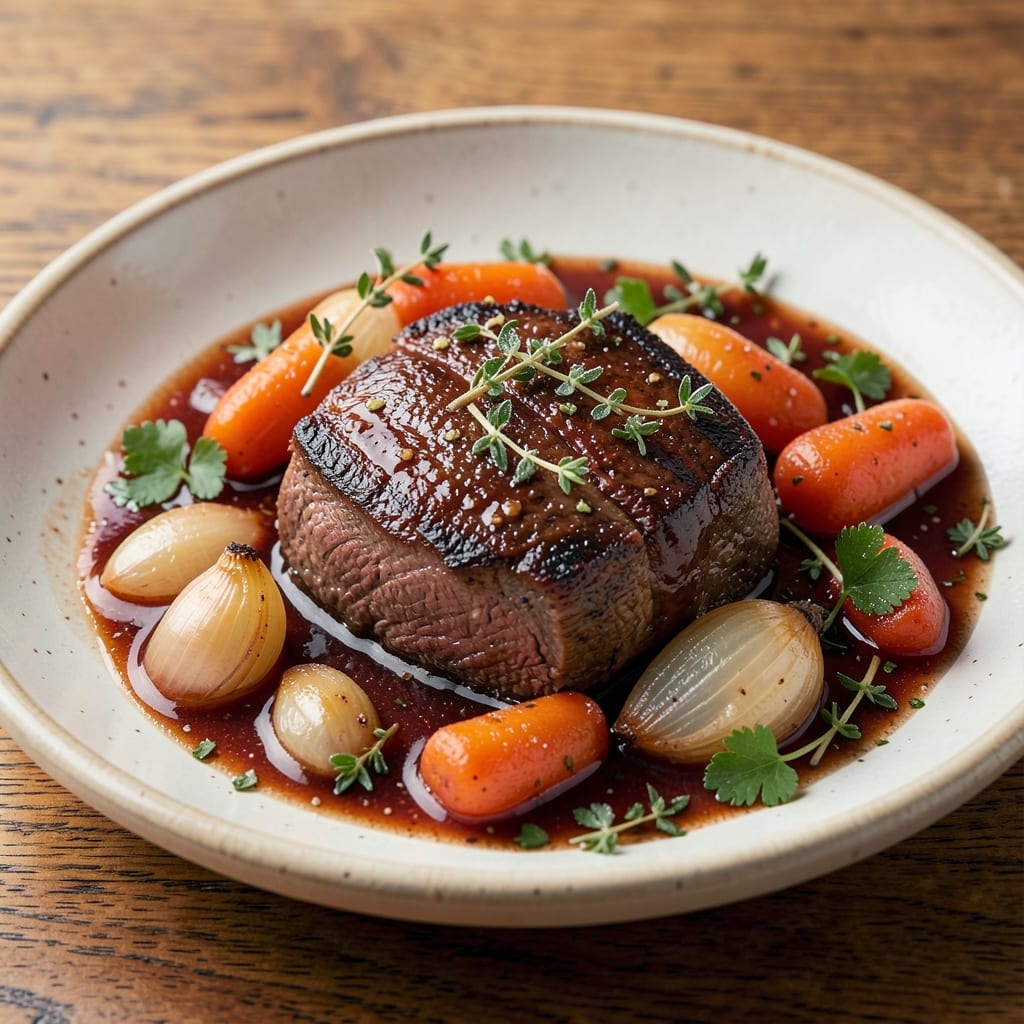
Auguste Escoffier's beef bourguignon recipe transforms humble beef and wine into a dish that defines French elegance. This classic technique—searing beef, reducing Burgundy wine, and braising with aromatic vegetables—creates a rich, deeply flavorful stew that tastes like a Parisian bistro. The slow cooking process tenderizes the meat while developing layers of umami from mushrooms, onions, and herbs.
The key to authentic results lies in proper searing and wine reduction—never skipping these steps, as they form the foundation of the dish's depth. Escoffier's method emphasizes patience, allowing flavors to meld over 3 hours of simmering. The result is beef that falls apart at the touch of a fork, bathed in a velvety sauce that captures all the essence of Burgundy's terroir.
This one-pot wonder serves as both a centerpiece for dinner parties and a comforting weeknight meal. The combination of tender beef, caramelized onions, and earthy mushrooms creates a harmonious balance that's both rustic and refined. Perfectly paired with a glass of the same wine used in cooking, it's a dish that respects tradition while delivering restaurant-quality results at home.
Whether you're recreating a classic for a special occasion or simply craving a taste of France, this recipe delivers the soul of French cuisine in every bite. The technique is straightforward, but the results are anything but ordinary—proof that true elegance comes from time-honored methods executed with care.
Ingredients for auguste escoffier beef bourguignon
Six aromatic vegetables, three pounds of beef, and two cups of Burgundy wine create Escoffier's timeless French masterpiece.
| Ingredient | Amount | Notes |
|---|---|---|
| Beef Chuck Roast 🥩 | 3 lb | Well-marbled, cut into 1.5-inch cubes |
| Yellow Onions 🧅 | 2 whole | Peeled, cut into 0.5-inch slices |
| Carrots 🥕 | 4 whole | Peeled, cut into 1-inch chunks |
| Garlic Cloves 🧄 | 6 cloves | Peeled, smashed with side of knife |
| Fresh Thyme 🌿 | ¼ cup | Stems removed, leaves chopped |
| Fresh Parsley 🌿 | ⅛ cup | Stems removed, chopped for garnish |
| Dry Red Wine 🍷 | 2 cups | Burgundy or Pinot Noir preferred |
| Beef Stock 💧 | 2 cups | Homemade or high-quality store-bought |
| Pearl Onions 🧅 | 1 lb | Peeled, halved horizontally |
| Mushrooms 🍄 | 8 oz | Cremini or button, quartered |
| Tomato Paste 🍅 | 2 tbsp | Smooth, no sugar added |
| Unsalted Butter 🧈 | 4 tbsp | Cold, for searing |
| All-Purpose Flour 🌾 | 2 tbsp | For dredging beef |
| Kosher Salt 🧂 | 1 ½ tsp | Diamond Crystal preferred |
| Freshly Ground Black Pepper 🌶️ | 1 tsp | Coarsely ground |
The beef selection is non-negotiable—chuck roast with visible marbling delivers the perfect balance of tenderness and flavor. Whole Foods Market or your local butcher shop will carry the best cuts; look for deep red color and fat flecks. If using frozen, thaw completely in the fridge overnight. Pearl onions add delicate sweetness, but halved baby carrots work in a pinch. For mushrooms, cremini varieties have more earthy depth than white buttons, though both will work. The thyme should be fresh—dried lacks the aromatic complexity this dish demands.
No Burgundy wine? Pinot Noir or Cabernet Sauvignon from a reputable producer will suffice, but avoid sweet or oaky varieties. For tomato paste, San Marzano is the gold standard, though any quality brand works. Substituting beef stock? Use homemade or high-end store-bought—bouillon cubes lack the depth. Fresh herbs are ideal, but dried thyme at one-third the amount works if needed. The flour is purely for searing—skip it if you prefer a more rustic crust. For a vegetarian adaptation, replace beef with mushrooms and lentils, though purists will argue it loses the soul of the dish.
This stew tastes even better the next day as flavors continue to develop. Store in an airtight container in the fridge for up to 5 days, or freeze portions for 3 months. The sauce thickens upon reheating—add a splash of water or wine if needed. For make-ahead convenience, prepare through the braising stage, then refrigerate and finish cooking before serving. The wine reduction should be reduced by half—never rush this step, as it builds the dish's signature richness. Garnish with fresh parsley just before serving to maintain vibrant color.
Why You'll Love This Recipe
- One-Pot Magic: I swear by this recipe—just brown the beef, toss in chopped onions, carrots, and garlic, then let the red wine and thyme work their magic. No extra pans, no stress, just layers of flavor building right in that same pot.
- Deep, Rich Layers: That slow simmer with the beef chuck? It turns tough cuts into melt-in-your-mouth perfection. The thyme and caramelized onions add a warmth that makes every bite feel like a hug—honestly, it’s the kind of dish that makes you slow down and savor.
- Weeknight to Dinner Party: Between us, this is my secret for feeding a crowd without slaving away. Serve it over crusty bread for a casual night in or plate it elegantly with mashed potatoes for company. Same recipe, two vibes—no extra effort.
- Leftovers That Don’t Suck: Most stews get boring after day two, but not this one. The beef stays tender, the sauce thickens into something even better the next day. I freeze half for lazy Mondays, and it reheats like it was just made—no dry, sad meat here.
Step-by-step instructions for wine-reduced beef bourguignon
Master Escoffier's technique for rich, layered flavors through precise timing and temperature control.
🍳 Step 1: Sear the Beef Chuck Roast for Deep Flavor
Pat the 3 lb beef chuck roast completely dry with paper towels—this ensures maximum browning. Working in batches if needed, heat 4 tbsp unsalted butter in a heavy Dutch oven over medium-high heat until foaming. Add the beef in a single layer and sear undisturbed for 3-4 minutes per side until deeply browned with a crust forming. This step develops the fundamental Maillard reaction that carries through the entire dish.
Remove the beef and set aside. In the same pot, add 2 tbsp all-purpose flour and stir vigorously for 1 minute to toast the flour and remove any raw taste. This flour will later thicken the wine reduction, creating the signature velouté base. Keep the browned bits—they're packed with flavor that will dissolve into the wine.
🍳 Step 2: Build the Aromatic Base with Vegetables
Return the Dutch oven to medium heat and add 2 whole yellow onions and 4 whole carrots cut into chunks. Cook for 8-10 minutes until the onions soften and begin to caramelize at the edges. Add the 6 smashed garlic cloves and 1 lb halved pearl onions, cooking for another 3 minutes until fragrant. This layered cooking process develops complex sweetness that balances the acidity of the wine.
Push the vegetables to one side of the pot and add 8 oz quartered mushrooms. Cook for 5 minutes until they release their moisture and begin to brown. Stir in 2 tbsp tomato paste and cook for 1 minute to deepen the sauce's color and add umami depth. This step creates the foundational flavors that will meld with the wine reduction.
🍷 Step 3: Deglaze with Red Wine for Maximum Flavor Extraction
Pour in 2 cups dry red wine (Burgundy or Pinot Noir) and scrape the bottom of the pot vigorously with a wooden spoon to release all the browned bits. This deglazing step is critical—those fond bits contain concentrated beef flavor that would otherwise burn. Let the wine simmer for 5-7 minutes until reduced by half, allowing the alcohol to cook off and the flavors to concentrate.
Add 2 cups beef stock and bring to a gentle simmer. Return the seared beef to the pot, along with 1.5 tsp kosher salt and 1 tsp freshly ground black pepper. The liquid should come about halfway up the beef. Partially cover the pot and simmer for 1 hour and 30 minutes, turning the beef occasionally, until it's fork-tender with internal temperature reaching 195°F. This long braising time ensures the connective tissue breaks down for melt-in-your-mouth texture.
🌿 Step 4: Finish with Herbs and Rest for Perfect Texture
Stir in 0.25 cup chopped fresh thyme and 0.125 cup chopped fresh parsley, reserving a small amount for garnish. Simmer uncovered for another 15-20 minutes until the sauce has thickened slightly and the flavors have melded. The herbs should be fragrant but not bitter—this indicates proper integration.
Remove the beef and vegetables to a serving platter and tent loosely with foil. Let rest for 15 minutes before serving. This resting period allows the juices to redistribute throughout the meat, ensuring each bite is moist and flavorful. Skim any excess fat from the sauce if desired, then ladle the reduced wine sauce over the beef and garnish with the reserved parsley.
Pro Tips For Making Auguste Escoffier Beef Bourguignon
- Sear the Chuck Hard: The beef won’t caramelize properly if you’re shy with the heat. Use a heavy pot—cast iron or Dutch oven—and get that roast deep brown on all sides before adding anything else. I used to rush this, and the sauce never tasted rich enough.
- Slice Onions Thinly: Melted onions are the backbone of bourguignon, but thick slices turn to mush. Cut them paper-thin (about 1/8-inch) so they soften without disappearing. Yes, it takes a few extra minutes, but the texture makes all the difference.
- Deglaze with Wine Immediately: Let the browned bits sit for 30 seconds after removing the meat—this gives them time to harden into fond. Then pour in the wine hot and scrape every inch of the pot. Skipping this step means a duller sauce, and nobody wants that.
- Add Carrots Late: Tossing carrots in with the onions at the start turns them to mush. Instead, add them after the onions are translucent (about 8 minutes in) so they stay tender-crisp with a slight bite. Trust me, you’ll notice the difference.
Troubleshooting this dish
Undercooked Beef Fix
If your beef feels tough after braising, it likely didn't reach the proper 195°F internal temperature. Extend the simmering time by 30-45 minutes with the lid slightly ajar to allow moisture to escape. For extra tenderness, add ½ cup beef stock to the pot and simmer uncovered for 15 minutes to reduce the sauce and concentrate flavors. The beef should be fork-tender and pull apart easily. 💪
Sauce Too Thin
A watery sauce usually means the wine wasn't reduced enough or too much liquid was added. Simmer the sauce uncovered for 10-15 minutes to thicken it naturally. If needed, mix 1 tbsp cornstarch with 2 tbsp cold water and stir into the sauce until it reaches the desired consistency. For a more traditional approach, remove the beef and reduce the sauce alone over medium-high heat for 5 minutes. Always return the beef to the pot before serving.
Wine Flavor Disappeared
If your dish lacks wine depth, you likely rushed the reduction phase. For future attempts, reduce the wine by at least half—this concentrates the flavors and allows the alcohol to cook off completely. Use a heavy-bottomed Dutch oven to prevent scorching, and stir occasionally to ensure even reduction. If the flavor is still weak, add 1 tbsp red wine vinegar to brighten the sauce before serving. 🍷
Vegetables Overcooked
Pearl onions and carrots can turn mushy if left too long in the braising liquid. To prevent this, add them to the pot only 30 minutes before the beef is fully cooked. For mushrooms, cook them separately in a pan with butter and garlic until golden, then add them to the pot just before serving. This keeps their texture firm and flavor vibrant. 🥕
Browned Bits Burned
If your fond (browned bits) burned during deglazing, the heat was too high. For future attempts, use medium-low heat when adding wine and scrape the bottom gently with a wooden spoon. If you notice burning, immediately add ¼ cup beef stock to deglaze and prevent scorching. Keep a close eye on the pot during this critical step to maintain flavor balance. 🔥
Herbs Too Bitter
Fresh thyme and parsley can become bitter if cooked too long. Add them to the pot only in the final 15-20 minutes of cooking. For extra flavor without bitterness, infuse the beef stock with herbs by simmering ½ cup thyme sprigs and ¼ cup parsley stems in the stock for 10 minutes before straining. This method extracts the aromatic oils without adding bitterness to the final dish. 🌿
Nutrition facts
Frequently asked questions
What makes this beef bourguignon different from other braised beef recipes?
This recipe follows Auguste Escoffier's classic French technique, emphasizing three key elements: proper searing of the beef for deep flavor development, precise wine reduction to concentrate umami, and a long braising time (3 hours) to tenderize the meat. The combination of Burgundy wine, tomato paste, and fresh herbs creates a velvety sauce that's more complex than basic braised beef recipes.
Can I use a different cut of beef besides chuck roast?
While chuck roast is traditional, you can substitute with brisket or short ribs for similar results. Avoid lean cuts like sirloin—they won't become tender enough during braising. If using short ribs, reduce cooking time by 30 minutes since they're already more tender. The fat content is crucial for flavor and moisture.
How do I know when the wine reduction is properly reduced?
The wine should reduce by at least half, meaning 2 cups becomes 1 cup. You'll know it's ready when the liquid has thickened noticeably and the alcohol smell has dissipated (about 5-7 minutes of simmering). The sauce should coat the back of a spoon but still be pourable. This step is critical for developing the dish's signature richness.
What's the best way to serve beef bourguignon?
Traditionally served with mashed potatoes, crusty French bread, or egg noodles to soak up the sauce. For an authentic touch, pair with a glass of the same wine used in cooking (Burgundy or Pinot Noir). Garnish with fresh parsley just before serving to maintain vibrant color. The dish tastes even better the next day as flavors meld further.
Can I make this recipe in a slow cooker?
Yes, but with adjustments: Sear the beef first in a skillet, then transfer everything to the slow cooker. Cook on low for 8 hours or high for 5 hours. The sauce may be thinner—reduce it on the stovetop before serving. For best results, use a Dutch oven for the searing steps as the slow cooker can't achieve the same Maillard reaction.