
Main Courses
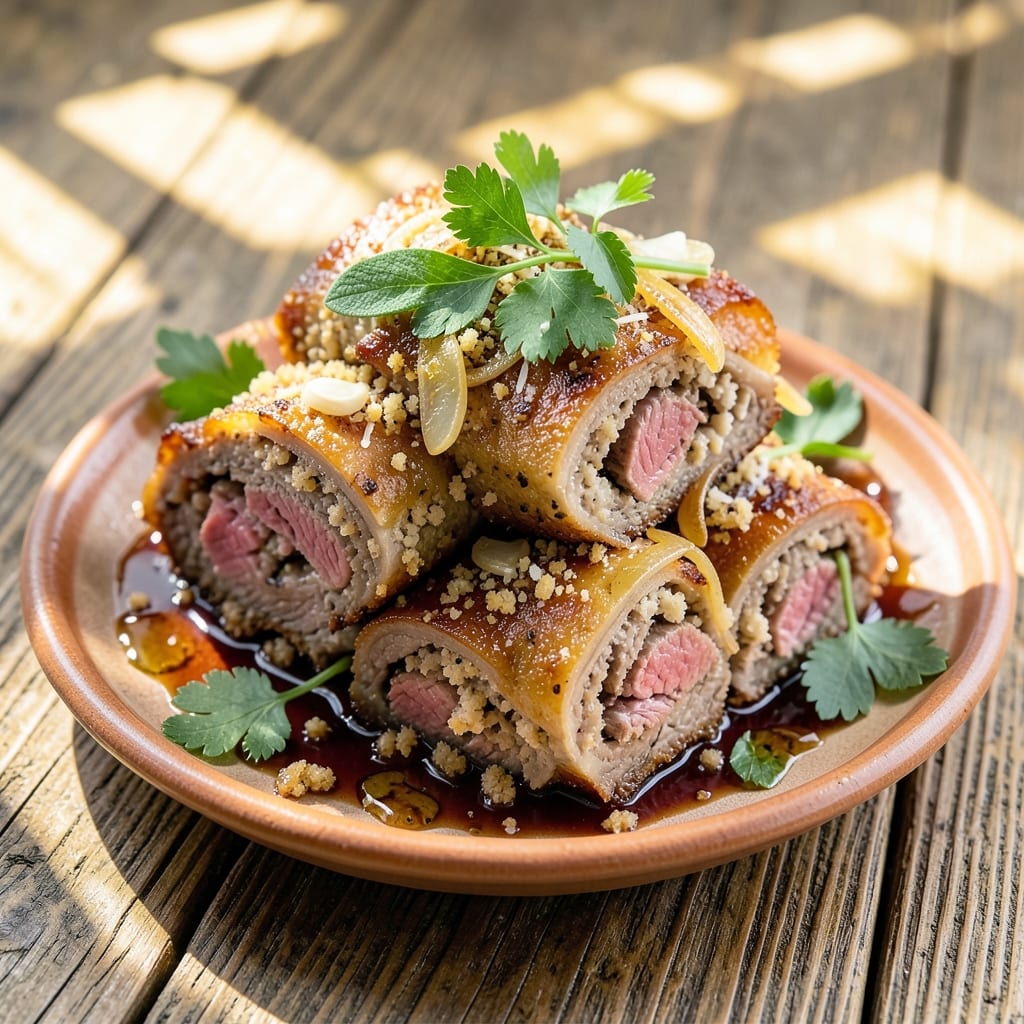
This authentic beef braciole recipe transports you straight to the heart of Italian home cooking, where tender beef, aromatic herbs, and rich tomato sauce create a dish fit for family gatherings. 💛 The secret lies in the herbed filling—ground beef mixed with breadcrumbs, cheese, and fresh herbs—that gets rolled and tied before slow cooking to perfection. What makes this recipe truly special is the balance of textures: crispy edges on the outside, succulent meat inside, all blanketed in a velvety tomato sauce that soaks in every flavor.
The traditional method involves rolling the beef mixture into thin layers, securing them with twine or toothpicks, and either braising or baking until the filling is cooked through and the exterior is golden. This approach ensures the braciole stays intact while absorbing the rich flavors of the sauce. The result is a dish that’s hearty enough to be the centerpiece of any meal, yet refined enough to feel like a restaurant-quality experience at home.
What sets this recipe apart is its versatility—serve it with pasta, polenta, or a simple side salad to round out the meal. The slow cooking process allows the flavors to meld beautifully, creating a dish that’s both comforting and elegant. Whether you're recreating a classic Italian family dinner or introducing this gem to your own table, the key is patience and attention to detail, which pays off in every tender, flavorful bite.
For those looking to add a personal touch, regional variations offer creative possibilities—some versions include prosciutto or pancetta in the filling, while others might use a splash of red wine in the sauce. The beauty of braciole lies in its adaptability, making it a dish you can make your own while staying true to its Italian roots. Let’s get started on creating this timeless comfort food.
Ingredients for authentic beef braciole
Pantry staples meet Italian tradition for this rich, layered beef dish that feels like home.
| Ingredient | Amount | Notes |
|---|---|---|
| Ground Beef 🥩 | 2 lb | 80% lean, finely ground |
| Italian Seasoned Breadcrumbs 🍞 | 1 cup | Panko works too |
| Parmesan Cheese 🧀 | 1 cup | Freshly grated from block |
| Fresh Parsley 🌿 | ½ cup | Chopped finely |
| Fresh Sage Leaves 🌿 | ¼ cup | Chopped, stems removed |
| Garlic Cloves 🧄 | 4 cloves | Minced finely |
| Large Eggs 🥚 | 2 whole | Beaten for binding |
| Twine or Toothpicks 📎 | 1 package | For securing rolls |
| San Marzano Tomato Sauce 🍅 | 3 cups | High-quality canned |
| Red Wine 🍷 | ½ cup | Dry, like Chianti |
| Olive Oil 🫒 | 2 tbsp | Extra-virgin preferred |
| Salt 🧂 | 1 ½ tsp | Kosher or sea salt |
| Black Pepper 🌶️ | 1 tsp | Freshly ground |
| Bay Leaves 🍃 | 2 whole | Fresh preferred |
The ground beef is non-negotiable here—80% lean gives you that perfect balance of flavor and tenderness. Whole Foods or your local butcher usually carry it pre-ground, but if you're buying a whole chuck roast, ask to have it finely ground. The Italian breadcrumbs? Trader Joe's has a great seasoned kind, but regular panko works if you add a pinch of Italian seasoning. Fresh herbs make all the difference—parsley and sage are classic, but throw in a little thyme if you're feeling fancy. The Parmesan needs to be freshly grated from a block—pre-grated gets clumpy and doesn't melt right. For the San Marzano tomatoes, if you can't find them, any high-quality canned tomatoes will do, but don't skip the quality check—look for no added salt or preservatives.
No red wine? Beef broth with a splash of balsamic works in a pinch, but the acidity from the wine is key for cutting through the richness. Short on fresh herbs? Dried works at half the amount, but it won't have the same bright punch. The twine or toothpicks are just for securing the rolls—if you're feeling creative, you can use kitchen twine or even heavy-duty aluminum foil wrapped around the rolls. For the tomato sauce, if you're making it from scratch, San Marzano tomatoes, garlic, olive oil, and a pinch of sugar are your best friends. The bay leaves add depth, but if you're out, a sprinkle of dried oregano will give you that Mediterranean vibe. The filling should be moist but not soupy—if it's too dry, add a splash of milk or beaten egg to bind it.
This dish tastes even better the next day, so make it ahead if you can. The assembled rolls can be refrigerated for 24 hours before cooking, and the cooked braciole keeps for 4-5 days in the fridge. For leftovers, reheat gently in the sauce—microwaving can make it rubbery. Freezes beautifully for 3 months, too. I always make a double batch—one for dinner, one for lunches. Store the sauce separately in the fridge, then reheat everything together when you're ready to eat. The flavors meld even more overnight, so don't rush it.
Why You'll Love This Recipe
- One-Bowl Wonder: I swear by this—just mix the ground beef with breadcrumbs, Parmesan, and chopped herbs right in a bowl. No fancy layers, no rolling stress. Honestly, my hands are usually sticky, but the result? Worth every smear.
- Herb-Packed Punch: That sage and parsley? They don’t just hint at Italian flavors—they sing. The breadcrumbs toast into a crispy shell while keeping the beef juicy inside, like a little meaty hug with every bite.
- Leftovers That Shine: This freezes like a dream—just reheat slices in a pan or oven, and it’s like you made it fresh. Between us, I’ve pulled it from the freezer for lunch and still gotten compliments. (Yes, even on a Tuesday night.)
- Budget-Friendly Feast: Ground beef stretches far, and the breadcrumbs and cheese add richness without breaking the bank. I’ve fed six people for under $15—plus, the leftovers make another meal. Practical magic, really.
Step-by-step instructions for authentic beef braciole
Here's how to craft this classic Italian dish with rich, herbed beef rolls and silky tomato sauce.
👨🍳 Step 1: Build the Flavor-Packed Filling
In a large bowl, combine the 2 lb ground beef with 1 cup Italian seasoned breadcrumbs, 1 cup freshly grated Parmesan cheese, 0.5 cup finely chopped fresh parsley, 0.25 cup chopped fresh sage leaves, 4 minced garlic cloves, 1.5 tsp salt, and 1 tsp freshly ground black pepper. Use your hands to mix everything thoroughly—you want the breadcrumbs to coat the beef evenly.
Here's the thing—don't skip the fresh herbs. They make all the difference in that authentic Italian flavor. Once everything is well incorporated, add the 2 beaten large eggs and mix again until the filling holds together when pressed. The mixture should be moist but not sticky, almost like wet sand. If it feels too dry, add 1 tablespoon water at a time until it reaches the right consistency.
🥘 Step 2: Shape and Secure the Rolls
Divide the filling into 6 equal portions (about ½ cup each) and shape them into long, thin rolls about 12 inches long and 1 inch thick. I like to use my hands for this—wet them slightly to prevent sticking. Roll each portion tightly, keeping the seams sealed.
Now for the tricky part: securing them. You'll need the twine or toothpicks to hold the rolls together while they cook. Wrap each roll tightly with twine or secure with toothpicks every 2 inches along the length. This keeps them from unraveling in the oven. If using toothpicks, place them perpendicular to the roll for maximum stability.
🔥 Step 3: Sear the Rolls for Depth of Flavor
Heat 2 tbsp olive oil in a large skillet over medium-high heat. Once shimmering, add the beef rolls in a single layer and sear for 2-3 minutes per side until they develop a deep golden brown crust. You want that Maillard reaction happening—it's what gives braciole its rich, caramelized flavor.
Don't crowd the pan or the rolls will steam instead of sear. Work in batches if needed, but keep the oil hot between batches. Once all rolls are nicely browned, transfer them to a plate and set aside. You'll notice the aroma in your kitchen—this is your first hint of the amazing flavors to come.
🍳 Step 4: Simmer in Tomato-Wine Sauce
In the same skillet (no need to clean it—the browned bits add flavor), pour in the 0.5 cup red wine and scrape up all those delicious fond bits from the bottom. Let it simmer for 3-4 minutes until reduced by half. Then add the 3 cups San Marzano tomato sauce and 2 whole bay leaves, stirring to combine.
Bring the sauce to a gentle simmer, then carefully add the seared beef rolls. They should be mostly submerged in the sauce. Cover the skillet and simmer on low heat for 1 hour, turning the rolls occasionally to ensure even cooking. The sauce should thicken slightly as it cooks, creating a luscious coating for the beef.
⏰ Step 5: Finish and Rest for Perfect Texture
After 1 hour, remove the lid and increase heat to medium. Simmer uncovered for another 15-20 minutes until the sauce has thickened to your desired consistency and the beef is cooked through. You'll know it's done when the rolls are tender and the sauce clings beautifully to them.
Remove the rolls from the sauce and let them rest on a plate for 5 minutes. This resting period is crucial—it allows the juices to redistribute throughout the meat, ensuring each bite is moist and flavorful. Discard the twine or toothpicks before serving. Ladle the rich tomato sauce over the top and serve immediately with crusty bread or over your favorite pasta.
Pro Tips For Making Authentic Beef Braciole
- Chill the Meat Mixture: After mixing your ground beef with breadcrumbs, parsley, and sage, pop it in the fridge for 20-30 minutes. I learned this the hard way—skipping it means the filling leaks out when rolling, and no one wants a braciole that unravels like a bad sweater. Cold hands make for tighter rolls, too.
- Toast the Breadcrumbs: Dry-toast your Italian-seasoned breadcrumbs in a skillet over medium heat for 3-4 minutes until golden. This adds depth the packet won’t give you—my grandmother swore by it, and the texture stays crisp instead of turning soggy when simmered in tomato sauce. (Yes, even if you’re impatient like me.)
- Roll Tight, Not Perfect: Focus on snug rolls, not neat ones. Overstuffed braciole bursts open; under-rolled ones dry out. Press gently but firmly, and don’t stress if the edges aren’t uniform—your sauce will tie it all together. I skip the fancy pleating unless I’m feeling fancy (which is rare).
- Simmer Slow and Low: After browning, reduce heat to a bare simmer—just enough to keep a gentle bubble. High heat steams the meat instead of rendering fat, and the sauce turns watery. I use a candy thermometer for reference: 170°F (77°C) is where it stays juicy without falling apart. (Your future self will thank you.)
Best sauces and condiments for this recipe
Classic Tomato-Wine Sauce
This rich, velvety sauce is the soul of your braciole. Start with 3 cups San Marzano tomato sauce for its natural sweetness and low acidity, then deglaze the pan with ½ cup dry red wine like Chianti after searing. The wine's acidity brightens the sauce while the tomato base provides depth. Add 2 bay leaves and simmer uncovered for the final 15-20 minutes to let the flavors concentrate. 🍷
Creamy Garlic-Herb Sauce
For a lighter alternative, blend ½ cup heavy cream with 2 minced garlic cloves, ¼ cup fresh parsley, 1 tbsp butter, and a pinch of salt. Warm this sauce separately and drizzle over the finished braciole tableside. The creaminess contrasts beautifully with the savory beef while keeping the dish elegant. I love this when serving to guests who prefer a more refined touch.
Spicy Arrabbiata Twist
Add heat by simmering 1 tbsp red pepper flakes with the tomato sauce for 5 minutes before adding the wine. For extra depth, stir in 1 tsp crushed fennel seeds (a Sicilian touch) and a splash of orange juice to balance the heat. This version works wonderfully with whole wheat pasta or over creamy polenta.
White Wine Reduction
Swap the red wine for ½ cup white wine (like Pinot Grigio) and add ½ cup chicken broth to keep the sauce lighter. Finish with 1 tbsp lemon zest and a handful of chopped basil for a fresh, bright contrast. This works beautifully if you're serving braciole during warm weather when you crave lighter flavors.
Cheesy Ricotta Sauce
For a decadent option, mix ½ cup ricotta cheese with 1 tbsp olive oil, 1 minced garlic clove, and a pinch of nutmeg. Spread this on top of the braciole during the final 10 minutes of cooking so it melts into a creamy blanket. Garnish with extra Parmesan and cracked black pepper for a restaurant-worthy finish. 🧀
Quick Pan Sauce
When short on time, use the drippings from the seared braciole to make a fast sauce. After removing the rolls, add ¼ cup beef broth and 1 tbsp tomato paste to the pan, scraping up all the browned bits. Simmer for 3 minutes until slightly thickened, then stir in 1 tsp balsamic vinegar for a tangy kick. This works surprisingly well and saves cleanup time.
Nutrition facts
Frequently asked questions
Can I use ground turkey instead of beef for braciole?
While it's possible to substitute ground turkey, the flavor and texture won't be the same. Beef gives braciole its rich, hearty character that's central to the dish. If you're set on turkey, use a 50/50 turkey-beef blend for better results. The fat content in beef helps create that signature tender, juicy texture that's harder to replicate with leaner meats.
How do I prevent the braciole rolls from falling apart?
Proper shaping and securing are key! Wet your hands slightly before handling the filling to prevent sticking, and roll the mixture tightly into 1-inch thick logs. Use twine or toothpicks every 2 inches to hold them together during cooking. Also, make sure your filling isn't too wet—if it feels sticky, add a few more breadcrumbs to absorb excess moisture before rolling.
What's the best way to reheat leftover braciole?
Reheat gently to preserve texture. Place the braciole and some sauce in a skillet over low heat for 10-15 minutes, turning occasionally until warmed through. Avoid microwaving as it can make the meat rubbery. For extra flavor, add a splash of water or broth to the skillet and cover while reheating to keep everything moist.
Can I make braciole ahead of time?
This dish tastes even better the next day. Assemble the rolls and refrigerate them (uncooked) for up to 24 hours before cooking. For cooked leftovers, store in an airtight container with sauce for 4-5 days or freeze for 3 months. The flavors deepen when reheated, making it perfect for meal prep.
What's the difference between braciole and meatballs?
Braciole is essentially a deconstructed meatball—rolled flat instead of shaped into balls, then secured with twine. The key difference is the cooking method: braciole is typically braised or baked in sauce, while meatballs are usually baked or simmered separately. The Italian seasoning blend and Parmesan in braciole give it a more complex, herby flavor profile that sets it apart from classic meatball recipes.