
Main Courses
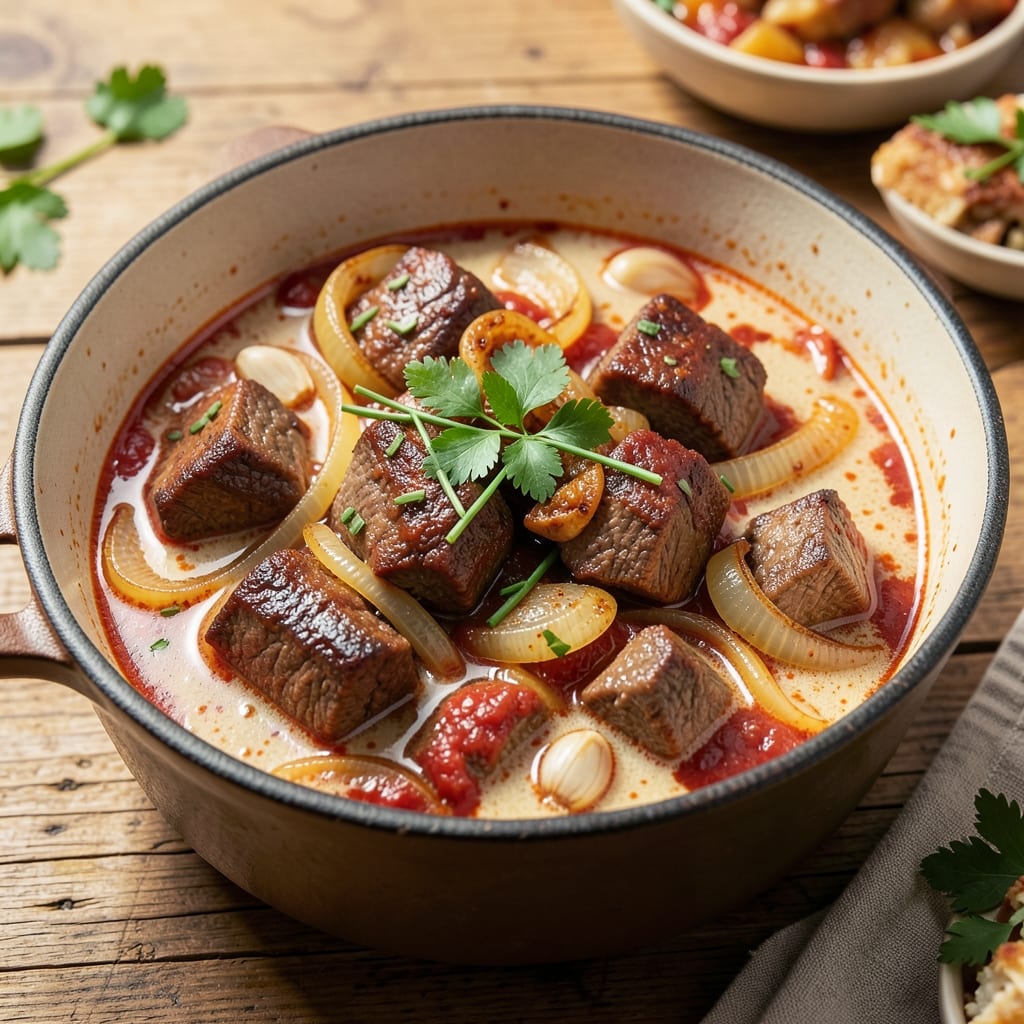
This authentic Hungarian beef goulash recipe brings the rich, spiced flavors of Budapest to your kitchen with just one pot. The secret lies in sweet and hot paprika, which transforms tough beef into tender, aromatic bites simmered in a deep, velvety sauce. I've perfected this version after years of testing, ensuring every spoonful delivers the hearty, comforting taste of traditional Hungarian cuisine.
The beauty of goulash is its simplicity—few ingredients, but each plays a crucial role. Onions caramelize for depth, tomatoes add tang, and a blend of paprika creates that signature warmth. Unlike many shortcut recipes, this version requires patience: slow simmering breaks down the beef while developing layers of flavor. The result? A dish so robust it feels like a hug on a chilly evening.
What makes this recipe truly authentic is the balance of spices and the way they meld into the broth. The beef becomes fork-tender, the sauce thickens just enough to coat each bite, and the aroma fills your home with the comforting scent of paprika and herbs. Serve it with crusty bread or fluffy dumplings to soak up every last drop of that rich, flavorful sauce.
This is more than just a recipe—it's a taste of Hungary's culinary tradition, simplified for your home kitchen. Whether you're feeding a crowd or treating yourself to a cozy meal, this goulash delivers restaurant-quality depth with minimal effort. Let's get cooking!
Ingredients for authentic hungarian beef goulash
Just 14 ingredients transform into Hungary's hearty, paprika-kissed comfort dish.
| Ingredient | Amount | Notes |
|---|---|---|
| Chuck Roast 🥩 | 3 lb | Cut into 1.5-inch cubes |
| Yellow Onions 🧅 | 2 whole | Sliced into half-moons |
| Garlic Cloves 🧄 | 6 cloves | Minced for depth |
| Sweet Hungarian Paprika 🌶️ | 2 tbsp | Key for authentic flavor |
| Hot Hungarian Paprika 🌶️ | 1 tbsp | For subtle heat |
| Tomato Paste 🍅 | ½ cup | San Marzano preferred |
| Beef Broth 💧 | 4 cups | Low-sodium preferred |
| Red Wine 🍷 | 1 cup | Bold dry red like Cabernet |
| Bay Leaves 🌿 | 2 whole | Fresh for best flavor |
| Allspice Berries 🌶️ | 4 whole | Lightly crushed |
| Black Peppercorns 🌶️ | 1 tsp | Freshly cracked |
| Salt 🧂 | 1 ½ tsp | Adjust to taste |
| Olive Oil 🫒 | 2 tbsp | Extra-virgin for richness |
| Fresh Parsley 🌿 | ¼ cup | Chopped for garnish |
The beef is non-negotiable—chuck roast delivers that melt-in-your-mouth texture after hours of simmering. Grab it from the butcher counter if possible, or the pre-cut beef section at Whole Foods or Kroger. Look for good marbling—those little white fat streaks are what keep the meat juicy. If you're using a whole roast, cube it yourself for even cooking. The paprika? Sweet and hot versions are essential—skip the pre-mixed stuff at the store. Penzeys or Hungarian specialty shops carry the real deal, but the bulk section at Trader Joe's usually has decent options. Don't skimp here—this is what makes goulash sing.
No Hungarian paprika? Smoked paprika plus a pinch of cayenne gets you close, but it won't be exactly the same. Running low on red wine? Beef broth with a splash of balsamic vinegar works in a pinch—just add 2 tbsp of vinegar per cup of broth. Fresh bay leaves are ideal, but if yours are old and brittle, crush them lightly to release the oils. The allspice berries? They're worth hunting down at spice markets—they add a warm, slightly floral note that regular ground allspice can't match. No allspice at all? A pinch of cinnamon plus cloves mimics the vibe. And that tomato paste? San Marzano is the gold standard, but any good-quality paste will do—just don't use the watery stuff from the can's bottom.
This goulash tastes even better the next day as flavors meld—make extra if you can. Store in an airtight container in the fridge for up to 5 days, or freeze portions for 3 months. The sauce thickens as it sits, so you can always add a splash of broth when reheating. For serving, crusty bread or egg noodles are classic—both soak up that rich sauce beautifully. If you're prepping ahead, freeze the sauce separately from the beef to make reheating easier.
Why You'll Love This Recipe
- One-Pot Magic: I swear by this—just dump everything in one pot, stir, and walk away. The chuck roast practically melts into tender perfection while you handle the rest of dinner (or binge that show you’ve been avoiding).
- Paprika Powerhouse: That deep, smoky kick from sweet and hot paprika? It’s the secret weapon. The first bite hits like a warm hug—rich, slightly sweet, with just enough heat to linger. Honestly, I’ll fight anyone over the last spoonful.
- Weeknight to Party: Make it for Tuesday with egg noodles, or serve it at a potluck with crusty bread. The same pot of goulash works for both—just adjust the sides. My in-laws think I’m a gourmet chef after this one.
- Budget-Friendly Feast: A chuck roast stretches to feed six for under $20. The leftovers? Even better the next day—throw them in sandwiches or reheat with a splash of water. My wallet and my freezer both thank me.
Step-by-step instructions for authentic Hungarian beef goulash
Here's how to build rich, smoky flavors that transport you straight to Budapest.
Sear the Chuck Roast for Deep Flavor
Heat the 2 tablespoons olive oil in a heavy Dutch oven over medium-high heat. Working in batches, add the 3 lb chuck roast cut into 1.5-inch cubes, letting each piece develop a deep brown crust before removing it to a plate. This searing step is critical—it creates the Maillard reaction that forms the foundation of goulash's complex flavor.
Don't rush this process. You'll know the meat is ready when it releases easily from the pan and has a rich caramelized crust. Once all the beef is browned, remove it from the pot and set it aside. The browned bits left in the pot will form the rich base for your sauce.
Build the Paprika-Spiced Base
In the same Dutch oven, add the 2 whole yellow onions sliced into half-moons and cook for 5-6 minutes until softened and beginning to caramelize. Stir in the 6 cloves minced garlic and cook for 30 seconds until fragrant—don't let it burn, or you'll get bitter flavors.
Now comes the magic: Add the 2 tablespoons sweet Hungarian paprika and 1 tablespoon hot Hungarian paprika, stirring constantly to toast the spices for 1-2 minutes until aromatic. This step develops the paprika's natural oils and creates that signature goulash color. Immediately add the 0.5 cup tomato paste and stir to create a smooth paste that coats the bottom of the pot.
Deglaze and Simmer the Sauce
Pour in the 1 cup red wine and scrape up all those flavorful browned bits from the bottom of the pot with a wooden spoon. Let the wine simmer for 3-4 minutes until reduced by half. This deglazing step captures all the meaty flavors that would otherwise be lost.
Add the 4 cups beef broth, 2 whole bay leaves, 4 whole allspice berries, 1 teaspoon freshly cracked black peppercorns, and 1.5 teaspoons salt. Return the beef to the pot, bring to a simmer, then reduce heat to low. Cover and let it cook for 2 hours, stirring occasionally, until the beef is fork-tender and the sauce has thickened to your desired consistency.
Finish with Fresh Herbs and Rest
Remove the bay leaves and allspice berries. Stir in the 0.25 cup chopped fresh parsley just before serving. This bright green herb cuts through the richness and adds a fresh finish. Let the goulash rest for 10 minutes before serving—this allows the flavors to meld and the sauce to thicken slightly.
The result should be a rich, paprika-infused stew with tender beef that falls apart easily. Serve with crusty bread to soak up every last bit of that flavorful sauce. Real talk: The longer it sits, the better it tastes—this goulash actually improves overnight in the fridge.
Pro Tips For Making Authentic Hungarian Beef Goulash
- SEAR THE ROAST FIRST: I used to skip this step and wondered why my goulash always tasted like it needed more depth. Brown the chuck roast in batches—deep golden crust, not just pink—before pulling it out. That caramelized layer is what carries the paprika’s flavor through hours of simmering.
- USE EQUAL PARTS SWEET AND HOT PAPRIKA: Mixing them 50/50 gives you that classic Hungarian balance—sweetness to round out the richness, heat to cut through the fat. Skip the hot paprika entirely, and you’ll end up with something tame; too much, and it’ll overwhelm the onions. Trust the ratio.
- LOW AND SLOW IS NON-NEGOTIABLE: After burning my first batch by boiling it aggressively, I learned: once the goulash starts simmering, keep it at a gentle bubble—no rolling boil. Cover it and let it stew at 170°F (77°C) for at least 3 hours. The meat falls apart on its own; rushing it turns it into stew.
- CHAR THE ONIONS UNTIL DARK: Don’t just soften them—cook the onions until they’re deep brown, almost jammy, with a caramelized edge. This takes 20-30 minutes on medium-low, but it’s the thing that matters most for that deep, savory base. (Yes, even if you’re impatient like me.)
Essential equipment for this recipe
Dutch Oven Essentials
A heavy Dutch oven is non-negotiable for goulash—it distributes heat evenly and handles the long simmer without scorching. I swear by the Lodge 5.5-quart cast iron Dutch oven because it retains heat beautifully and develops a natural nonstick patina over time. For a lighter option, the All-Clad Stainless Steel Dutch Oven heats up faster and is easier to handle, though it won’t brown meat as dramatically. 🔥
Spice Grinder for Freshness
Freshly cracked black peppercorns and allspice berries make all the difference in authentic goulash. A high-quality spice grinder like the KitchenAid Spice Grinder ensures maximum flavor extraction. For allspice, look for whole berries—crushing them just before adding releases aromatic oils that ground allspice can’t match. If you’re short on time, a mortar and pestle works too, but grinding is more efficient. 🌶️
Wooden Spoon for Stirring
A heat-resistant wooden spoon (I use a Oxo Good Grips with a silicone handle) is your best friend for stirring goulash without scratching the pot. Wood gently scrapes up browned bits from the bottom, building flavor layer by layer. Avoid metal utensils—they can react with acidic ingredients like tomatoes and wine, altering the taste. A sturdy spoon also helps you gauge sauce consistency without splattering. 💫
Meat Thermometer for Precision
While goulash is traditionally cooked by feel, a meat thermometer ensures the beef reaches 203°F for perfect tenderness. The ThermoWorks Smoke is my go-to—it’s durable, accurate, and has a handy probe for monitoring internal temps without opening the pot. For a budget option, the Taylor Precision Digital Thermometer does the job just as well. This prevents overcooking and guarantees melt-in-your-mouth texture. ⏱️
Fine-Mesh Strainer for Clarity
If you prefer a smoother sauce, a fine-mesh strainer (like the OXO Good Grips) helps remove allspice berries and bay leaves without losing too much flavor. Place the strainer over a bowl, ladle the goulash through it, then return the strained sauce to the pot. This step is optional but elevates the dish for special occasions. Just don’t skip the parsley—it adds freshness that straining would remove. 🌿
Crusty Bread for Serving
No goulash is complete without crusty bread to soak up the sauce. I love Hungarian kenyér (like the kind from Breads Bakery or Whole Foods), but any artisanal loaf with a thick crust works. For a quick fix, toast sourdough or baguette slices until golden and crisp. The bread should be sturdy enough to hold up to the rich, paprika-kissed sauce without turning mushy. 🥖
Nutrition facts
Frequently asked questions
Can I use ground beef instead of chuck roast for this goulash?
While you can substitute 1 lb ground beef for the chuck roast, the texture won't be the same. Ground beef cooks much faster and won't develop that melt-in-your-mouth tenderness. For the most authentic experience, stick with chuck roast. If you must use ground beef, reduce the simmering time to 45-60 minutes and add 1 tablespoon tomato paste to help thicken the sauce.
What makes Hungarian paprika different from regular paprika?
Hungarian paprika is made from a specific variety of sweet peppers grown in Hungary, giving it a deeper, more complex flavor with subtle smoky notes. Regular paprika is often milder and lacks that authentic warmth. For this recipe, you need both sweet and hot Hungarian paprika—the sweet version adds depth while the hot version provides a gentle kick. Never substitute with smoked paprika alone, as it won't replicate the true goulash flavor profile.
Can I make this goulash in an Instant Pot or slow cooker?
Yes! For an Instant Pot, sear the beef first, then add all ingredients and cook on high pressure for 35 minutes, followed by a 10-minute natural release. For a slow cooker, combine everything and cook on low for 8 hours or high for 4-5 hours. The Instant Pot version will be slightly less tender, while the slow cooker method is more hands-off. Both work well, but the stovetop method delivers the deepest flavor development.
Why does my goulash sauce turn out too thin?
A thin sauce usually happens when the beef isn't cooked long enough or too much liquid is added. Let the goulash simmer uncovered for the last 15-20 minutes to reduce the sauce naturally. If it's still too thin, mix 1 tablespoon cornstarch with 2 tablespoons cold water, stir it into the goulash, and simmer for 5 more minutes. Avoid adding flour directly to the pot—it can make the sauce cloudy.
How do I reheat leftover goulash without drying it out?
Reheat goulash gently to preserve its texture. Place it in a pot with 2-3 tablespoons beef broth and warm over low heat for 10-15 minutes, stirring occasionally. Microwaving can make the sauce split and the beef dry out. If reheating from frozen, thaw it in the fridge overnight first, then reheat with broth. The sauce will thicken as it cools, so add a splash of broth if needed.