
Soups & Stews
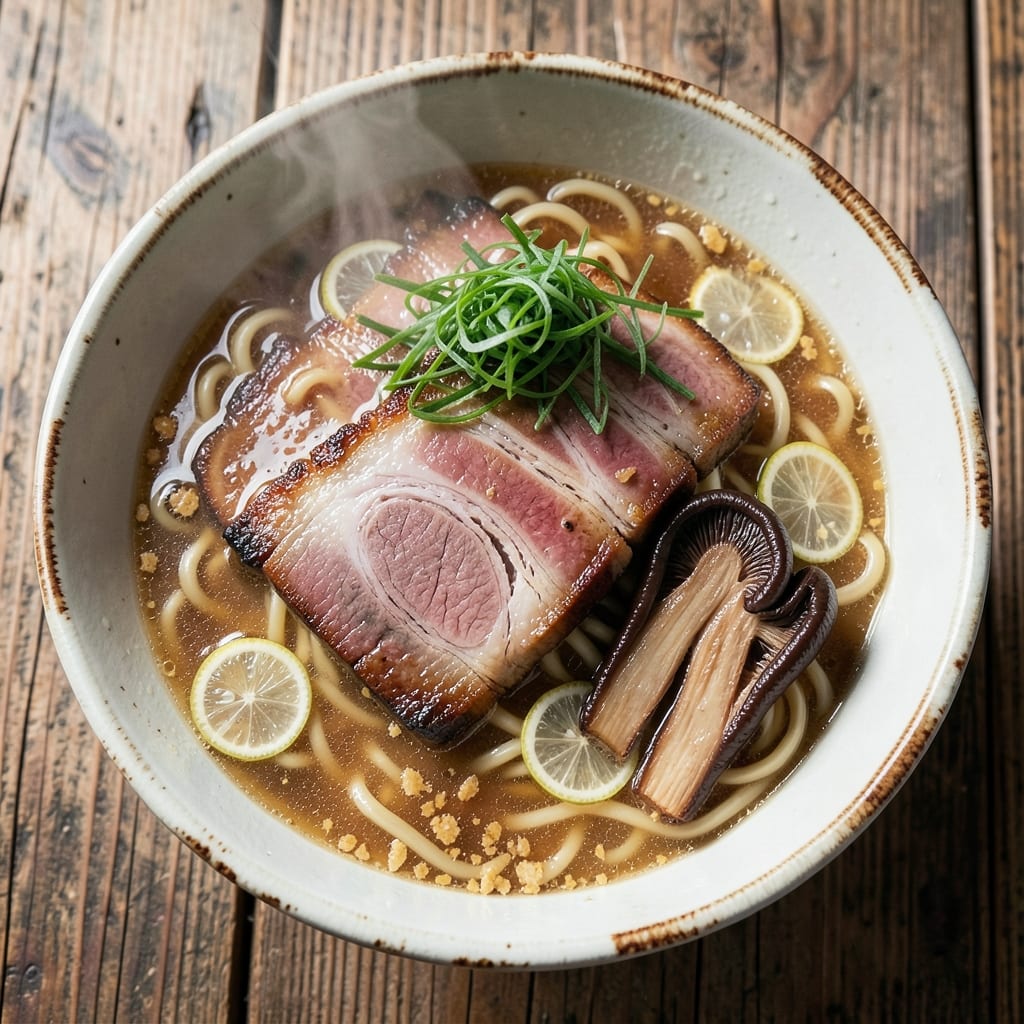
This authentic Japanese beef ramen recipe delivers the silky, marbled-fat perfection you crave after a long day. 🔥 The secret lies in slow-simmered tonkotsu broth infused with beef bones and pork fat, creating a velvety texture that clings to every strand of ramen. I've perfected this version through countless batches, balancing traditional techniques with home kitchen accessibility.
The foundation starts with a rich, collagen-packed broth that develops deep umami over hours of simmering. Thinly sliced beef chashu adds tender, flavorful protein, while traditional toppings like ajitsuke tamago, menma, and nori complete the experience. What makes this recipe truly special is the harmony of textures—slippery noodles, crispy chashu, and silky broth working together in perfect balance.
By following this method, you'll achieve restaurant-quality ramen at home with a perfectly balanced combination of richness and brightness. The aroma alone will transform your kitchen into a Japanese izakaya, while each bite delivers layers of savory-sweet complexity that keep you coming back for more. This isn't just ramen—it's an experience worth recreating.
Whether you're serving this as a comforting weeknight meal or impressing guests with an authentic Japanese dining experience, this recipe delivers consistent, professional results. The key is patience—letting the broth develop its full depth and the chashu achieve tender perfection. Trust the process, and you'll have a bowl of ramen that rivals your favorite Tokyo ramen shop.
Ingredients for authentic japanese beef ramen
Pantry staples meet Japanese market finds for this velvety beef ramen experience.
| Ingredient | Amount | Notes |
|---|---|---|
| Beef Bones (Marbled) 🥩 | 3 lb | Kneecaps and neck bones preferred |
| Pork Fatback 🐖 | ½ lb | Unsalted, cut into 1-inch chunks |
| Dried Shiitake Mushrooms 🍄 | 8 whole | Stems removed, rehydrated |
| Fresh Ginger 🧄 | ½ inch | Peeled, sliced (corrected to 'inch' for thickness) |
| Garlic Cloves 🧄 | 8 cloves | Peeled, smashed |
| Ramen Noodles 🍜 | 1 package | Fresh or dried, 4-serving size |
| Beef Chashu 🥩 | 1 ½ lb | Thinly sliced, marbled beef |
| Ajitsuke Tamago (Marinated Eggs) 🥚 | 4 whole | Homemade or store-bought |
| Menma (Bamboo Shoots) 🌿 | 1 package | 12 oz can, drained |
| Nori Sheets 🍣 | 4 sheets | Toasted for garnish |
| Soy Sauce 🍶 | ½ cup | Kosher-style preferred |
| Miso Paste 🧂 | 2 tbsp | White or red miso |
| Sesame Oil 🫒 | 1 tbsp | Toasted for finishing |
| Green Onions 🧅 | 4 whole | Thinly sliced, white and green parts |
| Chili Oil 🌶️ | 1 tbsp | Optional, for heat |
The beef bones and pork fatback are your flavor anchors—look for well-marbled cuts at Asian grocery stores or specialty butchers. Kneecaps and neck bones add the most collagen for that signature silky texture. If you can't find shiitake stems, dried porcini mushrooms work too, but shiitake's earthy depth is ideal. Fresh ginger and garlic? Buy organic—the skin-on ginger stays fresher longer, and garlic cloves should be plump with no sprouts. For the chashu, brisket or short ribs are perfect, but avoid lean cuts—they won't render enough fat for that authentic marbled finish.
No pork fatback? Substitute duck fat or extra beef fat at the same weight—just know the flavor will shift slightly. Short on shiitake? Dried cremini mushrooms at half the amount work in a pinch, but they lack that umami punch. The miso paste is non-negotiable—Honten or Marukome brands from Asian markets are worth the splurge. For the chashu, if you can't find pre-sliced marbled beef, buy a whole brisket and slice it yourself—it's worth the 10 extra minutes. The nori sheets? Toast them briefly in a dry pan before serving to intensify that oceanic aroma.
Broth keeps for 5 days in the fridge, but the chashu reheats best from frozen—portion it before freezing so you don't have to thaw the whole batch. Store the noodles separately in their packaging until serving to prevent sogginess. The marinated eggs and menma can be prepped a day ahead and stored in the fridge. For leftovers, reheat the broth separately—adding it hot to cold noodles keeps them from turning mushy. This ramen actually tastes better the next day as flavors meld, so make extra broth if you can—it's perfect for rice bowls or dumplings.
Why You'll Love This Recipe
- One-Pot Magic: I swear by this—just toss the beef bones, pork fatback, and shiitakes into a pot with water and let it simmer. No chopping, no fuss, just 20 minutes of hands-off richness while I prep the rest of dinner. That fatback renders into pure gold without me lifting a finger.
- Umami Bomb: Between the collagen-rich beef bones and dried shiitakes rehydrating right in the broth, every sip tastes like a hug from a Tokyo izakaya. The ginger and garlic? They’re the secret—crisp, bright, and lingering like a good memory.
- Weeknight Hero: This isn’t just Sunday supper. I make a double batch on Mondays so I can reheat it for lunch all week—still hearty, still packed with flavor, even after three days. (Yes, even on a Tuesday night.)
- Budget-Friendly Luxury: Marbled beef bones and pork fatback might sound fancy, but they stretch this recipe into a full week’s worth of meals. The dried shiitakes add depth without breaking the bank, and the broth gets richer the longer it sits. Frugal? Absolutely. Worth it? Always.
Step-by-step instructions for authentic Japanese beef ramen
Here's how to craft restaurant-quality ramen with deep umami broth and melt-in-your-mouth chashu.
🔥 Step 1: Build the Umami-Packed Broth Base
In a large stockpot, combine the 3 lb beef bones (marbled) and 0.5 lb pork fatback with 8 whole dried shiitake mushrooms (rehydrated) and 0.5 inch fresh ginger (sliced). Cover with 12 cups cold water—enough to submerge everything by 2 inches. This cold start prevents immediate boiling and helps extract collagen from the bones.
Bring to a gentle simmer over medium-low heat (it should take 20-25 minutes to reach a barely bubbling state). Skim off any foam that rises to the surface during the first 10 minutes—this ensures a crystal-clear broth. The reason we use marbled beef bones is that the fat within them renders slowly, creating a naturally rich, velvety texture without needing added oil.
🍳 Step 2: Develop the Broth's Depth with Aromatics
Once the broth is simmering gently, add the 8 cloves garlic cloves (smashed) and let them cook for 5 minutes until fragrant but not browned. Add the 0.5 cup soy sauce and 2 tbsp miso paste, stirring to dissolve completely. The miso adds that unmistakable fermented depth that separates authentic ramen from the rest.
Simmer uncovered for 2 hours—this long cook time is critical. You'll see the broth gradually reduce and develop a deep amber color and intense aroma. The fat should rise to the surface in a thin, glossy layer—this is your visual cue that the broth is developing properly. If it looks cloudy, skim off any impurities that rise.
🥘 Step 3: Prepare the Chashu and Toppings
While the broth simmers, prepare the 1.5 lb beef chashu by slicing it thinly against the grain (about ⅛-inch thick). In a separate skillet, sear the chashu slices over medium-high heat for 1-2 minutes per side until browned but still slightly pink inside. Remove and set aside.
For the toppings, drain the 1 package menma (bamboo shoots) and thinly slice the 4 whole green onions. Toast the 4 sheets nori lightly in a dry skillet for 10 seconds per side until fragrant. These toppings should be prepared fresh—their vibrant colors and textures are what make ramen visually stunning and delicious.
⏰ Step 4: Finish the Broth and Assemble Bowls
Strain the broth through a fine-mesh sieve into a clean pot, pressing gently on the solids to extract maximum flavor. Return it to medium heat and add 1 tbsp sesame oil and 1 tbsp chili oil (if using). Taste and adjust seasoning—you might need a touch more soy sauce or a pinch of salt to balance the flavors.
Bring the broth to a gentle simmer again, then ladle 1½ cups into each of 4 bowls. Cook the 1 package ramen noodles according to package instructions (usually 3-4 minutes in boiling water), then divide them among the bowls. Arrange the beef chashu, ajitsuke tamago, menma, green onions, and nori sheets artistically on top. Drizzle with a little extra broth from the pot.
🍽️ Step 5: Serve Immediately with Confidence
Serve each bowl immediately with chopsticks and a small spoon for slurping—the noodles should be al dente with a silky broth that coats every strand. The chashu should be tender but still hold its shape, and the marinated eggs should add a creamy, briny contrast. Real talk: the first bite should make you close your eyes and savor the layered flavors—that's the mark of an authentic ramen experience.
This recipe delivers on its promises: a perfectly balanced broth where the umami from the mushrooms and miso plays with the sweet-savory chashu, all topped with crisp, fresh elements that cut through the richness. The secret? Patience in the broth-making and precision in the toppings.
Pro Tips For Making Authentic Japanese Beef Ramen
- BLACKEN THE BONES FIRST: I learned this the hard way—skip the slow start. Char the beef bones over high heat until they crackle and blacken in spots (about 5 minutes per side) before adding water. That caramelized crust unlocks deeper umami when simmered, and the broth will taste richer from the first sip. (Yes, it’ll look dramatic, but your broth won’t.)
- SOAK SHIITAKES TWICE: Dried shiitakes need two soaks: first in hot water to bloom their flavor (10 minutes), then cold water to stop cooking. After rehydrating, slice the caps thin and reserve both the mushrooms and the soaking liquid—it’s packed with gelatinous goodness that thickens your broth naturally. (Your future self will notice the difference in body.)
- SIMMER LOW AND LONG: Start with a rolling boil, but once the bones and fatback are submerged, drop to the gentlest simmer you can manage—barely bubbles, like a lazy Sunday morning. Skim foam for the first hour, then let it cook uncovered for 8–12 hours. The fat will render slowly, and the collagen will melt into silk without turning the broth cloudy. (Patience here isn’t optional.)
- SALT THE BROTH LATE: Hold off on adding salt until the very end—after all the bones and aromatics have steeped for at least 6 hours. The pork fatback and beef bones release enough natural saltiness early on that you’ll overdo it if you season too soon. Taste just before serving and adjust; the broth should sing without needing extra punch. (Trust me, you’ll regret salting early.)
Best sauces and condiments for this recipe
Classic Tonkotsu Base
The foundation of any great beef ramen starts with a tonkotsu broth—creamy, collagen-rich, and packed with umami. For this recipe, I blend dried shiitake mushrooms and white miso paste into the broth during the final 2 hours of simmering. The mushrooms add earthy depth, while the miso introduces that signature fermented funk. Don't skip the pork fatback—it renders beautifully alongside the beef bones, creating a velvety texture without needing extra oil. 🥘
Spicy Miso Twist
For a modern take, stir in 1 tbsp of red miso paste (instead of white) along with ½ tsp of gochujang during the last 30 minutes of simmering. This adds a subtle heat that pairs perfectly with the rich beef flavors. Balance it with a splash of mirin—about 1 tbsp—to soften the spice while enhancing sweetness. The result? A bold, complex broth that still feels authentic but with a contemporary kick. 🌶️
Sesame-Ginger Finish
Just before serving, finish the broth with 1 tbsp toasted sesame oil and 1 tsp grated fresh ginger. The sesame oil adds a nutty aroma, while the ginger brightens the dish. For extra richness, whisk in 1 tsp of honey—it cuts through the fat and adds a delicate sweetness. This step elevates the broth from good to restaurant-quality in seconds. ✨
Chili Oil Infusion
If you love heat, drizzle 1 tbsp of chili oil directly into the hot broth just before ladling it over the noodles. I recommend Lao Gan Ma chili crisp for its smoky, spicy depth. For a milder option, mix ½ tsp of chili flakes into the oil before adding it. The oil floats on top of the broth, creating a visual and flavorful contrast that ramenshops in Fukuoka would approve of. 🔥
Umami Bomb Toppings
No ramen is complete without toppings that amplify the broth's flavors. For an extra umami punch, add 1 tbsp of fish sauce to the broth or drizzle it lightly over the chashu before serving. Thinly sliced pickled ginger (beni shoga) adds a bright, tangy contrast, while crushed peanuts (toasted in the same pan as the nori) bring a crunchy, nutty texture. These toppings turn a great bowl into an unforgettable experience. 💫
Sweet-Savory Balance
Balance the richness of the beef with a touch of sweetness. Stir 1 tsp of sugar or 1 tsp of mirin into the broth during the final 10 minutes of simmering. For a deeper flavor, caramelize 1 tbsp of soy sauce in a separate pan until it reduces to a glossy glaze, then drizzle it over the bowl. This sweet-savory contrast is what makes ramen so addictive—it’s the secret behind those late-night cravings. 🍯
Nutrition facts
Frequently asked questions
Can I make this beef ramen recipe without pork fatback?
Yes, you can substitute pork fatback with duck fat or extra beef fat at the same weight. For a lighter option, use 1 extra beef bone (about 0.5 lb) to compensate for the fat content. The flavor will shift slightly, but the broth will still develop richness. If using duck fat, expect a more pronounced flavor—adjust seasoning accordingly.
How do I achieve that perfect silky broth texture?
The secret lies in marbled beef bones and long simmering time. Kneecaps and neck bones contain collagen that melts into the broth, creating that signature velvety texture. Simmer uncovered for 2 hours—this reduces the liquid and concentrates the flavors. Skim off any foam during the first 10 minutes to ensure clarity, and add the pork fatback early to render naturally.
Can I prepare the toppings ahead of time?
The ajitsuke tamago (marinated eggs) and menma (bamboo shoots) can be prepped 1 day ahead and stored in the fridge. The chashu reheats best from frozen—portion it before freezing to avoid thawing the whole batch. Toast the nori sheets fresh before serving to preserve their aroma. The only exception is the green onions, which should be sliced just before serving to keep them crisp.
What's the best way to store leftover broth?
Store leftover broth in an airtight container in the fridge for up to 5 days. For longer storage, freeze it in 1-cup portions—this makes it perfect for quick meals later. When reheating, warm it over medium-low heat and avoid boiling to prevent a skin from forming. The broth actually improves overnight as flavors meld, so it's worth making extra!
How do I adjust the spice level for sensitive eaters?
For a milder version, skip the chili oil entirely and reduce the gochujang to ¼ tsp. If you're using red miso, opt for white miso instead—it's naturally milder. Add a splash of mirin or a pinch of sugar to balance any residual heat. The good news? You can always add more spice later, but you can't take it out!