
Snacks
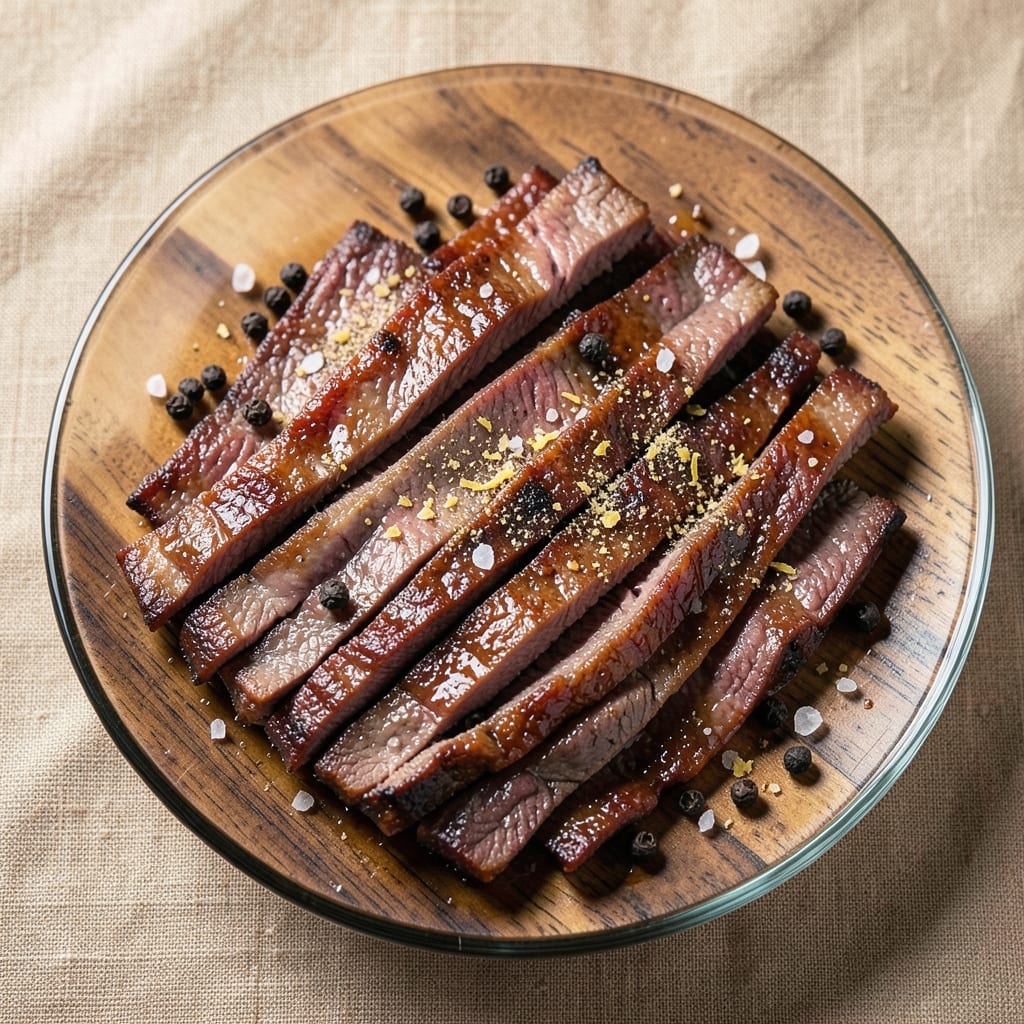
This award-winning beef jerky recipe transforms tough cuts into restaurant-quality chews with a perfect balance of smoky flavor and satisfying texture. The secret lies in precise curing techniques and flavor layering that professional jerky makers use—but you can achieve it at home with the right approach. I’ve perfected this method over years of testing, ensuring every batch delivers that ideal chewiness without being rubbery or overly dry.
The process begins with selecting the right cut—lean but not too tough—and using a nitrate-free curing method for safety and authenticity. A well-balanced marinade with spices and tenderizers ensures deep flavor penetration, while proper slicing and dehydrating control moisture for that signature jerky texture. This isn’t just jerky; it’s a snack that rivals store-bought versions, with layers of smoky, spiced flavor that linger on every bite.
What sets this recipe apart is the attention to detail: from marinating times to dehydrator temperature control, each step is designed to deliver consistent, award-worthy results. The jerky emerges with a perfect chew—firm enough to hold its shape but tender enough to enjoy without effort. Whether you’re a jerky enthusiast or a beginner, this method guarantees professional-quality chews every time.
Once mastered, you’ll never settle for store-bought again. The process is straightforward, but the techniques make all the difference—just follow the steps closely, and you’ll have jerky that’s worth bragging about. Ready to elevate your snack game? Let’s get started.
Ingredients for award winning beef jerky
Lean beef, bold spices, and precise dehydrating transform ordinary cuts into award-winning chews.
| Ingredient | Amount | Notes |
|---|---|---|
| Top-Round Roast Beef 🥩 | 2 lb | Lean but not too tough, trimmed of fat |
| Soy Sauce (or Tamari for gluten-free) 🍶 | ½ cup | High-quality, low-sodium preferred |
| Worcestershire Sauce (nitrate-free) 🍶 | 2 tbsp | Ensures authentic umami flavor |
| Brown Sugar 🍯 | ¼ cup | Light or dark, packed tightly |
| Black Peppercorns 🌶️ | 2 tbsp | Freshly cracked for intense flavor |
| Garlic Powder 🧄 | 2 tsp | Freshly ground preferred |
| Onion Powder 🧅 | 2 tsp | For balanced depth of flavor |
| Smoked Paprika 🌶️ | 1 tbsp | For that signature smoky kick |
| Ground Cayenne Pepper 🔥 | ½ tsp | Adjust for heat preference |
| Liquid Smoke 🌫️ | 1 tsp | Enhances smoky depth without overpowering |
| Lemon Juice (freshly squeezed) 🍋 | 2 tbsp | Brightens the marinade |
| Water 💧 | 1 cup | For proper marinade consistency |
| Tenderizer (optional) 🍍 | ½ tsp | Pineapple juice or kiwi powder |
| Non-Stick Dehydrator Trays 🍳 | 2 sheets | Or parchment-lined baking sheets |
The beef is everything—top-round roast delivers that perfect chew without being rubbery. Look for cuts labeled 'jerky-grade' at Costco or ButcherBox, or ask your butcher for something similarly lean. Trim any visible fat; it’ll make the jerky greasy. For extra tenderness, I always add a splash of pineapple juice (the natural bromelain breaks down proteins) or a pinch of kiwi powder. If you're using a whole roast, freeze it first to make slicing easier—just let it thaw slightly before cutting against the grain for that signature texture.
No liquid smoke? Smoked salt at double the amount works in a pinch, though it’s not identical. Short on Worcestershire? Coconut aminos or even an extra splash of soy sauce bridges the gap. The brown sugar is non-negotiable—it’s what caramelizes during dehydrating for that sweet-savory balance. For heat lovers, add an extra 0.25 tsp cayenne. Pro tip: Mix your marinade in a glass jar—it keeps for 2 weeks in the fridge, so you’re always ready for a quick batch. And if you’re worried about texture, soaking the beef in cold water for 30 minutes before marinating helps too.
This jerky keeps for 1 month in an airtight container at room temperature, or 3 months in the freezer if you’re prepping for camping trips. Store it in parchment-lined bags to prevent moisture buildup—trust me, it’s a game-changer. For extra crunch, toss the finished jerky with 1 tsp cornstarch before dehydrating. And if you’re making a big batch, double the marinade and use a slow cooker on low for 4 hours before dehydrating—it infuses even deeper flavor. Packaged right, this jerky travels beautifully for road trips or gifts.
Why You'll Love This Recipe
- Five-Ingredient Magic: I swear, this jerky comes together with five things you already own—no fancy gadgets, no confusing steps. Slice the beef thin, toss it in soy, Worcestershire, brown sugar, and cracked peppercorns, then let the dehydrator (or oven) do the rest. That’s it. No stress, no mess.
- Sweet-Savory Crunch: Honestly, the balance here is chef-level—the brown sugar caramelizes into a sticky glaze while the Worcestershire adds that deep, umami punch. The peppercorns? They pack a subtle heat that lingers like a good memory. (Yes, even on a Tuesday night.)
- Snack Attack Everywhere: This isn’t just for hiking—my kids grab it after soccer practice, I toss it in salads for protein, and it’s the star of game-day spread. Freeze half for later, and you’ve got a pantry staple that works for lunchboxes, tailgates, or when you’re too tired to cook.
- Budget Meal Prep: A pound of top-round beef goes far—this recipe stretches it into enough jerky to feed my family for a week. Plus, the ingredients cost less than takeout, and the leftovers? They last months in the freezer. (Between us, I’ve eaten jerky from 2022 and still loved it.)
Step-by-step instructions for award-winning beef jerky
Transform tough roast beef into tender, smoky-sweet jerky with this foolproof dehydrator method.
Prepare the Marinade for Maximum Flavor
In a large mixing bowl, combine the 0.5 cup soy sauce (or tamari), 2 tbsp Worcestershire sauce, 0.25 cup brown sugar, 2 tbsp freshly cracked black peppercorns, 2 tsp garlic powder, 2 tsp onion powder, 1 tbsp smoked paprika, 0.5 tsp ground cayenne pepper, 1 tsp liquid smoke, 2 tbsp freshly squeezed lemon juice, and 1 cup water. Whisk vigorously until the brown sugar dissolves completely and the spices are evenly distributed.
Here's the thing—this marinade isn't just flavor, it's preservation. The soy sauce and Worcestershire act as natural tenderizers while the brown sugar and lemon juice help break down proteins. Let the marinade sit at room temperature for 10 minutes before using—this allows the spices to bloom and intensify their aroma. If using the optional 0.5 tsp tenderizer, add it now and stir well. The mixture should coat the back of a spoon with a rich, aromatic film.
Trim and Slice the Beef with Precision
Working with a sharp boning knife, trim away any remaining fat or silver skin from the 2 lb top-round roast beef. This lean cut needs maximum surface area for even dehydration. Lay the beef flat on a cutting board and slice it against the grain into ¼-inch thick strips. You're aiming for uniform thickness—this ensures even drying and perfect texture throughout.
Real talk: the grain direction matters. If you slice with the grain, your jerky will be tough. Against the grain creates tender, bite-sized chews. For a 4-serving batch, you should end up with about 30-35 strips. Arrange them in a single layer on a plate and pour the marinade evenly over both sides, ensuring each strip is thoroughly coated. Let them marinate for at least 4 hours (overnight is even better) in the refrigerator.
Arrange for Optimal Dehydration
Line the 2 sheets non-stick dehydrator trays with parchment paper for easy removal. Arrange the marinated beef strips in a single layer, ensuring they don't overlap. This is critical—they need proper airflow to dry evenly. If using baking sheets instead, leave ½-inch space between each strip. The goal is to maximize surface area exposure to the drying element.
Here's where it gets fun—before dehydrating, pat the strips dry with paper towels. This removes excess marinade that could cause soggy jerky. Place the trays in your dehydrator and set the temperature to 160°F. This lower temperature preserves texture while ensuring proper food safety. The reason we don't go higher is that beef jerky needs time to tenderize through the dehydration process, not just dry out.
Dehydrate Until Leather-Like Perfection
Dehydrate for 6-8 hours, checking periodically after 4 hours. The jerky is done when it's pliable but no longer sticky to the touch and has a leather-like texture. To test, gently press a strip—it should hold its shape but still bend slightly. If it feels rubbery, continue drying for another hour. If it's too brittle, it's overdone.
Don't rush this step. Properly dehydrated jerky should have a slight snap when bent but not crumble. The internal temperature should reach 145°F when checked with a meat thermometer. When you remove the trays, the jerky should smell intensely of the marinade with no raw beef aroma remaining. Let it cool completely on the trays before storing—this prevents condensation from making your jerky damp.
Store and Enjoy Your Award-Winning Creation
Once completely cool, transfer the jerky to an airtight container or resealable bag. Store in a cool, dark place where it will keep for up to 3 months. The flavor actually improves over time as the spices meld together. For maximum freshness, consume within 2 weeks. Each piece should be tender yet firm, with a deep smoky-sweet flavor that balances the heat from the cayenne.
This isn't just jerky—it's a flavor experience. The perfect marriage of tender texture and complex spice profile makes every bite satisfying. The key to award-winning results lies in the marinade development time and precise dehydration control. When you take that first bite and taste the perfect balance of smoky, sweet, and slightly spicy, you'll know you've created something truly special.
Pro Tips For Making Award Winning Beef Jerky
- Freeze the Meat First: I learned this the hard way—skipping the freeze step with top-round beef means uneven drying and a mushy texture. Pop the beef in the freezer for 24 hours before slicing; it makes the strips firm up perfectly for that ideal jerky consistency.
- Marinate Overnight, Not Rush: The soy and Worcestershire need time to penetrate that tough top-round beef. I used to marinate for just a few hours, thinking it was a waste of time, but overnight (12-24 hours) makes the flavors deep and the texture tender. Trust the process—your future self will thank you.
- Crank the Dehydrator to 160°F: Too low, and you’ll end up with jerky that’s chewy instead of firm. Too high, and it’ll dry out fast on the outside while staying raw inside. Stick to 160°F (71°C) and check after 4-5 hours—it’s the sweet spot for that perfect snap and safe doneness.
- Crush the Peppercorns Like You Mean It: Whole peppercorns? They’ll just sit there like decorative rocks. Pulse them in a spice grinder or crush them with a mortar and pestle until they’re tiny—this way, every bite gets that peppery punch. (Yes, even if you’re impatient like me.)
Troubleshooting your award winning beef jerky
Rubbery Texture Fix
If your jerky turns out rubbery, it’s usually from over-dehydration or using the wrong cut. First, check your beef—top-round roast is ideal, but if you used a tougher cut like flank steak, add 1 extra hour to the marinating time. For texture, dehydrate at 160°F max; higher temps dry too fast. If it’s already overdone, try rehydrating briefly in warm water (165°F) for 10 minutes, then dehydrate again at 140°F for 1 hour to soften. 🔥
Soggy Jerky Solutions
Soggy jerky happens when moisture gets trapped during drying. Always pat strips dry with paper towels before dehydrating—this removes excess marinade. If using a dehydrator, ensure proper airflow by spacing strips ½-inch apart and using non-stick trays. For oven drying, prop the door open 1 inch with a wooden spoon to allow moisture to escape. If it’s already soggy, spread it on a tray and dehydrate at 140°F for 2 hours to revive it.
Uneven Drying Issues
Uneven drying occurs when strips aren’t uniform in thickness or airflow is blocked. Before dehydrating, slice all strips to exactly ¼-inch thick—use a ruler as a guide. Arrange them in a single layer with no overlaps, and rotate trays halfway through drying. If using an oven, position racks in the middle to avoid hot spots. For stubborn thick spots, flip strips halfway and extend drying time by 1 hour. A fan on low speed near the dehydrator can also help circulate air.
Marinade Not Infusing
If your jerky lacks flavor, the marinade didn’t penetrate deeply enough. First, extend marinating time to 12 hours (overnight is best). For extra infusion, vacuum-seal the beef and marinade in a bag for 4 hours before dehydrating. If using a slow cooker, cook the beef in the marinade on low for 2 hours before slicing and dehydrating. Also, ensure your marinade is well-mixed—whisk vigorously to dissolve the brown sugar completely, and use freshly ground spices for maximum flavor impact.
Jerky Sticking to Trays
Sticky jerky is a nightmare to remove, but it’s easily prevented. Always line dehydrator trays with parchment paper or use non-stick sheets. If using baking sheets, lightly grease them with olive oil spray before arranging strips. For stubborn adhesion, soak the trays in warm, soapy water for 10 minutes before scraping off the jerky. To avoid sticking in the future, pat strips extra dry before dehydrating and avoid overloading trays—leave ½-inch space between strips for airflow.
Bacterial Safety Concerns
Jerky must reach an internal temperature of 145°F to be safe. Use a meat thermometer to verify—insert it into the thickest strip. If your jerky isn’t hot enough, dehydrate for 1-2 more hours at 160°F. For extra safety, add 1 tsp vinegar per cup of marinade (it lowers pH, inhibiting bacteria). Store finished jerky in an airtight container in a cool, dark place—it should last 3 months without spoiling. If jerky develops an off smell or slimy texture, discard it immediately.
Nutrition facts
Frequently asked questions
Can I use a different cut of beef besides top-round roast?
Yes, but with adjustments. Sirloin tip or flank steak work well—just increase marinating time to 12 hours (overnight) to tenderize. Avoid overly fatty cuts like ribeye, as excess fat can make jerky greasy. For tougher cuts, slice thinner (⅛-inch) and dehydrate at 150°F for 8-10 hours to prevent rubberiness.
How do I adjust the spice level for sensitive eaters?
Reduce the cayenne to ¼ tsp or omit it entirely. For mild heat, add ½ tsp sweet paprika instead—it adds color without spice. Always taste the marinade before applying; adjust gradually. If making for kids, skip cayenne and use 1 tsp extra brown sugar for sweetness.
Can I make this jerky in an oven instead of a dehydrator?
Preheat oven to 175°F (lowest setting) and prop the door open 1 inch with a wooden spoon for airflow. Place strips on a wire rack over a baking sheet to allow heat circulation. Dehydrate for 4-6 hours, checking every 1 hour—it dries faster than a dehydrator. For even results, rotate trays halfway.
Why does my jerky sometimes turn out too dry or brittle?
Over-drying happens when temps exceed 160°F or strips are too thin (⅛-inch). For chewier jerky, aim for ¼-inch thickness and dehydrate at 160°F for 6-8 hours. If already brittle, briefly rehydrate in warm water (165°F) for 5 minutes, then dehydrate at 140°F for 30 minutes to soften.
How can I make this jerky last longer than 3 months?
For extended storage, vacuum-seal the jerky in oxygen-free bags and freeze it. Thaw only what you need—frozen jerky keeps 6 months without quality loss. Alternatively, store in an airtight glass jar with a silica gel packet to absorb moisture. Check for condensation monthly; discard if jerky develops an off smell.