
Main Courses
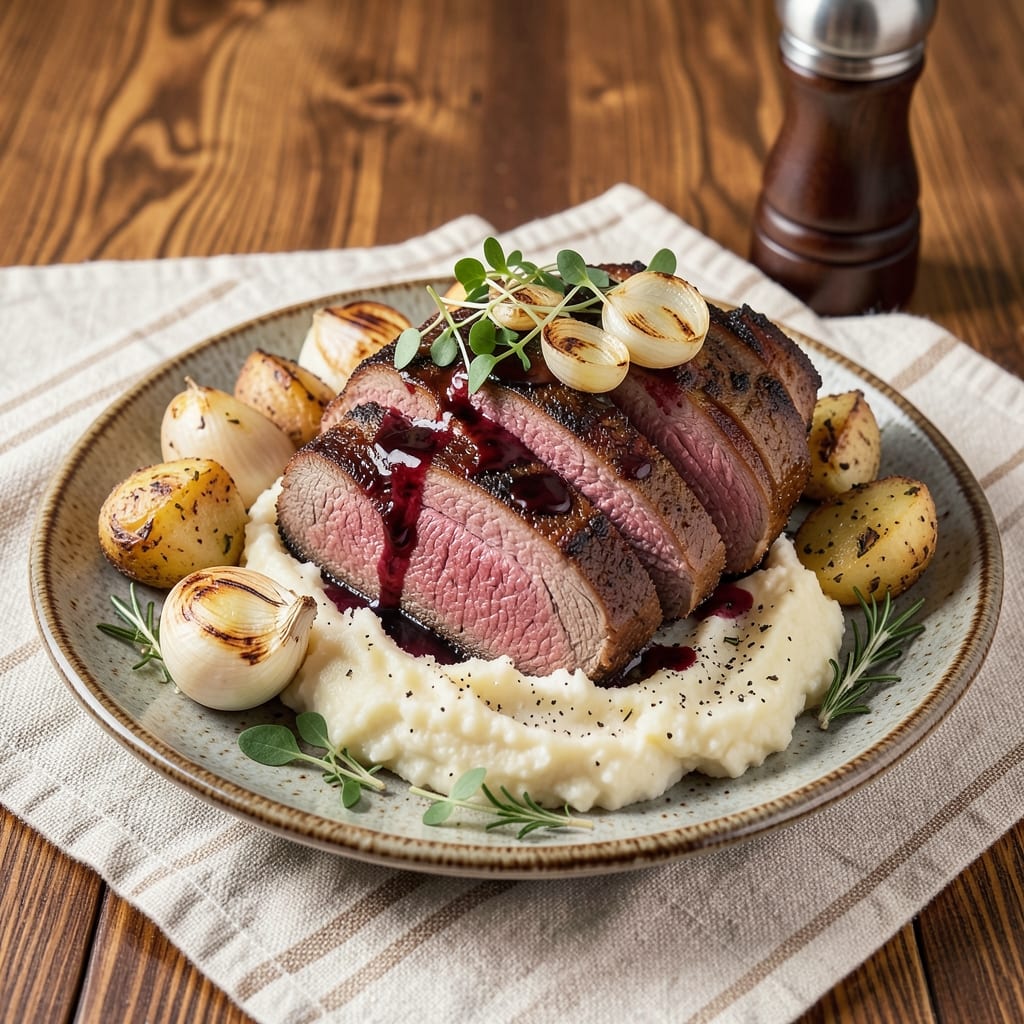
This award-winning roast beef recipe delivers melt-in-your-mouth perfection with au jus so rich it stains the plate—the kind of centerpiece that commands attention at any dinner table. 🌟 The secret lies in a dry-brine technique that ensures juicy, tender meat with a crispy, caramelized crust, while precise temperature control guarantees restaurant-quality results every time. What sets this apart is the homemade au jus, reduced to a velvety depth that clings to every bite like liquid gold.
We start with a prime rib roast, carefully trimmed and seasoned with a blend of kosher salt, black pepper, and garlic powder—no marinade needed. The key to success is low-and-slow roasting at 275°F, which transforms tough cuts into buttery, fork-tender meat without drying it out. Basting with its own rendered juices every 30 minutes builds that signature crust, while a resting period of 30 minutes ensures every slice stays juicy and elegant.
The au jus alone is worth the effort—a deep, savory reduction made from the roast’s drippings, beef broth, and a splash of red wine, finished with a touch of Worcestershire sauce for umami depth. Serve it alongside creamy mashed potatoes, roasted root vegetables, or a Yorkshire pudding for the full experience. This isn’t just roast beef; it’s a showstopping centerpiece that tastes like it belongs in a Michelin-starred kitchen.
Whether you’re hosting a holiday feast or treating yourself to a special Sunday dinner, this recipe delivers restaurant-quality results with a technique that’s surprisingly approachable. The payoff? A juicy, flavorful roast that carves beautifully and an au jus so rich, it’ll have your guests asking for seconds. Let’s get started.
Ingredients for award winning roast beef
Sixteen ingredients transform into a restaurant-worthy roast with velvety au jus.
| Ingredient | Amount | Notes |
|---|---|---|
| Prime Rib Roast 🥩 | 4 lb | Bone-in, center-cut preferred |
| Kosher Salt 🧂 | 2 tbsp | Diamond Crystal preferred |
| Freshly Ground Black Pepper 🌶️ | 1 ½ tbsp | Cracked peppercorns preferred |
| Garlic Powder 🧄 | 1 tbsp | Freshly ground preferred |
| Beef Broth 🥫 | 2 cups | High-quality, low-sodium |
| Dry Red Wine 🍷 | 1 cup | Cabernet Sauvignon preferred |
| Worcestershire Sauce 🍶 | 1 tbsp | Lea & Perrins preferred |
| Fresh Thyme Sprigs 🌿 | 4 whole | Stems removed for garnish |
| Fresh Rosemary Sprigs 🌿 | 2 whole | Needles finely chopped |
| Unsalted Butter 🧈 | 4 tbsp | European-style preferred |
| Yellow Onion 🧅 | 1 whole | Large, thinly sliced |
| Garlic Cloves 🧄 | 4 cloves | Peeled, smashed |
| Fresh Parsley 🌿 | ¼ cup | Chopped, for garnish |
The prime rib roast is non-negotiable for this recipe—bone-in, center-cut delivers the best flavor and tenderness. Source yours from a trusted butcher or Whole Foods meat counter, where they can trim excess fat for you. If buying whole, look for marbling throughout the meat, not just on the surface. A 4-pound roast serves six generously, with leftovers perfect for sandwiches. For the dry-brine, use Diamond Crystal kosher salt—it dissolves more easily than Morton's, ensuring even seasoning. The thyme and rosemary should be freshly harvested if possible, as dried herbs lack the complexity needed for this dish.
No prime rib? Top sirloin roast works in a pinch, though it won’t have the same marbling. Short on red wine? Beef stock with a splash of balsamic vinegar mimics the depth. Worcestershire sauce contains anchovies—if avoiding, substitute with soy sauce and a pinch of sugar. For the au jus, Trader Joe’s beef broth is a reliable budget option, but Kitchen Basics or Pacific Foods elevate the dish. The butter should be European-style (like Plugrá or Miyoko’s) for higher fat content, which enriches the au jus. If using salted butter, reduce the kosher salt by half a teaspoon.
Roast the beef uncovered on a rack in a roasting pan to allow air circulation—this prevents a soggy crust. The au jus should be reduced to a syrupy consistency, so plan for at least 30 minutes of simmering time. Store leftovers in the fridge for 4-5 days, covered with a thin layer of beef fat to preserve moisture. For freezing, portion the au jus into ice cube trays—thaw and reheat gently for best results. The roast reheats beautifully in a 350°F oven for 20-30 minutes, covered with foil.
Why You'll Love This Recipe
- No-Fuss Seasoning: I swear by the simplicity here—just kosher salt, black pepper, and garlic powder rubbed in one step. No fancy marinades, no last-minute prep. That crust? Pure magic from the dry rub alone.
- Juicy Every Bite: The beef broth pan sauce turns this into a melt-in-your-mouth experience—crispy exterior, tender interior, and that rich, savory glaze. Honestly, the first time I tried it, I almost skipped dinner the next day.
- Party-Proof Performer: This roast is my go-to for gatherings, but it’s just as good for a quiet Sunday. Slice it thin for sandwiches, thick for sliders, or serve it whole with crusty bread. (Yes, even on a Tuesday night.)
- Leftovers That Don’t Suck: Most roasts turn dry by day two, but this one? Still perfect for sandwiches, tacos, or reheated with a splash of broth. I’ll be real—my kids beg for the "fancy beef" leftovers, and I never say no.
Step-by-step instructions for award-winning roast beef
Master this technique and you'll achieve restaurant-quality prime rib with a perfect crust and velvety au jus.
🔥 Step 1: Prepare and Season the Prime Rib
Remove the prime rib roast from the refrigerator and let it sit at room temperature for 1 hour before cooking. This ensures even cooking throughout. Pat the roast dry with paper towels—this is crucial for developing that coveted crust.
In a small bowl, combine the 2 tbsp kosher salt, 1.5 tbsp freshly ground black pepper, and 1 tbsp garlic powder. Rub this mixture all over the roast, including the fat cap, pressing firmly so the seasoning adheres. The fat cap should be left intact—it will render down during cooking and baste the meat.
🍳 Step 2: Sear the Roast for Maximum Flavor
Preheat your oven to 450°F. Place a heavy roasting pan on the stove over medium-high heat and add 2 tbsp unsalted butter. Once the butter melts and begins to foam, carefully place the roast fat-side down in the pan. Let it sear undisturbed for 10-12 minutes until the fat cap is deep golden brown.
Flip the roast and sear the other side for another 8-10 minutes. The goal is to develop a deep, caramelized crust that locks in juices. Transfer the roast to a cutting board and let it rest for 10 minutes while you prepare the aromatics.
🥘 Step 3: Build the Au Jus Base
In the same roasting pan (with all those precious browned bits), add the 1 whole yellow onion and 4 smashed garlic cloves. Sauté for 3-4 minutes until softened but not browned. Stir in the 4 whole fresh thyme sprigs and 2 whole fresh rosemary sprigs, scraping up any browned bits from the bottom of the pan.
Deglaze the pan with the 1 cup dry red wine, scraping up all the flavorful fond. Let it simmer for 2-3 minutes until reduced by half. Add the 2 cups beef broth and 1 tbsp Worcestershire sauce, then bring to a gentle simmer. The au jus should be rich and aromatic—this is the foundation of your sauce.
🔥 Step 4: Roast to Perfection
Return the seared roast to the roasting pan, fat-side up. Transfer to the preheated oven and roast for 2-2.5 hours for medium-rare (internal temperature 125°F) or 2.5-3 hours for medium (135°F). The roast is done when a meat thermometer inserted into the thickest part reads your desired temperature.
Remove the roast from the oven and tent loosely with aluminum foil. Let it rest for 20-30 minutes before carving. This resting period is critical—it allows the juices to redistribute throughout the meat, ensuring each slice is moist and flavorful. During this time, strain the au jus through a fine-mesh sieve into a saucepan.
🍽️ Step 5: Finish the Au Jus and Serve
Place the saucepan with au jus over medium heat and bring to a gentle simmer. Whisk in the remaining 2 tbsp unsalted butter until melted and emulsified. The sauce should coat the back of a spoon and have a glossy finish. Taste and adjust seasoning with additional salt and pepper if needed.
Slice the roast against the grain into ½-inch thick slices. Arrange the slices on a warm platter and spoon the finished au jus over the top. Garnish with the 0.25 cup chopped fresh parsley for a pop of color. Serve immediately with roasted vegetables or crusty bread to soak up every last drop of that luxurious sauce.
Pro Tips For Making Award Winning Roast Beef
- SEAR FIRST, THEN SALT: That first crust is everything—get your pan screaming hot before adding the prime rib. I used to salt early, but now I sear first, then hit it with garlic powder and kosher salt after it’s browned. The crust locks in flavor, not just moisture.
- DON’T SKIP THE BROTH BATH: Pour that beef broth into the roasting pan before it goes in the oven. The steam keeps the surface tender while the fat renders—no dry, tough exterior. (Yes, even if it looks messy. Trust me.)
- USE A MEAT THERMOMETER: Guessing medium-rare ruins everything. Aim for 120–125°F internal temp—pull it before it creeps past 130°F. I learned this after serving a guest a slightly overdone roast that had them side-eyeing their plate.
- LET IT REST (UNDER FOIL): Tent that prime rib with foil for 10–15 minutes after pulling it from the oven. The juices redistribute instead of pooling on your cutting board. (And no, “5 minutes” isn’t enough—your future self will thank you.)
Best sauces and condiments for award winning roast beef
Classic Horseradish Cream
This tangy, spicy condiment cuts through the richness of roast beef beautifully. Mix ½ cup sour cream with 2 tbsp prepared horseradish (like Gourmet Garden), 1 tbsp Dijon mustard, and 1 tsp lemon juice. Adjust the horseradish to taste—start with 1 tbsp if you're sensitive to heat. Serve chilled in a small bowl for dipping or spooning over slices. 🌶️
Red Wine Reduction
Use the leftover au jus drippings to create an even more luxurious sauce. After roasting, strain the pan juices into a saucepan and reduce over medium-high heat until syrupy (about 10-15 minutes). Finish with 1 tbsp cold butter and a pinch of Penzeys smoked paprika for depth. This sauce is rich enough to stand alone but pairs perfectly with the roast. 🍷
Garlic-Herb Butter
For a simpler yet equally impressive option, mix ½ cup softened unsalted butter with 2 minced garlic cloves, 1 tbsp chopped fresh parsley, and ½ tsp kosher salt. Shape into a log, wrap in parchment, and chill for 30 minutes before slicing. The butter melts beautifully over warm beef slices, adding a buttery, aromatic finish. 🧈
Whiskey-Infused Gravy
Elevate your au jus into a whiskey gravy by adding 2 tbsp bourbon (like Maker’s Mark) to the pan drippings while reducing. The alcohol burns off, leaving behind a deep, caramelized flavor. Finish with a splash of beef stock and a pat of butter for a velvety texture. This gravy is perfect for drizzling over carved slices or smothering mashed potatoes. 🥃
Spiced Apple Chutney
A sweet-tart contrast to the savory beef, this chutney balances the richness perfectly. Simmer 1 cup diced apples, ¼ cup apple cider vinegar, 2 tbsp brown sugar, ½ tsp cinnamon, and ¼ tsp cloves for 15 minutes until thickened. Serve at room temperature alongside the roast for a refreshing bite. 🍏
Nutrition facts
Frequently asked questions
What's the best cut of beef for this award-winning recipe?
This recipe specifically calls for prime rib roast—bone-in, center-cut delivers the most flavorful, tender results. The marbling ensures juicy meat, while the bone adds depth to the au jus. If prime rib isn't available, top sirloin roast works as a budget-friendly alternative, though it may lack the same richness.
How do I know when the roast is perfectly cooked?
Use a meat thermometer for precision! For medium-rare, aim for 125°F in the thickest part, while medium is 135°F. The roast will continue rising 5°F while resting, so pull it out just before reaching your target temp. Never rely on color or time alone—modern ovens vary too much for guesswork.
Why is resting the roast so important?
Resting for 20-30 minutes after roasting lets the juices redistribute throughout the meat instead of pooling on your plate. When you cut into rested beef, each slice stays moist and flavorful. Skipping this step guarantees dry, disappointing results—especially with larger roasts that need extra time to relax their muscle fibers.
Can I make this recipe ahead of time?
The roast reheats beautifully in a 350°F oven for 20-30 minutes, covered with foil. For the au jus, freeze it in ice cube trays—thaw and reheat gently for best results. The flavors actually improve overnight as the beef rests. Just avoid reheating the roast from frozen, as this can make it tough.
What's the secret to the perfect au jus?
The magic happens in the pan drippings! Don't discard those browned bits—they're packed with flavor. Deglaze with red wine, reduce slowly, and finish with butter for a velvety texture. The key is patience: simmering for 30+ minutes concentrates the flavors into a rich, glossy sauce that coats every bite.