
Main Courses
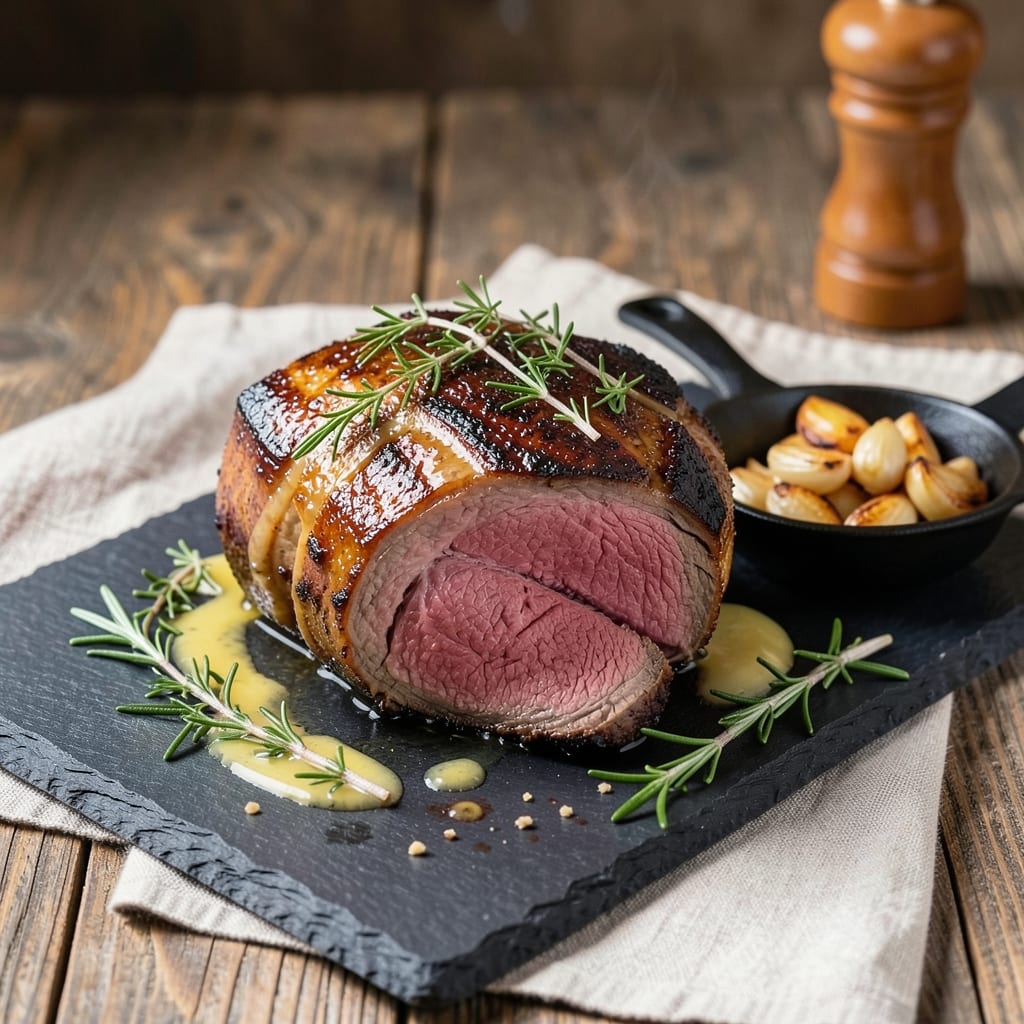
This awesome roast beef recipe delivers a perfect balance of crispy crust and juicy pink heart—the kind of showstopper that transforms Sunday dinners into restaurant-worthy experiences. The secret lies in dry-brining overnight, which enhances tenderness and flavor without adding moisture, followed by precise high-heat searing. Every slice reveals a deep mahogany crust that gives way to tender, melt-in-your-mouth beef, making it impossible to resist.
What sets this recipe apart is the two-stage cooking method: starting with a 325°F oven for even cooking, then finishing with a broiler blast for that coveted caramelized crust. The butter-basting technique ensures moisture stays locked in while building layers of richness. Even beginners will achieve restaurant-quality results—no guesswork, just consistent, foolproof execution.
By the time you carve that first slice, you’ll be rewarded with perfect medium-rare doneness—juicy enough to make meat lovers cheer, yet firm enough to hold its shape. The aroma alone will have everyone gathering at the table, while the crispy exterior and tender interior create a texture contrast that’s pure satisfaction. This isn’t just roast beef; it’s a centerpiece dish that elevates any meal.
Pair it with classic sides like au jus, roasted root vegetables, or crusty bread to complete the experience. The recipe scales effortlessly for crowds, ensuring leftovers are just as delicious reheated. Here’s how to make it—step by step, with precision—so you can serve a masterpiece every time.
Ingredients for awesome roast beef
The secret to restaurant-quality roast beef lies in precision ingredients and technique.
| Ingredient | Amount | Notes |
|---|---|---|
| Ribeye Roast Beef 🥩 | 4 lb | Bone-in, center-cut preferred |
| Diamond Crystal Kosher Salt 🧂 | ½ cup | For dry-brine overnight |
| Unsalted Butter 🧈 | ½ cup | Cold, cubed for basting |
| Fresh Thyme Sprigs 🌿 | 8 whole | Stems removed for garnish |
| Fresh Rosemary Sprigs 🌿 | 4 whole | Woodsy flavor, stems intact |
| Garlic Cloves 🧄 | 8 cloves | Smashed for aroma infusion |
| Black Peppercorns 🌶️ | 1 tbsp | Freshly cracked, coarse grind |
| Yellow Onion 🧅 | 1 whole | Sliced for au jus base |
| Beef Broth 💧 | 1 ½ cups | Low-sodium preferred |
| Red Wine 🍷 | ½ cup | Bold, dry variety |
| Olive Oil 🫒 | 2 tbsp | For pan searing |
| Balsamic Vinegar 🍶 | 1 tbsp | For au jus depth |
| Fresh Parsley 🌿 | ¼ cup | Chopped for garnish |
The ribeye roast is non-negotiable for this recipe—bone-in, center-cut delivers maximum flavor and tenderness. Whole Foods Market or local butchers often carry premium cuts with excellent marbling, which translates directly to juiciness. For best results, choose a roast with a thickness of 2-2.5 inches—this ensures even cooking while maintaining that coveted pink center. If your butcher offers dry-aged beef, opt for it; the enhanced flavor profile shines through in the final dish. The 4-pound size serves six generously, with leftovers that reheat beautifully for sandwiches the next day.
No Diamond Crystal kosher salt? Morton kosher salt works equally well, but adjust measurements—it's slightly coarser. The dry-brine is critical: 1 tablespoon of salt per pound of beef overnight enhances tenderness without adding moisture. For the butter basting, use European-style unsalted butter (like Plugrá) for higher fat content and richer flavor. Short on fresh herbs? Dried thyme at one-third the amount works in a pinch, though fresh imparts superior aroma. The red wine can be substituted with beef broth plus 1 tablespoon balsamic vinegar if you're avoiding alcohol, though the acidity balance shifts slightly.
The roast should rest 15-20 minutes after cooking before carving—this crucial step ensures juices redistribute. Store leftovers in an airtight container for up to 4 days in the refrigerator, or freeze for 3 months by wrapping tightly in butcher paper before plastic. For reheating, low oven (300°F) with a splash of beef broth prevents drying. The au jus keeps for 5 days refrigerated; freeze portions in ice cube trays for easy future use. Prep the dry-brine and aromatics the night before—this professional shortcut guarantees you're fully present during the searing stage where technique truly matters.
Why You'll Love This Recipe
- Minimal Prep Magic: I swear by this—just a ribeye roast, salt, butter, and herbs. No chopping, no fussing, no stress. The salt and butter do all the heavy lifting while you sip wine and pretend you’re a fancy chef.
- Herb-Crusted Perfection: That rosemary and thyme? They cling to the beef like a flavor hug. The butter bastes into a golden crust, and the meat stays juicy inside—crispy edge, melt-in-your-mouth center. Honestly, it’s the kind of bite that makes people pause mid-conversation.
- Weeknight or Sunday Feast: Same recipe, different vibes. Weeknight dinner? Toss it on the table with crusty bread. Sunday supper? Add roasted potatoes and a green salad. It’s my go-to for lazy days and “let’s impress” moments—no extra effort, just different sides.
- Leftovers That Beg for More: Between us, this roast is that good even the second day. Thinly slice it for sandwiches, cube it for hash, or just reheat with a splash of beef broth. I’ve been known to eat it cold straight from the fridge—no judgment.
Step-by-step instructions for dry-brined roast beef
Mastering this technique delivers a perfectly balanced crust and tender pink center every time.
Prepare the Dry Brine Overnight
Place the 4 lb ribeye roast beef on a wire rack set over a rimmed baking sheet. Generously coat all surfaces with the 0.5 cup diamond crystal kosher salt, pressing it into the meat to ensure even distribution. This dry brine method creates an ideal crust while maintaining moisture throughout.
Cover loosely with plastic wrap and refrigerate for 12-24 hours. The salt will penetrate deeply, breaking down muscle fibers and creating that coveted crust. I like to flip the roast halfway through for even seasoning. The beef should develop a slightly tacky surface—this indicates proper salt penetration.
Sear and Baste for Maximum Flavor
Remove the roast from the refrigerator 1 hour before cooking to bring it to room temperature. Preheat your oven to 375°F. Heat 2 tablespoons olive oil in a heavy roasting pan over medium-high heat. Once shimmering, sear the roast on all sides for 3-4 minutes per side until deeply browned.
Remove the pan from heat and add the 0.5 cup unsalted butter, 8 smashed garlic cloves, 4 whole rosemary sprigs, and 8 whole thyme sprigs. Return to the oven and baste the roast with the rendered fat every 20 minutes for 1 hour. This basting creates a flavorful crust while keeping the interior moist.
Roast to Perfect Medium-Rare
Continue roasting until the internal temperature reaches 120-125°F (measured with a meat thermometer in the thickest part). This typically takes 2-2.5 hours total, depending on your oven. The exterior should develop a deep mahogany crust while maintaining a vibrant pink center.
For the final 10 minutes, increase the oven temperature to 400°F to intensify the crust color. This high-heat finish creates that beautiful contrast between the crisp exterior and tender interior. Remove the roast when it reaches the target temperature—it will continue cooking slightly as it rests.
Prepare the Au Jus
While the roast rests, place the roasting pan on the stovetop over medium heat. Add the 1 whole sliced yellow onion and cook for 2 minutes to caramelize slightly. Deglaze with the 0.5 cup red wine, scraping up all the browned bits from the bottom of the pan.
Add 1.5 cups beef broth and 1 tablespoon balsamic vinegar, then simmer for 8-10 minutes until reduced by half. Strain through a fine-mesh sieve to remove any solids, then season with 1 tablespoon freshly cracked black peppercorns. This rich, flavorful au jus complements the roast perfectly.
Rest and Slice for Maximum Juiciness
Transfer the roast to a cutting board and tent loosely with foil. Let it rest for 20-30 minutes before slicing. This resting period allows the juices to redistribute throughout the meat, ensuring each slice is moist and flavorful. The internal temperature will rise 5-10°F during this time.
Slice the roast against the grain into ½-inch thick portions. Garnish each serving with 0.25 cup chopped fresh parsley and serve immediately with the prepared au jus. The contrast between the crispy crust and tender pink center creates an unforgettable eating experience.
Pro Tips For Making Awesome Roast Beef
- CRANK THE HEAT FIRST: The ribeye roast needs a screaming-hot pan or oven to lock in juices—no gradual warming. After searing, drop the heat to 275°F (135°C) for even cooking, but that first blast of 450°F (230°C) for 5–7 minutes is non-negotiable. I learned this the hard way when my roast turned out dry because I played it safe.
- SALT THE MEAT 48 HOURS EARLY: Diamond Crystal kosher salt needs time to work its magic. Sprinkle 1–2 teaspoons per pound two days ahead and let it sit uncovered in the fridge—this seasons the surface and tenderizes the meat. Skipping this step means your crust will taste flat, no matter how much you butter it later.
- DON’T CUT THE HERBS TOO SMALL: Tiny thyme and rosemary bits disappear into the butter and disappear into the meat. Strip the leaves off sprigs but leave them whole—tuck them into the roast’s fat cap or sear them whole in the butter for maximum aroma. After roasting, pull them out before slicing so they don’t turn to mush in the pan.
- USE COLD BUTTER FOR THE CRUST: Melted butter sticks to the pan and steams the meat instead of browning it. Instead, cut unsalted butter into pats and scatter them over the hot roast after searing—it’ll sizzle and crisp into a golden crust. Add the herbs right after the butter so they infuse the fat. (Yes, even if you’re impatient like me.)
Essential equipment for this recipe
Roasting Pan Essentials
Your heavy-duty roasting pan is the unsung hero of this recipe—opt for a 5-quart stainless steel pan with high sides (like the All-Clad Stainless Steel Roasting Pan). The deep sides prevent spills during basting, and stainless steel conducts heat evenly. I’ve found that Lodge Pre-Seasoned Roasting Pan works beautifully too, especially if you love that classic cast iron flavor. Avoid non-stick pans for roasting—they can’t handle the high heat needed for that perfect crust. 🔥
Precision Thermometer
A meat thermometer is non-negotiable for achieving the perfect medium-rare center. I swear by the Thermoworks Smoke—its dual probes let me monitor both the oven temperature and the beef’s internal temp simultaneously. For budget-friendly options, the Thermopro TP19 delivers accurate readings without breaking the bank. Always insert the probe into the thickest part of the roast, avoiding fat or bone. The 120-125°F range is your sweet spot for that juicy pink heart.
Wire Rack Setup
Elevating your roast on a wire rack (like the Ozeri Touch Control) ensures even air circulation, preventing soggy bottoms and promoting that deep mahogany crust we’re after. Place the rack directly on the roasting pan’s bottom—no need for extra trays. Pro tip: If your rack is too small, use two rimmed baking sheets side by side for larger roasts. This setup also makes basting with rendered fat effortless, as it drips straight back onto the meat. ✨
Basting Tools
For basting, I use a silicon baster (like the OXO Good Grips)—it’s heat-resistant and easy to squeeze, even with gloves on. Avoid metal spoons, which can splatter hot fat. Pair it with a long-handled spoon (I love the Cuisinart Stainless Steel Spoon) to stir the au jus on the stovetop. A small offset spatula (like the Victorinox) comes in handy for flipping the roast during searing. Keep these tools within arm’s reach while cooking to maintain that butter-basting rhythm every 20 minutes. 💡
Optional: Sous-Vide Finisher
For an extra touch of luxury, add a sous-vide circulator (like the Anova Precision Cooker) to finish the roast. After searing, vacuum-seal the beef with 1 cup beef broth and cook at 130°F for 4-6 hours. This guarantees perfect medium-rare doneness before the broiler blast. While not essential, it’s a game-changer for those who love foolproof results—especially with thicker cuts. Just be sure to pat the roast dry before broiling to ensure that crispy crust.
Storage Containers
Leftovers deserve proper care! Store sliced roast beef in glass Pyrex containers with snap-on lids for reheating. For au jus, use freezer-safe glass jars—they’re microwave-safe too. I also keep a small airtight container in the fridge for quick sandwich prep. Label everything with dates to track freshness. Pro move: Freeze au jus in ice cube trays for easy portioning later. This keeps your roast beef leftovers tasting as fresh as day one. 💫
Nutrition facts
Frequently asked questions
Can I use a different cut of beef for this recipe?
While ribeye delivers the best marbling and flavor, you can substitute with top sirloin or New York strip—just reduce cooking time by 15-20 minutes since these cuts are leaner. Avoid round cuts like chuck; they lack the fat needed for juiciness. For extra tenderness, trim excess fat but leave ¼-inch for flavor and moisture.
How do I adjust the recipe for a larger crowd?
Scale the recipe by 1.5x for 9 servings: use a 6 lb roast, 0.75 cup salt, 1 cup butter, and increase oven time by 45-60 minutes. Keep the same 325°F/163°C temperature to prevent overcooking. For 12+ servings, use a 8 lb roast and double the au jus ingredients. Always use a meat thermometer—thicker roasts need longer resting times.
What if my roast comes out overcooked?
If the internal temperature exceeds 130°F, the beef will be tough. To salvage it, slice thinly against the grain and serve with extra au jus or a rich pan sauce. For future attempts, reduce oven temp to 300°F and cook until 115°F internal, then finish under the broiler for 5 minutes to restore crust color. Never overcook—medium-rare (120-125°F) is key for tenderness.
Can I make this recipe without red wine?
Replace the 0.5 cup red wine with 0.5 cup beef broth plus 1 tablespoon balsamic vinegar for depth. For extra richness, add 1 teaspoon Worcestershire sauce. The au jus will be slightly less complex but still delicious. If avoiding alcohol entirely, use dry sherry or apple cider vinegar instead.
How do I reheat leftovers without drying them out?
Slice the roast and reheat in a 300°F oven for 15-20 minutes with a splash of beef broth. For quick reheating, use the microwave in 30-second bursts, covering with a damp paper towel. Never reheat au jus above 165°F—simmer gently on the stovetop instead. Store leftovers in an airtight container for up to 4 days.