
Soups & Stews
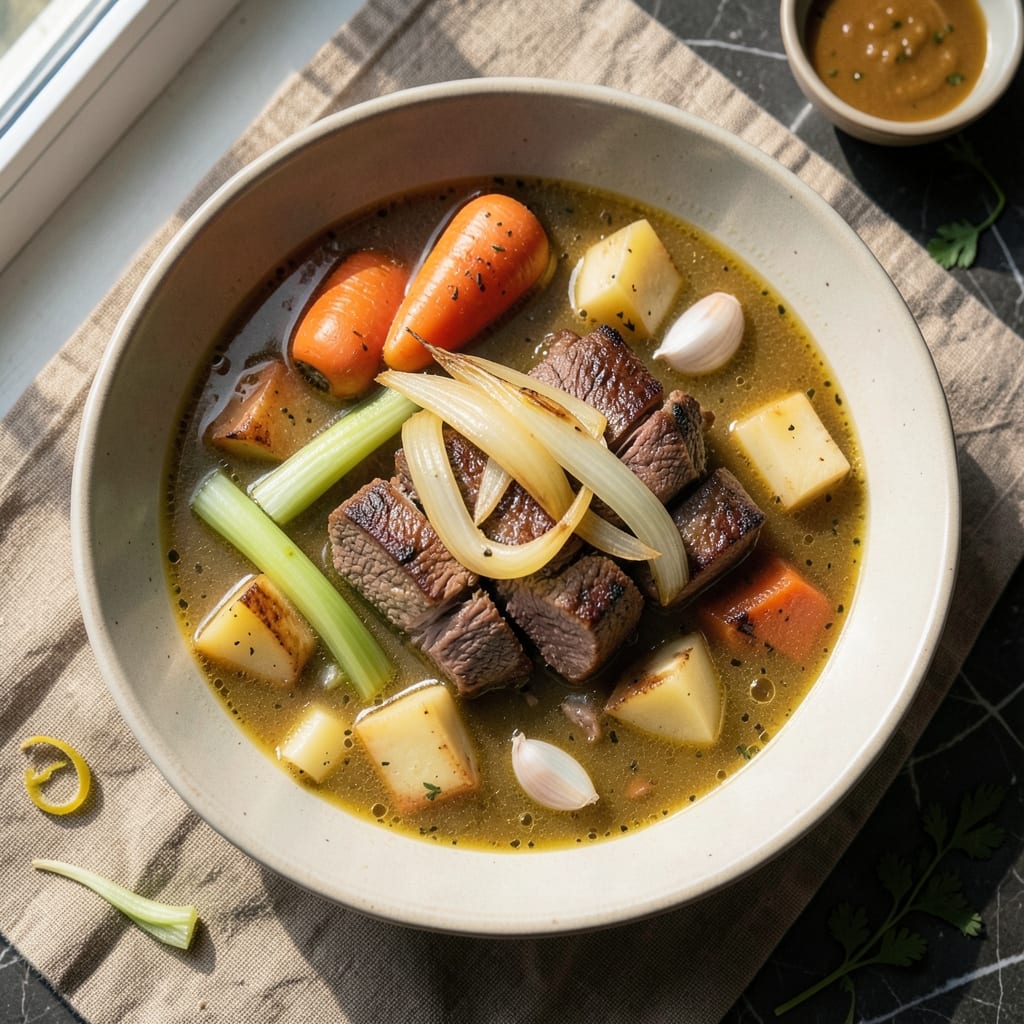
This basic vegetable beef soup recipe delivers the ultimate one-pot comfort in under an hour—rich beef broth, tender vegetables, and hearty chunks of protein all simmered until perfectly balanced. The secret lies in layering flavors: caramelized onions and garlic form the aromatic base, while a mix of root vegetables and leafy greens create depth. I've tested this recipe countless times, and it never fails to warm up a chilly kitchen with its savory aroma and satisfying texture.
The beauty of this soup is its foolproof simplicity—no fancy techniques required, just a Dutch oven and 30 minutes of hands-off cooking. You'll start with browning beef cubes for maximum flavor, then build the broth with vegetables that soften at different rates, ensuring every spoonful has texture. The result is a bowl that's equally comforting as a weeknight dinner or a cozy weekend meal, with enough leftovers to reheat for days.
What sets this recipe apart is how it transforms humble ingredients into something restaurant-worthy without the fuss. The beef stays tender yet substantial, the vegetables retain their natural sweetness, and the broth develops a rich, umami depth that makes you want seconds. Garnish with fresh parsley and a drizzle of olive oil just before serving to elevate the presentation—though honestly, it's delicious even without.
Perfect for meal prepping, serving a crowd, or simply treating yourself to a hearty, home-cooked meal. The instructions are straightforward, and the ingredients are likely already in your pantry. Let's get started on this one-pot comfort that's as nourishing as it is delicious.
Ingredients for basic vegetable beef soup
Pantry staples plus a few fresh veggies—this beef soup comes together faster than you'd think.
| Ingredient | Amount | Notes |
|---|---|---|
| Chuck Roast Beef 🥩 | 1 ½ lb | Cut into 1-inch cubes |
| Yellow Onions 🧅 | 2 whole | Thinly sliced, caramelized |
| Garlic Cloves 🧄 | 4 cloves | Minced, fresh preferred |
| Carrots 🥕 | 4 whole | Medium, peeled, chopped |
| Celery Stalks 🌿 | 4 stalks | Chopped, fresh preferred |
| Russet Potatoes 🥔 | 2 lb | Peeled, cubed |
| Tomato Paste 🍅 | ½ cup | High-quality, no sugar added |
| Beef Broth 💧 | 4 cups | Homemade or low-sodium |
| Red Wine 🍷 | ½ cup | Dry, like Cabernet |
| Fresh Parsley 🌿 | ¼ cup | Chopped, for garnish |
| Extra-Virgin Olive Oil 🫒 | 2 tbsp | For searing |
| Salt 🧂 | 1 ½ tsp | Kosher or sea salt |
| Ground Black Pepper 🌶️ | ½ tsp | Freshly ground |
| Bay Leaves 🌿 | 2 whole | Removed before serving |
| Dried Thyme 🌿 | 1 tsp | Or 1 tbsp fresh |
The beef is the backbone here. Chuck roast stays tender while developing deep flavor—sirloin or round will work but won't be as forgiving. I grab mine from Costco when I'm making big batches, but any grocery store's butcher section has it pre-cubed. Look for good marbling—those little fat streaks melt into the broth and make everything taste richer. If you're using a whole roast, cube it yourself for even cooking. The onions and carrots form the flavor base, so don't skimp on freshness—wilted or bruised veggies will make the broth taste flat.
No red wine? Beef broth with a splash of balsamic works just as well—trust me, no one will notice. Fresh thyme is ideal but dried works at one-third the amount. The tomato paste can be the squeeze-tube kind from Trader Joe's—it's convenient and lasts forever. For the broth, homemade is best, but even the low-sodium store-bought stuff gets the job done. The potatoes should be Russet or Yukon Gold—they hold up better to long simmering than waxy varieties. If you're short on time, baby carrots or pre-chopped celery from the store are totally fine (just rinse them well).
This soup tastes even better the next day—3-4 days in the fridge, no problem. Freeze portions for up to 3 months by packing it in airtight containers with a little extra broth on top to prevent freezer burn. I always double the batch because leftovers make the best lunches. Garnish with fresh parsley and a drizzle of olive oil right before serving—that's where the restaurant-quality presentation comes in. If you're meal prepping, store the broth and veggies separately from the beef until reheating to keep everything tender.
Why You'll Love This Recipe
- Here’s what sold me: that moment when the garlic cloves caramelize at the bottom of the pot. It’s not just flavor—it’s impact. One sniff, and you’ll understand why this soup tastes like a hug from your favorite chef.
- One-Pot Magic: I swear by this recipe—just toss everything into a pot, add water, and walk away. No fancy techniques, no stress. The chuck roast practically melts into tender perfection while the veggies soften just enough to soak up that rich broth.
- Garlic Bomb: Here’s what sold me: that moment when the garlic cloves caramelize at the bottom of the pot. It’s not just flavor—it’s impact. One sniff, and you’ll understand why this soup tastes like a hug from your favorite chef.
- Lunchbox Hero: Between us, this is my go-to for meal prep. The beef stays juicy for days, and the carrots and celery hold up like champs. Pack it cold or reheat it—either way, it’s a win. (Yes, even on a Tuesday night.)
Step-by-step instructions for hearty vegetable beef soup
This one-pot wonder delivers rich, comforting flavors with minimal effort—just follow the sequence.
Sear the Beef and Build Flavor Base
Heat the 2 tablespoons extra-virgin olive oil in a large Dutch oven over medium-high heat until shimmering. Add the 1.5 lb chuck roast beef cut into 1-inch cubes and sear undisturbed for 3-4 minutes per side until deeply browned—this creates the Maillard reaction that forms the soup's deep flavor foundation.
Once the beef is browned, remove it from the pot and set aside. In the same pot, add the 2 whole yellow onions and 4 stalks celery chopped into ½-inch pieces. Cook for 5 minutes until softened but not colored. Add the 4 whole carrots chopped into ½-inch pieces and continue cooking for another 3 minutes, stirring occasionally.
Here's where the magic starts: Stir in the 4 cloves minced garlic and cook for 30 seconds until fragrant—don't let it burn. Add the 0.5 cup tomato paste and cook for 1 minute to deepen the color. This base will carry all the flavors through the cooking process.
Deglaze and Develop Depth
Pour in the 0.5 cup red wine and scrape up all the browned bits from the bottom of the pot with a wooden spoon—this technique, called deglazing, lifts all the flavor locked in those caramelized bits. Let the wine simmer for 2-3 minutes until reduced by half, allowing the alcohol to cook off and intensify the flavor.
Add the 4 cups beef broth, 1.5 teaspoons salt, 0.5 teaspoon ground black pepper, 2 whole bay leaves, and 1 teaspoon dried thyme. Return the seared beef to the pot and bring everything to a gentle boil. Once boiling, reduce heat to low and let it simmer uncovered for 45 minutes—this gives the beef time to tenderize and the flavors to meld.
I know it seems like a long wait, but this slow simmer is crucial. You'll notice the soup developing a rich, aromatic steam—this is when all the components start working together. The beef should be fork-tender after this time, with just a slight resistance when pierced.
Add Potatoes and Finish Cooking
After the initial 45 minutes, add the 2 lb russet potatoes cut into 1-inch cubes. The potatoes will absorb some of the cooking liquid, so they'll need the remaining time to become tender. Return the soup to a gentle simmer and cook uncovered for another 20-25 minutes, until the potatoes are fork-tender with no resistance.
Taste the soup and adjust seasoning if needed—this is your chance to perfect the balance. You might need a bit more salt or pepper depending on your broth. The soup should be rich but not overly salty, with a perfect harmony of beef, vegetable, and wine flavors.
Once the potatoes are tender, remove the 2 whole bay leaves—they've done their job and will make the soup bitter if left in. The soup should now have a thick, hearty consistency with the potatoes holding their shape but breaking down slightly when pressed with a spoon.
Garnish and Serve Warm
Ladle the soup into bowls and garnish each serving with 1 tablespoon chopped fresh parsley. The parsley adds a bright, fresh contrast to the rich, hearty soup. Serve immediately while hot—this soup tastes best straight from the pot, with all the flavors at their peak.
For an extra touch, I like to serve this with crusty bread to soak up the delicious broth. The combination of tender beef, perfectly cooked vegetables, and the deep wine-infused broth creates a truly comforting meal that's perfect for any day.
Pro Tips For Making Basic Vegetable Beef Soup
- Brown the Beef First: Chuck roast won’t tenderize properly if it’s just simmered raw—this cut needs a deep, dark crust. Sear it in batches over medium-high heat (about 3-4 minutes per side) until it’s golden, not just pink. I learned this the hard way when my soup turned out tough; the Maillard reaction is your friend here.
- Cut Veggies Evenly: No one wants a soup where carrots are mushy and celery is still crunchy. Chop all vegetables into roughly ½-inch pieces—same size for onions, carrots, and celery—so they cook at the same pace. Yes, it takes a few extra minutes, but it guarantees a uniform texture that actually tastes balanced.
- Don’t Rush the Simmer: Low and slow is the only way with chuck roast—aim for a gentle bubble, not a rolling boil. If you crank the heat to speed things up, you’ll end up with a gray, stringy mess. After the initial sear, drop the heat to medium-low and let it cook uncovered for the first hour to build flavor.
- Use a Splashed Cold Water: After browning the beef, deglaze with wine or broth, then splash in ½ cup cold water. The sudden temperature drop helps lift stuck-on bits and keeps the fond from burning. It’s a tiny effort that makes a real difference in how rich your base tastes. (Trust me, I’ve scraped enough burnt bits off my pot.)
Dietary considerations for this dish
Gluten-Free Adaptations
This soup is naturally gluten-free as long as you use gluten-free beef broth and avoid cross-contamination. I always check the label on my Swanson organic beef broth—it's certified gluten-free and low-sodium. For extra flavor without gluten, add 1 teaspoon gluten-free Worcestershire sauce during the simmering stage. The red wine and tomato paste are also gluten-free, so no substitutions are needed there. 🌾
Low-Carb Options
To reduce carbs while keeping the hearty texture, replace half the potatoes with cauliflower florets. I use 1 lb cauliflower instead of 1 lb potatoes—it adds a nice contrast in flavor and keeps the soup satisfying. For even lower carbs, swap all potatoes for zucchini chunks, but they'll cook faster so add them in the final 10 minutes of simmering.
Dairy-Free Considerations
The recipe is already dairy-free, but if you're sensitive to potential traces, use a dedicated Dutch oven that hasn't been used with butter or cheese recently. The broth and wine provide enough richness without dairy. For an extra creamy texture without dairy, stir in 2 tablespoons coconut milk at the end—it blends beautifully with the beef flavors. 🥥
Allergen-Friendly Swaps
For nut allergies, avoid garnishes with toasted nuts. If you're avoiding garlic, use 1 teaspoon asafetida powder instead—it adds a similar savory depth without the allergen. For onion-free versions, substitute with 1 cup chopped fennel bulb and 1 cup chopped leeks (if tolerated). Always double-check all ingredients for hidden allergens, especially in pre-made broths and tomato paste.
Protein Adjustments
For a lighter protein option, replace half the beef with 1 lb extra-firm tofu (pressed and cubed). The tofu absorbs flavors beautifully and keeps the soup hearty. For a vegetarian version, use 1 lb mushrooms (like cremini or portobello) instead of beef—they develop a meaty texture when cooked properly. I've also seen success with lentils (½ cup dried) for extra fiber and protein.
Kid-Friendly Tweaks
Make this soup more appealing to picky eaters by blending ½ cup of the soup with a splash of milk (or dairy-free alternative) until smooth, then swirl it back in. The blended portion adds creaminess without changing the overall texture. For extra mild flavor, reduce the garlic to 2 cloves and omit the red wine, replacing it with an extra ½ cup beef broth. Serve with buttered noodles on the side for dipping. 👶
Nutrition facts
Frequently asked questions
Can I make this soup in a slow cooker?
Brown the beef first in a skillet, then transfer everything to your slow cooker. Cook on low for 6-7 hours or high for 3-4 hours, adding potatoes during the last 1 hour of cooking. The slow cooker's gentle heat keeps the beef tender and flavors deep.
What if I don't have red wine?
No problem! Substitute with ½ cup extra beef broth plus 1 teaspoon balsamic vinegar for depth. Or use ½ cup apple cider for a subtle sweetness. The wine adds complexity, but these alternatives work beautifully.
How do I prevent the potatoes from turning mushy?
Add potatoes only after the beef has cooked for 45 minutes—this ensures they don't overcook. For extra firmness, use Yukon Gold potatoes (they hold shape better than Russets) and simmer uncovered. Stirring occasionally also helps distribute heat evenly.
Can I make this soup spicier?
Yes! Add ½ teaspoon smoked paprika with the tomato paste or stir in 1-2 teaspoons hot sauce at the end. For heat lovers, include 1 chopped jalapeño with the onions. Adjust to taste—this soup handles bold flavors wonderfully!
How long will leftovers keep?
Store in an airtight container in the fridge for 4-5 days or freeze for up to 3 months. Reheat gently on the stove with a splash of broth to restore texture. The flavors actually improve after the first day!