
Soups & Stews
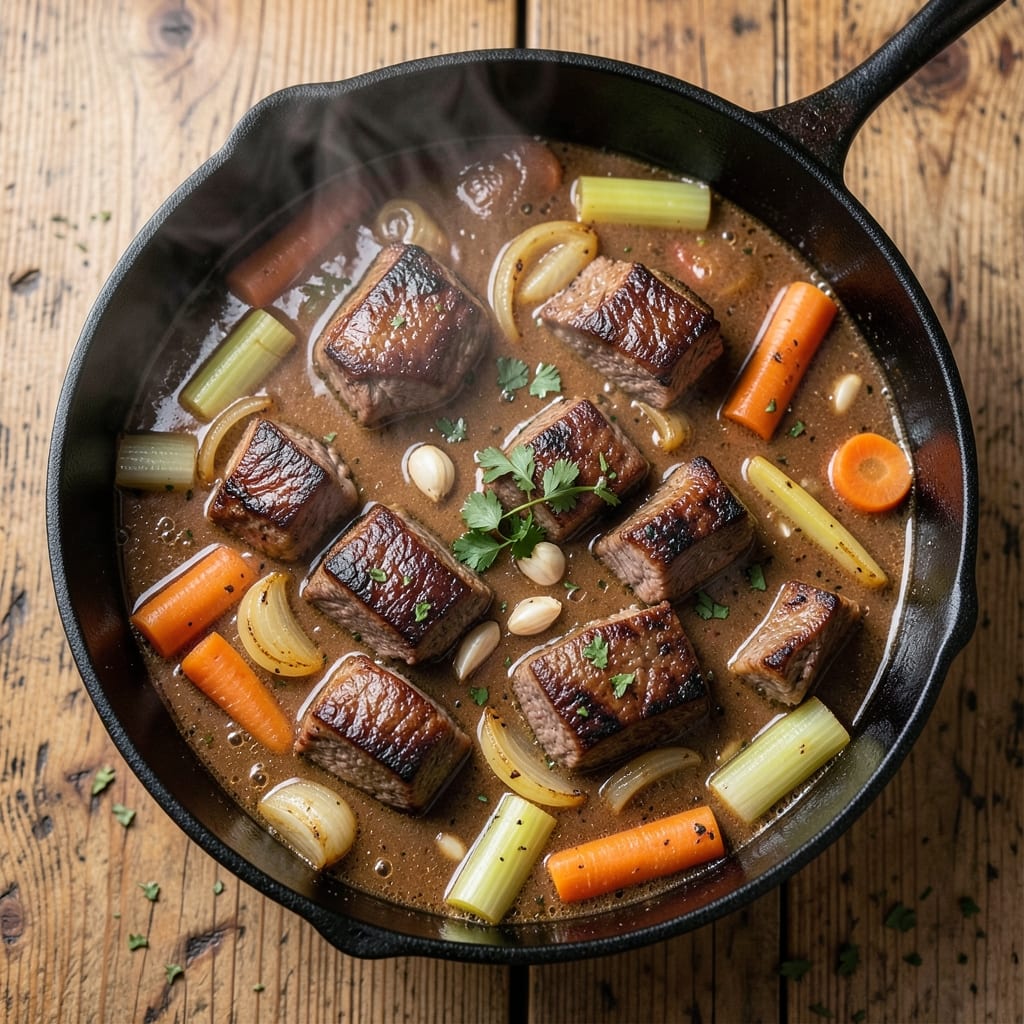
This beef and ale stew delivers restaurant-quality depth with perfectly braised beef and rich, caramelized ale reduction—exactly how Gordon Ramsay would make it. The secret lies in proper searing and slow braising, transforming tough cuts into melt-in-your-mouth tenderness while developing layers of umami flavor from the ale and aromatics.
What sets this recipe apart is the technique: browning the beef in batches creates a deep, flavorful crust that forms the foundation of the stew. Deglazing the pan with ale captures every bit of caramelized goodness, while slow cooking at low heat ensures the meat becomes fork-tender without drying out. The result is a hearty, aromatic stew that's perfect for cold evenings.
The final dish features tender beef chunks swimming in a velvety sauce with just the right balance of sweetness from the ale and savory depth from the vegetables. Each bite delivers that perfect combination of textures and flavors that makes this a standout comfort food. Serve with crusty bread to soak up every last drop of that rich, umami-packed sauce.
This method ensures you'll achieve professional-quality results at home, with all the depth and richness of a Michelin-starred restaurant dish. The key is patience and proper technique—once you master these, you'll have a stew that's impossible to resist. Let's get started on creating this heartwarming masterpiece.
Ingredients for beef and ale stew gordon ramsay
Restaurant-quality beef and ale stew starts with these carefully selected ingredients for deep umami flavor.
| Ingredient | Amount | Notes |
|---|---|---|
| Chuck Roast 🥩 | 2 lb | 2-inch cubes, trimmed of fat |
| Dark Ale 🍺 | 2 cups | Stout or porter preferred |
| Yellow Onion 🧅 | 1 whole | Large, peeled and quartered |
| Carrots | 4 medium | Peeled and cut into chunks |
| Garlic Cloves 🧄 | 4 cloves | Peeled and smashed |
| Celery Stalks 🥬 | 3 whole | Trimmed and chopped |
| Tomato Paste 🍅 | 2 tbsp | Smooth, not chunky |
| Beef Stock 🥄 | 2 cups | Homemade or high-quality |
| Fresh Thyme 🌿 | 2 sprigs | Stems removed |
| Bay Leaves 🌿 | 2 whole | Dried preferred |
| Olive Oil 🫒 | 2 tbsp | Extra-virgin for searing |
| All-Purpose Flour 🌾 | 2 tbsp | For thickening |
| Salt 🧂 | 1 ½ tsp | Kosher or sea salt |
| Black Peppercorns 🌶️ | 1 tsp | Freshly cracked |
| Worcestershire Sauce 🍶 | 1 tbsp | Vegan if needed |
The beef is everything here—chuck roast with good marbling is non-negotiable. Costco or Whole Foods carry excellent cuts, but any well-marbled chuck will work. Look for pieces with visible fat—this renders down during cooking, creating that rich sauce. The ale should be dark—Guinness, stout, or porter all work beautifully. If you can't find dark ale, substitute beef stock with a splash of soy sauce for umami depth. The tomato paste is key for that caramelized foundation—San Marzano if you're feeling fancy, but any smooth paste works.
No dark ale? Beef broth with 1 tbsp soy sauce mimics the depth perfectly. Fresh thyme is ideal, but dried works at half the amount. The Worcestershire sauce adds that signature umami punch—Lee & Perrins is the gold standard, but any quality brand suffices. For the vegetables, carrots and celery should be roughly chopped (no need to be precise), but the onion and garlic need to be cut evenly so they cook through without turning to mush. The beef stock can be homemade or a high-quality store-bought version—Kitchen Basics or Pacific Foods are reliable choices.
This stew tastes even better the next day as flavors meld. Store in an airtight container in the fridge for up to 5 days, or freeze portions for 3 months. For reheating, bring to a simmer on the stove—adding a splash of water or ale if the sauce has thickened too much. The crusty bread you'll serve with it? Baguette or sourdough, toasted until golden. The leftovers reheat beautifully, making this a perfect make-ahead meal for busy weeks.
Why You'll Love This Recipe
- One-Pot Magic: I swear by this—just brown the chuck roast, toss in onions and carrots, then pour the ale right over it. No extra pans, no fuss. The slow cooker or Dutch oven does all the work while I sip my tea.
- Ale’s Secret Weapon: That dark ale isn’t just flavor—it’s the star. It caramelizes into a glossy, rich sauce that clings to every bite. The garlic and onions deepen as they simmer, turning this into something restaurant-worthy without trying.
- Weeknight to Dinner Party: Make a double batch on Sunday, and you’ve got lunch, dinner, and leftovers covered. Serve it with crusty bread for casual nights or pair it with mashed potatoes and roasted veggies when company’s over. It’s that adaptable.
- Budget-Friendly Luxury: Chuck roast is cheap, but it tastes like a steakhouse cut after hours of slow cooking. The ale adds depth without breaking the bank, and the veggies stretch the meal into a full, hearty portion. My wallet and my family thank me every time.
Step-by-step instructions for beef and ale stew
Master this braising technique for tender beef and rich, malty ale sauce every time.
Sear the Chuck Roast for Deep Flavor
Pat the 2 lb chuck roast dry with paper towels and cut it into 2-inch cubes, trimming any excess fat. Heat 2 tablespoons olive oil in a heavy Dutch oven over medium-high heat until shimmering. Working in batches, sear the beef cubes for 2-3 minutes per side until they develop a deep brown crust. This step is crucial—it builds layers of flavor through the Maillard reaction.
As you sear, place the browned beef in a bowl and set aside. The residual heat will continue cooking the meat slightly, so don't overcrowd the pan. If the pan gets too full, reduce heat to medium to prevent steaming instead of searing. You're aiming for golden brown on all sides, not blackened edges.
Build the Aromatic Base
In the same Dutch oven, add 1 whole yellow onion (quartered), 4 medium carrots (cut into chunks), 3 whole celery stalks (chopped), and 4 cloves garlic (smashed). Cook for 5-6 minutes until the vegetables soften slightly and the onion becomes translucent. This process releases their natural sugars, which will caramelize and deepen the stew's flavor profile.
Stir in 2 tablespoons tomato paste and cook for 1 minute until it darkens slightly. This step develops a rich, umami base that balances the ale's bitterness. Sprinkle in 1.5 teaspoons salt and 1 teaspoon freshly cracked black peppercorns, then add 2 sprigs fresh thyme and 2 whole bay leaves. The herbs will infuse the liquid with aromatic complexity as the stew simmers.
Deglaze and Combine Liquids
Pour in 2 cups dark ale (stout or porter preferred) and scrape up all the browned bits from the bottom of the pot with a wooden spoon. This deglazing step captures all the caramelized flavors you've built. Let the mixture simmer for 3-4 minutes until the alcohol smell dissipates—this indicates the alcohol has cooked off and the flavors have melded.
Add 2 cups beef stock and 1 tablespoon Worcestershire sauce, then return the seared beef to the pot. Bring the liquid to a gentle boil, then reduce heat to low until small bubbles occasionally break the surface. This simmering temperature (180-190°F) is critical for tenderizing the beef without curdling the sauce.
Braise Until Tender
Cover the Dutch oven with a tight-fitting lid and transfer it to a 325°F oven. Braise for 2.5-3 hours, turning the beef cubes halfway through cooking time. The stew should reduce slightly, concentrating its flavors. You'll know the beef is tender when it easily pulls apart with a fork—this typically occurs when the internal temperature reaches 203°F at its thickest point.
Check the liquid level periodically. If it reduces too much, add ½ cup hot water or beef stock to maintain moisture. The sauce should coat the back of a spoon but not be watery. For the final 30 minutes, increase oven temperature to 350°F to thicken the sauce slightly and enhance its richness.
Thicken and Finish
Remove the stew from the oven and discard the thyme sprigs and bay leaves. Transfer the beef to a plate and skim any excess fat from the surface of the sauce. Return the beef to the pot and stir in 2 tablespoons all-purpose flour, whisking vigorously to combine. Simmer uncovered over medium heat for 5-7 minutes until the sauce thickens to your desired consistency.
Taste and adjust seasoning with additional salt or black pepper as needed. The final stew should have a velvety texture with deep umami notes from the ale, caramelized vegetables, and tender beef that practically melts in your mouth. Serve immediately with crusty bread or mashed potatoes to soak up every last drop of that rich sauce.
Pro Tips For Making Beef And Ale Stew Gordon Ramsay
- SEAR THE ROAST FIRST: After patting the chuck roast dry, hit it with a hot pan—no oil needed—until a deep crust forms. I used to skip this, thinking the ale would handle it, but that crust locks in flavor and keeps the meat from turning to shoe leather later.
- USE STALE ALE, NOT FRESH: Fresh ale is too bitter and carbonated—it’ll make your stew taste like a pub draft gone wrong. Grab a bottle that’s been open for 24 hours or use a non-alcoholic dark ale if you’re avoiding it. The older the better; it mellows out the sharpness.
- DON’T CROWD THE PAN: When browning onions and garlic, give them space—they’ll release moisture and steam instead of caramelizing. If they’re packed in, you’ll end up with sad, pale bits instead of deep, golden fond. Spread them out and let them sizzle.
- SIMMER LOW AND LONG: This isn’t a race—after the roast goes in, drop the heat to a gentle simmer and walk away. I learned this after rushing it and ending up with tough, stringy beef. Two hours at low heat is better than an hour at high.
Flavor customization for this recipe
Ale Substitutions
No dark ale? No problem. For a stout or porter substitute, try 2 cups beef broth mixed with 1 tablespoon soy sauce and ½ teaspoon liquid smoke for depth. If you prefer beer, a dark lager or amber ale works in a pinch—just add ½ teaspoon coffee granules to deepen the maltiness. 🍺
Spice Level Boost
Crank up the heat with 1 teaspoon smoked paprika and ½ teaspoon cayenne pepper during the aromatic base step. For a smoky kick, add ½ teaspoon chipotle powder when deglazing with ale. I love finishing with freshly cracked black pepper and a pinch of red pepper flakes right before serving.
Sweet-Savory Balance
Add 1 tablespoon brown sugar when building the aromatic base to complement the ale’s bitterness. For a caramelized twist, stir in 2 tablespoons tomato paste and cook it until dark brown before adding liquids. A splash of apple cider (½ cup) during braising adds subtle sweetness that pairs beautifully with the beef.
Herb Variations
Swap thyme for rosemary (2 sprigs) or sage (4 leaves) for an earthy depth. For a Mediterranean twist, add 1 teaspoon dried oregano and ½ teaspoon cinnamon when deglazing. Fresh herbs like parsley or cilantro brighten the dish at the end—just stir them in during the final 5 minutes of simmering.
Umami Enhancers
Boost umami with 1 tablespoon fish sauce or 1 teaspoon mushroom powder when deglazing. For extra richness, add 2 slices of bacon (cooked crispy) to the aromatic base—just remove them before adding the ale. A dash of balsamic vinegar (1 teaspoon) at the end adds complexity without overpowering.
Vegetable Swaps
Replace carrots with parsnips or sweet potatoes for a sweeter profile. Swap celery for leeks (white parts only) for a milder flavor. For a heartier stew, add 1 cup diced mushrooms (cremini or portobello) during the aromatic base step—they absorb the ale beautifully. 🥕
Nutrition facts
Frequently asked questions
Can I use a different cut of beef instead of chuck roast?
Yes, but choose wisely! Short ribs or brisket work beautifully—they're well-marbled and stay tender. Avoid lean cuts like sirloin, as they'll dry out during braising. If using short ribs, reduce cooking time to 2 hours since they cook faster than chuck roast.
How do I make this stew in a slow cooker?
Sear the beef first (critical for flavor), then transfer everything to the slow cooker. Cook on low for 7-8 hours or high for 4-5 hours. For thickening, mix 2 tablespoons cornstarch with 2 tablespoons cold water, stir into the stew during the last 30 minutes of cooking. The sauce will thicken as it cools.
Why did my stew turn out watery?
This usually happens from overcrowding the pan or not reducing the sauce enough. Always sear beef in batches to avoid steaming, and simmer uncovered for 10-15 minutes at the end to thicken. For extra richness, whisk in 1 tablespoon cold butter or 1 teaspoon cornstarch slurry before serving.
Can I prepare this stew ahead of time?
This stew tastes even better the next day as flavors meld. Store in an airtight container in the fridge for up to 5 days or freeze portions for 3 months. Reheat gently on the stove—never microwave—adding a splash of water or ale if the sauce thickens too much. The textures improve with resting!
What's the best way to serve this with bread?
Crusty baguette or sourdough are perfect for soaking up the rich sauce. Toast slices until golden, then serve warm alongside the stew. For extra flavor, rub the bread with garlic and olive oil before toasting. The contrast of crispy bread with velvety stew makes every bite unforgettable!