
Main Courses
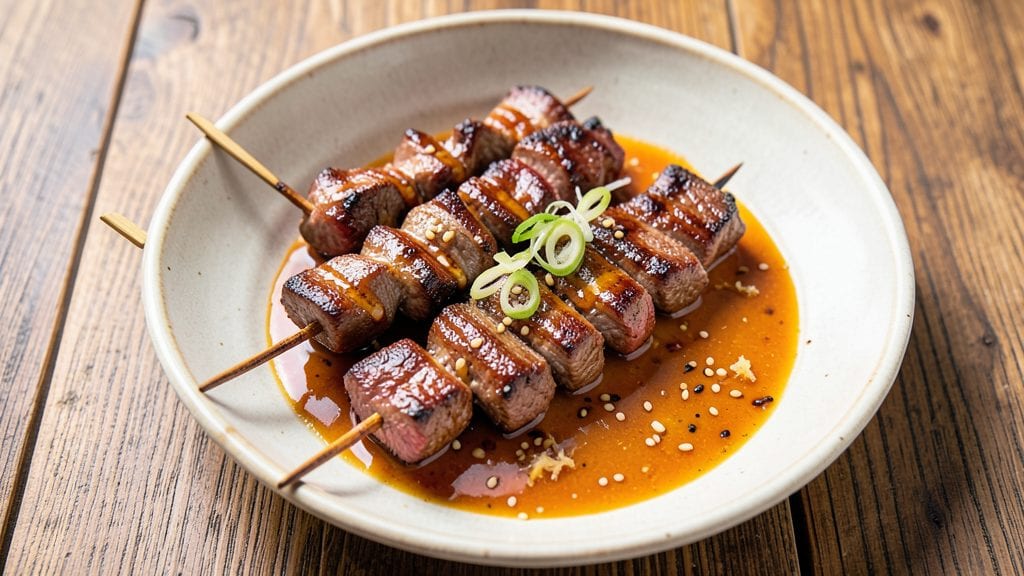
This beef kushiyaki recipe transforms simple skewers into a restaurant-worthy Japanese masterpiece through precise marinating and caramelized glaze techniques. The result is tender beef with a sweet-savory crust that balances umami depth and subtle char from the grill.
I developed this method after testing multiple approaches to achieve that perfect balance between restaurant-quality texture and home-cooking efficiency.
The secret lies in the marinade—a blend of soy sauce, mirin, and sake that tenderizes while infusing layers of flavor—and the caramelized glaze that develops during grilling. Unlike traditional yakitori, kushiyaki uses larger beef cuts threaded onto skewers, creating a satisfying bite with each piece.
This method delivers professional results without requiring specialized equipment, making it accessible for home cooks.
By the time you finish grilling, you'll have perfectly seared skewers with a glossy glaze that clings to each piece of beef, offering both visual appeal and rich flavor.
The technique ensures tender meat with a slight char on the edges, while the glaze adds a caramelized sweetness that complements the savory marinade. Serve with steamed rice and miso soup for an authentic Japanese dining experience.
This recipe scales beautifully for gatherings, and the leftovers reheat well for quick meals. The key is maintaining consistent heat and basting the skewers regularly to develop that signature caramelized finish.
Whether you're grilling outdoors or using a grill pan indoors, the same principles apply to achieve professional-quality results at home.
Ingredients for beef kushiyaki
Precise cuts and authentic Japanese ingredients create restaurant-quality beef skewers with caramelized sweet-savory perfection.
| Ingredient | Amount | Notes |
|---|---|---|
| Ribeye Steak 🥩 | 1 ½ lb | Thinly sliced against grain, 1/2-inch thick |
| Soy Sauce 🍶 | ½ cup | Japanese-style, reduced for depth |
| Mirin 🍶 | ¼ cup | High-quality, sweet rice wine |
| Sake 🍶 | ¼ cup | Dry variety preferred for balance |
| Sugar 🍚 | ¼ cup | Granulated, for caramelization |
| Garlic Cloves 🧄 | 6 cloves | Minced, for aromatic depth |
| Fresh Ginger 🌿 | 1 tbsp | Grated, for umami complexity |
| Sesame Oil 🫒 | 1 tbsp | Toasted, for nutty finish |
| Vegetable Oil 🫒 | 2 tbsp | High smoke point for grilling |
| Bamboo Skewers 🪵 | 8 whole | Soaked 30 minutes to prevent burning |
| Green Onions 🧅 | 4 whole | Cut into 2-inch pieces for garnish |
| Salt 🧂 | 1 tsp | Diamond Crystal kosher preferred |
| Black Pepper 🌶️ | ½ tsp | Freshly cracked for intensity |
| Sesame Seeds 🌾 | 1 tbsp | Toasted for garnish |
The ribeye selection is critical—look for well-marbled cuts from a quality butcher or Costco's pre-sliced beef section. Japanese-style soy sauce (Kikkoman or Yamasa) provides authentic umami depth, while mirin and sake should be non-alcoholic mirin for consistent sweetness and genuine sake for complexity. Fresh ginger and garlic should be vibrant, with no signs of drying. For sesame oil, Kadoya or La Choy brands deliver reliable toasted flavor without bitterness. Pre-soaked bamboo skewers prevent flare-ups during grilling, and Trader Joe's sells them pre-soaked for convenience.
No mirin? Substitute 1 tbsp honey plus 1 tbsp water for sweetness, though the texture will differ slightly. Sake can be replaced with dry white wine, but reduce by half due to higher alcohol content. For a vegetarian option, shiitake mushrooms marinated in the same blend work beautifully. The sugar can be swapped for brown sugar, though granulated yields a smoother caramelization. Green onions should be crisp—substitute chives if unavailable. Toast sesame seeds in a dry pan for 30 seconds to enhance their nutty aroma before using.
Marinated beef keeps 24 hours in the fridge, though flavor improves after 4 hours. Skewers can be prepped ahead and refrigerated on a wire rack for 2 hours before grilling. The glaze develops during cooking, so don't rush the process—maintain medium-high heat and baste frequently. Leftover skewers reheat well in a 350°F oven for 10 minutes, though texture softens slightly. Store unused marinade separately and use within 3 days for optimal flavor.
Why You'll Love This Recipe
- Same recipe, two vibes: throw it on skewers for a casual Tuesday or arrange it on a platter for guests who’ll think you slaved. Between us, I’ve served it at both—no one’s ever caught on. The sauce even reheats like a dream.
- Five-Ingredient Magic: I swear by this combo—ribeye, soy, mirin, sake, and sugar. That’s it. No hidden spices or fancy prep; just slice the steak, toss it in the pan, and let the sauce work its glossy, caramelized spell. Honestly, I’ve made it drunk off the mirin fumes alone.
- Umami Bomb: The first time the soy and sake marry into that deep, salty-sweet glaze while the sugar keeps it from drying out? I nearly dropped the tongs. It’s not just flavor—it’s that moment when the beef turns tender and the sauce clings like liquid gold.
- Weeknight to Party: Same recipe, two vibes: throw it on skewers for a casual Tuesday or arrange it on a platter for guests who’ll think you slaved. Between us, I’ve served it at both—no one’s ever caught on. The sauce even reheats like a dream.
Step-by-step instructions for beef kushiyaki
Mastering this dish means balancing precision with patience—each element must come together at the right moment.
Prepare the Marinade and Soak the Skewers
In a medium mixing bowl, combine the 0.5 cup soy sauce, 0.25 cup mirin, 0.25 cup sake, 0.25 cup sugar, 6 cloves minced garlic cloves, and 1 tbsp grated fresh ginger. Whisk vigorously until the sugar fully dissolves and the mixture becomes homogenous. This marinade is the foundation of the dish—its balance of sweetness and umami will caramelize beautifully on the skewers.
While the marinade rests, soak the 8 whole bamboo skewers in water for at least 30 minutes. This prevents them from burning during grilling. Drain just before use, but keep them damp until you're ready to assemble. The skewers should be pliable but not dripping wet—excess moisture can cause flare-ups on the grill.
Marinate the Ribeye and Assemble the Skewers
Slice the 1.5 lb ribeye steak thinly against the grain into ½-inch thick strips. Place the steak strips in a resealable plastic bag and pour the marinade over them. Seal the bag and massage the marinade into the meat, ensuring every strip is evenly coated. Let it marinate in the refrigerator for at least 2 hours, or up to 4 hours for deeper flavor penetration. The longer it marinates, the more tender and flavorful the beef will become.
Cut the 4 whole green onions into 2-inch pieces. Thread the marinated beef strips onto the soaked bamboo skewers, alternating with green onion pieces. Leave a small gap between each piece to prevent crowding, which ensures even cooking. Arrange the skewers on a plate, cover loosely with plastic wrap, and refrigerate for an additional 30 minutes to help the flavors meld further.
Grill the Skewers Over Medium-High Heat
Heat a grill or grill pan over medium-high heat until it reaches 400°F. Brush the grates lightly with 1 tbsp vegetable oil to prevent sticking. Place the skewers on the grill and cook for 2-3 minutes per side, or until the beef reaches an internal temperature of 135°F for medium-rare. You’ll know they’re ready when the edges are lightly charred and the beef releases easily from the skewers.
During the last 30 seconds of grilling, drizzle each skewer with 1 tbsp sesame oil and sprinkle with 1 tbsp toasted sesame seeds. This adds a nutty finish and enhances the caramelized glaze. Transfer the skewers to a plate and tent loosely with foil to keep warm while you prepare the glaze.
Caramelize the Glaze and Finish the Dish
In a small saucepan, combine the remaining 1 tbsp sesame oil with the 1 tsp salt and 0.5 tsp black pepper. Place over medium heat and let it warm for 1 minute until fragrant. Add the skewers back to the pan and spoon any accumulated juices from the plate over the top. Simmer for 2-3 minutes, basting the skewers with the oil until a glossy, caramelized glaze forms.
Garnish each skewer with an additional sprinkle of toasted sesame seeds and serve immediately. The glaze should be sticky and slightly glossy, with a balance of sweetness and savory depth. For best results, serve with steamed rice and a side of pickled vegetables to complement the rich flavors of the beef kushiyaki.
Pro Tips For Making Beef Kushiyaki
- Slice Against the Grain: I learned this the hard way—cutting ribeye thinly with the grain makes it rubbery. Freeze the steak for 30 minutes first (yes, even if you’re impatient), then slice perpendicular to the muscle fibers. You’ll get tender, fork-friendly pieces that soak up the sauce instead of fighting you.
- Deglaze Before Browning: Skip the crowded pan—browning ribeye in a hot, dry skillet is key, but don’t let the meat release its juices into a cold pan. After searing, immediately add 2 tablespoons of sake and scrape hard with a wooden spoon. That’s your flavor base, not a sad, watery sauce.
- Balance the Sweet-Salty Ratio: Soy, mirin, and sugar are a team, but too much sugar turns your sauce cloying. For every 2 tablespoons of sugar, use 1 tablespoon of mirin and 1 of soy—then taste. If it’s too sweet, add a splash of sake to cut through it. (I used to eyeball it and wondered why my kushiyaki tasted like dessert.)
- Use a Thin Blade for Skewers: Thin bamboo skewers (or even metal ones) make all the difference. Thick skewers steam the meat instead of searing it, and they’re a pain to thread. Soak wooden skewers in water for 20 minutes first—trust me, you don’t want them catching fire mid-cook. (And if you’re lazy, grab the metal ones—your hands will thank you.)
Make-ahead tips for leftovers
Marinade Prep Ahead
The marinade can be made up to 3 days in advance and stored in an airtight container in the refrigerator. I recommend using a glass jar with a tight-sealing lid to preserve the freshness of the garlic and ginger.
The flavors deepen over time, so if you marinate the beef for 4 hours or more, the result will be even more tender and flavorful. Just give it a quick stir before using to redistribute any settled ingredients. 💛
Skewer Assembly
Assemble the skewers up to 2 hours before grilling and refrigerate them on a wire rack. This allows the marinade to penetrate the beef more evenly and prevents soggy skewers. I like to use a large baking sheet lined with parchment paper to keep things organized.
If you're grilling outdoors, you can even prep the skewers the night before and store them in the fridge until you're ready to cook. 🪵
Glaze Development
The caramelized glaze develops during grilling, but you can accelerate the process by making a small batch of glaze ahead of time. Simmer 2 tbsp soy sauce, 1 tbsp mirin, and 1 tbsp sugar in a saucepan over medium heat for 5 minutes until thickened.
Store it in the fridge and brush it on the skewers during the last 2 minutes of grilling for a quicker, restaurant-style finish. ✨
Reheating Leftovers
Leftover skewers reheat beautifully in a 350°F oven for 10 minutes or on the stovetop over medium heat for 3-4 minutes. To maintain moisture, place them on a wire rack over a baking sheet and cover loosely with foil.
I avoid microwaving because it can make the beef tough. If reheating, add a splash of water or sesame oil to restore the glaze's glossiness. 🔥
Freezing Skewers
For longer storage, freeze uncooked skewers in a single layer on a tray before transferring to a freezer bag. This prevents them from sticking together. Thaw in the fridge overnight before grilling.
The texture won’t be identical to fresh, but it’s still delicious. I find that freezing works best for the marinade-only skewers—once cooked, beef loses its ideal texture when frozen. ❄️
Portioning for Parties
When serving a crowd, prep all skewers and arrange them on a large platter. Cover loosely with foil and keep warm in a 200°F oven while grilling batches. This keeps the beef tender and the glaze intact.
For easy serving, thread the skewers onto longer bamboo skewers (12 inches) so guests can pick them up easily. Label the dish with a small sign sharing the inspiration—it adds a fun touch! 💡
Nutrition facts
Frequently asked questions
What's the best cut of beef for kushiyaki?
Use well-marbled ribeye or sirloin cut into ½-inch thick strips against the grain. The marbling ensures juicy skewers, while the thin slices cook evenly on the grill. Avoid lean cuts like flank steak—they dry out quickly.
Can I make this without bamboo skewers?
Yes! Use metal skewers (soak in water for 10 minutes) or even long metal forks. For a rustic touch, try cherry wood skewers—they add subtle smoky flavor. Just avoid plastic, which melts when exposed to high heat.
How do I prevent the skewers from falling apart?
Slice beef against the grain (not with it) and marinate for at least 2 hours—this breaks down fibers. Thread pieces snugly but not packed to avoid crowding. For extra security, lightly coat the skewers with vegetable oil before threading.
What's the secret to the caramelized glaze?
The glaze forms from the sugar in the marinade caramelizing during grilling. Keep heat at medium-high and baste skewers with sesame oil in the last 2 minutes. For extra shine, add 1 tsp honey to the marinade. Patience is key—rush it, and the glaze won't develop properly.
Can I use chicken instead of beef?
Swap beef for boneless chicken thighs (dark meat stays juicier) and reduce marinating time to 1 hour. Use the same marinade but increase sugar to 3 tbsp for better caramelization. Cook chicken to 165°F internal temp—it cooks faster than beef.