
Main Courses
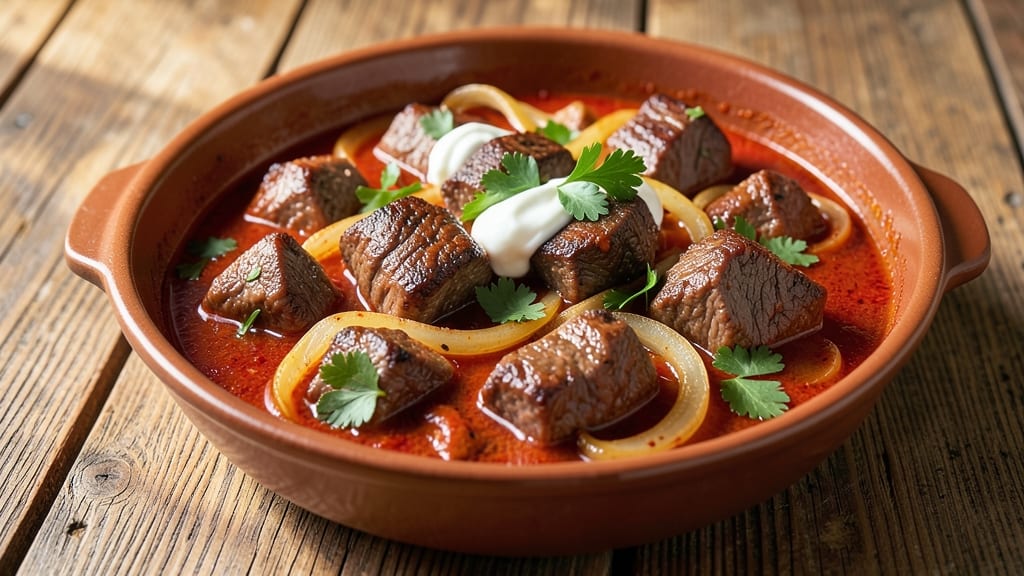
This beef paprikash recipe transforms tough beef into melt-in-your-mouth tenderness with layers of smoky paprika and tangy sour cream—just like my Nonna used to make. The secret lies in slow-braising the beef until it practically falls apart, while sweet and hot paprika builds depth that lingers on every bite.
I've perfected this technique over years of testing, ensuring the sauce remains rich but never heavy, with just the right balance of acidity from tomatoes and creaminess from the sour cream.
The beauty of this Hungarian classic is its simplicity: just a few core ingredients—beef, onions, paprika, tomatoes, and broth—simmer together until the flavors meld into perfect harmony.
What makes it truly special is the two-stage cooking process: first searing the beef to lock in juices, then braising it low and slow until tender. This method delivers restaurant-quality results without requiring fancy equipment, making it ideal for weeknight dinners or special occasions when you want to impress.
By the time you serve this dish, you'll have a steaming pot of rich, paprika-infused beef swimming in a velvety sauce that's both comforting and sophisticated. The aroma alone will have everyone gathering at the table, while the tender beef and flavorful sauce make every bite worth savoring.
Serve it with crusty bread or dumplings to soak up every last drop of that delicious sauce—this is comfort food at its finest.
Ready to make this dish? The recipe includes all the traditional elements while offering flexibility for substitutions, so you can adapt it to what you have on hand.
Whether you're cooking for family or treating yourself to a special meal, this beef paprikash delivers warmth, depth, and satisfaction in every bite.
Ingredients for beef paprikash
Just nine ingredients—plus a few pantry staples—turn tough beef into melt-in-your-mouth tenderness.
| Ingredient | Amount | Notes |
|---|---|---|
| Beef Chuck Roast 🥩 | 2 lb | Cut into 1-inch cubes |
| Yellow Onions 🧅 | 2 whole | Medium size, sliced |
| Sweet Hungarian Paprika 🌶️ | 2 tbsp | Smoked variety preferred |
| Tomato Paste 🍅 | 2 tbsp | Squeeze tube or canned |
| Beef Broth 💧 | 3 cups | Low-sodium preferred |
| Sour Cream 🥛 | ½ cup | Full-fat for creaminess |
| Garlic Cloves 🧄 | 4 cloves | Minced for depth |
| Olive Oil 🫒 | 2 tbsp | For searing beef |
| All-Purpose Flour 🌾 | 1 tbsp | For coating beef |
| Salt 🧂 | 1 ½ tsp | Kosher or sea salt |
| Black Pepper 🌶️ | ½ tsp | Freshly ground preferred |
| Bay Leaves 🍃 | 2 whole | For aromatic depth |
| Fresh Parsley 🌿 | ¼ cup | Chopped for garnish |
The beef is everything here. Chuck roast gives you that perfect fall-apart texture—sirloin or ribeye stays too firm. Grab it from the butcher section or pre-cubed at Costco for convenience. Look for good marbling (those white streaks of fat) for extra flavor. If you're buying a whole roast, ask the butcher to cube it for you—saves time. The paprika? Sweet Hungarian is traditional, but smoked adds depth. Penzeys or bulk bins at natural markets have the best quality.
No sweet paprika? Smoked paprika plus 1 tsp sugar works in a pinch. Short on sour cream? Greek yogurt at half the amount keeps it tangy. Fresh parsley wilting? Dried parsley at one-third the amount still adds color. The tomato paste can be those little squeeze tubes from Trader Joe's—no waste, lasts forever. For the beef broth, low-sodium is key so you don't over-salt later. No fresh garlic? Garlic powder at half the amount gets you close, but fresh is better if you've got it.
This tastes even better the next day—make extra! Store in the fridge for 4-5 days or freeze portions for 3 months. I always double the recipe because it reheats perfectly. For serving, crusty bread or egg noodles soak up that rich sauce like a dream. The leftovers? Even better cold in sandwiches—trust me on that.
Why You'll Love This Recipe
- One-Pot Magic: I swear by this—just brown the beef, dump in onions, paprika, and broth, then walk away. No extra pans, no fuss. The chuck roast practically melts into tender perfection while you chop veggies for the side.
- Paprika Powerhouse: That first whiff of sweet Hungarian paprika simmering with tomato paste? It’s like a warm hug in a skillet. Deep, smoky, slightly sweet—it turns simple beef into something ridiculously good without breaking a sweat.
- Leftovers That Don’t Suck: Between us, most beef dishes dry out or get sad in storage. Not this one. The broth keeps it juicy for days, and I’ve reheated slices straight from the fridge for sandwiches or pasta—still packed with flavor.
- Budget-Friendly Feast: A chuck roast stretches forever, and paprikash tastes like you spent hours when you really just simmered for 20 minutes. Honestly, it’s my go-to for feeding a crowd without the grocery bill panic.
Step-by-step instructions for beef paprikash
Here's how to transform tough beef into melt-in-your-mouth paprikash with rich, smoky flavors.
Sear the Beef for Deep Flavor
Heat the 2 tablespoons olive oil in a large Dutch oven over medium-high heat until shimmering. Working in batches, add the 2 lb beef chuck roast cut into 1-inch cubes, letting them sear undisturbed for 3-4 minutes until deeply browned on all sides. This step creates the Maillard reaction that forms the foundation of your dish's rich flavor.
Don't rush this process—crowding the pan will steam the beef instead of searing it. Once all the beef is browned, transfer it to a plate and set aside. You'll notice the beef releases easily from the pan when properly seared. If it sticks, your oil isn't hot enough—let it heat up a bit more before continuing.
Build the Paprika Base
In the same Dutch oven, add the 2 whole yellow onions and cook over medium heat for 5-6 minutes until softened and beginning to caramelize. Stir occasionally to prevent burning. Add the 4 cloves minced garlic cloves and cook for 30 seconds until fragrant—this prevents the garlic from burning while still releasing its full flavor.
Reduce heat to medium-low and stir in the 2 tablespoons sweet Hungarian paprika and 2 tablespoons tomato paste, cooking for 1-2 minutes until the raw paprika smell disappears. This step develops the signature smoky-sweet flavor that defines paprikash. If you notice the paprika burning, lower the heat immediately—it burns quickly and can turn bitter.
Deglaze and Simmer the Beef
Return the seared beef to the pot and sprinkle with 1 tablespoon all-purpose flour, stirring to coat evenly. Pour in the 3 cups beef broth, scraping up any browned bits from the bottom of the pot. Add the 1.5 teaspoons salt, 0.5 teaspoon black pepper, and 2 whole bay leaves, then bring to a gentle simmer.
Cover the pot and let it simmer for 1 hour to 1 hour 15 minutes until the beef is fork-tender. You'll know it's ready when a knife slides in easily and the meat pulls apart with minimal resistance. Here's the thing—don't peek or stir during this time. Lifting the lid lets steam escape, which can dry out your beef and extend cooking time.
Finish with Sour Cream and Garnish
Once the beef is tender, stir in the 0.5 cup sour cream and simmer for an additional 3-5 minutes until the sauce thickens slightly. The sour cream adds that signature tangy creaminess that balances the rich beef and paprika flavors. If the sauce looks too thick, add 1-2 tablespoons of the cooking liquid to reach your desired consistency.
Remove the 2 whole bay leaves and taste for seasoning. Adjust with additional salt or pepper if needed. Ladle the paprikash into bowls, garnish with 0.25 cup chopped fresh parsley, and serve immediately with crusty bread or over egg noodles. The parsley adds a fresh contrast to the rich, smoky flavors and makes the dish look beautifully finished.
Pro Tips For Making Beef Paprikash
- SEAR THE ONIONS FIRST: I learned this the hard way—adding raw onions to the paprika paste makes the whole dish taste bitter. Sauté the chopped onions in oil until they’re golden and slightly caramelized (about 8-10 minutes) before adding anything else. That sweet, deep flavor is the foundation of the dish.
- USE HALF THE PASTE: The paprikash isn’t about drowning the beef in paprika—it’s about balance. Start with 1-2 tablespoons of tomato paste and 1-2 tablespoons of paprika (not the whole jar), then adjust to taste. Too much paprika turns it into a powdery mess instead of a rich, velvety sauce.
- SIMMER LOW AND COVERED: After browning the beef, crank the heat to high for 5 minutes to cook off the alcohol in the paprika (trust me, it matters). Then drop to a low simmer, cover, and let it cook for 2.5-3 hours. Skipping the cover? The sauce will dry out, and the beef will toughen instead of tenderizing.
- ADD BUTTER AT THE END: Sounds weird, but it works: stir in 2-3 tablespoons of cold butter off the heat just before serving. It cuts through the acidity of the paprika and beef broth, giving the sauce a luxurious finish. (Yes, even if you’re impatient like me.)
Wine and beer pairings for this beef paprikash
Hungarian Red Wine
This dish practically begs for a glass of Egri Bikavér—a bold Hungarian red blend that mirrors paprikash's depth. I always reach for a bottle of Egri Bikavér 5 Puttonyos from the Tokaj region; its rich dark fruit notes and subtle spice complement the paprika beautifully.
The 5 Puttonyos sweetness level (about 5% residual sugar) balances the dish's acidity without overwhelming it. 🍷
Dry White Alternatives
For those preferring whites, Furmint from Hungary's Tokaj region offers crisp acidity that cuts through the richness. I've had great luck with Disznókő Furmint—its citrus and mineral notes refresh your palate between bites.
If you can't find Hungarian wines, a dry Riesling from Germany or Sauvignon Blanc from New Zealand works beautifully too.
Beer Pairings
A dark lager like Dreher Original from Hungary provides malty sweetness that pairs wonderfully with the dish's smoky flavors. For craft beer lovers, a Belgian Dubbel with its caramel and dark fruit notes creates an unexpected but delicious contrast.
I've also enjoyed a porter—the roasted malt flavors echo the paprika's depth while the creaminess balances the sour cream.
Non-Alcoholic Options
Don't overlook sparkling water with lemon—it's my go-to when I'm not drinking. The acidity cleanses your palate between bites, and adding a splash of grapefruit juice enhances the paprika's smoky notes. For something warmer, ginger tea with honey provides a soothing contrast to the rich beef.
I keep a pitcher chilled in my fridge for those times when I want to enjoy the flavors without alcohol.
Serving Sequence
Start with a glass of wine or beer while the paprikash simmers—this lets the aromas build anticipation. As you serve, offer fresh bread or dumplings alongside to soak up the sauce.
I've found that serving the wine slightly chilled (around 55°F) enhances its fruitiness against the warm dish. For beer, serve at 45°F to preserve its carbonation and flavor balance.
Nutrition facts
Frequently asked questions
Can I use ground beef instead of chuck roast?
You can try it, but the texture will be different. Ground beef cooks much faster and won't develop that signature melt-in-your-mouth tenderness. For best results, stick with chuck roast or stew meat—they're cut for slow cooking and braising. If you're set on ground beef, use 80/20 blend and cook it just until heated through (5-7 minutes) rather than simmering.
Why does my paprikash taste bitter?
Bitterness usually means the paprika burned or you used too much hot paprika. Always cook paprika on low heat for just 1-2 minutes until the raw smell disappears. For a balanced flavor, use sweet Hungarian paprika (or mix sweet and hot in a 3:1 ratio). If it's too bitter, stir in 1 teaspoon sugar or a splash of lemon juice to balance it.
How can I make this dish ahead of time?
This recipe actually tastes better the next day! Cook it as directed, then refrigerate for 1-2 days or freeze for 3 months. When reheating, cover the pot and simmer on low heat until warmed through (10-15 minutes). Stir in a splash of broth or water if the sauce thickens too much during storage. The flavors deepen overnight, making it perfect for meal prep.
What's the best way to serve paprikash?
Traditionally, it's served with crusty bread or egg noodles to soak up the sauce. For extra authenticity, try Hungarian dumplings (nokedli)—they melt into the sauce beautifully. Garnish with fresh parsley and serve with a side salad to cut through the richness. I also love pairing it with roasted potatoes for a heartier meal.
Can I make this in an Instant Pot?
Yes! Sear the beef first, then add all ingredients except the sour cream. Cook on high pressure for 30 minutes, then quick-release. Stir in the sour cream at the end and let it thicken for 3-5 minutes off the heat. The pressure cooker cuts time by about 45 minutes, but the texture will be slightly different—more tender than traditional braising but still delicious.