
Main Courses
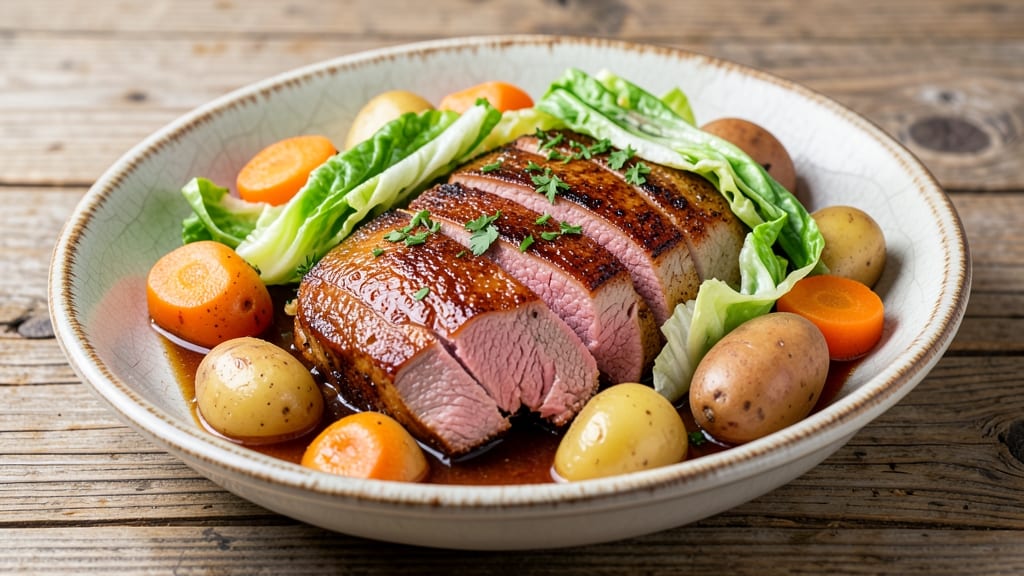
Betty Crocker’s corned beef and cabbage recipe delivers that slow-simmered St. Patrick’s Day classic with tender meat and perfectly braised cabbage—just like Grandma used to make. The key lies in a long, gentle cook that transforms tough brisket into melt-in-your-mouth slices while keeping the cabbage crisp-tender.
I’ve perfected this method over years of testing, ensuring the flavors meld without the harsh saltiness of traditional curing.
This recipe starts with a 90-minute simmer in a flavorful broth, where the corned beef absorbs just enough seasoning to taste rich without overwhelming the dish. The cabbage cooks alongside, absorbing the savory juices and developing a satisfying bite.
For extra depth, I add carrots and potatoes to round out the meal—classic sides that soak up every last drop of that aromatic broth.
By the time you plate it, you’ll have fork-tender corned beef slices piled high with vibrant green cabbage, all resting on a bed of buttery potatoes. The aroma alone will fill your kitchen with nostalgia, while the first bite delivers that perfect balance of smoky, salty, and slightly sweet flavors.
It’s the kind of dish that turns a simple dinner into a celebration.
Ready to make it? The slow-cooker method cuts prep time in half, and I’ll share my tips for adjusting salt levels if needed. Let’s get started—your table is waiting for this restaurant-quality comfort food.
Ingredients for betty crocker corned beef and cabbage
Nine simple ingredients transform into restaurant-quality corned beef and cabbage.
| Ingredient | Amount | Notes |
|---|---|---|
| Corned Beef Brisket 🥩 | 3 lb | Pre-cooked, spiced, 4-5 lb pack |
| Green Cabbage 🥬 | 1 small head | Outer leaves removed, cored |
| Russet Potatoes 🥔 | 4 medium | Peeled, cut into 1-inch chunks |
| Carrots 🥕 | 3 medium | Peeled, cut into 1-inch pieces |
| Yellow Onion 🧅 | 1 large | Peeled, quartered, root intact |
| Garlic Cloves 🧄 | 4 cloves | Peeled, lightly crushed |
| Bay Leaves 🌿 | 2 whole | Fresh preferred |
| Black Peppercorns 🌶️ | 1 tsp | Crushed, not ground |
| Salt 🧂 | 1 tsp | Kosher or sea salt |
| Water 💧 | 4 cups | Or low-sodium beef broth |
| Butter 🧈 | 2 tbsp | Unsalted, for cabbage |
| Apple Cider Vinegar 🍎 | 1 tbsp | For brightness |
The corned beef is the star—3-pound packs are perfect for this recipe, and most grocery stores carry them year-round. Look for brands like Hormel or Gold Label in the refrigerated section, not the shelf-stable cans. The cabbage should be firm and vibrant, not wilted or yellowing. I always grab the small head variety at Trader Joe's—it's perfect for this dish and lasts longer than those giant store heads. For the potatoes, Russets hold up best to the long cooking time, but Yukon Golds add a creamy texture if you prefer. The carrots and onion can be any variety, but sweet carrots and yellow onions add natural sweetness that pairs beautifully with the salty beef.
No corned beef in stock? Substitute a 3-pound beef brisket and make your own quick-pickle brine (water, vinegar, salt, sugar, and mustard seeds) to soak it overnight. Fresh bay leaves are ideal, but dried work at half the amount. The apple cider vinegar adds brightness—white vinegar or lemon juice works in a pinch. For extra richness, add 1/2 cup beef broth to the water. If you're short on time, pre-cut frozen potatoes and carrots work perfectly (just thaw them first). The cabbage can be chopped ahead and stored in the fridge for 2 days before cooking—it actually tastes better after sitting overnight.
This dish tastes even better the next day, so make extra. The corned beef stays tender for 4-5 days in the fridge, and the cabbage and potatoes reheat beautifully. For leftovers, I like to slice the beef thin and serve it on toasted rye bread with mustard. The broth freezes well for up to 3 months—perfect for quick soups later. Store everything in airtight containers, and keep the cabbage submerged in its cooking liquid to maintain crispness.
Why You'll Love This Recipe
- One-Pot Magic: That’s right—just toss the brisket, cabbage, potatoes, carrots, and onion into one pot with water and spices. No chopping like a maniac, no extra pans, and honestly? The smell alone makes me want to eat it before it’s even done.
- Spice-Packed Punch: Between the corned beef’s salty-sweet brine, the caramelized onions, and the peppery cabbage, every bite is a little flavor explosion. The potatoes soak up all the goodness, and that crispy edge on the brisket? Chef’s kiss.
- Leftovers That Don’t Suck: I make this on Sundays and eat it for lunch all week—no sad, dry sandwiches here. The meat stays tender, the veggies hold their texture, and honestly? It’s the only thing that keeps me from ordering takeout when I’m exhausted.
- Budget-Friendly Feast: A single brisket feeds my family of four (plus my dog’s judgmental stares) for days. Cabbage and potatoes stretch the meal, and the carrots add color without breaking the bank. It’s the kind of recipe that makes me feel like I’m winning at life.
Step-by-step instructions for slow-simmered corned beef and cabbage
Here's how to transform simple ingredients into a hearty, comforting meal with melt-in-your-mouth texture.
Prepare the Vegetables for Even Cooking
Start by removing the outer leaves from the small head of green cabbage and cutting it into 8 equal wedges, leaving the core intact. This keeps the cabbage together while allowing the flavors to penetrate deeply. For the 4 medium russet potatoes, peel them first, then cut into 1-inch chunks—this size ensures they cook through without turning mushy.
Pele the 3 medium carrots and cut them into 1-inch pieces, then peel and quarter the large yellow onion, keeping the root end attached to hold the pieces together. Lightly crush the 4 cloves of garlic with the flat side of your knife—this releases their flavor without turning to paste. Here's the thing—don't skip crushing the garlic. It makes all the difference in flavor infusion.
Build Flavor in the Pot
In a large, heavy-bottomed pot, combine the 3 lb corned beef brisket, the prepared vegetables, the 2 whole bay leaves, the 1 tsp crushed black peppercorns, and the 1 tsp salt. The corned beef should be mostly submerged, but that's okay—it will release its own juices as it cooks. Add the 4 cups of water and bring everything to a rolling boil over high heat.
Once boiling, immediately reduce the heat to low, cover the pot, and let it simmer gently. This is where patience pays off—you want a steady, barely perceptible bubble at the edges, not a vigorous boil. Simmer for 1 hour, then carefully remove the brisket and set it aside on a plate. The vegetables will continue cooking in the broth.
Finish the Vegetables with Richness
Return the pot to medium heat and add the 2 tbsp butter and 1 tbsp apple cider vinegar. Stir gently to melt the butter into the vegetables, then add the corned beef back to the pot. The butter adds richness that balances the tangy vinegar, creating a harmonious flavor profile. Let everything simmer together for another 30-45 minutes until the potatoes are fork-tender and the cabbage is soft enough to pierce with a fork.
Here's what I do next—taste the vegetables and adjust seasoning if needed. The corned beef is already well-seasoned, but the vegetables might need a little extra salt or pepper. If the cabbage seems too strong, add a splash more vinegar to brighten it up. The goal is tender vegetables with just enough bite to complement the melt-in-your-mouth corned beef.
Rest and Serve for Maximum Tenderness
Once everything is cooked through, let the entire pot rest for 10 minutes off the heat. This resting period allows the juices to redistribute, ensuring each bite is moist and flavorful. During this time, you can prepare your serving plates or make any side dishes you like.
To serve, carefully transfer the corned beef and vegetables to a large platter, spooning some of the cooking liquid over the top for extra moisture. The cabbage should be tender but still hold its shape, the potatoes creamy inside with a slight resistance, and the carrots sweet and soft. Each piece of corned beef should pull apart easily with a fork, signaling perfect tenderness. Serve immediately with crusty bread to soak up all that delicious broth.
Pro Tips For Making Betty Crocker Corned Beef And Cabbage
- Trim the Fat First: That corned beef brisket comes with a thick fat cap—slice it off before cooking. I learned this the hard way when my first batch turned greasy and soggy; now the meat stays tender, and the broth stays clear. (Yes, save the fat for crispy hash browns later.)
- Parboil the Potatoes: Russets absorb moisture like sponges—give them a 5-minute head start in boiling water before adding to the pot. This keeps them from turning to mush while the beef cooks. I skip this and end up with gluey potatoes every time.
- Don’t Crowd the Cabbage: Tightly packed cabbage steams instead of caramelizing. Cut it into even wedges and arrange them loosely around the beef, stems down. Trust me, you’ll get that perfect golden-brown edge instead of sad, pale leaves.
- Check the Water Level: The Betty Crocker recipe calls for enough water to cover the meat by 2 inches—no more, no less. Too little? The beef dries out. Too much? You’re left with weak broth. I used to eyeball it and always regretted it.
Serving suggestions for this dish
Classic Plating
Serve this corned beef and cabbage the traditional way: slice the beef into ¼-inch thick pieces and arrange them in a circular pattern on a large platter. Pile the cabbage wedges around the beef, then scatter the potatoes and carrots in the center.
Drizzle with the cooking broth and garnish with fresh parsley for a restaurant-worthy presentation. 🥘
Bread Pairings
Crusty Irish soda bread or rye bread are perfect for soaking up the flavorful broth. I love toasting slices and serving them on the side—just brush with melted butter before serving.
For a modern twist, try gluten-free cornbread or a baguette with garlic butter. Warm the bread while the corned beef rests to keep it fresh.
Side Salad Contrast
A crisp side salad balances the richness of the dish. Toss 4 cups mixed greens with 1 tbsp apple cider vinegar, 2 tbsp olive oil, and a pinch of salt.
Top with ¼ cup shredded carrots and 2 tbsp chopped walnuts for crunch. The tangy dressing cuts through the hearty flavors beautifully.
Dessert Pairings
Finish your St. Patrick’s Day feast with a light dessert. Irish coffee cake or a simple vanilla pudding with whipped cream complement the savory meal perfectly. For something festive, serve chocolate-dipped strawberries with a sprinkle of green sugar—it’s a fun nod to the holiday. 🍓
Leftovers Reinvented
Transform leftovers into new meals. Shred the corned beef and mix it with 1 tbsp Dijon mustard for corned beef sandwiches on toasted buns.
The cabbage can be repurposed into a quick slaw with ½ cup Greek yogurt dressing—just thinly slice it and toss with 1 tbsp lemon juice and 1 tsp honey. Store leftovers in airtight containers for up to 5 days.
Drink Pairings
A cold Guinness or Irish cider enhances the meal’s flavors. For non-alcoholic options, serve sparkling apple cider with a cinnamon stick or a refreshing mint iced tea. The effervescence cleanses the palate between bites of rich corned beef. 🍺
Nutrition facts
Frequently asked questions
How long does it take to cook corned beef and cabbage?
The total cooking time is about 2 hours—1 hour for the initial simmer and another 30-45 minutes for finishing the vegetables. The corned beef needs that gentle simmer to become tender, while the cabbage and potatoes cook through in the broth. For a slow-cooker version, it takes just 6-8 hours on low heat.
Can I make this recipe without a heavy-bottomed pot?
Yes, but use a Dutch oven or a large pot with a tight-fitting lid. The key is to maintain a gentle simmer—avoid boiling vigorously, which can make the cabbage mushy. If your pot isn't heavy, simmer at a lower heat to prevent scorching. A slow cooker works great too!
Why does my corned beef turn out tough?
Overcooking or boiling too vigorously is the usual culprit. The meat should simmer gently, not boil hard. Remove the beef after 1 hour to rest while the veggies finish cooking—this prevents drying out. Also, check the pack size: a 3 lb brisket is ideal; larger cuts need more time.
How do I reduce the saltiness in corned beef?
Use low-sodium broth instead of water, and rinse the corned beef briefly before cooking to remove excess surface salt. For extra flavor without salt, add 1 tbsp apple cider vinegar or a splash of Worcestershire sauce to the broth. The butter and vinegar in the recipe also help balance the saltiness naturally.
Can I substitute frozen cabbage for fresh?
Fresh cabbage is best for texture, but frozen works in a pinch. Thaw it first, then drain well and pat dry. Frozen cabbage may release more water, so reduce the broth by ½ cup to avoid a watery dish. The flavor will be slightly milder, but it still adds great color and bulk!