
Soups & Stews
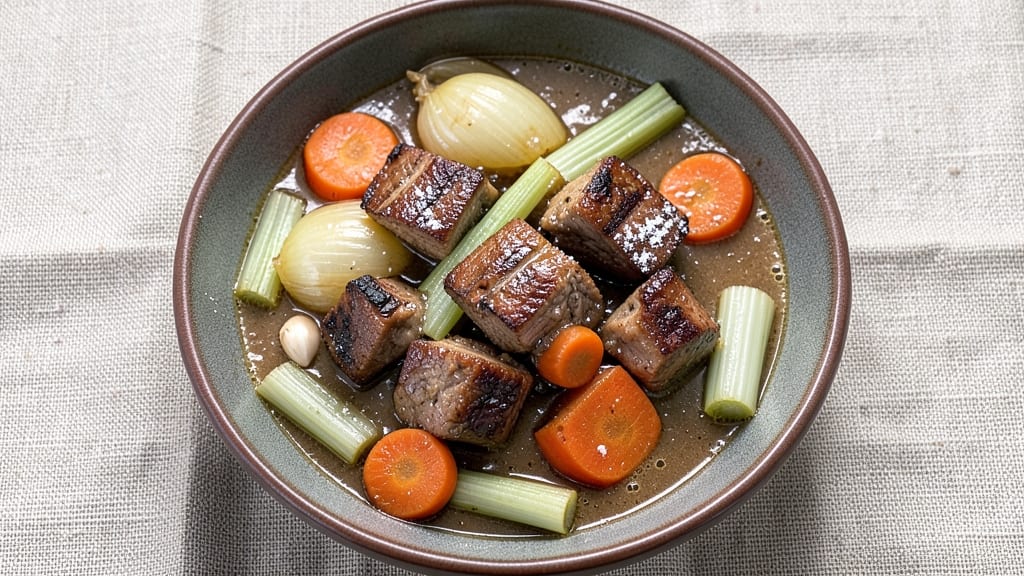
Betty Crocker's old-fashioned beef stew recipe delivers the deep, rich flavors of classic American comfort food without requiring an all-day simmer. The secret lies in proper meat browning and layered seasonings—techniques that build complexity over time while keeping the process manageable for modern kitchens.
I've refined this version to achieve restaurant-quality results in just 3 hours, including prep, while maintaining the hearty, satisfying texture that makes stew a family favorite.
What sets this stew apart is the balance of tender beef, caramelized vegetables, and a velvety broth that develops as it cooks.
Unlike quick versions that rely on shortcuts, this recipe uses a precise method of browning the beef in batches to create flavorful fond, then simmering it slowly to melt the meat into the broth.
The result is a dish that's deeply comforting yet approachable—perfect for weeknight dinners or holiday gatherings where tradition meets convenience.
The final product features fork-tender beef chunks, perfectly softened root vegetables, and a sauce thickened naturally by the cooking process. Each spoonful delivers a harmonious blend of savory, slightly sweet, and umami-rich flavors that define classic beef stew.
The aroma alone transforms any kitchen into a cozy gathering spot, making this a recipe worth perfecting for those who appreciate both tradition and efficiency.
Whether you're serving a crowd or meal prepping for the week, this stew scales beautifully while maintaining its rich, satisfying qualities. Pair it with crusty bread or over mashed potatoes to soak up every last drop of that flavorful broth.
Ready to experience the timeless appeal of old-fashioned beef stew with a modern twist? Let's get started with the ingredients and instructions that bring this classic to life.
Ingredients for betty crocker old fashioned beef stew
Sixteen ingredients, three hours, restaurant-quality beef stew without the all-day commitment.
| Ingredient | Amount | Notes |
|---|---|---|
| Chuck Roast 🥩 | 3 lb | Trimmed of excess fat, cut into 1.5-inch cubes |
| Yellow Onions 🧅 | 2 whole | Medium size, chopped into 0.5-inch pieces |
| Carrots 🥕 | 4 whole | Medium size, peeled and cut into 1-inch chunks |
| Celery Stalks 🌿 | 4 whole | Fresh, cut into 0.5-inch pieces |
| Garlic Cloves 🧄 | 6 cloves | Fresh, minced finely |
| All-Purpose Flour 🌾 | 1 tbsp | For thickening the stew |
| Beef Broth 💧 | 6 cups | Low-sodium preferred, homemade or high-quality |
| Red Wine 🍷 | 1 cup | Dry red, such as Cabernet Sauvignon |
| Tomato Paste 🍅 | 2 tbsp | Smooth, for depth of flavor |
| Thyme Sprigs 🌿 | 2 whole | Fresh, stems removed |
| Bay Leaves 🍃 | 2 whole | Dried, standard size |
| Black Peppercorns 🌶️ | 1 tsp | Freshly cracked, coarse grind |
| Salt 🧂 | 1 ½ tsp | Diamond Crystal kosher salt |
| Unsalted Butter 🧈 | 2 tbsp | For finishing, cold |
| Fresh Parsley 🌿 | ¼ cup | Chopped, for garnish |
The chuck roast is non-negotiable for authentic texture—Costco's pre-cut chuck saves time, but if buying whole, ask your butcher for well-marbled cuts. Trader Joe's carries excellent beef broth in their frozen section, ideal for depth of flavor. For the red wine, Cabernet Sauvignon delivers the right balance of acidity and tannins, but Merlot works too if that's what's open. Fresh thyme and bay leaves elevate the dish beyond basic seasoning—Penzeys sells premium dried herbs if fresh isn't available, though fresh is always preferred for this classic preparation.
No red wine? Substitute an additional 1 cup beef broth with 1 tbsp balsamic vinegar for acidity. The tomato paste can be omitted entirely if you prefer a more traditional approach, though it adds a subtle sweetness that complements the beef. For the vegetables, frozen carrots and celery work in a pinch, but fresh yields superior texture. The flour should be sifted before adding to prevent lumps—King Arthur brand is ideal for its fine texture. If you're making this ahead, the stew actually improves overnight as flavors meld.
This stew reheats beautifully—simmer gently for 10-15 minutes before serving to restore its velvety texture. Store in airtight glass containers for up to 5 days in the refrigerator or freeze for 3 months. The butter should be added just before serving to create a luxurious finish. For meal prep, portion into individual containers with a layer of broth to prevent drying. The parsley garnish can be added fresh at the table for a pop of color and brightness.
Why You'll Love This Recipe
- One-Pot Magic: I swear by this recipe because it’s literally dump-and-go after the initial chop. Toss in the chuck roast, onions, carrots, and celery—no fancy searing required—and let the slow simmer do the work. Honestly, the only real effort is peeling potatoes (if you even add those).
- Deep, Rich Flavor: That chuck roast turns incredibly tender, and the garlic? Oh, it’s there—in the best way, like a warm hug in every bite. The onions caramelize just enough to give it that homey, comforting depth without tasting like you slaved over it.
- Leftovers That Shine: Between us, this stew gets better the next day. I make a double batch on Sundays, freeze half, and pull it out for lazy nights or when company drops by. The flavors meld even more overnight—no sad, dry reheats here.
- Budget-Friendly Feast: Chuck roast is my wallet’s best friend, and this recipe stretches it across a whole week. Add a bag of carrots, a few onions, and celery from the crisper drawer, and you’ve got a meal that feeds four for under $15. (Yes, even on a Tuesday night.)
Step-by-step instructions for Betty Crocker's old-fashioned beef stew
This method delivers deep, restaurant-quality flavor in a fraction of the traditional time.
Sear the Chuck Roast for Maximum Flavor
Heat a heavy Dutch oven over medium-high heat until hot. Add the 3 lb chuck roast cut into 1.5-inch cubes and sear undisturbed for 4-5 minutes per side until deeply browned. This caramelization forms the foundation of your stew's rich flavor profile.
Work in batches if needed to avoid crowding the pan. The goal is to develop a dark, flavorful crust on each piece. Once all cubes are browned, transfer them to a plate and set aside. This step is non-negotiable—it creates the depth that separates homemade stew from canned versions.
Build the Aromatic Base
In the same Dutch oven, add 2 tablespoons tomato paste and cook for 1 minute until it darkens slightly. Add 2 whole yellow onions chopped into 0.5-inch pieces, 4 whole carrots cut into 1-inch chunks, and 4 whole celery stalks cut into 0.5-inch pieces. Cook for 5-6 minutes, stirring occasionally, until the vegetables begin to soften and release their natural juices.
Add 6 cloves minced garlic cloves and cook for 30 seconds until fragrant. This aromatic base forms the flavor backbone of your stew. The vegetables should be tender but not fully cooked at this stage. Stir in 1 tablespoon all-purpose flour and cook for 1 minute to remove any raw flour taste and create a light coating on the vegetables.
Deglaze and Simmer the Stew
Pour in 1 cup red wine and scrape up all the browned bits from the bottom of the Dutch oven using a wooden spoon. This deglazing step captures all the concentrated flavors that would otherwise be lost. Add 6 cups beef broth, 2 whole thyme sprigs, 2 whole bay leaves, 1 teaspoon black peppercorns, and 1.5 teaspoons salt. Bring to a gentle boil.
Return the seared chuck roast cubes to the Dutch oven. Reduce heat to low and cover partially. Simmer for 2 hours until the beef is fork-tender. The stew should reduce slightly, allowing the flavors to concentrate. Check occasionally and add water if the liquid level gets too low, but avoid over-diluting the stew.
Finish and Serve
Remove the thyme sprigs and bay leaves. Stir in 2 tablespoons cold unsalted butter and allow it to melt completely, creating a silky finish. Taste and adjust seasoning if needed. The stew should be rich, well-seasoned, and perfectly balanced between the beef, vegetables, and wine.
Ladle the stew into bowls and garnish each serving with 0.25 cup chopped fresh parsley. Serve immediately with crusty bread or over buttered egg noodles. The butter finish adds a luxurious touch that elevates this classic dish from ordinary to extraordinary.
Pro Tips For Making Betty Crocker Old Fashioned Beef Stew
- SEAR THE ROAST HARD: The Betty Crocker recipe might call for a quick brown, but don’t skimp—get that chuck roast deep golden in a hot Dutch oven. I learned this the hard way: a pale sear means a mealy texture later. Use 2 tablespoons of oil, crank the heat to medium-high, and let it sit undisturbed for 4-5 minutes per side until it releases easily.
- CHOP ONIONS SMALLER: The recipe likely says "diced," but trust me—cut those yellow onions into ¼-inch pieces or smaller. Big chunks stay tough and turn to mush. I used to follow the recipe exactly, but now I treat them like I would for a soup base. A food processor makes this faster, but a sharp knife works too.
- DEGLAZE WITH BEER OR BROTH: After browning the meat, don’t just splash in water. Use ½ cup of beer (like a dark ale or stout) or beef broth instead—it adds depth the recipe’s water can’t match. I was skeptical until I tried it, and now it’s non-negotiable. Just make sure to reduce it later if the stew’s too thin.
- SIMMER LOW AND COVERED: The recipe might say "low heat," but "low" isn’t specific enough. Aim for a gentle bubble—tiny ripples at the edges, not a rolling boil. If it boils hard, the carrots and celery will turn to mush. I skip the lid for the first 20 minutes to let the liquid reduce slightly, then cover tightly. This keeps the veggies intact and the stew rich.
Storing and reheating this dish
Refrigerator Storage
Transfer your beef stew to airtight glass containers (like Pyrex with snap-on lids) once cooled for no more than 2 hours. Store at 40°F or below for up to 5 days—the flavors actually deepen overnight as the herbs infuse further.
I always leave ½-inch headspace to prevent spills when reheating. 💫
Freezer Prep Tips
For long-term storage, portion stew into freezer-safe glass jars or quart-sized freezer bags, leaving 1-inch headspace for expansion. Label with the date—this stew maintains quality for 3 months. To prevent freezer burn, press out excess air before sealing. Thaw overnight in the fridge before reheating. ❄️
Stovetop Reheating
My preferred method: Transfer stew to a heavy-bottomed pot (like Le Creuset) and heat over medium-low for 10-15 minutes, stirring occasionally. Add 2-3 tablespoons water or broth if it thickens too much. The gentle heat preserves texture better than microwaving. Always reheat to 165°F for food safety. 🔥
Microwave Shortcuts
For quick meals, microwave covered portions on 50% power for 3-4 minutes, stir, then continue in 1-minute intervals until steaming. Add a splash of broth if it looks dry. Avoid full power—it turns the broth rubbery. I only use this for single servings when pressed for time. ✨
Make-Ahead Magic
This stew tastes even better the next day! Double the recipe and freeze half for future meals. The red wine and tomato paste flavors meld beautifully overnight. When reheating, skim any hardened fat from the surface first for a cleaner presentation. 💡
Serving Suggestions
Serve stew directly from the pot with crusty sourdough bread or over buttered egg noodles. The bread soaks up the rich broth perfectly. For a restaurant touch, finish each bowl with 2 tbsp cold butter and a sprinkle of fresh parsley right before serving. 🥖
Nutrition facts
Frequently asked questions
Can I use a different cut of beef instead of chuck roast?
While chuck roast is ideal for its marbling and flavor, you can substitute with stew meat or chuck shoulder in a pinch. Avoid lean cuts like sirloin—they won't become tender enough. For best results, ask your butcher for a well-marbled cut around 1-1.5 inches thick to ensure proper browning and tenderness.
Why does the recipe call for browning the meat in batches?
Browning meat in batches prevents overcrowding, which steams instead of sears. This step creates a deep, caramelized crust that forms the foundation of your stew's rich flavor. Crowding the pan with all the meat at once will result in uneven cooking and a less flavorful dish. Think of it as building layers of flavor—each batch adds complexity.
Can I make this stew in a slow cooker?
Yes! Sear the beef first in a skillet, then transfer everything to a 6-quart slow cooker. Cook on low for 8 hours or high for 4-5 hours until the beef is fork-tender. The slow cooker method is perfect for hands-off prep, though the flavors will be slightly less concentrated than stovetop. Add a splash of water if needed to maintain liquid.
What if my stew turns out too thin or too thick?
For a thinner stew, add ½ cup beef broth at a time while simmering. If it's too thick, mix 1 tablespoon cornstarch with 2 tablespoons cold water and stir in gradually. Avoid adding flour directly to the stew—it can create lumps. The key is to adjust gradually and taste as you go.
How do I know when the beef is fully cooked?
The beef is done when it reaches an internal temperature of 203°F and easily shreds with a fork. If it's still tough, return it to the pot with a splash of broth and simmer uncovered for another 15-20 minutes. Overcooking can make the meat dry, so aim for tender but not mushy. A quick test: Press a piece with tongs—it should hold together but give slightly.