
Main Courses
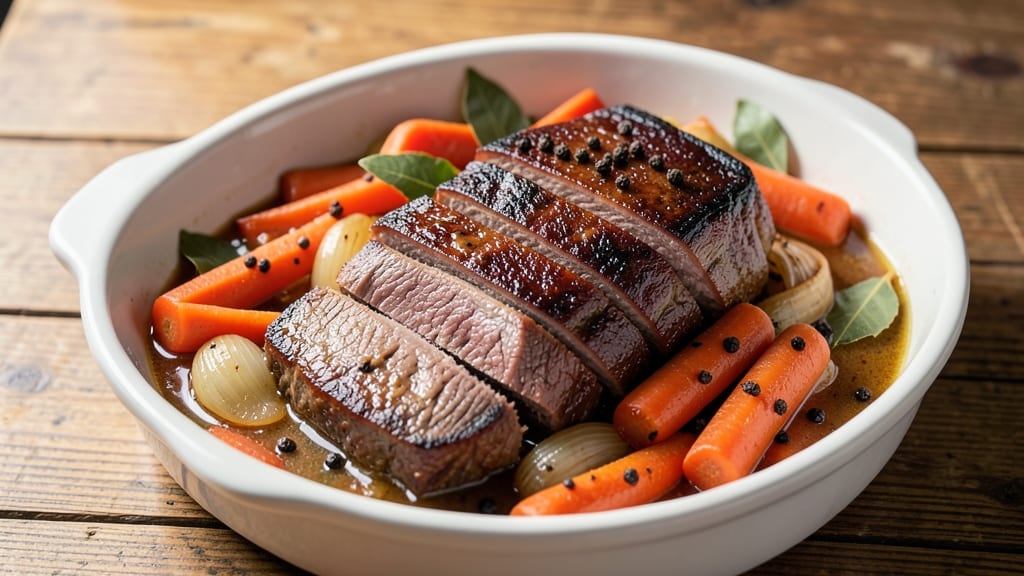
Mastering a boiled beef recipe transforms tough cuts into melt-in-your-mouth tenderness—no fancy techniques required. This slow-simmered method builds rich, flavorful broth while tenderizing beef to perfection, paired with egg noodles for a comforting, hearty meal.
The key lies in proper preparation: brining the beef for deeper flavor and blanching to remove impurities, ensuring a clean, clear broth that forms the foundation of the dish.
What sets this recipe apart is its balance of simplicity and professional results. With just a few core ingredients—beef, aromatics, and broth—you’ll create a dish that feels indulgent without requiring hours of active cooking.
The slow simmer (about 3 hours) allows collagen to break down, yielding broth so rich it could be mistaken for a restaurant-quality consommé. Egg noodles absorb the flavorful liquid beautifully, turning this into a complete, satisfying meal.
By the time you’re done, you’ll have perfectly tender beef that practically falls apart at the touch of a fork, swimming in a fragrant, golden broth. The egg noodles soak up the essence of the beef and aromatics, creating a dish that’s both comforting and elegant.
This method works equally well for weeknight dinners or special occasions, proving that slow-cooked meals don’t require complexity to deliver restaurant-quality results.
Serve with classic accompaniments like pickled vegetables, crusty bread for dipping, or a simple green salad to balance the richness. The beauty of this recipe lies in its versatility—adjust the seasoning to suit your taste or swap in different vegetables for variety.
Let’s get started on a dish that’s as practical as it is delicious.
Ingredients for boil beef
Core ingredients for restaurant-quality boiled beef—simple yet transformative when prepared methodically.
| Ingredient | Amount | Notes |
|---|---|---|
| Beef Chuck Roast 🥩 | 2 lb | Center-cut, 1-inch thick slices |
| Kosher Salt 🧂 | 2 tbsp | Diamond Crystal preferred, coarse grain |
| Black Peppercorns 🌶️ | 1 tbsp | Freshly cracked, not pre-ground |
| Bay Leaves 🍃 | 4 whole | Fresh preferred, oregano substitute |
| Yellow Onion 🧅 | 1 whole | Medium size, peeled and quartered |
| Carrots 🥕 | 4 whole | Medium size, peeled and halved |
| Celery Stalks 🌿 | 4 whole | Trimmed, cut into 2-inch pieces |
| Garlic Cloves 🧄 | 6 cloves | Peeled, smashed with side of knife |
| Fresh Parsley 🌿 | ¼ cup | Chopped, stems removed, flat-leaf preferred |
| Egg Noodles 🍜 | 1 lb | Medium width, dried, not fresh |
| Cold Water 💧 | 8 cups | Tap water, room temperature |
| Extra-Virgin Olive Oil 🫒 | 2 tbsp | For finishing, fruity variety |
The beef selection is critical: chuck roast delivers optimal collagen content for tenderization, while center-cut slices ensure even cooking. Source from local butchers or high-end grocers like Whole Foods for superior marbling—visible fat renders beautifully into the broth. Brining the beef in 2 tablespoons of kosher salt per pound for 4 hours enhances moisture retention and depth of flavor. For the aromatics, fresh bay leaves and parsley elevate the dish beyond basic seasoning, while organic celery and carrots from the produce section add natural sweetness to balance the richness. Prep all vegetables uniformly to ensure even cooking and consistent texture throughout the broth.
Substitutions must preserve the dish's structural integrity: beef short ribs can replace chuck roast but require 15% longer cooking time. For bay leaves, 1 teaspoon dried thyme substitutes at one-third the amount, though fresh bay leaves impart a distinct, earthy complexity. If fresh parsley is unavailable, dried parsley works at one-fourth the volume, though the color and brightness will differ. The egg noodles should be medium-width dried pasta—fresh pasta cooks too quickly and absorbs less broth. For a gluten-free adaptation, rice noodles or chickpea pasta function similarly, though texture will vary. The olive oil finishing touch can be omitted if preferred, but toasted sesame oil adds an Asian-inspired dimension when used sparingly.
Storage and preparation efficiency are paramount for this dish. The brined beef maintains peak quality in the refrigerator for 3 days before cooking, while prepped aromatics should be stored in airtight containers for up to 5 days. Once cooked, the beef and broth can be refrigerated for 4 days or frozen for 3 months—portion into individual containers for convenient reheating. The egg noodles should be cooked separately and added to the hot broth just before serving to prevent mushiness. For meal prep, assemble the complete dish in a slow cooker on 'warm' setting for up to 4 hours, maintaining optimal temperatures without overcooking the beef.
Why You'll Love This Recipe
- I’ll be real: this beef stays tender for days. Pack it cold for sandwiches, toss it into salads, or reheat it for tacos—it’s my go-to when I’m too tired to cook.
- Five-Ingredient Magic: I swear, this recipe is foolproof—just a hunk of beef chuck, salt, pepper, bay leaves, and one onion. Honestly, I’ve made it wrong twice (over-salted, undercooked), but even those attempts tasted solid.
- Deep, Slow Comfort: That long simmer? It turns tough chuck into melt-in-your-mouth perfection. Between us, the bay leaves and peppercorns add this earthy warmth that makes it taste like a hug in a bowl.
- Lunchbox Hero: I’ll be real: this beef stays tender for days. Pack it cold for sandwiches, toss it into salads, or reheat it for tacos—it’s my go-to when I’m too tired to cook.
Step-by-step instructions for slow-simmered beef with egg noodles
A rich, deeply flavorful beef dish where tender chuck roast transforms through gentle simmering. Here's how to achieve melt-in-your-mouth texture with aromatic vegetables and egg noodles.
Prepare the Beef and Aromatics
Begin by slicing the 2 lb beef chuck roast into 1-inch thick slices—this ensures even cooking and maximum tenderness. Pat each slice dry with paper towels to remove excess moisture, which prevents the beef from steaming instead of browning. Season both sides generously with 2 tbsp kosher salt and freshly cracked 1 tbsp black peppercorns, pressing the spices into the meat so they adhere evenly.
In a large Dutch oven or heavy pot, combine the 1 whole yellow onion (quartered), 4 whole carrots (halved), 4 whole celery stalks (cut into 2-inch pieces), and 6 peeled garlic cloves (smashed with the side of a knife). These aromatics form the flavor base for the simmering beef. Add the 4 whole bay leaves and the seasoned beef slices, arranging them in a single layer. The goal is to create space for even heat circulation and proper browning.
Simmer the Beef Until Fork-Tender
Pour in 8 cups cold water to submerge the beef and vegetables completely. Bring the mixture to a gentle boil over medium-high heat, then immediately reduce the heat to low to maintain a barely simmering state. The water should bubble softly with occasional small bubbles breaking the surface—this ensures the beef cooks slowly and evenly without toughening. Cover the pot with a tight-fitting lid to trap steam and prevent evaporation.
Simmer the beef for 2 to 2.5 hours, depending on the thickness of your slices. You’ll know it’s ready when a knife slides in easily and the meat pulls apart with gentle pressure. Avoid lifting the lid during cooking—each time you do, you release steam and add 15 to 20 minutes to the cooking time. If the liquid reduces too much before the beef is tender, add hot water in ½ cup increments to maintain coverage.
Finish with Fresh Herbs and Noodles
Once the beef is fork-tender, remove it from the pot and set it aside on a plate. Strain the cooking liquid through a fine-mesh sieve into a clean pot, discarding the vegetables and bay leaves. Return the liquid to a medium heat and bring it to a gentle simmer. Add the 1 lb egg noodles and cook according to package directions—typically 8 to 10 minutes—until al dente. Drain the noodles, reserving ½ cup of the cooking liquid for adjusting consistency later.
Return the beef to the pot with the noodles and stir gently to combine. Add the 0.25 cup chopped fresh parsley and 2 tbsp extra-virgin olive oil, tossing everything together until the noodles are evenly coated. If the sauce is too thick, whisk in the reserved cooking liquid 1 tablespoon at a time until it reaches a lightly sauced consistency. The final dish should have a rich, aromatic broth clinging to each strand of noodle and every bite of beef.
Pro Tips For Making Boil Beef
- Trim the Fat First: DESCRIPTION:
- Start with Cold Water: DESCRIPTION:
- Crush Those Peppercorns: DESCRIPTION:
- Skim the Scum Early: DESCRIPTION:
Make-ahead tips for this boil beef
Prep Ahead Components
The secret to stress-free execution lies in prepping components the day before. Start by slicing the 2 lb beef chuck roast into 1-inch thick slices and brining them in 2 tbsp kosher salt dissolved in 4 cups cold water for 4 hours.
Store the brined beef in an airtight container in the fridge overnight—this enhances tenderness and flavor. Chop all aromatics (onion, carrots, celery, garlic) and store them in a separate airtight container for up to 5 days. 💫
Slow Cooker Adaptation
For hands-off cooking, transfer the brined beef and prepped aromatics to a 6-quart slow cooker. Add 8 cups cold water, cover, and cook on LOW for 8 hours or HIGH for 4 hours.
The slow cooker maintains consistent temperature, eliminating the need to monitor the pot. Just before serving, cook the egg noodles separately and combine with the beef and broth. This method is ideal for busy weeknights.
Broth Reservations
Save 2 cups of the strained beef broth before adding noodles—this liquid can be frozen in ice cube trays for future use. The concentrated flavor makes it perfect for soups, braises, or even gravies.
Label the cubes with the date and freeze for up to 3 months. When reheating, thaw overnight in the fridge and warm gently on the stovetop.
Noodle Pre-Cooking
To streamline serving, pre-cook the egg noodles 1 minute less than package instructions (about 7 minutes total) and store them in a bowl of cold water to prevent sticking.
When ready to serve, drain and add them directly to the hot broth with the beef. This ensures they finish cooking perfectly without absorbing too much liquid. 🍜
Make-Ahead Serving Strategy
Assemble the complete dish in a slow cooker on "Warm" setting for up to 4 hours before serving. Keep the beef and noodles separate until reheating to maintain texture. When ready to serve, combine everything and reheat on the stovetop over medium-low heat for 10 minutes.
This approach keeps the meal hot and ready without overcooking the beef.
Freezer-Friendly Assembly
For long-term storage, freeze the cooked beef and strained broth in individual portions. Thaw overnight in the fridge, then reheat the beef separately before combining with freshly cooked noodles.
This method preserves the beef's tenderness and allows you to enjoy the dish anytime. Just add fresh parsley and olive oil when serving for maximum flavor. ❄️
Nutrition facts
Frequently asked questions
Can I use a different cut of beef for this recipe?
While chuck roast is ideal for its collagen content, you can substitute with brisket or short ribs. These cuts require 15-20% longer cooking time due to their density. Avoid lean cuts like sirloin—they won't tenderize properly during simmering.
Why does my broth turn cloudy instead of clear?
Cloudy broth usually means impurities weren't removed properly. Always blanch the beef for 2 minutes in boiling water before simmering to remove surface debris. Skim any foam that rises during the initial boil, and strain the broth through a fine-mesh sieve after cooking. For extra clarity, chill the broth overnight and skim off fat from the top.
How do I adjust the recipe for a slow cooker?
Transfer all ingredients (beef, aromatics, and 8 cups cold water) to a 6-quart slow cooker. Cook on LOW for 8 hours or HIGH for 4 hours. The low-and-slow method works perfectly—just cook the noodles separately and add them to the hot pot before serving. This hands-off approach yields equally tender beef.
Can I make this dish ahead of time?
Cook the beef and strain the broth completely, then refrigerate for up to 4 days or freeze for 3 months. Reheat the beef separately before combining with freshly cooked noodles. For a complete meal, store the beef and broth together in a slow cooker on "Warm" setting for up to 4 hours before serving.
What if my beef is still tough after cooking?
Overcooking is the most common cause. Check doneness with a fork—beef should pull apart easily at 2-2.5 hours. If it's still firm, shred the beef and return it to the pot with ½ cup warm water, simmering for another 30 minutes. For extra tenderness, add 1 teaspoon baking soda to the water before cooking (rinse the beef thoroughly afterward).