
Main Courses
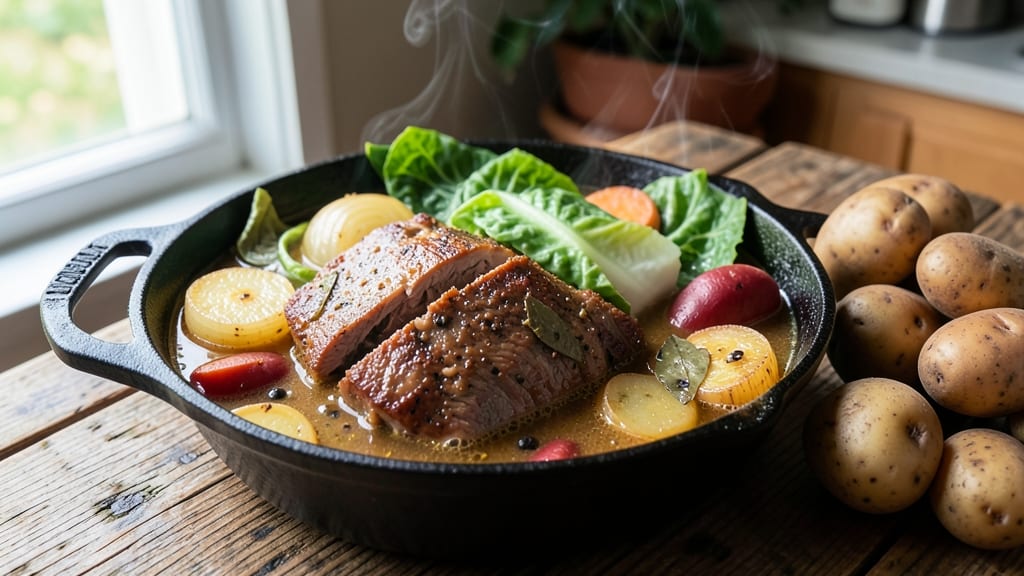
This classic boiled corned beef and cabbage recipe delivers the hearty, comforting flavors of tradition with minimal fuss. The secret lies in slow simmering—3 to 4 hours for tender beef and 15 to 20 minutes for cabbage—transforming tough cuts into melt-in-your-mouth perfection.
I’ve perfected this method over years, balancing simplicity with restaurant-quality results, whether you’re cooking on the stove or adapting for a slow cooker.
The beauty of this dish is its foolproof technique: just salt, pepper, bay leaves, and a few aromatic vegetables. The corned beef simmers until fork-tender, while the cabbage softens just enough to soak up the rich, savory broth.
Every bite delivers a harmonious blend of briny beef, tender greens, and a depth of flavor that feels like a hug in a bowl. This is the kind of meal that turns weeknights into celebrations.
What makes this recipe truly special is its versatility—it’s just as impressive served with crusty bread for a casual dinner as it is at a festive gathering.
The slow cooking process infuses the cabbage with the beef’s natural juices, creating a broth so flavorful you’ll want to ladle it over everything. No shortcuts here, but the effort is worth every tender, savory bite.
Whether you’re following the traditional stovetop method or using a slow cooker for convenience, the result is the same: a classic dish that’s as comforting as it is delicious. Let’s get started on creating this timeless favorite that brings warmth to any table.
Ingredients for classic boiled corned beef and cabbage
Four pounds of beef, a head of cabbage, and a handful of pantry staples—this classic comes together effortlessly.
| Ingredient | Amount | Notes |
|---|---|---|
| Corned Beef Brisket 🥩 | 3 lb | Pre-salted, thick cut preferred |
| Green Cabbage 🥬 | 1 whole | Heavier head, core removed |
| Yellow Onion 🧅 | 1 whole | Peeled, quartered lengthwise |
| Carrots 🥕 | 4 medium | Scrubbed, whole or halved |
| Russet Potatoes 🥔 | 4 medium | Scrubbed, quartered |
| Bay Leaves 🌿 | 2 whole | Fresh preferred, dried works |
| Black Peppercorns 🌶️ | 1 tsp | Crushed lightly |
| Kosher Salt 🧂 | 1 tsp | Diamond Crystal preferred |
| Water 💧 | 8 cups | Cold, filtered preferred |
| Fresh Parsley 🌿 | ¼ cup | Chopped, for garnish |
| Crusty Bread 🍞 | 1 loaf | For serving |
The corned beef is non-negotiable here. Pre-salted brisket from Costco or your local butcher gives the best results—thick-cut stays juicier than thin slices. If you're buying a whole brisket, trim excess fat but leave some for flavor. The cabbage should be heavy and firm—avoid those wilted heads at the grocery store. For the potatoes and carrots, organic is worth it—they scrub easier and taste better. I always grab Russet potatoes because they hold up to long cooking.
No fresh bay leaves? Dried works at double the amount. Short on parsley? Fresh dill or thyme adds a nice twist. The water can be low-sodium beef broth instead for extra depth—just check the label. If you're using a slow cooker, add 2 more cups of water to account for evaporation. The bread? Sourdough or a good Italian loaf—toast it before serving so it soaks up the broth without getting soggy. And if you're worried about the beef being too salty, rinse it briefly before cooking (but don't overdo it—some salt is good).
This dish tastes even better the next day. Portion the broth into containers—it's perfect for reheating with mashed potatoes or over toast. The beef keeps 3-4 days in the fridge, but the cabbage and veggies soften further, so use them up first. For leftovers, freeze the broth separately—it's amazing in soups or stews later. And if you're making this ahead for a party, keep the beef and veggies separate until reheating so the cabbage doesn't turn to mush.
Why You'll Love This Recipe
- One-Pot Magic: I swear by this recipe—just toss the brisket, cabbage, carrots, and potatoes into a pot with water, salt, and pepper. No chopping like a fine chef, no fancy gadgets, just boil. The flavors meld together while you handle the rest of your day.
- Umami Bomb: That corned beef brisket? Pre-cured with garlic, mustard, and bay leaves—it’s basically flavor in a brick. The cabbage soaks up the salty, herby goodness, and the carrots caramelize just enough to make every bite ridiculously satisfying.
- Leftovers That Win: Between us, this dish begs for seconds. The beef stays tender for days, and the potatoes? They’re basically mashed potatoes’ dream come true. I meal prep this all weekend—sandwiches, hash, or just reheated with a sprinkle of black pepper.
- Budget Feast: Honestly, this feeds a crowd for less than takeout. A big brisket, a head of cabbage, and a few potatoes stretch to lunches, dinners, and even breakfast hash. No wasted ingredients, no guilt—just solid, hearty meals that don’t break the bank.
Step-by-step instructions for classic boiled corned beef and cabbage
Here's how to make this hearty Irish classic with tender meat and perfectly seasoned vegetables.
Prepare the Corned Beef Brisket
Place the 3 lb corned beef brisket in a large stockpot that's big enough to accommodate all the vegetables. The key here is to use a pot with enough space—you want the brisket to be submerged when all ingredients are added. If your pot isn't deep enough, use a Dutch oven instead. Add the 8 cups cold water and bring it to a gentle simmer over medium heat. You'll know it's ready when small bubbles form at the surface but don't boil vigorously.
Once simmering, reduce the heat to low and let the brisket cook uncovered for 2 hours. This initial cooking phase allows the meat to gradually absorb the flavors while preventing the water from boiling too hard, which could make the meat tough. I like to check it after 1 hour—if the water hasn't reduced too much, you're on track. If it's boiling too hard, reduce the heat further to maintain a gentle simmer.
Add Vegetables and Seasonings
After the 2-hour mark, carefully remove the brisket from the pot using tongs and set it aside on a plate. Now it's time to add the vegetables. Peel and quarter the 4 medium russet potatoes and scrub the 4 medium carrots—leave them whole or halve them lengthwise if they're particularly thick. Cut the 1 whole green cabbage into eighths, removing the core as you go. Peel and quarter the 1 whole yellow onion lengthwise.
Add all the vegetables to the pot along with the 2 whole bay leaves, 1 tsp crushed black peppercorns, and 1 tsp kosher salt. Return the brisket to the pot, making sure it's fully submerged. Bring the mixture back to a simmer over medium heat, then reduce the heat to low again. Cover the pot with a lid and let it cook for 1 hour. The vegetables should be tender but still hold their shape—you're aiming for fork-tender, not mushy.
Finish Cooking and Rest the Meat
After the 1 hour of cooking with the vegetables, check the doneness of the brisket. It should be fork-tender, meaning the meat should pull apart easily with minimal resistance. If it's not quite there, continue cooking for another 15-20 minutes on low heat. The brisket is done when it reaches an internal temperature of 205°F—use a meat thermometer to check the thickest part of the meat.
Once the brisket is fully cooked, remove it from the pot and let it rest on a cutting board for 10-15 minutes. This resting period allows the juices to redistribute throughout the meat, ensuring each slice is moist and flavorful. While the brisket rests, keep the vegetables in the pot on low heat to maintain their warmth. The broth should be rich and flavorful, infused with the aromatics from the bay leaves and peppercorns.
Serve with Fresh Parsley and Crusty Bread
Slice the rested brisket against the grain into ¼-inch thick slices. The grain direction is easy to spot—it runs horizontally across the meat. Serve the sliced brisket alongside the vegetables, ladling some of the broth over the top for extra flavor. Garnish each serving with 0.25 cup chopped fresh parsley—this adds a bright, fresh contrast to the rich, savory flavors of the dish.
Serve with the 1 loaf crusty bread on the side for soaking up the delicious broth. This classic combination is all about balance—the tender brisket, the slightly sweet carrots and potatoes, the peppery bite of the cabbage, and the freshness of the parsley. Each bite should be hearty and satisfying, with layers of flavor that make this dish a true comfort food staple.
Pro Tips For Making Classic Boiled Corned Beef And Cabbage
- Parboil the Potatoes First: I learned this the hard way—dumping whole potatoes into the pot with raw corned beef means they’ll turn to mush before the meat is done. Instead, blanch them in salted water for 8–10 minutes until just tender, then add them to the pot with the corned beef. They’ll hold their shape and soak up flavor like a dream.
- Trim the Cabbage Right: Skip the whole head if you’re short on time, but avoid those tough outer leaves—they’ll stay chewy no matter how long you boil. Cut the cabbage into 6–8 wedges, remove the core, and slice the leaves away from the stem. It takes 2 extra minutes but makes a real difference in texture.
- Don’t Crowd the Pot: After burning three batches, I finally figured out that cramming too many veggies into the pot with the corned beef means uneven cooking and a watery broth. Aim for a loose fit—let the beef and potatoes sit side by side, not stacked like a tower. The broth will be richer, and the veggies won’t turn to sludge.
- Use the Juices, Not Water: Sounds weird, but it works: After the corned beef simmers for 2 hours, skim off the fat and save the juices. Discard the water and replace it with the reserved juices when adding the potatoes and cabbage. The meat’s natural flavors will carry through, and the dish won’t taste like bland boiled water.
Creative variations of this classic boiled corned beef and cabbage
Irish Pub Twist
Add ½ cup Guinness stout to the cooking liquid during the final 30 minutes of simmering for a rich, malty depth. I like to use 12 oz can Guinness—it caramelizes beautifully and pairs perfectly with the briny beef.
For extra pub-style flair, serve with crispy onion strings (sauté 2 tbsp butter with 1 sliced onion until golden) and a sprinkle of flaky sea salt on top. 🍺
Sweet and Smoky BBQ Style
Swap the bay leaves for 2 tbsp smoked paprika and add ½ cup BBQ sauce (I recommend St. Louis-style like Sweet Baby Ray's) during the last 20 minutes of cooking.
The smoky-sweet contrast transforms this into a Southern-inspired dish. Top with pickled red onions and serve with cornbread instead of crusty bread. 🔥
Asian-Inspired Kimchi Version
Replace the cabbage with 1 lb kimchi (chopped) and add 1 tbsp gochujang and 1 tbsp soy sauce to the cooking liquid. The fermented spice brings a tangy kick that balances the beef’s richness. Garnish with sesame seeds and serve with steamed rice for a fusion twist. 🌶️
Slow Cooker Shortcut
For hands-off cooking, place all ingredients in a 6-quart slow cooker, add 10 cups water, and cook on low for 8 hours or high for 5 hours.
The slow cooker’s gentle heat keeps the beef tender without monitoring. I like to add 1 tsp garlic powder and 1 tsp onion powder for extra depth. 💡
Spicy Cajun Heat
Boost the heat with 1 tbsp Cajun seasoning (like Tony Chachere's) and ½ tsp cayenne pepper. Add these with the vegetables for a Louisiana-inspired kick. Serve with hot sauce and cornbread muffins for a Cajun boil-style meal. 🌶️
Vegetarian Adaptation
Replace the beef with 2 large portobello mushrooms (sliced) or 1 lb extra-firm tofu (pressed and cubed). Simmer with 1 tbsp soy sauce and 1 tsp liquid smoke for a meaty texture. The cabbage and potatoes still absorb the broth beautifully. 🌱
Nutrition facts
Frequently asked questions
Why does the corned beef need to rest after cooking?
Resting the beef for 10-15 minutes after cooking allows the juices to redistribute throughout the meat, preventing them from leaking out when sliced. This ensures each bite stays moist and flavorful. Skipping this step can make the beef dry and tough, even if it's cooked to perfection.
Can I use a slow cooker instead of a stovetop pot?
For a hands-off approach, place all ingredients in a 6-quart slow cooker with 10 cups water and cook on low for 8 hours or high for 5 hours. The slow cooker's gentle heat keeps the beef tender without constant monitoring. Just add 1 tsp garlic powder and 1 tsp onion powder for extra depth.
How do I know when the corned beef is fully cooked?
The beef is done when it reaches an internal temperature of 205°F and feels fork-tender. Insert a fork into the thickest part—it should slide in easily with minimal resistance. If it's not quite there after 3-4 hours of cooking, add 15-20 more minutes on low heat. A meat thermometer is your best tool for accuracy.
What if my cabbage turns mushy?
Overcooking is the usual culprit. Cabbage should cook for only 15-20 minutes with the beef—it softens quickly! If it's already too soft, drain some broth and return the cabbage to the pot for 5 minutes on medium heat. For extra crispness, add the cabbage to the pot only in the final 10 minutes of cooking.
Can I make this dish ahead of time?
This dish tastes even better the next day! Store the beef and vegetables separately in the fridge for up to 4 days, keeping the broth in a separate container. Reheat everything together on low heat until warmed through. The flavors meld beautifully overnight, making it perfect for meal prep.