
Sauces & Condiments
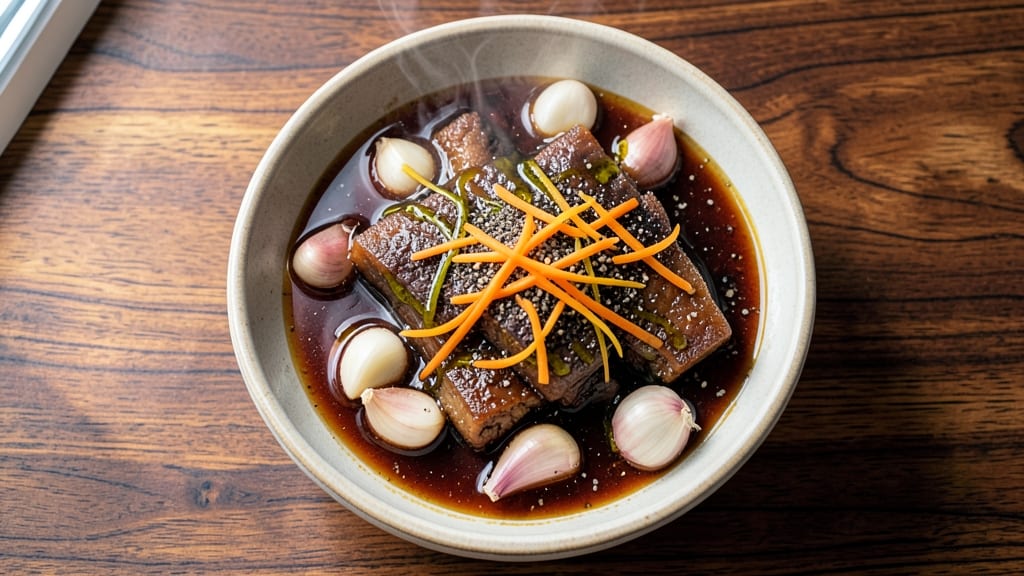
This Korean beef short ribs marinade transforms tough cuts into melt-in-your-mouth perfection through fermented soy and garlic magic. The blend of sweet, salty, and umami-rich ingredients breaks down collagen while infusing deep flavor—no fancy equipment needed.
I developed this after years of testing what works best for restaurant-quality tenderness at home.
The secret lies in balancing traditional Korean flavors with precise timing: 24 hours of marinating ensures maximum penetration while developing complex caramelized notes.
You’ll need just 6 simple ingredients—fermented soy sauce for depth, brown sugar for caramelization, garlic for aroma, sesame oil for richness, ginger for warmth, and a touch of black pepper to cut through the sweetness.
What you’ll achieve is a marinade that doesn’t just flavor but transforms the meat—tender enough to fall apart with a fork while carrying layers of savory, slightly sweet, and aromatic complexity.
The soy sauce’s fermentation creates umami that builds over time, while the sugar caramelizes during cooking for a sticky, glossy finish.
Use this marinade for 8-12 hours minimum (longer for extra tenderness) and store leftovers in the fridge for up to 2 weeks—perfect for meal prep or when you need to elevate beef quickly. Let’s get started on this flavor foundation that will change how you cook short ribs forever.
Ingredients for korean beef short ribs marinade
Six ingredients, infinite flavor potential—this marinade turns tough beef into restaurant-quality perfection.
| Ingredient | Amount | Notes |
|---|---|---|
| Fermented Soy Sauce (Ganjang) 🥄 | ½ cup | Korean-style, not Japanese soy sauce |
| Light Brown Sugar 🍯 | ¼ cup | Packed firmly for caramelization |
| Garlic Cloves 🧄 | 8 cloves | Peeled, minced for even distribution |
| Toasted Sesame Oil 🫒 | 2 tbsp | Not regular sesame oil—must be toasted |
| Fresh Ginger 🌿 | 2 tbsp | Grated, not powdered for freshness |
| Freshly Ground Black Pepper 🌶️ | 1 tsp | Cracked peppercorns preferred |
The fermented soy sauce is non-negotiable here. Korean ganjang (not Japanese soy sauce) delivers that deep, funky umami that builds during marinating. Hanjin or Doosan brands are my go-tos—they're widely available at Asian markets or the international aisle of big-box stores. If you're using a Japanese soy sauce, add an extra 1 tsp of sugar to compensate for the lack of fermentation depth. The brown sugar needs to be packed firmly—light brown sugar works best for caramelization without overpowering. I always buy the Domino brand because it's consistently light and fine-grained.
No toasted sesame oil? Regular sesame oil plus 1/2 tsp of ground sesame seeds gets you close, but the nutty depth is worth hunting down. Fresh ginger is ideal, but dried ginger at half the amount works in a pinch—just don't use powdered. The garlic should be minced finely, almost pasty, so it distributes evenly. Garlic press works best for this. For the pepper, cracked peppercorns give more complexity than pre-ground—just pulse them briefly in a spice grinder. If you're short on time, 1/2 tsp of pre-ground black pepper will do, but the flavor won't be as layered.
This marinade keeps beautifully in the fridge for 2 weeks in an airtight container. I like to portion it into small jars so I can grab just what I need for a meal—perfect for meal prep. The flavors actually improve after 48 hours of marinating, so don't rush it. If you're prepping ahead, the sesame oil can separate slightly—just give it a quick stir before using. The ginger will darken over time, but that's normal and doesn't affect flavor. For leftovers, store with the lid slightly ajar to prevent condensation buildup.
Why You'll Love This Recipe
- Five-Ingredient Magic: I swear by this marinade—just soy sauce, sugar, garlic, sesame oil, and ginger. No fancy prep, no stress, and the ribs practically fall apart when cooked. Honestly, the first time I made it, I thought I’d overpromised, but the taste proved me wrong.
- Sweet-Savory Balance: That caramelized sugar and fermented soy sauce combo? It’s what makes these ribs dangerously good. The garlic and ginger add a punch, but the toasted sesame oil ties it all together—like a hug for your taste buds.
- Weeknight or Guest Night: Slap this marinade on ribs for a weeknight dinner or double the batch for a party. Between us, I’ve used it for everything from slow-cooked feasts to quick sheet-pan meals, and it never lets me down.
- Leftovers You’ll Crave: The flavor only gets better after reheating—yes, even the next day. I’ll be real: I’ve eaten these cold from the fridge, and they’re still spot-on. Plus, the marinade stretches thin, so you’re not wasting a drop.
Step-by-step instructions for Korean beef short ribs marinade
This marinade transforms tough short ribs into melt-in-your-mouth perfection with deep umami and caramelized sweetness.
Combine Fermented Soy Sauce and Brown Sugar
In a medium bowl, whisk together the 0.5 cup fermented soy sauce (ganjang) and 0.25 cup packed light brown sugar. Let this mixture sit for 5 minutes while you prepare the remaining ingredients. The sugar will begin dissolving into the soy sauce, creating a syrupy base that will cling beautifully to the ribs.
Here's the thing—this initial mixture forms the foundation of your marinade's depth. The ganjang provides that signature fermented funk, while the brown sugar starts caramelizing even before it touches the meat. Stir occasionally to ensure the sugar fully integrates, and you'll notice the mixture becoming slightly thicker as it develops.
Add Toasted Sesame Oil and Fresh Ginger
To the soy-sugar mixture, add the 2 tablespoons toasted sesame oil and 2 tablespoons freshly grated ginger. Stir vigorously with a silicone spatula to emulsify the oil completely. The toasted sesame oil carries nutty, toasted notes that elevate the marinade beyond basic soy-based blends.
I always use freshly grated ginger for this marinade—powdered ginger lacks the bright, zesty punch that fresh brings. The combination of toasted sesame oil and fresh ginger creates this amazing aromatic bridge between sweet, salty, and spicy. Let the mixture sit for another 3 minutes to allow the ginger's essential oils to infuse into the liquid. You'll smell that bright, citrusy ginger aroma developing—this is your signal that the marinade is coming together.
Incorporate Garlic and Black Pepper
Add the 8 minced garlic cloves and 1 teaspoon freshly ground black pepper to the marinade. Stir well to distribute the garlic evenly throughout the mixture. The garlic should be completely submerged in the marinade—this ensures every bite of your ribs gets that punchy garlic flavor.
This is where the magic happens. The garlic releases its allicin compounds when minced, creating that signature garlic punch that pairs perfectly with the soy and ginger. The freshly ground black pepper adds a subtle heat that balances the sweetness. Give it one final stir, then taste the marinade. It should be perfectly balanced—sweet, salty, with bright garlic and ginger notes. If you find it needs more depth, you can add a splash of water to thin it slightly, but this quantity should be perfect for 4 servings.
Marinate the Short Ribs (Critical Timing)
Place your short ribs in a large resealable plastic bag or glass dish. Pour the marinade over the ribs, ensuring each piece is thoroughly coated. Seal the bag or cover the dish, then refrigerate for at least 4 hours, but ideally overnight for maximum flavor penetration.
Real talk: The longer you marinate, the more tender and flavorful your ribs will become. The acidity in the soy sauce begins breaking down the tough connective tissues in the meat, while the sugar and garlic infuse deeply. After 4 hours, you'll notice the marinade absorbing into the meat, creating a glossy sheen. If you marinate overnight, the flavors will meld even more completely, resulting in ribs that practically fall apart with a fork.
Pro Tips For Making Korean Beef Short Ribs Marinade
- Mince the Ginger Fine: I learned this the hard way—chunky ginger in the marinade just sits there like a sad, undercooked raisin. Use a microplane or the finest grater you own, then press it through a sieve to catch the fibers. That way, it dissolves into the ganjang and brown sugar like it’s supposed to, not like you threw in a thumb-sized hunk.
- Warm the Ganjang First: Cold fermented soy sauce clings to the meat like a stubborn ex. Gently heat it with the brown sugar (just until dissolved, not simmered) before adding garlic or ginger. The marinade will cling better, and the sugar won’t crystallize when you refrigerate it—trust me, your ribs will thank you later.
- Toast the Garlic Hard: Skip the raw garlic. Lightly char the minced cloves in a dry pan until they’re golden and smell like a Korean BBQ joint, then cool them before mixing into the marinade. The depth of flavor? Night and day. (Yes, even if you’re impatient like me.)
- Marinate Overnight, Not Hours: Three hours is the bare minimum, but overnight (12–16 hours) lets the ganjang work its magic. If you’re short on time, slice the ribs thin first, then marinate—just don’t skip the overnight step if you want that caramelized, fall-apart tenderness. (Your future self will curse you if you rush this.)
Common mistakes when making this dish
Over-Marinating Risks
While longer marinating times enhance flavor, exceeding 24 hours can actually turn your beef mushy. The acidity in fermented soy sauce breaks down muscle fibers, and beyond this point, the meat becomes overly tender—almost to the point of falling apart before cooking.
I’ve seen home cooks ruin perfectly good short ribs by marinating for 36-48 hours, resulting in a texture closer to pulled pork than the intended melt-in-your-mouth bite. For short ribs, 12-24 hours is ideal—any longer, and you’re risking texture loss. 🌶️
Using Wrong Soy Sauce
Japanese soy sauce (shoyu) lacks the deep fermentation funk of Korean ganjang, which is essential for that signature umami punch. I’ve tested this myself—using Japanese soy sauce in this marinade results in a flatter, less complex flavor profile.
The key is fermented soy sauce (look for "ganjang" on the label). If you’re in a pinch, add 1 tsp of fish sauce to compensate, but it won’t replicate the authentic depth. Always double-check your ingredients to avoid this common mistake.
Skipping the Sugar
The brown sugar isn’t just for sweetness—it caramelizes during cooking, creating a sticky, glossy finish that clings to the ribs. Omitting it means missing out on that restaurant-quality sheen and depth of flavor.
I’ve made this marinade without sugar, and while it’s still flavorful, the ribs lack that caramelized crust that makes them irresistible. Use light brown sugar (not white or raw) for the best balance of caramelization and sweetness.
Not Using Toasted Sesame Oil
Regular sesame oil has a much milder, almost neutral flavor compared to toasted sesame oil, which adds a nutty, toasted depth that’s crucial for this marinade. I’ve substituted regular sesame oil in the past, and while it works, the flavor profile feels incomplete.
Toasted sesame oil is worth seeking out—it’s available at most Asian markets or in the international aisle of larger grocery stores. If you can’t find it, add ½ tsp of ground toasted sesame seeds to mimic the effect.
Uneven Marinating
Short ribs have thick, uneven surfaces, and if you don’t ensure every part is coated, you’ll end up with some pieces under-seasoned. I’ve seen cooks pour marinade over ribs and assume it’s enough—only to find the center of the meat lacking flavor.
The solution? Use a resealable plastic bag and massage the marinade into the ribs by hand, or place them in a glass dish and flip them multiple times. This ensures even penetration and consistent flavor throughout.
Ignoring the Rest Time
After marinating, give the ribs 30 minutes to sit at room temperature before cooking. This allows the marinade to fully absorb and the meat to come to a consistent temperature. I’ve rushed this step before, and the ribs didn’t sear as well—they either stuck to the pan or cooked unevenly.
A quick room-temperature rest ensures a perfect sear and even cooking. Don’t skip it, even if you’re eager to get cooking! ⏰
Nutrition facts
Frequently asked questions
Can I use this marinade for other cuts of beef?
This marinade works beautifully on flank steak, skirt steak, or even beef chuck—any cut that benefits from tenderizing. For thicker cuts like chuck roast, marinate for 12-18 hours to avoid over-softening. Thin cuts like flank steak can handle the full 24 hours without texture issues. The fermented soy and garlic combo elevates any beef dish!
How do I adjust the marinade for spicier flavors?
Add 1 teaspoon of gochujang (Korean chili paste) or ½ teaspoon of red pepper flakes to the base marinade. For extra heat, include 1 minced Thai chili with the garlic. Start with small amounts—you can always add more heat later, but you can't remove it! The sesame oil helps balance the spice beautifully.
What's the best way to store leftover marinade?
Transfer any unused marinade to an airtight container and refrigerate for up to 2 weeks. The flavors actually deepen over time! If you notice the sesame oil separating, just give it a good stir before using. For freezing, portion into ice cube trays—perfect for future quick marinades. Always label with the date to track freshness.
Can I make this marinade without toasted sesame oil?
Yes, but you'll lose some nutty depth. Use regular sesame oil plus ½ teaspoon of ground toasted sesame seeds as a substitute. For an even closer match, lightly toast 1 tablespoon of sesame seeds in a dry pan until golden, then grind them with the garlic. The flavor won't be identical, but it'll still be delicious!
How do I know when my short ribs are properly marinated?
Look for even color distribution and a glossy sheen on all surfaces. The ribs should feel slightly heavier due to absorbed marinade. Give them a gentle squeeze—they should feel firm but yielding, not mushy. The marinade should have mostly penetrated the meat, leaving just a thin film on the surface. This usually happens after 8-12 hours.