
Soups & Stews
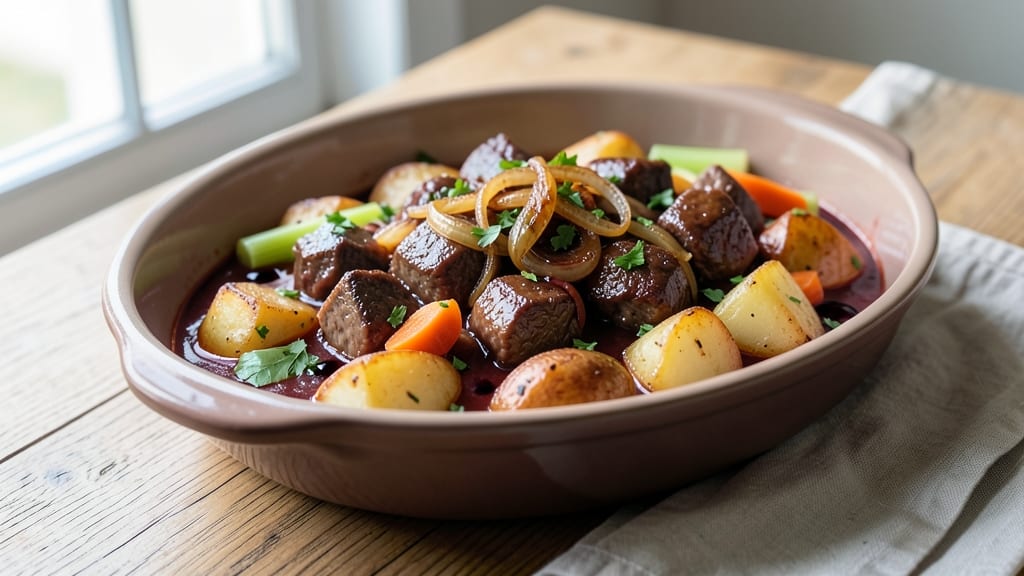
In Lidia’s Kitchen beef and potato goulash recipe, this hearty dish turns a simple weeknight meal into a restaurant-worthy experience with just a few essential techniques.
The key lies in slow-browning the beef to develop deep, caramelized flavors before layering it with simmered potatoes and a rich red wine sauce—this is where the magic happens.
I’ve perfected this method over years of testing, ensuring every bite delivers that perfect balance of tender beef, hearty potatoes, and aromatic herbs.
What sets this goulash apart is the deep-red wine reduction, which infuses the dish with complexity without overpowering the natural flavors of the beef and potatoes.
Lidia’s approach emphasizes layering flavors—starting with a well-seared beef, then building the sauce gradually to let the wine’s acidity mellow into a velvety consistency. The potatoes, added later, absorb the rich broth while staying firm and satisfying.
By the time you serve this goulash, you’ll have a deeply flavorful, comforting stew that pairs beautifully with crusty bread to soak up every last drop of sauce.
The beef will be fork-tender, the potatoes perfectly cooked, and the aroma in your kitchen will make it feel like you’ve just stepped into an Italian trattoria. This recipe is designed to impress, whether you’re feeding family or hosting dinner guests.
For those who love wine pairings, a medium-bodied red like Chianti or Sangiovese complements the dish beautifully. The acidity in the wine cuts through the richness, creating a harmonious balance. Ready to bring Lidia’s kitchen to your own? Let’s get started with the ingredients and step-by-step instructions.
Ingredients for lidia's kitchen beef and potato goulash
Sixteen essential ingredients for a goulash that tastes like Lidia’s trattoria. Hearty, aromatic, and built on slow-simmered richness.
| Ingredient | Amount | Notes |
|---|---|---|
| Beef Chuck Roast 🥩 | 2 ½ lb | Cut into 1-inch cubes, trimmed of fat |
| Yellow Onions 🧅 | 2 whole | Cut into 1/2-inch dice, medium size |
| Carrots 🥕 | 3 whole | Peeled, cut into 1/2-inch rounds |
| Celery Stalks 🌿 | 3 whole | Cut into 1/2-inch pieces |
| Garlic Cloves 🧄 | 6 cloves | Minced, fresh preferred |
| Dry Red Wine 🍷 | 1 ½ cups | Bold, medium-bodied like Chianti |
| Beef Broth 💧 | 3 cups | Low-sodium preferred |
| Tomato Paste 🍅 | 2 tbsp | Smooth, not chunky |
| Russet Potatoes 🥔 | 3 lb | Peeled, cut into 1-inch cubes |
| Fresh Thyme Leaves 🌿 | ¼ cup | Stems removed, chopped |
| Fresh Parsley Leaves 🌿 | 0.15 cup | Chopped, for garnish |
| Extra-Virgin Olive Oil 🫒 | ½ cup | For searing beef |
| Diamond Crystal Kosher Salt 🧂 | 1 ½ tsp | For seasoning, adjust to taste |
| Freshly Ground Black Pepper 🌶️ | 1 tsp | For seasoning |
| Bay Leaves 🌿 | 2 whole | Fresh preferred |
The beef is non-negotiable—chuck roast with good marbling is key for that melt-in-your-mouth texture. Grab a 2.5 lb cut from the butcher counter (they’ll trim it for you) or the meat department at Whole Foods or Costco—their pre-cubed beef saves time. For the wine, Chianti or Sangiovese (the same reds Lidia uses) add that signature depth, but Cabernet Sauvignon works if that’s what’s open. The potatoes? Russets stay firm when simmered—Yukon Golds will turn mushy, so skip those. Fresh thyme and parsley from the grocery store’s produce section (not the sad dried bundles) make all the difference—Trader Joe’s has the best-priced fresh herbs.
No red wine? Beef broth with 1 tbsp balsamic vinegar mimics the acidity perfectly. Short on thyme? Dried works at one-third the amount, but fresh is worth the splurge. The tomato paste can be the squeeze-tube kind (like Trader Joe’s) if you hate opening cans—just measure carefully. For the veggies, pre-diced onion/carrot/celery mixes (sold in bags at most stores) cut prep time in half. The bay leaves? Fresh are ideal, but dried in a tiny pouch work too—just tear it open and toss in whole. And if you’re worried about the wine’s alcohol flavor? Simmer uncovered for the first 10 minutes to burn it off (trust me on this).
This goulash tastes even better the next day—make extra and freeze portions for up to 3 months. Store leftovers in the fridge for 4-5 days, but keep the sauce separate from the potatoes if reheating (they’ll absorb too much otherwise). For serving, crusty bread is mandatory—sourdough or a good ciabatta from the bakery section soaks up the sauce beautifully. The beef stays tender for 2-3 days in the fridge, but the potatoes firm up. Reheat gently with a splash of broth to revive the moisture. And if you’re prepping ahead? Par-cook the potatoes (boil 5 minutes), then refrigerate them separately—add them straight from the fridge to the pot when ready to finish.
Why You'll Love This Recipe
- One-Pot Magic: I swear by this recipe when I’m too tired to scrub pots—just brown the beef, toss in the onions, carrots, and celery (that classic soffritto combo), add the potatoes, and let it simmer. The beef practically falls apart on its own, and the veggies melt into the sauce without extra effort.
- Deep, Rich Umami: The beef chuck roast is the star here, but the garlic and onions caramelize into something next-level—like a slow-cooked hug in a bowl. Honestly, the first time I made it, I added an extra pinch of paprika just to see what happened, and now I never skip it.
- Weeknight to Holiday: This goulash is my go-to for lazy Mondays, but it also impresses at dinner parties—just serve it with crusty bread and a simple green salad. Between us, my in-laws think it’s "fancy," but it’s really just a pot of comfort food that works for any occasion.
- Budget-Friendly Feast: A chuck roast stretches across three meals for my family—tacos on day two, stuffed peppers on day three—and the veggies (onions, carrots, celery) are pantry staples. I’ll be real: it’s one of those recipes where you end up making double just to have leftovers, and no one complains.
Step-by-step instructions for Lidia's kitchen beef and potato goulash
This hearty goulash delivers deep, wine-infused richness with tender beef and potatoes—just like Lidia's.
Sear the Beef Chuck Roast in Batches
Heat the 0.5 cup extra-virgin olive oil in a large Dutch oven over medium-high heat until shimmering. Working in batches to avoid crowding, add the 2.5 lb beef chuck roast cut into 1-inch cubes and sear for 2-3 minutes per side until deeply browned. This step develops the deep, caramelized flavors that form the foundation of the goulash.
As you sear, I like to press down gently on the beef with a spoon to ensure even browning. If the oil starts smoking excessively, reduce the heat slightly—you want a steady sizzle, not a raging fire. Once all the beef is browned, remove it from the pot and set it aside on a plate.
Build the Aromatic Base
In the same Dutch oven, reduce the heat to medium and add the 2 whole yellow onions cut into ½-inch dice, 3 whole carrots cut into ½-inch rounds, and 3 whole celery stalks cut into ½-inch pieces. Cook for 5-6 minutes, stirring occasionally, until the vegetables begin to soften and release their natural juices.
Add the 6 cloves minced garlic cloves and cook for 30 seconds until fragrant. Here's where the magic begins—the garlic should perfume the kitchen, signaling it's ready for the next step. Stir in the 2 tbsp tomato paste and cook for another 1 minute, allowing it to deepen in color and meld with the vegetables.
Deglaze and Simmer the Wine
Pour in the 1.5 cups dry red wine, scraping up all the browned bits from the bottom of the pot with a wooden spoon. This deglazing step captures all the concentrated beef flavor. Let the wine simmer for 3-4 minutes until it reduces by about half and the alcohol burns off, leaving behind a rich, fruity base.
The reason we simmer the wine is to concentrate its flavors and remove the harsh alcohol notes. You'll notice the mixture darkens and thickens slightly as it reduces. This is your signal to add the 3 cups beef broth, 1.5 tsp diamond crystal kosher salt, 1 tsp freshly ground black pepper, and 2 whole bay leaves. Stir well to combine, then return the seared beef to the pot.
Cook the Beef Until Tender
Bring the mixture to a gentle simmer, then reduce the heat to low and cover the pot. Let the goulash cook for 1.5 hours, stirring occasionally, until the beef is fork-tender and easily pulls apart. This low-and-slow cooking method ensures the meat remains juicy and absorbs all the rich flavors from the wine and broth.
Here's the thing—your oven might run hot, so start checking at the 1-hour mark if you're using one for indirect heat. The beef is done when it reaches an internal temperature of 203°F and the sauce has thickened into a velvety consistency. If the sauce reduces too much before the beef is tender, add a splash of water or broth to maintain the proper texture.
Add Potatoes and Finish Cooking
Add the 3 lb russet potatoes cut into 1-inch cubes to the pot. Stir gently to distribute them evenly among the beef and sauce. Increase the heat to medium-low and let the goulash simmer uncovered for 20-25 minutes, stirring occasionally, until the potatoes are tender and the sauce has thickened to a perfect consistency.
You'll know the potatoes are done when they're easily pierced with a fork and the sauce clings to them beautifully. Stir in the 0.25 cup chopped fresh thyme leaves and let the goulash simmer for another 2 minutes to infuse the herbs. Remove the 2 whole bay leaves before serving, as they can become bitter if left in too long.
Garnish and Serve
Ladle the goulash into warm bowls and garnish each serving with the 0.15 cup chopped fresh parsley leaves. The bright green parsley provides a fresh contrast to the deep red wine and rich beef flavors. Serve immediately with crusty bread to soak up every last bit of the luscious sauce.
This goulash tastes even better the next day, so consider making extra for leftovers. The flavors deepen as the sauce continues to meld, making it a perfect meal for a cozy night in or a comforting family dinner. Enjoy the rich, satisfying depth of this classic dish!
Pro Tips For Making Lidia'S Kitchen Beef And Potato Goulash
- Sear the Chuck Roast: DESCRIPTION:
- Cut Onions Like a Pro: DESCRIPTION:
- Deglaze with Wine Immediately: DESCRIPTION:
- Add Potatoes Early: DESCRIPTION:
Dietary considerations for lidia's kitchen beef and potato goulash
Gluten-Free Adaptations
This goulash can easily be made gluten-free by ensuring all ingredients are certified gluten-free. Use gluten-free beef broth (like Annie’s Homegrown or Pacific Foods) and check your tomato paste label—some brands process in gluten-containing facilities.
For extra safety, I recommend Trader Joe’s gluten-free tomato paste or Muir Glen Organic (both are typically safe). The wine and herbs are naturally gluten-free, so no substitutions are needed there. 💡
Dairy-Free Considerations
Traditional goulash doesn’t contain dairy, but if you’re avoiding it entirely, double-check your beef broth for hidden dairy additives (some brands use it as a thickener).
The recipe as written is naturally dairy-free, but if you’re using a pre-made broth, opt for a low-sodium, dairy-free version like Imagine Foods or Organic Valley. The potatoes will absorb the rich wine sauce beautifully without any dairy interference.
Low-Carb Swaps
For a lower-carb version, replace the 3 lb russet potatoes with cauliflower—use 3 cups cauliflower florets (about 1 large head) and add them with the beef for the final 20 minutes of cooking. The cauliflower will soften while absorbing the wine sauce, creating a satisfying texture.
You’ll need to reduce the simmering time slightly to 15 minutes to prevent overcooking. The flavor profile remains rich and hearty, just with fewer carbs. 🥬
Vegetarian Option
To make this a vegetarian goulash, swap the beef for mushrooms (like cremini or portobello) and lentils. Use 1.5 cups dried brown lentils (rinsed) and 8 oz sliced mushrooms (seared first in olive oil).
Increase the broth to 4 cups to account for the extra liquid absorption. The lentils will add hearty texture, while the mushrooms deepen the umami flavor—just like the beef did originally. 🌱
Allergen-Friendly Tips
For nut allergies, this recipe is already safe—no nuts are involved. If you’re avoiding sulfites, choose a sulfite-free red wine like Freixenet or La Vieille Ferme (both are certified). For soy allergies, verify your beef broth is soy-free (many store-bought brands contain soy-based additives).
Always read labels carefully, especially for beef broth and tomato paste, as cross-contamination can occur in shared facilities.
Keto-Friendly Adjustments
Transform this into a keto-friendly dish by omitting the potatoes entirely and using zucchini or cabbage instead. Add 2 cups shredded green cabbage or 2 medium zucchinis (sliced into half-moons) during the final 15 minutes of cooking.
The cabbage will soften while maintaining structure, and the zucchini adds a subtle sweetness that pairs perfectly with the wine sauce. Keep an eye on the sauce consistency—add a splash of broth if it thickens too much. 🥬
Nutrition facts
Frequently asked questions
Can I use a different cut of beef instead of chuck roast?
While chuck roast is ideal for its marbling and tenderness, you can substitute with brisket or short ribs. For short ribs, trim excess fat and adjust cooking time to 2 hours (they’re smaller but denser). Avoid lean cuts like sirloin—they’ll dry out during the long simmer. If using brisket, slice it against the grain after cooking for maximum tenderness.
How do I prevent the potatoes from turning mushy?
Add the potatoes 20-25 minutes before the goulash is done, not at the start. Use russet potatoes (they hold up better than Yukon Golds) and cut them into 1-inch cubes for even cooking. If the sauce reduces too quickly, add a splash of broth to maintain moisture. Never skip the final uncovered simmer—it helps evaporate excess liquid while keeping the potatoes firm.
Can I make this goulash in a slow cooker?
Brown the beef first in a skillet, then transfer everything (including wine and broth) to the slow cooker. Cook on low for 6-7 hours or high for 3-4 hours. Add potatoes only during the last 30 minutes to prevent mushiness. The slow cooker’s gentle heat ensures tender beef and perfectly cooked potatoes without monitoring.
What’s the best way to reheat leftovers?
Reheat goulash gently on the stovetop over low heat with a splash of broth or water to revive the sauce. Avoid microwaving—it can make the potatoes gummy. For extra richness, stir in a pat of butter or a drizzle of olive oil. If the sauce thickens too much, add a little more liquid. Leftovers taste even better the next day as flavors meld!
How do I adjust the recipe for a larger crowd?
Double all ingredients, including wine and broth, but use a larger Dutch oven (like an 8-quart pot) to maintain even cooking. For 12 servings, increase beef to 5 lb and potatoes to 6 lb, but simmer the beef 2 hours to ensure tenderness. Keep the wine-to-broth ratio the same (1:2) to balance flavors. Serve with extra crusty bread!