
Main Courses
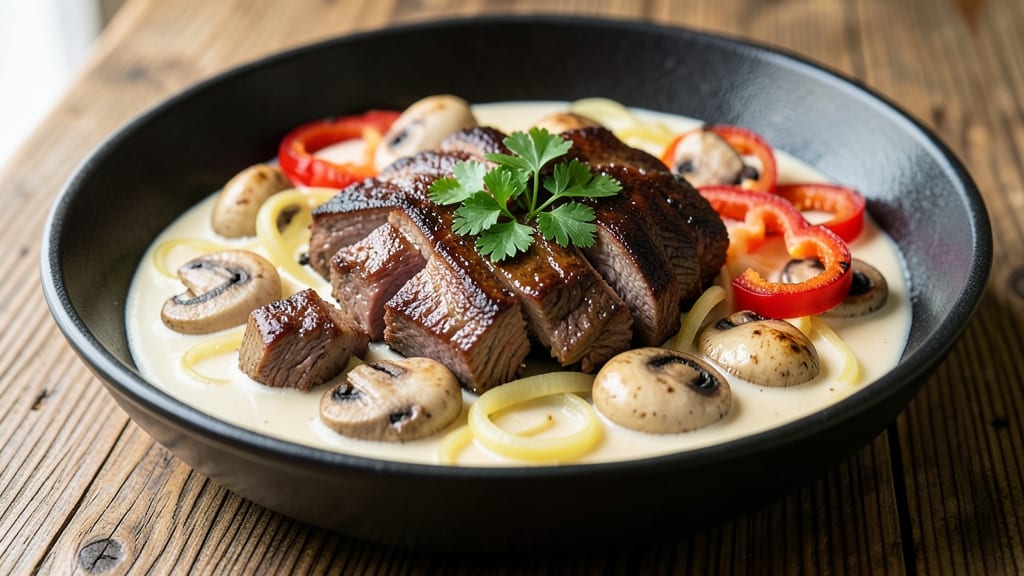
Pepper Belly Pete's beef stroganoff delivers that restaurant-quality richness you crave, where tender beef and mushrooms swim in a velvety sour cream sauce that clings perfectly to every noodle. This recipe captures the essence of classic stroganoff—deep, savory, and impossibly creamy—without requiring hours in the kitchen.
The secret lies in proper searing and a sauce that emulsifies just right, transforming simple ingredients into a dish that feels like a home-cooked masterpiece.
What sets this stroganoff apart is the balance of techniques: a quick sear for beef that stays tender, mushrooms sautéed to golden perfection, and a sauce built on a bechamel base that gets elevated with sour cream for that signature tangy creaminess.
The dish comes together in under 45 minutes, making it ideal for weeknight dinners when you still want to feel like you've served something special. Every bite delivers that perfect harmony of beefy richness, earthy mushrooms, and the cool, velvety sauce.
By the time you twirl that first forkful, you'll understand why this version stands out—it's not just stroganoff, but a foolproof method that delivers restaurant-quality results at home. The sauce coats the noodles completely, the beef remains fork-tender, and the mushrooms add just the right earthy depth.
Serve it over egg noodles, mashed potatoes, or even crusty bread to soak up every last drop of that luscious sauce. This is comfort food at its finest, made easier than you'd expect.
Whether you're feeding a family or treating yourself to a cozy meal, this beef stroganoff delivers satisfaction in every bite. The recipe scales beautifully, and leftovers reheat just as well as the first serving. Here's everything you need to bring this classic dish to your table with confidence and ease.
Ingredients for pepper belly pete beef stroganoff
Restaurant-quality stroganoff starts with tender beef and velvety sauce—here's what you'll need.
| Ingredient | Amount | Notes |
|---|---|---|
| Beef Chuck Roast 🥩 | 1 ½ lb | Cut into 1-inch cubes, boneless |
| White Button Mushrooms 🍄 | 16 oz | Sliced into 1/4-inch pieces |
| Yellow Onion 🧅 | 1 whole | Diced, medium size |
| Garlic Cloves 🧄 | 4 cloves | Minced, fresh preferred |
| All-Purpose Flour 🌾 | 2 tbsp | For roux, unsifted |
| Whole Milk 🥛 | 1 cup | Full-fat for creaminess |
| Unsalted Butter 🧈 | 4 tbsp | Cold, cut into pieces |
| Sour Cream 🥛 | 1 cup | Full-fat, room temperature |
| Dry White Wine 🍷 | ½ cup | Medium-bodied, like Chardonnay |
| Beef Broth 💧 | 1 cup | Low-sodium preferred |
| Diamond Crystal Kosher Salt 🧂 | ¾ tsp | Adjust to taste |
| Freshly Ground Black Pepper 🌶️ | ½ tsp | Freshly cracked |
| Egg Noodles 🍝 | 8 oz | Fresh or dried, medium width |
| Fresh Dill 🌿 | ¼ cup | Chopped, stems removed |
| Extra-Virgin Olive Oil 🫒 | 1 tbsp | For searing beef |
The beef is non-negotiable. Chuck roast delivers that melt-in-your-mouth texture—sirloin or ribeye will stay tough. Grab it pre-cubed from Costco or your butcher's counter if you want to save time. For mushrooms, white buttons work, but cremini or shiitake add deeper flavor. Slice them evenly so they cook at the same rate. The onions? Yellow or red both work, but yellow has slightly more sweetness. I always grab a bag of organic onions from Trader Joe's—they're sweeter and more flavorful than the regular grocery store kind. Fresh garlic and dill? Never dried—the difference is night and day. Stock up at the farmers market if you can, or grab the frozen sections at Whole Foods for budget-friendly freshness.
No white wine? Substitute beef broth with a splash of lemon juice—it mimics the acidity. Short on sour cream? Greek yogurt at half the amount works in a pinch, but the texture won't be quite as silky. The flour and butter roux is where the magic happens—don't rush it. If you're worried about lumps, whisk your flour into the cold butter first before adding the milk. For the noodles, egg noodles are traditional, but fettuccine or wide rice noodles work too. The key is to cook them al dente—they'll finish cooking in the sauce. And if you're out of fresh dill, tarragon or parsley can stand in, though it won't be quite the same. The beef broth should be low-sodium—Homemade or high-quality store-bought like Pacific Foods makes all the difference.
This sauce is best made fresh, but it reheats beautifully—just add a splash of milk or broth to loosen it up. Keeps in the fridge for 4-5 days in an airtight container, or 3 months frozen. I like to portion the sauce into individual containers so I can reheat just what I need. The beef and mushrooms can be prepped ahead and refrigerated for 24 hours before cooking. For a shortcut, cook the beef and mushrooms separately, then assemble everything when you're ready to serve. The noodles? Cook them fresh—they absorb the sauce better, but if you're making this ahead, cook them just shy of al dente, drain, and toss with a little olive oil to prevent sticking. They'll finish cooking in the sauce.
Why You'll Love This Recipe
- Same recipe, different vibes: serve it over noodles for a lazy Tuesday or plop it on mashed potatoes for a Sunday supper. My in-laws think it’s fancy; my kids just lick their plates.
- One-Pan Magic: I swear by this—just brown the chuck roast, toss in onions and mushrooms, and let the flour and garlic work their sauce magic all in the same pan. No extra dishes, no stress.
- Deep Flavor Bang: That chuck roast? It gets tender and juicy, while the mushrooms soak up the garlic-onion base like a sponge. Honestly, the first bite makes me pause—it’s rich but not heavy, thanks to the flour’s crispy edge.
- Weeknight to Dinner Party: Same recipe, different vibes: serve it over noodles for a lazy Tuesday or plop it on mashed potatoes for a Sunday supper. My in-laws think it’s fancy; my kids just lick their plates.
Step-by-step instructions for pepper Belly Pete's beef stroganoff
Here's how to build a rich, velvety stroganoff where every noodle gets perfectly coated.
Sear the Beef Chuck Roast Until Deeply Browned
Heat the 1 tablespoon extra-virgin olive oil in a large Dutch oven over medium-high heat until shimmering. Working in batches if needed, add the 1.5 lb beef chuck roast cut into 1-inch cubes, letting each piece sear undisturbed for 2-3 minutes until deeply browned on all sides. This step develops the fundamental flavor—don't rush it.
Once browned, transfer the beef to a plate and set aside. The remaining browned bits in the pot (fond) will become the base of your sauce. If the oil appears too cool after searing, let it recover for 30 seconds before adding more beef.
Build the Roux with Onion, Mushrooms, and Garlic
In the same Dutch oven, reduce heat to medium and add 4 tablespoons unsalted butter. Let it melt completely, then add the 1 whole yellow onion diced medium and 16 oz white button mushrooms sliced into ¼-inch pieces. Cook for 5-6 minutes, stirring occasionally, until the mushrooms release their moisture and begin to soften.
Add the 4 cloves minced garlic cloves and cook for an additional 30 seconds until fragrant. Sprinkle the 2 tablespoons all-purpose flour over the mixture and stir vigorously for 1-2 minutes to create a light roux. This will thicken your sauce beautifully—don't let it brown or it'll taste bitter.
Deglaze and Simmer with Wine and Broth
Pour in the ½ cup dry white wine and scrape up all the browned bits from the bottom of the pot. Let it simmer for 2-3 minutes until the wine reduces by half. Add the 1 cup beef broth and bring the mixture to a gentle simmer. Return the seared beef to the pot and let it cook for 10 minutes to infuse with the flavors.
Here's the thing—this simmering step ensures the beef becomes fork-tender without drying out. If the sauce starts to reduce too quickly, add a splash of water to maintain the right consistency. The beef should be nearly tender but still have a slight bite.
Finish with Sour Cream and Milk for Creamy Perfection
Reduce heat to low and stir in the 1 cup whole milk and 1 cup sour cream. Add the ¾ teaspoon diamond crystal kosher salt and ½ teaspoon freshly ground black pepper. Let the mixture simmer gently for 5-7 minutes, stirring occasionally, until it thickens slightly but remains silky. The sauce should coat the back of a spoon smoothly.
Remove from heat and stir in the ¼ cup chopped fresh dill. Taste and adjust seasoning if needed—this is your chance to balance the richness with acidity. The dill adds a bright, herbaceous finish that cuts through the creaminess beautifully.
Cook and Toss with Egg Noodles
In a separate pot, cook the 8 oz egg noodles according to package instructions until al dente—about 1 minute less than recommended. Drain, reserving ½ cup pasta water. Toss the noodles immediately with the stroganoff sauce, adding reserved pasta water as needed to reach your desired consistency.
Serve hot, garnished with additional fresh dill if desired. Each bite should deliver tender beef, creamy sauce, and perfectly al dente noodles. The sauce should cling to every strand, creating that signature stroganoff experience.
Pro Tips For Making Pepper Belly Pete Beef Stroganoff
- Sear the Chuck First: That beef chuck roast won’t tenderize itself—hit it with a screaming-hot pan (cast iron if you’ve got it) and sear until deep brown on all sides. I used to rush this, and the sauce would never taste like it had any beef in it. Three minutes per side minimum, no peeking.
- Slice Mushrooms Thin: Button mushrooms release water like nobody’s business, and thick slices turn your stroganoff into a sad, soupy mess. Use a sharp knife and aim for ⅛-inch slices—think "almost translucent" when you cut through them. Toss them in a dry pan first to cook off moisture before adding anything else.
- Deglaze Aggressively: That browned crust on the beef and mushrooms? That’s flavor gold. Pour in your liquid (beer, broth, whatever) and let it simmer for 2-3 minutes before scraping with a wooden spoon. I learned this the hard way—skipping this step means half your flavor ends up stuck to the pan.
- Finish with Butter: The recipe might not say it, but trust me: stir in 2 tablespoons of cold butter off the heat at the very end. It coats the beef and mushrooms in a silky sheen and cuts through the acidity of any sour cream or mustard. (Yes, even if you’re impatient like me.)
Common mistakes when making perfect results
Overcooking the Beef
One of the biggest mistakes is letting the beef become tough instead of tender. Since we're using chuck roast, it needs to stay at medium doneness—not well-done. Once the beef reaches 160°F internal temperature (about 10 minutes of simmering), it's ready.
Overcooking past 165°F turns it dry and stringy. I've ruined stroganoff this way more times than I'd admit—always use a meat thermometer! 🌡️
Skipping the Sear
The deep brown crust on your beef is where all the flavor lives! If you skip searing or rush this step, your stroganoff will taste flat. Let each piece develop a good golden-brown crust before removing it.
I like to work in batches if needed—don't crowd the pan or the beef will steam instead of sear. That fond (browned bits) becomes the flavor base for your sauce.
Adding Sour Cream Too Early
Sour cream curdles when exposed to high heat, and that's a texture disaster. Always add it off the heat or at the very end when the sauce is just simmering gently. I've learned this the hard way—once I added it too soon and ended up with a lumpy, grainy mess.
Instead, stir in the sour cream and milk together at low heat for just 5-7 minutes to let it meld smoothly.
Ignoring the Roux
The roux is what gives your sauce that velvety thickness, so don't skip it! If you rush this step or let the flour brown, you'll end up with a bitter, grainy sauce. Cook the flour and butter over medium heat for exactly 1-2 minutes, stirring constantly.
The moment it turns golden, it's ready. I like to use a whisk to ensure no lumps form—this makes all the difference in texture.
Using Low-Quality Ingredients
This dish shines when you use good ingredients. Don't skimp on the beef—chuck roast is non-negotiable for tenderness. The same goes for sour cream: full-fat, high-quality brands like Kroger's Organic or Trader Joe's make a noticeable difference.
I've tried store-brand sour cream, and while it works, it just doesn't have the same richness. The same goes for butter—use unsalted European-style butter like Plugrá for the best flavor.
Not Deglazing Properly
Deglazing with wine is where you capture all those flavorful browned bits from the searing step. If you skip this or don't scrape the bottom of the pot thoroughly, your sauce will lack depth. I like to use a wooden spoon to really get into those corners—every bit counts!
Let the wine reduce by half before adding broth, or you'll dilute the sauce too much. This step is what transforms a simple sauce into something truly special. 💡
Nutrition facts
Frequently asked questions
Can I substitute chicken or pork for the beef in this recipe?
This recipe is designed specifically for beef chuck roast to achieve that signature tender texture. While you could technically use chicken thighs (bone-in for moisture) or pork tenderloin, the flavor and texture won't be the same. Chicken would cook much faster and might dry out, while pork can become tough if not cooked low and slow. Stick with beef for authentic results!
How do I make this stroganoff without wine?
No problem! Replace the ½ cup white wine with a mix of ¼ cup beef broth and ¼ cup lemon juice to maintain acidity. The lemon juice will mimic the wine's brightness while keeping the sauce balanced. For extra depth, add 1 teaspoon apple cider vinegar to the broth mixture.
Can I prepare this stroganoff ahead of time?
The sauce and cooked beef can be made 1 day ahead and refrigerated in an airtight container. Reheat gently on the stove with a splash of milk or broth to restore creaminess. For the noodles, cook them fresh when serving—they absorb the sauce better when hot. If you're making it 2 days ahead, freeze the sauce separately and thaw overnight in the fridge.
What's the best way to reheat leftovers?
Reheat stroganoff gently on the stove over low heat with 2-3 tablespoons milk or beef broth to prevent the sauce from separating. Stir constantly and add more liquid as needed until warmed through. Microwaving can make the sauce watery—always reheat on the stovetop for best results. If the sauce thickens too much, stir in a splash of warm water or broth while reheating.
Why did my sauce turn grainy or separate?
This usually happens when sour cream is added too early or the sauce is exposed to too much heat. Always stir in the sour cream and milk together at the very end, keeping heat at low. If the sauce separates, whisk in 1 tablespoon cold butter or 1 tablespoon flour mixed with cold water to re-emulsify. For a smoother texture next time, temper the sour cream by whisking it into the warm sauce gradually while stirring constantly.