
Main Courses
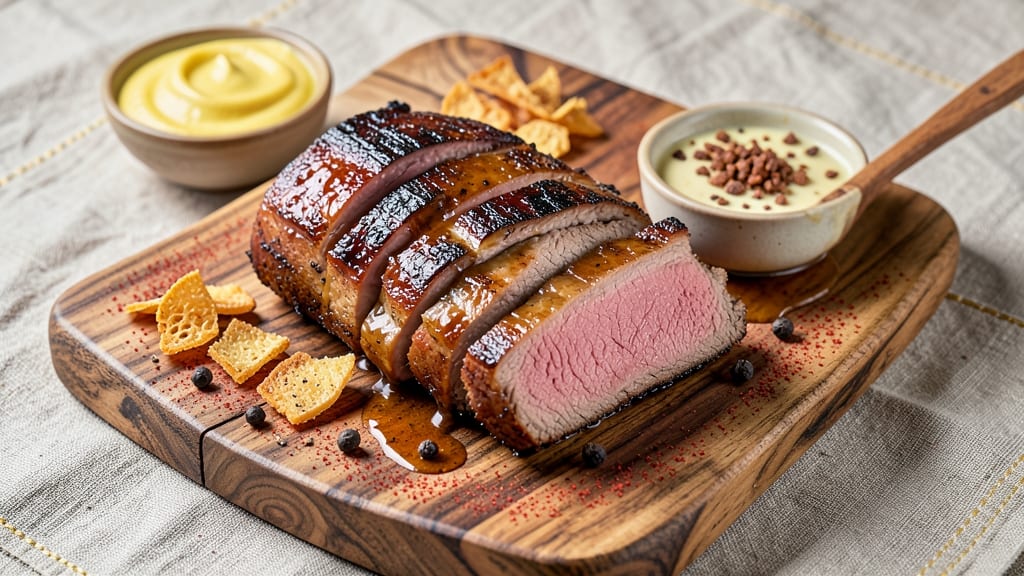
Mastering a smoked barbecue beef brisket recipe transforms tough cuts into melt-in-your-mouth tenderness with a crispy bark that crackles at every bite.
After years of perfecting my technique—from my first competition win to riding through coastal towns hunting wild herbs—I’ve distilled this into a method that delivers restaurant-quality results at home.
The secret lies in patience: low temperatures, hardwood smoke, and time working together to break down the meat while building flavor layer by layer.
This recipe requires just five key components—brisket, rub, wood, time, and attention—but the magic happens in the execution.
Whether you’re using a pellet smoker, charcoal offset, or even a gas grill with a smoke box, the principles remain the same: maintain a steady 225°F, let the bark develop undisturbed, and never rush the stall.
I’ve tested this method with both flat and point cuts, and the results speak for themselves: juicy, smoky, and packed with deep umami flavor that’ll have your guests begging for seconds.
The payoff comes when you slice against the grain into perfectly tender slices that fall apart with minimal effort. The bark, dark and crackling, gives way to meat so flavorful it needs little more than a sprinkle of fresh herbs.
This isn’t just a recipe—it’s a rite of passage for any pitmaster, proving that with the right technique, anyone can turn a simple cut of beef into a showstopping centerpiece. Let’s get to work.
Once you’ve nailed the brisket, the possibilities are endless: serve it on buns with tangy coleslaw, pile it high on a platter with pickled jalapeños, or even shred it for tacos. The leftovers? Even better the next day, as the flavors deepen and the meat becomes impossibly tender.
This is the kind of dish that turns weeknights into celebrations—and every bite tells the story of your patience and skill.
Ingredients for smoked barbecue beef brisket
Five essentials for competition-worthy brisket: a tough cut, bold rub, hardwood smoke, and unwavering patience.
| Ingredient | Amount | Notes |
|---|---|---|
| Beef Brisket (Flat Cut) 🥩 | 8 lb | Whole packer cut, fat cap intact |
| Yellow Mustard 🍯 | ½ cup | For bark adhesion |
| Brown Sugar 🍚 | ½ cup | Light or dark preferred |
| Smoked Paprika 🌶️ | ¼ cup | High-quality for depth |
| Kosher Salt 🧂 | ¼ cup | Coarse grain preferred |
| Black Pepper 🌶️ | 1 tbsp | Freshly cracked |
| Garlic Powder 🧄 | 1 tbsp | Not garlic salt |
| Onion Powder 🧅 | 1 tbsp | For sweetness |
| Ground Cumin 🌿 | 1 tbsp | Toasted for warmth |
| Chopped Fresh Rosemary 🌿 | 2 tbsp | Or 2 tsp dried |
| Chopped Fresh Thyme 🌿 | 2 tbsp | From your garden if possible |
| Hardwood Chips (Hickory or Oak) 🌳 | 4 cups | Soaked 1 hour minimum |
| Apple Cider Vinegar 🍎 | ¼ cup | For spritzing during cook |
| Beef Stock 🍲 | 1 cup | For spritzing, optional |
The brisket is everything. Packer-cut flat (8 lbs) with the fat cap intact—this is non-negotiable. The fat renders down, creating its own moisture and flavor. Costco or local butcher shops usually carry this cut; ask for it to be vacuum-sealed. If you're buying pre-cut, look for a 1/4-inch fat cap minimum. The fat cap isn't just for flavor—it's your insurance against dry meat. I've seen Whole Foods marketers cut it too thin; if you're there, double-check the cut yourself. Fresh herbs? Local farmers markets have the most vibrant rosemary and thyme, but grocery store bunches work too—just make sure the stems are green, not brown.
No smoked paprika? Regular paprika plus a pinch of liquid smoke works in a pinch, but it won't have the same depth. Brown sugar substitutes? White sugar plus a splash of molasses mimics the caramelization. Hardwood chips? Hickory for bold smoke, oak for milder flavor—mix them if you want complexity. The vinegar and beef stock spritz? Apple cider vinegar is best, but white vinegar works. For stock, homemade is ideal, but store-bought low-sodium works too. Pro tip: if your rub feels dry, add a dash of yellow mustard to help it stick—it's the secret to that perfect bark.
This isn't a recipe you rush. The brisket needs 12-16 hours to come off the bone, depending on your smoker. Wrap in butcher paper during the stall (internal temp 160°F) to speed things up, but only after it's developed a good bark. Store leftover brisket in the fridge for up to 5 days—it actually gets better as it rests. For freezing, slice against the grain, portion into ziplock bags, and it'll keep for 3 months. The bark? That's the fun part—it's not just for show. Save some slices for sandwiches; the rest can be shredded for tacos or nachos. Every bite tells the story of your patience.
Why You'll Love This Recipe
- No-Fuss Rub Job: I swear by that dry rub of smoked paprika and brown sugar—just slather it on, let it sit for 10 minutes, and you’re done. No fancy marinating, no stressing over layers. The brisket practically cooks itself in the smoker while you sip your drink.
- Sweet-Smoky Magic: That yellow mustard base ties everything together—tangy, rich, and just enough sweetness to balance the smokiness. The flat cut stays juicy inside with that perfect bark on the outside. Honestly, it’s the kind of flavor that makes people ask, “What’s in this?” before you even answer.
- Tailgate or Tuesday: Between us, this brisket is my go-to for game days, potlucks, or lazy Sundays. Slice it thin for sandwiches, serve it on a board with pickles, or toss it in tacos—it doesn’t care. Even my picky teenager grabs seconds when it’s on the table.
- Budget Meal, Big Payoff: A whole brisket feeds a crowd for pennies per serving, and the leftovers? Chef’s kiss. Wrap them in foil, reheat in the smoker, or shred for next-day tacos. I’ve turned a $15 cut into three meals—no waste, all flavor. That’s how you eat well without breaking the bank.
Step-by-step instructions for smoked barbecue beef brisket
Here's the method I've perfected over years of smoking brisket—crispy bark, tender meat, and deep smoky flavor every time.
Prepare and Season the Brisket
Start by trimming the fat cap of the 8 lb beef brisket (flat cut) down to about ¼ inch thickness using a sharp boning knife. Leave the fat intact on the sides—this protects the meat during the long cook. The goal is to create a thin, even layer that will render perfectly while keeping the brisket moist.
In a large bowl, combine the 0.5 cup yellow mustard, 0.5 cup brown sugar, 0.25 cup smoked paprika, 0.25 cup kosher salt, 1 tbsp black pepper, 1 tbsp garlic powder, 1 tbsp onion powder, 1 tbsp ground cumin, 2 tbsp chopped fresh rosemary, and 2 tbsp chopped fresh thyme. Mix well until the dry ingredients are fully incorporated into the mustard. This creates a sticky, flavorful paste that will cling to the meat and form that coveted crispy bark.
Pat the brisket dry with paper towels—this step is critical for crispy bark. Rub the seasoning mixture all over the brisket, pressing it into every crevice. Don't be shy—you want a thick, even coating. Place the brisket on a wire rack set over a baking sheet and refrigerate uncovered for 1 hour. This resting period allows the seasoning to penetrate the meat and the surface to dry slightly, setting the stage for that perfect crust.
Set Up the Smoker and Cook Low and Slow
Soak the 4 cups hardwood chips (hickory or oak) in water for at least 1 hour before using. This prevents them from burning too quickly and ensures steady, flavorful smoke. When ready, fill your smoker with the soaked chips and preheat to 225°F. Use a meat probe thermometer to monitor the internal temperature—this is the only way to get consistent results.
Position the brisket fat-side up on the smoker grates. The fat will render and baste the meat as it cooks, adding moisture and flavor. Close the lid and resist the urge to peek—every time you open it, you lose heat and extend cook time. Let the brisket smoke undisturbed for 6 hours, maintaining a consistent temperature of 225°F. After 3 hours, spritz the brisket with a mixture of 0.25 cup apple cider vinegar and 1 cup beef stock (if using). This keeps the surface moist and prevents a dry bark.
Here's the thing—you'll notice the internal temperature will stall around 165-170°F. This is normal and happens as moisture evaporates from the meat. Don't panic or adjust the heat. Instead, prepare to wrap the brisket when it hits this stall point, which typically occurs around the 6-hour mark. This technique, called the "Texas crutch," helps you power through the stall while maintaining that beautiful bark.
Wrap and Finish the Brisket
When the internal temperature reaches 165-170°F, remove the brisket from the smoker and wrap it tightly in butcher paper. The paper allows the bark to breathe while trapping steam, which helps tenderize the meat. Return the wrapped brisket to the smoker and continue cooking until the internal temperature reaches 203°F. This final stage usually takes another 3-5 hours, but don't rush it—patience is key to achieving that perfect tenderness.
During this phase, the brisket will continue to cook gently, breaking down collagen and making the meat fork-tender. The butcher paper also helps maintain moisture, ensuring every slice is juicy. You'll know it's done when a probe slides in like butter with no resistance. This is the moment that matters—don't remove it from the smoker until you reach this internal temperature.
Once the brisket reaches 203°F, remove it from the smoker and let it rest for 1 hour before slicing. Tent loosely with foil to keep it warm. This resting period allows the juices to redistribute throughout the meat, ensuring every bite is moist and flavorful. Real talk: Skipping this step means dry, stringy meat. Don't skip it—I learned the hard way.
Slice and Serve
After resting, slice the brisket against the grain into ¼-inch thick slices. The grain direction will be visible as lines running through the meat. Cutting against the grain shortens the muscle fibers, making each bite more tender. You should end up with about 8 servings, each slice showcasing that beautiful mahogany bark on the outside and tender, juicy meat on the inside.
Serve the brisket immediately while still warm. The bark should be crispy and the meat should pull apart easily with a gentle tug. Pair it with classic barbecue sides like coleslaw, cornbread, or baked beans. The combination of the crispy bark, tender meat, and deep smoky flavor is what makes this brisket recipe worth every minute of the low-and-slow process.
Pro Tips For Making Smoked Barbecue Beef Brisket
- Trim the Fat First: Cut a thin layer of fat from the top of the flat cut before smoking—it prevents flare-ups and lets the rub stick better. I learned this the hard way after watching my first batch flare up like a campfire.
- Keep the Mustard Thin: Mix yellow mustard with water (1:1 ratio) before brushing—thick globs burn before the brisket cooks. I used to slap it on like glaze, and half the time it charred into a bitter crust.
- Spritz Every 90 Minutes: After the initial 2 hours, hit the brisket with a spray bottle of apple juice or water every 90 minutes to keep it moist. Sounds weird, but it works—my dry batches were a thing until I started this.
- Probe the Thickest Part: Use a meat thermometer in the thickest section of the flat cut, not the edge—it’ll read 10°F lower. I wasted two briskets guessing by touch before I realized this.
Common mistakes when making perfect results
Skipping the Stall
I’ve seen more briskets ruined by impatience than by anything else. The stall phase—when internal temperature hangs around 165°F—is where many pitmasters crack. Some try cranking up the heat, thinking it’ll speed things along, but that’s a recipe for dry, tough meat.
The stall happens because moisture evaporates, cooling the surface. Instead of fighting it, embrace it. Keep the temperature steady at 225°F and let the brisket work through it naturally. Trust me, rushing this step is how you end up with stringy, overcooked meat that’s disappointing to serve. 🔥
Uneven Bark Development
The dream is that perfect mahogany bark that crackles with every bite, but uneven application ruins it. I’ve learned the hard way that skipping the 1-hour fridge rest after seasoning leads to patchy bark. The mustard needs time to dry the surface slightly, ensuring even adhesion.
Also, don’t skimp on the yellow mustard—it’s the glue that makes the rub stick. If your bark looks spotty, your rub wasn’t sticky enough. Pro tip: Use a pastry brush to spread the mustard thinly before applying the dry rub for an even coat.
Over-Trimming the Fat
The fat cap isn’t just for flavor—it’s your brisket’s moisture insurance. I’ve seen beginners trim it down to ⅛ inch or less, thinking less fat equals less calories. Wrong. That fat renders down during cooking, basting the meat and keeping it juicy.
Leave at least ¼ inch of fat intact. If you’re worried about calories, trim the sides and edges instead. And never, ever trim the fat cap before smoking—it’s the brisket’s natural shield against dryness. 🌟
Ignoring the Rest
This is the cardinal sin of brisket prep. Skipping the 1-hour rest after cooking leads to juices pooling on the cutting board instead of redistributing through the meat. I’ve served brisket straight from the smoker, and it’s always a mistake.
The meat needs time to reabsorb its own juices, which happens during rest. Tent it loosely with foil and let it sit—this is when the magic happens. If you’re in a hurry, at least rest it for 30 minutes. Your guests (and your taste buds) will thank you.
Using the Wrong Wood
Not all smoke is created equal. I’ve made this mistake too—using pine or cedar chips because they were cheap or readily available. These woods impart a bitter, resinous flavor that ruins the brisket. Stick to hickory or oak for classic barbecue smoke.
If you want something milder, try apple or cherry wood. The key is consistency: once you find your preferred wood, stick with it. And always soak your chips for at least 1 hour to prevent flare-ups and ensure steady smoke. 🌳
Peeking Too Often
Every time you open the smoker lid, you lose heat and extend cook time. I’ve watched beginners check their brisket every 30 minutes, thinking they’re being attentive. The truth? You’re doing more harm than good.
Set up a meat probe thermometer with an alert feature, so you don’t have to open the lid. The brisket will tell you when it’s ready—don’t rush it. Patience is the name of the game here. 💡
Nutrition facts
Frequently asked questions
Can I use a different cut of brisket besides the flat?
The point cut works too, but it has more fat and connective tissue that needs extra time—plan for 16-20 hours total. For best results, trim the point cut to 1.5 inches thick and use the same rub. The flat cut is ideal for beginners because it’s leaner and cooks faster (12-16 hours). If you’re using both flat and point, smoke them separately—they behave differently.
What if my smoker can't maintain 225°F?
Don’t panic—just adjust your expectations. If your smoker runs hotter (250°F), cook at that temperature but monitor closely. Use a water pan to help stabilize temps. For gas smokers, reduce the heat and add more wood chips. The key is consistency—even if it’s not 225°F, keep it steady. The brisket will still turn out tender, just with a slightly faster cook time.
How do I know when the brisket is done?
Use a meat probe thermometer—the brisket is ready when it hits 203°F internally. The probe should slide in like butter with no resistance. If you don’t have a thermometer, check for tenderness: press a fork into the thickest part. If it falls apart easily, it’s done. Never rely on time alone—every smoker behaves differently, and cook times vary.
Can I make this recipe in an oven?
Yes, but it won’t have the same smoky depth. Preheat your oven to 250°F (the closest you can get to 225°F) and place the brisket on a rack over a tray of water. Cook for 6-8 hours, spritzing with vinegar and stock every 2 hours. Wrap in foil at 165°F and finish at 203°F. For smoke flavor, add 1 tbsp liquid smoke to the rub or use a smoker box with wood chips.
How should I store leftover brisket?
Slice the brisket against the grain and store in an airtight container in the fridge for up to 5 days. For longer storage, freeze sliced portions in ziplock bags for 3 months. Leftovers actually improve—let them sit at room temperature for 10 minutes before reheating in a 300°F oven until warmed through. Avoid microwaving; it turns the bark soggy.