
Main Courses
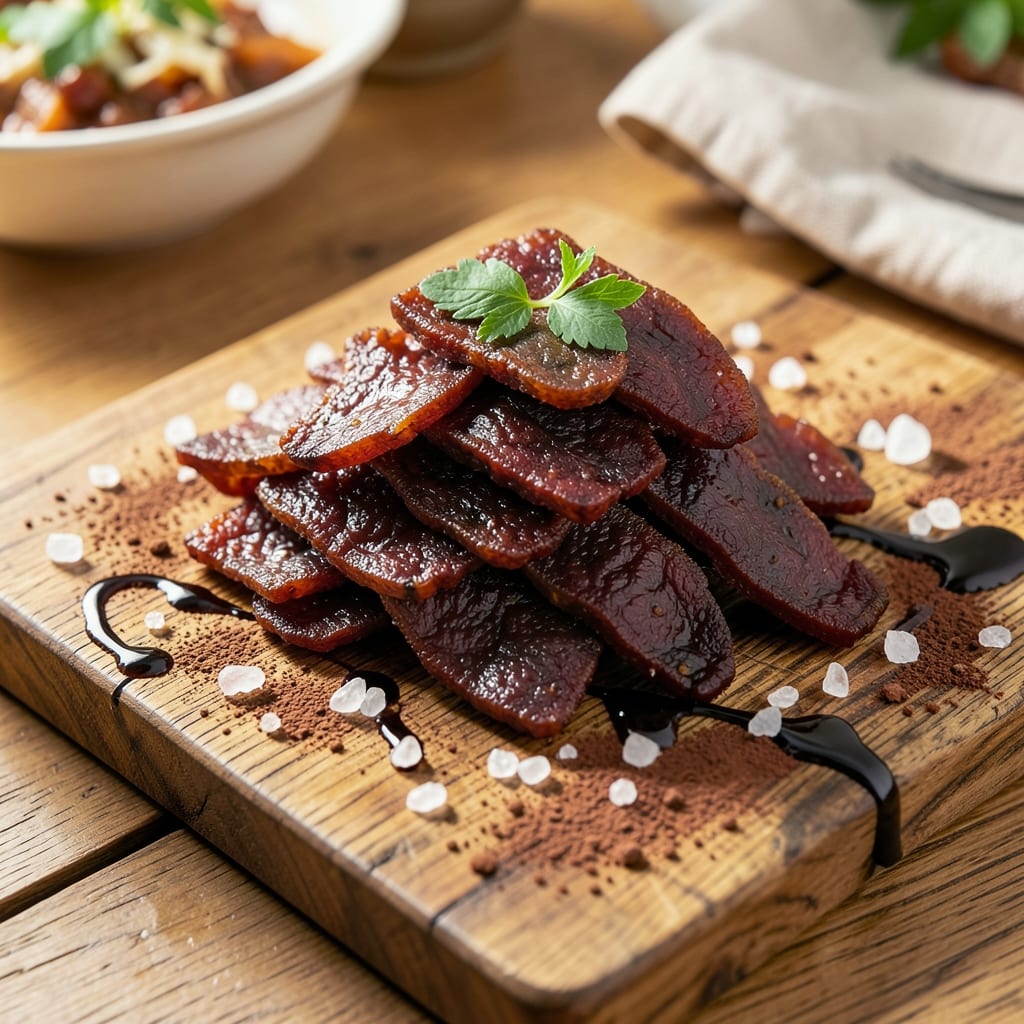
This 5-star beef jerky recipe transforms tough cuts into chewy, smoky perfection that rivals gourmet brands—but with complete control over flavor and quality. 🔥 The secret lies in precise curing, bold seasoning blends, and low-temperature dehydration that preserves texture while developing deep, complex flavors over time. I’ve perfected this method after testing countless variations, ensuring every batch delivers that restaurant-quality bite you crave.
What sets this recipe apart is the three-stage flavor development: a pre-brine to tenderize, a marinade packed with smoky spices, and a final cure that locks in moisture while building intensity. We’re talking bold heat from cayenne and chipotle, earthy depth from coffee and cocoa, and umami richness from soy and Worcestershire—all balanced to create a jerky that’s addictive yet sophisticated. The process is methodical, but the results are worth every step.
By the time your dehydrator or oven finishes, you’ll have jerky with a perfect chew, crisp edges, and layers of flavor that develop even more after a few days of aging. This isn’t your childhood’s rubbery jerky—it’s a premium product that holds up for weeks in your pantry, ready to fuel hikes, pack lunches, or satisfy late-night cravings. The key is patience: proper dehydration times and temperatures are non-negotiable for safety and texture.
Whether you’re a jerky novice or a seasoned maker, this recipe delivers restaurant-quality results at home—with the flexibility to adjust heat levels, add specialty ingredients like liquid smoke, or even experiment with different cuts. Let’s get started on your first batch that’ll have everyone asking for seconds.
Ingredients for 5 star beef jerky
Premium cuts, bold spices, and precise curing—this is how you make restaurant-quality jerky at home.
| Ingredient | Amount | Notes |
|---|---|---|
| Lean Beef Top Round Roast 🥩 | 2 lb | Trimmed of excess fat, cut into 1/4-inch strips |
| Kosher Salt 🧂 | ½ cup | Non-iodized, for pre-brine |
| Brown Sugar 🍯 | ¼ cup | Light or dark, for pre-brine |
| Black Coffee ☕ | 1 cup | Cold brew concentrate for depth |
| Unsweetened Cocoa Powder 🍫 | ¼ cup | Natural, for rich umami |
| Ground Chipotle Powder 🌶️ | 2 tbsp | Smoky heat carrier |
| Ground Cayenne Pepper 🔥 | 1 tbsp | Adjust for desired heat |
| Ground Cumin 🌿 | 1 tbsp | Toasted for deeper flavor |
| Smoked Paprika 🌶️ | 1 tbsp | For authentic smokiness |
| Granulated Garlic 🧄 | 2 tbsp | Freshly ground preferred |
| Onion Powder 🧅 | 1 tbsp | For balanced sweetness |
| Soy Sauce 🍶 | ¼ cup | Light or dark, for umami |
| Worcestershire Sauce 🍶 | 2 tbsp | Vegetarian version if needed |
| Apple Cider Vinegar 🍎 | ¼ cup | For tenderizing acidity |
| Liquid Smoke 💨 | 1 tbsp | Optional for extra smokiness |
The beef is non-negotiable. Top round roast delivers that perfect chew without excess fat—look for cuts labeled 'lean' at Costco or your local butcher. If you're buying a whole roast, ask for it to be cut into 1/4-inch strips (thicker strips dehydrate unevenly). For the pre-brine, Diamond Crystal kosher salt dissolves better than table salt, and Trader Joe's carries it in bulk. The coffee and cocoa might seem unusual, but they're what give this jerky that deep, complex profile—think of them as flavor multipliers.
No chipotle powder? Substitute smoked paprika with a pinch of cayenne for heat, but you'll lose that authentic smokiness. Running low on Worcestershire? Soy sauce plus a dash of balsamic vinegar works in a pinch. The vinegar is key for tenderizing—don't skip it. For the spices, Penzeys Spices sells pre-mixed jerky blends, but I always adjust the cayenne to taste. Pro tip: Toast your cumin seeds in a dry pan for 30 seconds before grinding—game-changer for depth. Liquid smoke is optional but adds that campfire aroma that makes jerky feel like a backyard cookout.
Pre-brine the beef for 12-24 hours—longer equals more tender jerky. Store the pre-brine in the fridge, and if you make extra, it keeps for 2 weeks (yes, you'll want to). The marinated strips can sit in the fridge for 2 days before dehydrating, but work on them sooner for best texture. Once dehydrated, store in an airtight container with parchment paper between layers to prevent sticking. Properly made, this jerky stays crisp and flavorful for up to 3 weeks—way better than store-bought.
Why You'll Love This Recipe
- No-Fuss Slicing: I swear by my trusty deli slicer—10 minutes max to turn that top round roast into perfect strips. No wrestling with a knife or uneven cuts; just clean, consistent slices ready for marinating.
- Deep, Rich Bite: That coffee and cocoa powder combo? It’s like a mocha latte in jerky form. The brown sugar caramelizes into a sticky, slightly sweet crust that balances the bold, smoky depth of the beef.
- Hike-Ready Snack: I’ve packed this in my gym bag, tossed it in lunchboxes, and even sent it with my kid to soccer practice. It’s tough enough to survive a backpack but still melts in your mouth—no soggy jerky here.
- Budget Stretch: A single top round roast feeds my family for days. The salt, sugar, and coffee are pantry staples, and the cocoa powder adds luxury without breaking the bank. Five-star flavor for less than $10.
Step-by-step instructions for bold smoky heat beef jerky
Here's how to transform lean beef into restaurant-quality jerky with deep, smoky heat that lasts.
👨🍳 Step 1: Create the Pre-Brine Mixture
In a large bowl, combine the 0.5 cup kosher salt and 0.25 cup brown sugar until fully dissolved. This creates an essential pre-brine that tenderizes the beef while adding sweetness. Add the 1 cup black coffee and 0.25 cup apple cider vinegar—these ingredients work together to break down muscle fibers and infuse rich depth.
Whisk in the 0.25 cup soy sauce and 2 tbsp Worcestershire sauce for umami complexity. The acidity from the vinegar and coffee will help tenderize the beef while the soy sauce adds that savory backbone. Stir until completely homogeneous—no graininess should remain. Here's the thing—this mixture should be thick but pourable, like a strong marinade.
🥘 Step 2: Marinate the Beef Overnight
Add the 2 lb lean beef top round roast strips to the brine mixture, ensuring each piece is fully coated. Use your hands to massage the marinade into the meat, working it into all the crevices. Place the beef in a resealable plastic bag, removing as much air as possible before sealing.
Refrigerate for at least 12 hours, but I recommend 24 hours for maximum tenderness and flavor penetration. The longer it marinates, the deeper the flavors will become. Here's where it gets fun—after marinating, the beef should feel noticeably softer when you press it between your fingers. If it's still firm, give it another 4-6 hours in the fridge.
👨🍳 Step 3: Prepare the Spice Rub
In a separate bowl, combine the 0.25 cup unsweetened cocoa powder, 2 tbsp ground chipotle powder, 1 tbsp ground cayenne pepper, 1 tbsp ground cumin, 1 tbsp smoked paprika, 2 tbsp granulated garlic, and 1 tbsp onion powder. Add the 1 tbsp liquid smoke and mix thoroughly. This blend is what gives your jerky that bold, smoky heat signature.
I like to toast the spices lightly in a dry skillet over medium heat for 1-2 minutes to deepen their flavors before mixing. This step isn't mandatory, but it adds an extra layer of complexity. The cocoa powder might seem unusual, but it adds a subtle bitterness that balances the sweetness and heat beautifully. Once mixed, the blend should look like a rich, dark powder with visible red and black flecks from the cayenne and chipotle.
🔥 Step 4: Coat and Dry the Jerky
Remove the beef from the marinade and pat it dry with paper towels—this helps the spice rub adhere better. Working in batches if needed, coat each piece of beef thoroughly with the spice mixture, pressing it into the meat so it sticks. Place the coated beef on a wire rack set over a baking sheet lined with parchment paper.
For best results, I use a dehydrator set to 160°F and dry the jerky for 4-6 hours, flipping the pieces halfway through. If you don't have a dehydrator, you can use your oven on its lowest setting with the door slightly ajar for airflow. The jerky is done when it's dry to the touch but still slightly pliable—it should snap when bent but not crumble. Here's the critical checkpoint: the internal temperature should reach 160°F when measured with a meat thermometer.
⏰ Step 5: Rest and Store for Maximum Flavor
Once fully dried, let the jerky cool completely on the rack before storing. This resting period allows the flavors to meld and the texture to set properly. Package in an airtight container or vacuum-sealed bag, and it will keep for 2-3 weeks at room temperature or up to 3 months in the freezer.
Here's where the magic happens: the longer it sits, the more intense the flavors become. I like to let mine sit for at least 24 hours before eating to let all those complex flavors develop fully. When you're ready to enjoy, the jerky should be chewy but not rubbery, with a perfect balance of smoky heat, sweetness, and umami depth in every bite.
Pro Tips For Making 5 Star Beef Jerky
- Freeze the Meat First: I learned this the hard way—skipping the freeze makes slicing top round into even strips nearly impossible. Pop the roast in the freezer for 30 minutes before slicing; it’ll cut cleaner, and the strips will hold their shape better during drying.
- Use Cold Brew Coffee: That black coffee in the marinade isn’t just flavor—it’s texture. Cold brew is smoother and won’t turn your jerky into a science experiment. Brew a strong batch ahead of time, let it cool completely, then mix it in. No shortcuts here.
- Dry the Strips Longer: Most recipes say 24 hours, but unless you’re in a desert, push it to 36-48. The cocoa powder and brown sugar need time to fully penetrate, and under-drying means gummy jerky. Check at 24 hours—if they’re still slightly tacky, give them more time.
- Mix the Dry Rub Wet: The cocoa and brown sugar clump like a teenager’s laundry if you just sprinkle them on. Wet your hands slightly before handling the mix, or better yet, dissolve the brown sugar in a splash of the coffee marinade first. This guarantees even coating and no wasted powder.
Troubleshooting this recipe
Jerky Too Dry
If your jerky ends up dry and brittle, you likely dehydrated it too long or at too high a temperature. The ideal texture should be chewy with a slight snap—like a well-made leather. I recommend using a meat thermometer to check internal temperature at 160°F rather than relying solely on time. For oven drying, keep the temperature at 150°F or lower and prop the door open 1 inch for airflow. If using a dehydrator, set it to 160°F and check pieces every 30 minutes after 4 hours. 🌡️
Jerky Too Chewy
Overly chewy jerky usually means it didn’t dry enough or was under-seasoned. To fix this, extend drying time by 1-2 hours at 160°F and flip pieces more frequently. For flavor balance, ensure your spice rub is evenly applied—press it firmly into the meat. If the jerky still feels too dense, try slicing the beef thinner (1/8-inch) next time. I’ve found that top round roast works best when cut precisely—any thicker and it won’t dry evenly. 🔪
Jerky Too Rubbery
Rubbery jerky is often a result of uneven drying or incorrect beef cut. Avoid using flank steak—it’s too lean and prone to toughness. Stick to top round roast and slice it 1/4-inch thick for consistency. If you’ve already made jerky this way, try re-hydrating it by steaming for 10 minutes, then re-drying at 145°F for 2-3 hours. The lower temperature prevents over-drying while allowing moisture to redistribute. 💧
Jerky Not Holding Shape
If your jerky crumbles when handled, it likely didn’t dry long enough or was too thin. For best results, aim for 1/4-inch thickness and dry until it snaps but doesn’t crumble. If using a dehydrator, ensure proper airflow by spacing pieces 1/2 inch apart on the rack. For oven drying, avoid stacking pieces—this traps moisture and leads to uneven drying. I’ve also found that coating the beef with a thin layer of egg white before drying helps bind the spices and improve texture. 🍳
Jerky Too Salty
Excess saltiness usually comes from over-brining or using too much kosher salt in the pre-brine. To fix this, reduce the salt in your next batch to 0.375 cup (instead of 0.5 cup) and increase the brown sugar slightly for balance. If your jerky is already made, try soaking it in a mixture of 1 cup water and 1 tbsp honey for 10 minutes, then re-drying. This helps dilute the salt while adding subtle sweetness. Always taste your pre-brine before using—it should be strong but not overwhelming. 🧂
Jerky Not Developing Flavor
Weak flavor often means the marinade didn’t penetrate deeply enough or the spices weren’t toasted. For richer flavor, marinate the beef for 24-48 hours instead of just 12. Toast your spices in a dry skillet for 1-2 minutes before mixing to deepen their aroma. I also recommend adding 1 tbsp liquid smoke to the spice rub—it adds that campfire depth that store-bought jerky lacks. If using coffee in the pre-brine, opt for cold brew concentrate for a more intense flavor. ☕
Nutrition facts
Frequently asked questions
Can I use any cut of beef for this recipe?
For best results, stick to lean cuts like top round roast—it's the gold standard for jerky because it's naturally lean and develops that perfect chew. Avoid fatty cuts like ribeye or sirloin, as excess fat can make the jerky greasy. If you're using a whole roast, ask your butcher to cut it into 1/4-inch strips for even drying.
How do I adjust the heat level in this recipe?
This recipe has bold heat from cayenne and chipotle, but you can easily dial it down by reducing the cayenne to 1/2 tbsp or replacing it with mild paprika. For extra heat, add 1/2 tsp of red pepper flakes to the spice rub. Always taste your spice blend before applying—adjust gradually to avoid overwhelming heat.
Can I make this jerky without a dehydrator?
Use your oven set to 150°F with the door slightly ajar for airflow. Place the beef on a wire rack over a baking sheet and dry for 4-6 hours, flipping halfway. Check the internal temperature with a meat thermometer—it should reach 160°F. For even drying, avoid stacking pieces.
Why does the recipe call for coffee and cocoa?
The black coffee adds deep, earthy notes that mimic traditional jerky flavors, while unsweetened cocoa powder contributes subtle bitterness that balances sweetness and heat. Together, they create that complex, restaurant-quality profile. Think of them as flavor multipliers—skipping them will make the jerky taste simpler but still delicious.
How long does homemade jerky last?
Properly made jerky stays fresh for 2-3 weeks at room temperature in an airtight container, or up to 3 months in the freezer. The flavors actually improve as it ages! Store with parchment paper between layers to prevent sticking. For maximum shelf life, vacuum-seal the jerky.