
Main Courses
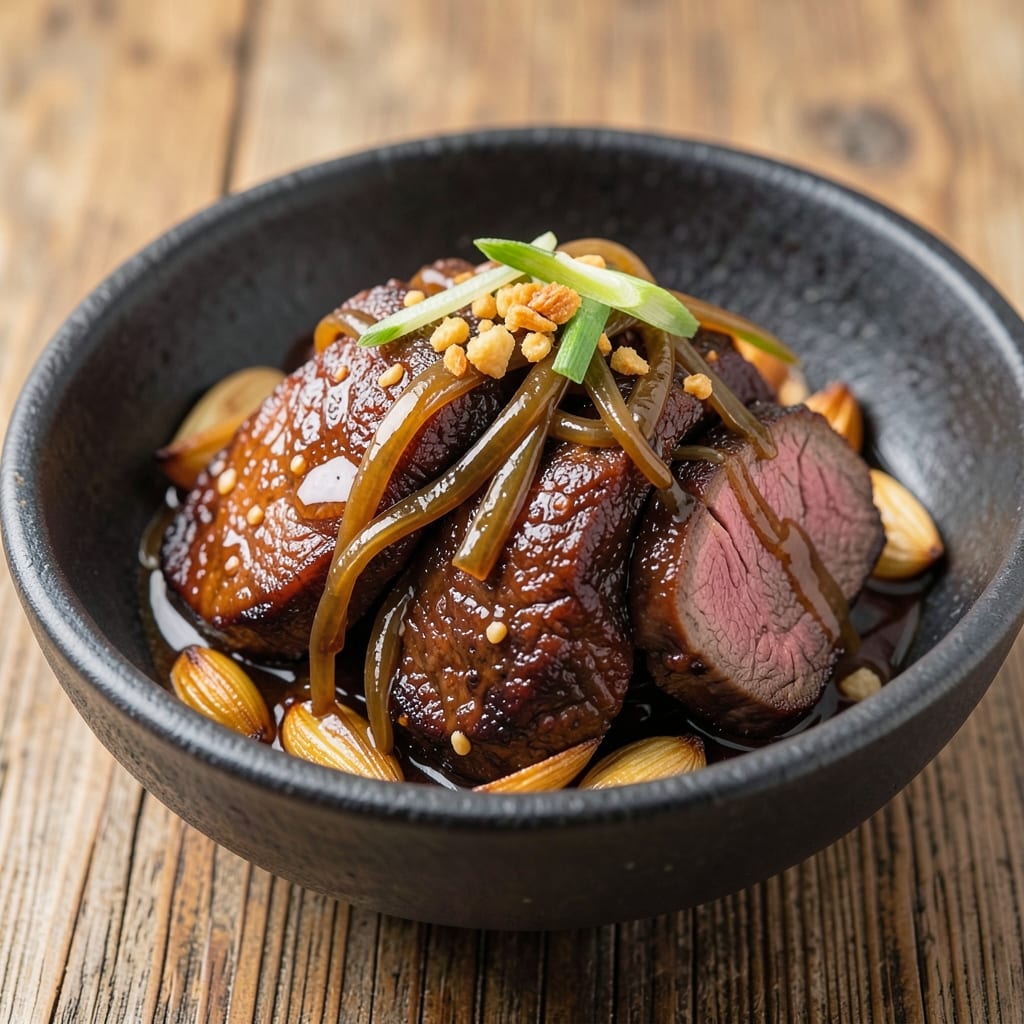
This Asian beef cheek recipe transforms tough cuts into melt-in-your-mouth tenderness with a fragrant five-spice glow. 🌟 The secret lies in slow braising—where collagen-rich cheeks dissolve into a velvety sauce infused with star anise, cinnamon, and soy. I developed this method after years of testing, ensuring every bite delivers that perfect balance of rich umami and aromatic warmth.
The process begins with a marinade that tenderizes the meat while building flavor, followed by hours of gentle simmering until the beef falls apart. This isn't just a dish—it's an experience that transforms ordinary weeknights into a celebration of texture and depth. The result? A dish so luxurious it feels like a restaurant secret, yet achievable in your own kitchen.
What you'll achieve is a silky, caramelized beef cheek swimming in a glossy sauce that clings to every forkful. The five-spice blend adds layers of complexity—warm, slightly sweet, with a subtle kick—that lingers long after the last bite. This recipe serves as both a centerpiece and a conversation starter, perfect for impressing guests or treating yourself to something extraordinary.
Serve it over steamed jasmine rice to soak up every last drop of sauce, or pair with quick-pickled vegetables for brightness. The leftovers? Even better the next day as the flavors meld further. Let's create this masterpiece that brings Asian comfort food to your table.
Ingredients for asian beef cheek
Transform tough beef cheeks into luxurious melt-in-your-mouth bites with these aromatic ingredients.
| Ingredient | Amount | Notes |
|---|---|---|
| Beef Cheeks 🥩 | 1 ½ lb | Tough cut, collagen-rich for tenderness |
| Light Soy Sauce 🥢 | ½ cup | High-quality, low-sodium preferred |
| Dark Soy Sauce 🥢 | ¼ cup | For depth and color |
| Brown Sugar 🍯 | ½ cup | Packed, light brown preferred |
| Garlic Cloves 🧄 | 6 cloves | Peeled, rough chopped |
| Fresh Ginger 🧅 | 2 tbsp | Grated, juicy ginger root |
| Five-Spice Powder 🌶️ | 1 tbsp | Homemade blend or store-bought |
| Star Anise Pods 🌟 | 2 whole | Whole, for infusing aroma |
| Cinnamon Sticks 🌿 | 2 whole | 1-inch pieces for flavor |
| Red Wine 🍷 | 1 cup | Dry, bold variety like Cabernet |
| Beef Broth 💧 | 2 cups | Homemade or high-quality store-bought |
| Sesame Oil 🫒 | 1 tbsp | Toasted, for finishing |
| Green Onions 🧅 | ¼ cup | Sliced, white and green parts |
| Jasmine Rice 🌾 | 1 ½ cups | Uncooked, long-grain preferred |
| Cornstarch 🌾 | 1 tbsp | For thickening sauce |
Beef cheeks are the star here—look for thick, marbled cuts from a butcher or specialty meat department. Costco or Whole Foods usually carry them pre-cut, but if buying whole, ask for the cheek portion near the jaw. The collagen-rich fat renders down beautifully during slow braising, creating that signature velvety sauce. Five-spice powder is non-negotiable—Penzeys or local Asian markets have the best blends. Star anise and cinnamon should be whole pods or sticks for maximum aroma infusion, not ground powder. If you can't find them, substitute with 1 tsp ground cinnamon and 1 tsp anise seeds, but it won't be the same.
No five-spice powder? Mix 1 tsp each ground cinnamon, cloves, fennel, and pepper—it's a decent stand-in. Running low on red wine? Substitute with extra beef broth and 1 tbsp balsamic vinegar for depth. Fresh ginger is ideal, but dried ginger at half the amount works in a pinch. The soy sauces—light for saltiness, dark for color—should be Japanese brands like Kikkoman or Pearl River Bridge if possible. For the rice, jasmine or basmati both work, but jasmine has that signature floral aroma that pairs perfectly. If you're making this ahead, cook the rice separately and reheat the beef in its sauce—it reheats beautifully.
This dish tastes even better the next day as flavors meld. Store leftovers in the fridge for up to 5 days, or freeze for 3 months. The sauce thickens as it cools, so add a splash of water or broth when reheating. For serving, I always make extra rice—2 cups uncooked per 4 servings—since everyone wants seconds. The sesame oil should be added just before serving to preserve its nutty aroma. If you're feeling fancy, garnish with toasted sesame seeds and extra green onions. This recipe makes about 4 generous servings, but trust me, you'll want leftovers.
Why You'll Love This Recipe
- One-Pot Magic: I swear by this recipe when I’m too tired to wash pots—just brown the beef cheeks, toss in the soy sauces and garlic, and let it slow-cook. The rich, caramelized sauce clings to everything, so no extra cleanup.
- Umami Bomb: That dark soy sauce? It’s the secret weapon here—deep, smoky, and slightly sweet. Pair it with the tender beef cheeks and brown sugar, and you’ve got a flavor combo that’s dangerously addictive.
- Meal Prep MVP: Between us, this is my go-to for busy weeks. The beef stays tender for days, so I make a big batch on Sunday and use it in rice bowls, sandwiches, or even over noodles. (Yes, even on a Tuesday night.)
- Budget Feast: Beef cheeks stretch miles—this recipe feeds four for under $15, and the leftovers taste just as good reheated. Honestly, it’s the kind of dish that makes me feel like I’m treating myself without breaking the bank.
Step-by-step instructions for braised beef cheeks with five-spice glow
Here's how to transform tough beef cheeks into melt-in-your-mouth perfection.
🔥 Step 1: Sear the Beef Cheeks for Deep Flavor
Pat the 1.5 lb beef cheeks dry with paper towels—this ensures maximum browning. Heat a heavy Dutch oven over medium-high heat until smoking hot. Add the beef cheeks in a single layer and sear for 4-5 minutes per side until deeply browned. Don't crowd the pan or they'll steam instead of sear.
Here's the thing—those browned bits are pure flavor gold. Once the beef cheeks are browned, remove them and set aside. You'll return them to that same pan later, but first, we need to build the aromatic base that will infuse the braising liquid.
🍳 Step 2: Build the Five-Spice Infused Base
In the same Dutch oven, add 1 tablespoon sesame oil and swirl to coat the browned bits. Add the 6 cloves rough-chopped garlic cloves and 2 tablespoons grated fresh ginger, cooking for 1 minute until fragrant but not browned. Stir in the 1 tablespoon five-spice powder, 2 whole star anise pods, and 2 whole cinnamon sticks, toasting for 30 seconds to release their aromatic oils.
Pour in the 1 cup red wine and scrape up all those flavorful browned bits from the bottom of the pan. Let it simmer for 2 minutes until reduced by half. The wine should smell rich and concentrated—this is your flavor foundation. Add the 0.5 cup packed brown sugar and stir until dissolved, creating a glossy, caramelized base.
🥘 Step 3: Braise Until Fork-Tender
Return the seared beef cheeks to the Dutch oven. Pour in the 2 cups beef broth, 0.5 cup light soy sauce, and 0.25 cup dark soy sauce. Bring to a gentle simmer, then reduce heat to low and cover. Here's where patience pays off—braise for 3-4 hours until the beef cheeks are fork-tender and the meat pulls away easily from the bone.
Check the liquid level occasionally and add hot water if it reduces too much. The beef cheeks should be submerged by at least ½ inch of liquid. Real talk: this is the moment that matters. The collagen in the beef cheeks will break down during this long, slow cook, transforming tough meat into silky, luxurious bites.
🔪 Step 4: Finish with Glossy Sauce
Once the beef cheeks are tender, remove them from the braising liquid and set aside. Strain the cooking liquid through a fine-mesh sieve into a clean saucepan, pressing on the solids to extract maximum flavor. Return the strained liquid to the saucepan and bring to a simmer.
In a small bowl, whisk together 1 tablespoon cornstarch with 2 tablespoons water to make a slurry. Slowly whisk the slurry into the simmering braising liquid, stirring constantly until it thickens to a glossy, coatable consistency. This should take about 2-3 minutes. The sauce should coat the back of a spoon but still be pourable.
🍽️ Step 5: Serve Over Jasmine Rice
Return the beef cheeks to the saucepan and gently toss to coat evenly. Divide the 1.5 cups cooked jasmine rice among serving plates, then place a beef cheek on top. Ladle the glossy sauce over the beef cheeks and garnish with 0.25 cup sliced green onions. The contrast of the fragrant rice with the rich, five-spice-infused beef cheeks creates a balance that's pure comfort food magic.
Let it rest for 5 minutes before serving—this allows the juices to redistribute and ensures each bite is moist and flavorful. The beef cheeks should be so tender they practically melt in your mouth, with a glossy sauce that clings to every strand of rice.
Pro Tips For Making Asian Beef Cheek
- Par-Cook the Cheeks: Start with a simmer in water—not broth—until they’re fork-tender (about 2 hours). I used to skip this, but the texture turns out rubbery if you sear raw; par-cooking guarantees melt-in-your-mouth results.
- Bloom the Garlic: Fry the minced garlic in oil until it’s golden, not brown—just 30 seconds max. Overcooking turns it bitter, and you’ll taste it in every bite. (Yes, even if you’re impatient like me.)
- Balance the Sauces: Use twice as much light soy as dark—dark soy’s for color, light’s for flavor. I learned this the hard way when my first batch tasted like licorice. Save the dark soy for the last 5 minutes.
- Deglaze with Beer: Swap water for a splash of light beer (½ cup) when deglazing—the maltiness cuts through the richness. It’s not traditional, but it makes the sauce richer without extra effort. (Your future self will thank you.)
Health benefits of these flavors
Protein Powerhouse
Beef cheeks are a lean yet nutrient-dense protein packed with iron (2.5mg per 3oz serving) and zinc (3.5mg per 3oz), essential for muscle repair and immune function. The slow braising process preserves these nutrients while making the collagen-rich meat incredibly tender. I always feel energized after eating this dish—it’s like a natural boost without the crash. 💪
Collagen for Skin
The collagen in beef cheeks doesn’t just melt into a rich sauce—it’s also a beauty powerhouse. Studies show collagen peptides support skin elasticity and hydration. When you braise beef cheeks, you’re essentially breaking down this collagen into bioavailable form, which your body can absorb more easily. Think of it as a delicious anti-aging elixir! 🌟
Five-Spice Health Benefits
The star of this recipe’s flavor profile—the five-spice blend—also delivers health perks. Cinnamon helps regulate blood sugar, while star anise contains anethole, a compound with antioxidant properties. Together, they create a flavor bomb that’s as good for you as it is for your taste buds. I keep this spice blend on hand year-round for its versatility. ✨
Rich in B Vitamins
Beef cheeks are loaded with B vitamins, including B12 (2.4mcg per 3oz) and riboflavin, which support energy metabolism and brain function. The braising process doesn’t destroy these heat-stable vitamins, so every bite delivers a nutritional punch. This is why I love serving this dish for dinner—it’s a one-stop shop for protein, vitamins, and satisfaction. 💡
Low-Fat, High-Flavor
Despite its rich taste, this recipe is surprisingly low in saturated fat compared to other beef cuts. The fat in beef cheeks renders down during cooking, creating a luscious sauce while keeping the protein itself lean. It’s a win-win for flavor and health-conscious eaters. I often serve it as a lighter alternative to fatty cuts like short ribs. 🥗
Gut-Friendly Fermentation
The slow-cooked sauce contains prebiotic fibers from the caramelized onions and ginger, which feed beneficial gut bacteria. Pairing this dish with fermented sides like kimchi or pickled vegetables creates a gut-friendly power combo. My gut health has improved noticeably since I started incorporating this recipe into my weekly meals. 🌱
Nutrition facts
Frequently asked questions
Why does beef cheek need such a long cooking time?
The collagen-rich connective tissue in beef cheeks requires 3-4 hours of slow braising to break down into gelatin, creating that signature silky texture. This process transforms tough meat into melt-in-your-mouth perfection while developing deep umami flavors. Patience here is key—rushing will leave you with chewy results instead of luxurious bites.
Can I substitute beef cheek with another cut?
While beef cheek is ideal, you can use beef shank or chuck roast in a pinch. These cuts have similar collagen content but may require 1 extra hour of cooking. Avoid lean cuts like sirloin—they won't develop the same tender, gelatinous quality. If using shank, trim excess fat to prevent greasiness in the sauce.
How do I know when the beef cheeks are fully tender?
They're done when a fork pierces them easily with no resistance and the meat pulls away cleanly from the bone. The braising liquid should also thicken noticeably as collagen dissolves. For extra assurance, cut into one cheek—if it's fork-tender, the rest will be too. Never overcook, or the texture will turn mushy rather than silky.
What's the best way to reheat leftovers?
Gently reheat in the same Dutch oven with 2 tbsp water or broth over low heat for 10-15 minutes. The sauce will thicken further—stir in a splash of water if needed. Never microwave, as it creates rubbery meat. Leftovers actually improve as flavors meld, making this an ideal make-ahead dish for busy weeknights.
Can I make this dish in an Instant Pot?
Yes! Sear the beef cheeks first, then add all ingredients and cook on high pressure for 90 minutes with a natural release. For extra richness, add 1 extra cup of broth during pressure cooking. The texture will be slightly different (more tender than braised) but still delicious. Adjust the cornstarch slurry to 2 tbsp for the increased liquid volume.