
Salads
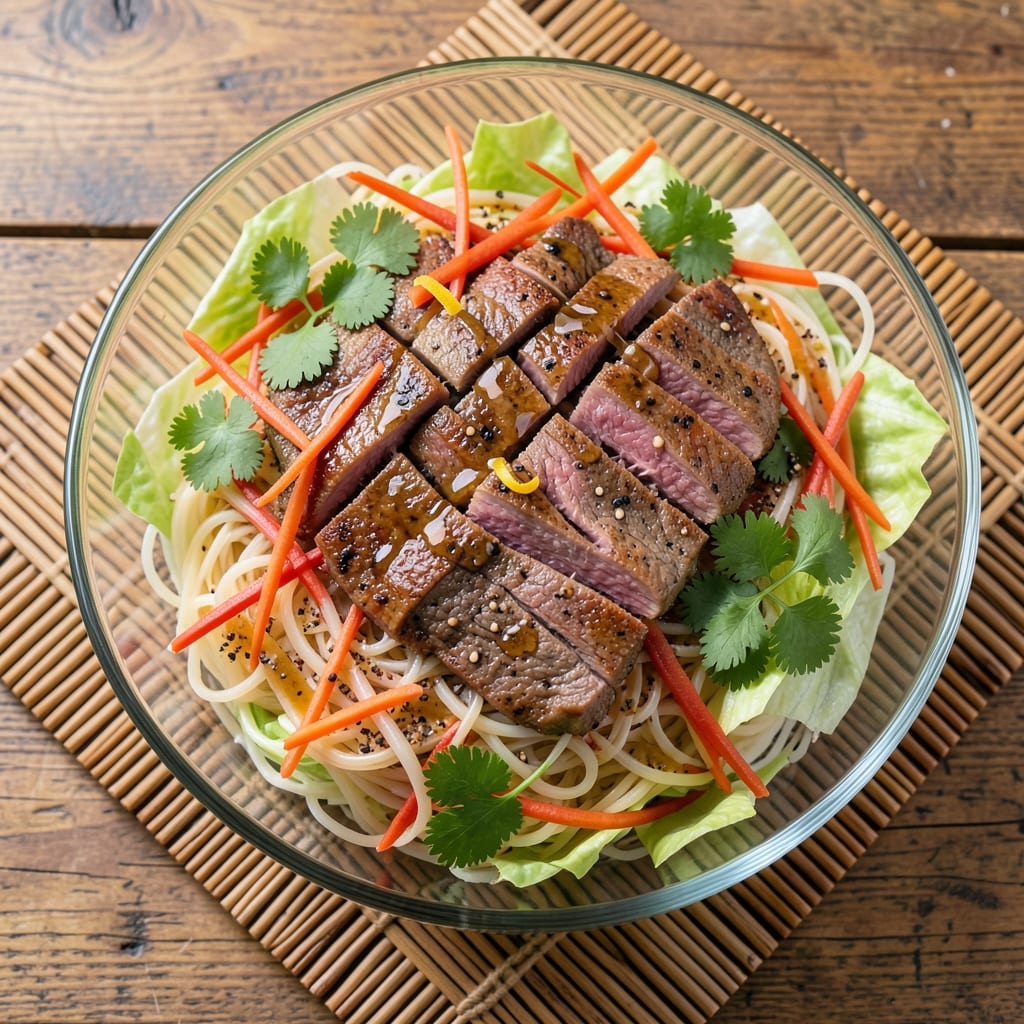
This Asian beef salad recipe transforms simple ingredients into a vibrant, restaurant-quality dish that balances bold flavors with satisfying textures. 💛 The secret lies in tender, marinated beef slices paired with crispy rice noodles and a tangy tamarind dressing that ties everything together. I developed this recipe after craving something fresh yet deeply flavorful—no heavy sauces or complicated techniques, just layers of Asian-inspired taste in every bite.
The foundation starts with thinly sliced beef marinated in a blend of soy sauce, sesame oil, and ginger, which infuses deep umami and aromatic notes. Crunchy rice noodles provide the perfect base, while shredded cabbage, carrots, and cilantro add freshness and texture. The dressing, made with tamarind paste, rice vinegar, and a touch of honey, delivers a perfect balance of sweet, sour, and savory that elevates every component.
What makes this salad truly special is how effortlessly it comes together—no fussy prep, just a few key steps that yield a dish packed with restaurant-quality flavor. The beef stays tender and juicy, the noodles maintain their satisfying crunch, and the dressing coats everything without overwhelming the fresh ingredients. It’s the kind of meal that’s light enough for a summer lunch but hearty enough for a dinner centerpiece.
Serve this salad with a side of steamed jasmine rice or warm dumplings to round out the meal, and pair it with iced green tea or a cold Asian lager for the full experience. The flavors are bright and refreshing, yet rich enough to satisfy even the most discerning palates. Let’s bring this vibrant dish to your table!
Ingredients for asian beef salad
Thinly sliced beef, crisp rice noodles, and a tangy tamarind dressing create this vibrant Asian-inspired salad.
| Ingredient | Amount | Notes |
|---|---|---|
| Flank Steak 🥩 | 1 lb | Thinly sliced against grain |
| Rice Noodles 🍜 | 8 oz | Thin, dry variety preferred |
| Green Cabbage 🥬 | 4 cups | Shredded, thin strips |
| Carrots 🥕 | 2 medium | Julienned or matchstick cut |
| Fresh Cilantro 🌿 | ½ cup | Chopped, stems removed |
| Sesame Oil 🫒 | 1 tbsp | For marinade and drizzle |
| Soy Sauce 🍶 | ½ cup | Low-sodium preferred |
| Fresh Ginger 🌿 | 1 tbsp | Grated, finely minced |
| Tamarind Paste 🍯 | ¼ cup | Or 3 tbsp tamarind concentrate |
| Rice Vinegar 🍶 | ¼ cup | Unseasoned preferred |
| Honey 🍯 | 1 tbsp | Or agave for vegan option |
| Sesame Seeds 🌱 | 1 tbsp | Toasted for garnish |
| Red Chili Flakes 🌶️ | ½ tsp | Optional, for heat |
| Salt 🧂 | 1 tsp | Kosher or sea salt |
| Black Pepper 🌶️ | ½ tsp | Freshly ground |
The beef is everything here—flank steak gives you that perfect tender texture when sliced thin. I grab mine from Whole Foods or the butcher counter at Kroger—look for good marbling and ask for it sliced against the grain. If you can't find flank, sirloin or ribeye work too, but slice them extra thin. The rice noodles? Thin, dry varieties like those in the Asian aisle hold their crunch best. Soak them in warm water for 5-7 minutes, then rinse with cold water to stop cooking. The cabbage should be crisp—green or purple both work, but avoid pre-shredded bags since they wilt faster.
No tamarind paste? Substitute 1 tbsp lime juice plus 1 tsp brown sugar—it won't be identical, but close enough. Fresh ginger loses potency fast, so freeze it in ice cube trays once opened. For the dressing, rice vinegar is key—subbing apple cider vinegar changes the flavor profile. The honey adds balance, but maple syrup works in a pinch. If you're avoiding honey, use agave. Sesame oil has a strong flavor—toast the seeds separately for garnish to avoid overpowering the salad. For extra crunch, add thinly sliced cucumber or bean sprouts if you've got them.
Marinate the beef for at least 30 minutes—overnight is even better. Store leftover dressing in a jar for up to 1 week in the fridge. The noodles keep their crunch best when dressed right before serving, but you can prep everything else ahead. Packaged sesame seeds last 6-12 months unopened, while fresh ginger keeps for 2-3 weeks in the fridge. For a meal-prep hack, store components separately and assemble when ready to eat—just add the dressing last to keep everything crisp.
Why You'll Love This Recipe
- Fridge-to-Table Speed: I swear by this when I’m starving but can’t be bothered to cook. Thinly sliced flank steak hits the pan in 5 minutes, while the noodles and veggies just need a quick toss—no boiling, no fuss. The cabbage stays crisp, the carrots add satisfying crunch, and the cilantro? That’s the secret to making it feel fresh without effort.
- Umami Bomb: That first bite of marinated flank steak—slightly charred, tender, and packed with soy, garlic, and a hint of sesame—is chef’s kiss. The rice noodles soak up the dressing like a sponge, while the raw veggies cut through the richness. Honestly, it’s the kind of flavor that makes you want to eat it straight from the bowl.
- Lunchbox Hero: Between us, this is my go-to for packed lunches—no sad soggy salads here. The noodles hold up surprisingly well (thanks to the dressing), and the steak stays juicy if you slice it thin enough. Toss in a handful of cilantro for freshness, and suddenly you’ve got a meal that’s exciting enough to actually eat at work. (Yes, even on a Tuesday.)
- Budget Stretch: Flank steak is affordable, and a single pound feeds the whole family—leftovers? Even better. I’ll make a big batch on Sunday, and by Wednesday, we’re still snacking on it. The cabbage and carrots bulk it up without breaking the bank, and the noodles? Cheap as chips. It’s the kind of recipe that makes grocery day less stressful.
Step-by-step instructions for crunchy rice noodle salad
Here's the method for a restaurant-quality Asian beef salad with perfect texture balance.
🍳 Step 1: Marinate and Sear the Flank Steak
In a bowl, combine the 1 lb flank steak with 0.5 cup soy sauce, 1 tbsp sesame oil, 1 tbsp minced fresh ginger, 1 tsp salt, and 0.5 tsp black pepper. Massage the marinade into the meat, then cover and refrigerate for at least 30 minutes (or up to 4 hours for deeper flavor).
Heat a skillet over medium-high heat until hot. Add the marinated steak and sear for 2-3 minutes per side until it reaches medium-rare (internal temperature 130-135°F). Remove from heat and let rest for 5 minutes before thinly slicing against the grain into ¼-inch strips. This resting period ensures juicy slices that won't turn tough.
👨🍳 Step 2: Prepare the Tangy Tamarind Dressing
In a small bowl, whisk together 0.25 cup tamarind paste, 0.25 cup rice vinegar, 1 tbsp honey, and 0.5 tsp red chili flakes (if using). Thin with 2 tablespoons warm water until smooth but still slightly thick. Taste and adjust seasoning with additional salt or honey as needed—the dressing should balance sweet, sour, and spicy notes.
This tangy dressing is the heart of the salad. The tamarind paste provides that signature Asian umami depth, while the rice vinegar cuts through the richness of the beef. I like to let it sit for 5 minutes before using to allow the flavors to meld—trust me, it makes a difference.
🥘 Step 3: Assemble the Crunchy Vegetable Base
Soak the 8 oz rice noodles in hot water for 5-7 minutes until pliable but still slightly firm. Drain and rinse under cold water to stop cooking, then toss with 1 tbsp sesame oil to prevent sticking. In a large bowl, combine the drained noodles with 4 cups shredded green cabbage, 2 medium julienned carrots, and 0.5 cup chopped fresh cilantro.
The key here is texture contrast—crisp cabbage, tender carrots, and chewy noodles. I like to handle the cabbage gently to maintain its crunch. If you notice the noodles sticking together, add a quick spray of water and toss again. This vegetable mix should be ready to absorb the dressing beautifully.
🍽️ Step 4: Combine and Garnish for Perfect Balance
Add the sliced flank steak to the noodle and vegetable mixture. Drizzle with the prepared tamarind dressing and toss gently but thoroughly to coat everything evenly. The salad should look vibrant with red, green, and white colors contrasting beautifully.
Sprinkle with 1 tbsp toasted sesame seeds just before serving. These add a nutty crunch that elevates the dish. Serve immediately while the noodles are still warm and the dressing clings perfectly to each component. For extra presentation, garnish with additional cilantro and a final drizzle of dressing.
Pro Tips For Making Asian Beef Salad
- Slice Against the Grain: Flank steak’s grain runs long—cutting perpendicular to it turns chewy slices into tender, bite-sized pieces. Use a sharp knife and don’t rush; the extra 30 seconds saves your salad from rubbery beef.
- Blanch Cabbage for Crunch: Toss shredded green cabbage in boiling water for 30 seconds, then ice bath. It softens just enough to hold up to the dressing without wilting into mush—your salad’s texture stays crisp where it counts.
- Don’t Overmix the Noodles: Rice noodles clump like glue when overworked. Soak them in warm water until pliable (about 10 minutes), then drain and toss gently with a splash of oil. Rough edges? Good. Globs of sticky noodle? Bad.
- Rest the Steak Before Slicing: Skip the slicing rush—let the cooked flank steak rest 5 minutes under foil. The fibers relax, making it easier to slice cleanly and keeping the meat juicy instead of drying out on the cutting board.
Wine and beer pairings for this asian beef salad
Crisp Lager Pairing
A Sapporo Classic or Asahi Super Dry is my go-to choice for this salad. The crisp, clean profile of these Japanese lagers cuts through the rich umami of the beef and tamarind dressing without overpowering the fresh vegetables. The subtle hop bit also enhances the sesame notes in the dish. Serve chilled to maintain the salad's refreshing quality and balance the warm, seared beef. 🍺
Dry Riesling Harmony
For a wine lover’s twist, opt for a dry Riesling from Germany or California. The bright acidity mirrors the tangy tamarind dressing, while the stone fruit notes complement the caramelized flavors of the seared beef. A Dr. Loosen Blue Slate or Chateau Ste. Michelle works beautifully. Chill to 50-55°F to preserve the wine’s crispness and let it refresh your palate between bites.
Sake Elevation
If you’re feeling adventurous, serve dry junmai sake like Hakkaisan Junmai alongside the salad. The clean, slightly nutty profile enhances the sesame and ginger flavors while adding a sophisticated touch. Pour it slightly chilled (45-50°F) to highlight its delicate aromas and let it complement the dish’s balance of textures and flavors.
Non-Alcoholic Options
For a refreshing non-alcoholic pairing, try sparkling yuzu soda or jasmine iced tea. The effervescence cleanses the palate, while the citrus notes in yuzu soda or floral jasmine tea enhance the salad’s brightness. Add a squeeze of lime to either for an extra zing that matches the tamarind dressing’s tang. ✨
Beer and Wine Storage Tips
Store your beer upright in the fridge to preserve carbonation, and finish within 3-4 days of opening. For wine, recork and refrigerate after opening—it’ll stay fresh for 3-5 days. Sake should be refrigerated and consumed within 5-7 days of opening. Keeping drinks chilled ensures they complement the salad’s fresh, vibrant flavors without competing for attention.
Nutrition facts
Frequently asked questions
Can I substitute flank steak with another cut of beef?
Yes, but choose a lean, tender cut that slices thinly. Sirloin or ribeye work well—just slice against the grain for maximum tenderness. Avoid tougher cuts like chuck or brisket, as they won’t hold up well in the salad. For extra flavor, try ribeye steak and marinate it for 1-2 hours instead of 30 minutes.
How do I prevent the rice noodles from getting soggy?
Rinse the cooked noodles in cold water immediately after draining, then toss with 1 tbsp sesame oil to create a protective barrier. Add the dressing just before serving, and avoid overmixing—gentle tossing keeps the noodles crisp. For extra crunch, serve the salad over chilled noodles instead of warm ones.
What if I don’t have tamarind paste?
Use 1 tbsp lime juice + 1 tsp brown sugar as a quick substitute, though it won’t replicate tamarind’s complex umami depth. For a closer match, blend 2 tbsp dried tamarind pulp with 2 tbsp warm water to make a paste. The dressing will still taste tangy, but the flavor profile will differ slightly.
Can I make this salad ahead of time?
Prep the components separately and store them in airtight containers. Keep the beef, veggies, and noodles refrigerated for up to 2 days, and make the dressing fresh. Assemble just before serving to maintain crispness. The noodles will soften if dressed too early, but the flavors stay vibrant if kept separate.
Is this recipe gluten-free?
Mostly, but check your ingredients! Rice noodles are naturally gluten-free, but verify the package to ensure no cross-contamination. Soy sauce contains gluten—use tamari instead. The tamarind paste, sesame oil, and other components are typically gluten-free. Always double-check labels for hidden gluten.