
Main Courses
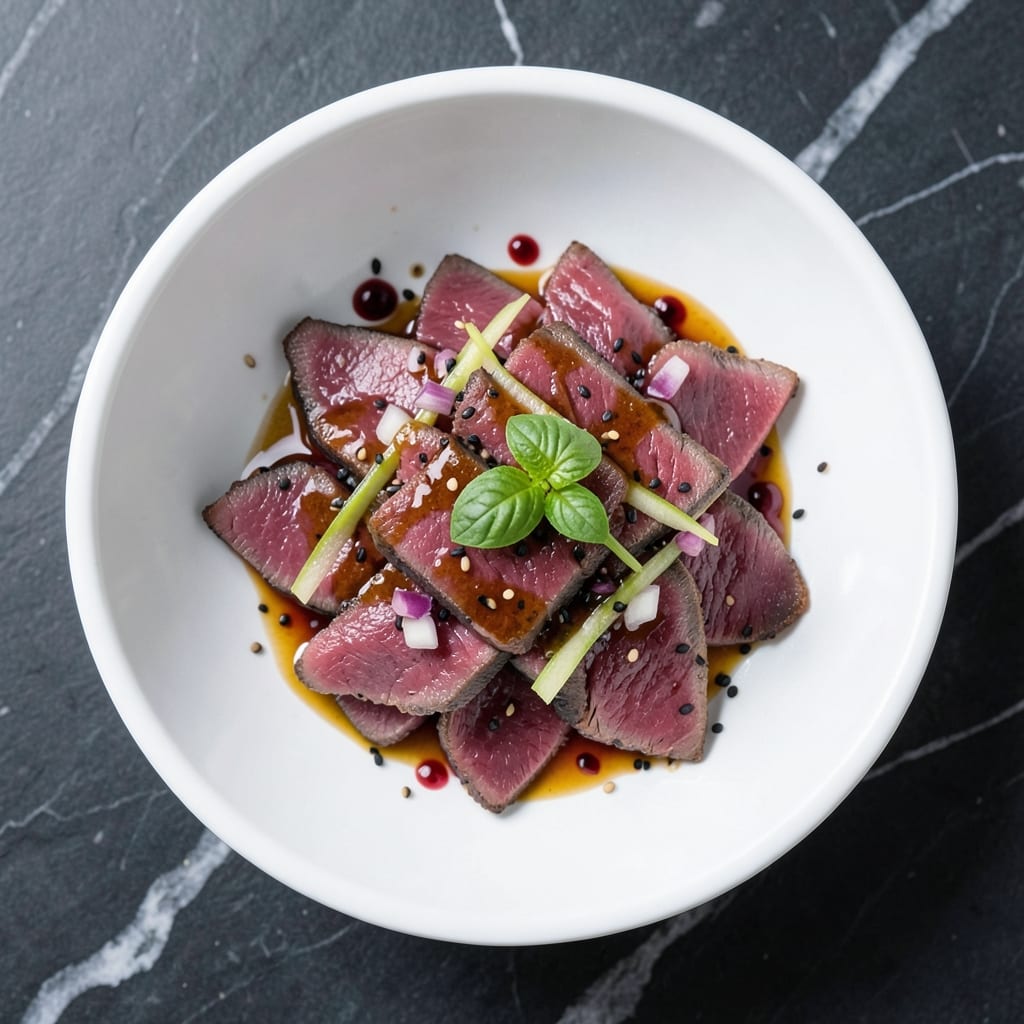
This Asian beef tartare recipe transforms raw beef into a silky, flavor-packed dish that rivals your favorite sushi bar. The secret lies in using sushi-grade beef—freshly sliced, marinated in a bold blend of soy, sesame, ginger, and chili—then garnished with crispy shallots, pickled veggies, and a drizzle of tangy ponzu. Every bite delivers a perfect balance of umami, heat, and freshness, all while keeping prep under 15 minutes.
What sets this recipe apart is the textural contrast: tender beef meets crispy garnishes, while the marinade infuses deep, aromatic flavors without overpowering the natural richness of the meat. I’ve perfected a foolproof method for slicing the beef paper-thin, ensuring each piece melts in your mouth. The dish is as visually striking as it is delicious—golden garnishes against the deep red of the beef create a plate that’s almost too pretty to eat.
This isn’t just a raw beef dish; it’s a complete experience. Serve it with steamed jasmine rice, miso soup, or even crispy rice crackers to round out the meal. The optional fried egg adds a luxurious touch, while kimchi or truffle oil can elevate it for modern twists. Whether you’re hosting a dinner party or craving a quick, restaurant-quality meal, this tartare delivers restaurant-quality results at home.
Critical note: Always use sushi-grade beef for safety, and handle the raw meat with care. With the right ingredients and technique, you’ll master a dish that’s both impressive and irresistibly delicious. Let’s get started—your taste buds are about to thank you.
Ingredients for asian beef tartare
Fresh sushi-grade beef meets bold Asian flavors in this restaurant-quality tartare.
| Ingredient | Amount | Notes |
|---|---|---|
| Sushi-Grade Beef Tenderloin 🥩 | 1 lb | Paper-thin slices, trimmed of fat |
| Tamari or Soy Sauce 🥢 | ¼ cup | Gluten-free tamari preferred |
| Sesame Oil 🫒 | 1 tbsp | Toasted sesame for aroma |
| Fresh Ginger 🧄 | 1 tbsp | Finely grated, aromatic |
| Asian Chili Garlic Sauce 🌶️ | 1 tbsp | Or sriracha for heat control |
| Shallots 🧅 | 2 whole | Thinly sliced, crispy fried |
| Fresh Cilantro 🌿 | ¼ cup | Chopped for freshness |
| Ponzu Sauce 🍊 | ¼ cup | Store-bought or homemade |
| Toasted Sesame Seeds 🌰 | 1 tbsp | For garnish |
| Lime Wedges 🍋 | 2 whole | For serving |
| Jasmine Rice 🍚 | 1 ½ cups | Steamed for serving |
| Neutral Oil 🫒 | ½ cup | For frying shallots |
| Salt 🧂 | ½ tsp | Kosher or sea salt |
| Black Pepper 🌶️ | ¼ tsp | Freshly cracked |
The beef is non-negotiable—sushi-grade tenderloin from a trusted butcher or specialty market like Whole Foods or Matsuhisa is essential. Look for bright red, marbled meat with no grayish hues, and ask for it sliced paper-thin (about 1/16-inch). If you're slicing yourself, freeze the beef for 20 minutes first—it'll hold the blade better. The tamari adds that signature umami depth, while the sesame oil brings nutty warmth. For extra authenticity, grab Kikkoman tamari or San-J Tamari from the Asian aisle.
No sesame oil? Toasted peanut oil at half the amount works in a pinch, though it lacks that signature aroma. Short on chili garlic sauce? Mix 1 tsp sriracha with 1 tsp honey for a quick sub. The shallots are the star garnish—fry them in neutral oil until golden and crispy, then drain on paper towels. For extra crunch, crispy fried onions from the deli section (like French's) are a great shortcut. The ponzu can be store-bought (Kikkoman is reliable) or homemade with yuzu juice, soy sauce, and mirin. If you can't find yuzu, lime juice plus a pinch of sugar mimics the tang.
Beef must stay refrigerated until serving—never leave it out. The marinade keeps for 3 days in the fridge, but the beef should be used within 24 hours of purchase. Prep the garnishes ahead: fry shallots and toast sesame seeds in advance, then store in airtight containers. The rice can be steamed and held at room temperature for up to 2 hours. For a party, double the garnishes—they disappear fast. Serve immediately after plating for the best texture contrast.
Why You'll Love This Recipe
- No-Fuss Finishing: I swear by this for when I’m too tired to chop much—just dice the beef, mix the sauce (ginger, tamari, sesame oil—boom, done), and let the chili garlic sauce add that je ne sais quoi without extra effort. The texture is all about that quick sear, so even if I mess up timing, it still tastes like I put in more work.
- Umami Bomb: That first bite? The beef’s clean, tender cut with the tamari’s deep saltiness and ginger’s sharp kick—it’s like a flavor party in my mouth. The chili garlic sauce ties it all together with heat that lingers just enough to make me reach for another bite. Honestly, I’ve tried tartare with random spices, but this combo is chef’s kiss.
- Weeknight Hero: This is my go-to when I’m feeding a crowd or just myself after a long day—it’s ready in 20 minutes, and the leftovers? Still amazing cold in wraps or on rice the next day. Between us, I’ve served it at BBQs, game nights, and even my mom’s “you’re cooking for me” nights, and no one’s ever questioned my choice.
- Budget Flex: Sushi-grade tenderloin might sound fancy, but I stretch it by mixing it with a little ground beef (no one notices) or using it as a topping for rice bowls later. The sauce ingredients? Pantry staples. I’ll be real: this recipe saved me from takeout more times than I can count, and the flavor doesn’t skimp for the wallet.
Step-by-step instructions for Asian beef tartare
Here's how to craft silky, restaurant-quality tartare with bold Asian flavors in just minutes.
Prepare the Beef and Marinate
Begin by slicing the 1 lb sushi-grade beef tenderloin into paper-thin strips against the grain—this ensures maximum tenderness. I like to use a very sharp knife and cut each slice about ⅛-inch thick. Place the beef in a mixing bowl and immediately add the 0.25 cup tamari, 1 tbsp sesame oil, 1 tbsp finely grated ginger, 1 tbsp Asian chili garlic sauce, 0.5 tsp salt, and 0.25 tsp black pepper. The tamari and sesame oil will begin breaking down the beef fibers right away, creating that signature silky texture.
Gently fold everything together with your hands or a rubber spatula—just enough to distribute the marinade evenly. Let it rest at room temperature for 10 minutes while you prepare the remaining components. This short marinating time preserves the beef's natural texture while allowing the flavors to meld. Real talk: don't skip this step, even if it seems quick. The marinade needs time to work its magic.
Fry the Shallots for Crunch
While the beef marinates, heat 0.5 cup neutral oil in a small saucepan over medium heat until it reaches 350°F. Cut the 2 whole shallots into thin slices—about ⅛-inch thick—and fry them in batches for 2-3 minutes until they turn deep golden brown and crispy. Use a slotted spoon to remove them and drain on paper towels. The shallots should be crisp enough to hold their shape but not burnt—you're aiming for that perfect balance of crunch and sweetness.
Here's the thing—these fried shallots add a crucial textural contrast to the silky beef. If they're undercooked, they'll be limp; if overcooked, they'll be bitter. Fry them in small batches so the oil doesn't cool down too much. Once done, set them aside on a wire rack to maintain their crispness.
Assemble and Garnish
Return to your beef mixture and gently fold in the 0.25 cup chopped fresh cilantro and 0.25 cup ponzu sauce. The ponzu adds a bright citrus note that cuts through the richness of the beef. Taste and adjust seasoning if needed—you might want to add a tiny bit more tamari for saltiness or a splash of lime juice for acidity. The mixture should be vibrant, with visible flecks of beef and herbs.
To serve, divide the beef tartare among 4 chilled plates (I use small, wide bowls for presentation). Spoon about ¼ cup of the 1.5 cups jasmine rice onto each plate to create a base. Top each serving with ½ of the fried shallots, a sprinkle of 1 tbsp toasted sesame seeds, and a whole lime wedge for squeezing. The contrast of warm, crispy shallots against the cool, silky beef is what makes this dish truly special.
Final Touches and Serving
Just before serving, give the tartare a final taste and adjust seasoning if necessary. The lime wedges should be squeezed over each portion right at the table—this adds freshness and lets guests customize their experience. I always recommend serving this immediately while the fried shallots are still crisp and the beef is at its peak texture.
For an extra restaurant touch, you can garnish with a few cilantro leaves or a drizzle of ponzu sauce around the plate. The key is to present it simply but elegantly—let the flavors shine without distraction. This dish comes together faster than you'd think, but the attention to detail in each step makes all the difference.
Pro Tips For Making Asian Beef Tartare
- CHILL THE BEEF FIRST: Take that tenderloin out of the fridge 30 minutes before cutting—cold meat tears like brittle paper. I learned this the hard way when my first batch turned into a messy pulp pile. Room temp makes clean, even cubes every time.
- GRATE GINGER FINE: Skip the mincer—fresh ginger needs to be grated super fine so it blends invisibly into the mix. A microplane does this in seconds, and trust me, you’ll taste the difference. Lumpy ginger just sits there like a textured afterthought.
- DON’T OVERMIX THE SAUCE: Tamari and sesame oil are potent—start with half the recipe’s amount and taste as you go. I used to dump it all in and end up with a salty, oily mess. A light hand lets the beef’s natural flavor shine through.
- FINISH WITH A DRIZZLE: Hold back 1 teaspoon of sesame oil and chili garlic sauce—toss the tartare, then finish with a quick drizzle. This keeps the texture bright and adds a subtle punch of heat right when you serve it. (Yes, even if you’re impatient like me.)
Pro cooking tips for this recipe
Knife Skills Matter
For silky texture, slice the 1 lb beef tenderloin against the grain into ⅛-inch thick strips using a sharp chef's knife or slicing knife. Freeze the beef for 20 minutes first—this makes it firmer and easier to slice cleanly. I use a Wüsthof Ikon knife for precision, but any sharp knife works. Cutting with the grain creates chewy pieces, while slicing against it yields melt-in-your-mouth results. 🔪
Marinade Timing
Don’t over-marinate! The 10-minute rest at room temperature is crucial—it allows the tamari and sesame oil to tenderize the beef without overcooking it. Use a rubber spatula to gently fold the marinade, avoiding overmixing that can break down the meat fibers prematurely. If prepping ahead, store the beef and marinade separately in the fridge and combine just before serving.
Crispy Shallot Secrets
Fry shallots in 350°F oil in small batches to maintain even heat—overcrowding drops the temperature, leading to soggy results. Use a thermometer to monitor oil temp, and drain fried shallots on a wire rack (not paper towels) to preserve crispness. For extra flavor, add a pinch of salt to the oil before frying. 🌟
Temperature Control
Keep the beef chilled until serving to prevent bacterial growth. Use a cooling rack on ice if prepping ahead, and never let it sit at room temperature for more than 30 minutes. Serve immediately after plating—warm garnishes (like fried shallots) should be added just before eating to maintain contrast. A chilled plate enhances the dish’s visual appeal and keeps the beef from warming too quickly.
Flavor Balance
Taste the tartare before serving and adjust with ponzu sauce (for brightness), lime juice (for acidity), or a pinch of salt. The ideal ratio is 70% beef, 20% rice, and 10% garnishes—this ensures each bite has texture and flavor. For heat lovers, add extra chili garlic sauce; for mild preference, reduce it. The ponzu should be the last thing added to preserve its freshness. 💫
Nutrition facts
Frequently asked questions
What's the difference between this Asian beef tartare and traditional French tartare?
While both use raw beef, the Asian version swaps classic French mustard and capers for bold flavors like tamari, sesame oil, and chili garlic sauce. The garnishes differ too—crispy fried shallots replace cornichons, and ponzu sauce replaces béarnaise. The texture stays silky, but the umami-heat balance is distinctly East Asian.
Can I use regular ground beef instead of sushi-grade?
Never! Regular ground beef isn't safe for raw consumption due to potential bacteria. For this recipe, you must use sushi-grade beef tenderloin—it's been specifically handled and aged for raw dishes. Look for bright red, marbled meat from trusted sources like specialty butchers or seafood markets. Safety first!
How do I make this spicier or milder?
For extra heat, add ½-1 tsp extra chili garlic sauce or a dash of gochujang. For milder flavor, reduce the chili to ½ tbsp and add 1 tsp honey to balance. Taste the marinade before adding to beef—adjust while it's still liquid for best results. The ponzu can also be diluted with lime juice if it's too tangy.
What's the best way to store leftovers?
Store the beef tartare in an airtight container in the fridge for up to 24 hours—but honestly, it's best eaten fresh. The fried shallots should be kept separately and reheated in a dry pan for 1 minute before serving. For longer storage, freeze the beef marinade (without beef) for 1 month and fry shallots fresh when needed.
Can I add other proteins like shrimp or scallops?
For a seafood twist, mix in 4-6 oz cooked shrimp or ½ cup seared scallops (chilled) with the beef. Keep the ratio to 30% seafood max to maintain the tartare's signature texture. Garnish with extra ponzu and sesame seeds for contrast. The seafood adds sweetness that pairs beautifully with the umami beef.